
What Are Common Septic Code Violations in Harris County? A 2026 Guide
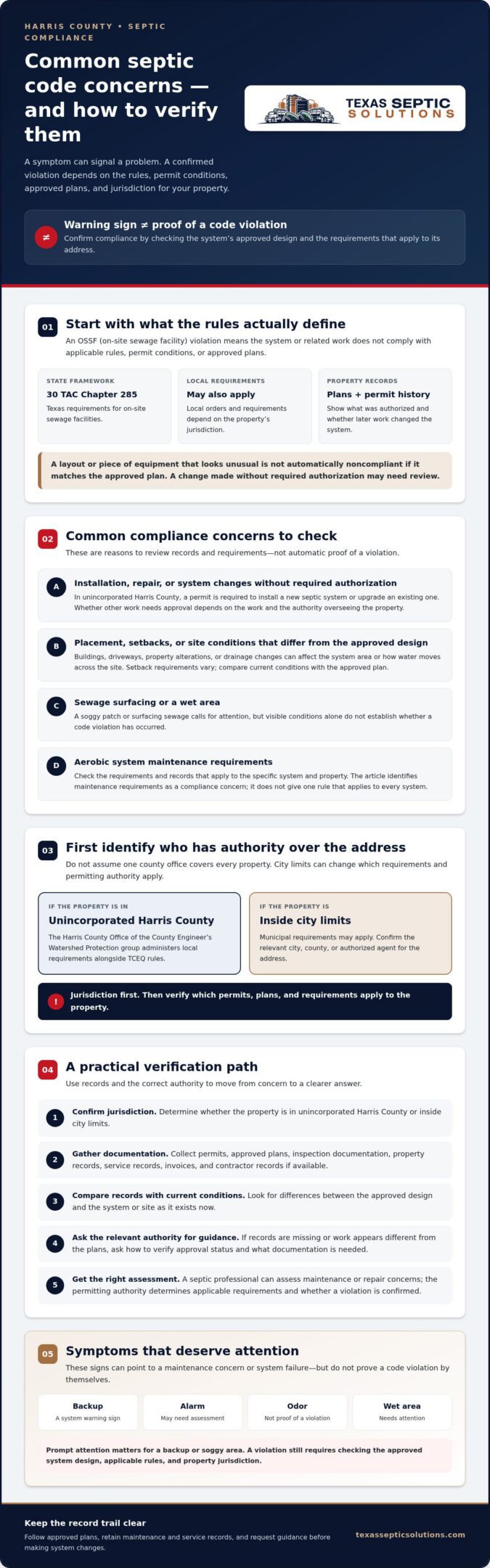
Could a wet patch in your yard mean a code violation, or could it point to a septic problem that needs attention? If you’re asking “what are common septic code violations in Harris County,” symptoms alone won’t tell you. A backup or soggy area deserves prompt attention, but confirming a violation means checking the system’s approved design, applicable rules, and property jurisdiction.
It’s understandable to feel unsure, especially if you inherited a system or don’t know which authority oversees your address. In unincorporated Harris County, local and Texas requirements apply. Properties inside city limits may fall under municipal rules. That distinction affects where to verify permits and which requirements to follow.
This guide explains common compliance concerns, including unpermitted installations or changes, sewage surfacing, aerobic system maintenance requirements, and setbacks. You’ll also learn how to identify the right authority, gather useful records, and take safe next steps. Texas Septic Solutions provides septic system maintenance, repair, pumping, and installation for customers in Cleveland, Houston, Cypress, Huffman, and Shepherd. Confirm availability for your address after checking the requirements that apply to your property.
Key Takeaways
- When asking “what are common septic code violations in Harris County,” check permits, approved plans, and applicable requirements, not just visible symptoms.
- Find out whether your property is inside city limits or in unincorporated Harris County before contacting an authority about septic rules.
- A backup, alarm, odor, or wet area can signal a maintenance concern or system failure, but doesn’t prove a code violation on its own.
- Gather permits, service records, and clear documentation of the issue. Request guidance before making system changes.
- Follow approved plans and keep maintenance records. Arrange professional inspection, repair, or maintenance when needed.
What Counts as a Septic Code Violation in Harris County?
A septic code violation is more than a worrying smell or a slow drain. It means the system or work on it doesn’t comply with the rules, permit conditions, or approved plans that apply to the property. Texas requirements appear in 30 TAC Chapter 285, while local orders and the property’s permit history can add important details.
That distinction matters when researching what are common septic code violations in Harris County. A backup, alarm, odor, or wet patch may point to a maintenance issue or system failure. None proves a code violation on its own. Confirmation may require an inspection and a review by the authority responsible for the address.
Who regulates an on-site sewage facility at a Harris County address?
Texas sets a statewide framework for on-site sewage facilities, often called septic systems or OSSFs. The On-site sewage facilities (OSSF) overview introduces general system types and concepts. Local authorities may handle permitting and enforcement under that framework.
For properties in unincorporated Harris County, the Harris County Office of the County Engineer’s Watershed Protection group administers local requirements alongside TCEQ rules. A property inside city limits may instead be subject to municipal requirements. Don’t assume one county office covers every address. Confirm jurisdiction with the relevant county, city, or authorized agent before relying on guidance or taking action.
How do permits and approved plans define compliance?
An OSSF violation occurs when a system or related work fails to meet the applicable rules, permit conditions, or approved system plans. That’s a practical definition, not a substitute for an authority’s decision under 30 TAC Chapter 285 and the local requirements that apply to the property.
Start with the records. A permit, approved design, inspection documentation, and property records can show what was authorized and whether later work changed the system. Requirements may vary with system type, site conditions, jurisdiction, and approval history. Equipment or placement that looks unusual isn’t automatically noncompliant if it matches the approved plan. A change made without required authorization may need review.
If records are missing or the installation doesn’t appear to match the plans, avoid jumping to conclusions. Ask the relevant authority how to verify the system’s approval status and what documentation it needs. A septic professional can assess a maintenance or repair concern, but the permitting authority determines which requirements apply and whether a violation has been confirmed.
Common Septic Code Violations: Permits, Placement, and System Changes
Some potential violations involve work that was never authorized. Others come to light when the system’s location or setup doesn’t match its approved design. If you’re asking what are common septic code violations in Harris County, start by checking the permit and jurisdiction rather than assuming that every malfunction or past repair broke a rule. Requirements depend on the property’s location and the type and scope of work.
Unpermitted installation, repair, or alteration
In unincorporated Harris County, a permit is required to install a new septic system or upgrade an existing one. Other work may also require authorization, depending on what changed and which authority oversees the property. Before calling an installation, repair, or alteration a violation, ask the relevant authority whether that specific work needed approval.
Look for permits, inspection reports, approved plans, invoices, and contractor records. Together, these documents can help establish what work took place and whether it followed the applicable process. Harris County’s Wastewater Quality Permitting information explains local requirements and the permitting process for properties under its authority. For a practical overview of installation permits, see this septic tank installation permit guide.
Setbacks, drainage, and departures from approved plans
A septic system’s location is tied to the site and approved design. A new building, driveway, property alteration, or change to drainage may affect the area around the system or how water moves across the site. Setback requirements vary, so don’t rely on a general distance or a neighbor’s layout. Compare the approved plan with current site conditions and ask the authority to review any apparent conflict.
Approved plans show what was authorized. Comparing them with current site conditions can help identify changes that may need review. A tank or treatment component that appears close to a structure or property boundary isn’t proof of a violation by itself. The applicable rules, site details, and approved records matter.
Look for changes such as rerouted pipes, new connections, relocated components, or wastewater surfacing where it wasn’t expected. These conditions may point to a repair need, an unauthorized alteration, or another issue. Document what you can see from a safe location and ask the appropriate authority or a qualified septic professional to assess it. Don’t open tanks or attempt sewage repairs yourself.
Once you’ve verified the applicable requirements, a septic professional can help assess, maintain, or repair the system. Texas Septic Solutions provides septic system repair and maintenance. Confirm service availability for your location.
Is a Septic Problem Automatically a Code Violation?
No. A backup, alarm, sewage odor, or unusually wet area can signal a maintenance concern or system failure, but none proves a code violation by itself. If you’re trying to understand what are common septic code violations in Harris County, separate two questions: Is the system working properly, and does it comply with the requirements and approvals that apply to the property?
Symptoms that need attention but do not prove a violation
Symptoms still deserve prompt attention, especially if sewage may be surfacing or someone could come into contact with it. A professional assessment can help identify the cause. An alarm, for example, can have several possible causes. See this septic tank alarm response guide for practical next steps. Avoid opening a tank or attempting repairs that could expose you to sewage or other hazards.
| Situation | What it means | Useful next step |
|---|---|---|
| Maintenance concern | An alarm, odor, or slow drainage may point to a service need, but doesn’t establish a rule breach. | Arrange an appropriate assessment and check recent service records. |
| System failure | A backup or wet area may indicate the system isn’t functioning as intended. Failure alone doesn’t confirm a code violation. | Limit contact with sewage and seek professional guidance promptly. |
| Suspected noncompliance | Visible conditions or records raise questions about permits, approved plans, placement, or system changes. | Document what you can safely observe and ask the authority responsible for the property to review the concern. |
| Confirmed violation | The appropriate authority has reviewed the evidence and determined that an applicable requirement wasn’t met. | Follow the authority’s instructions and verify which approvals are needed before corrective work. |
When a concern becomes a compliance issue
A compliance determination may depend on inspection findings, permit and plan history, system condition, and the rules that apply to the property. The relevant authority decides whether the evidence establishes noncompliance and what response is required. A service professional can assess system condition, but that assessment isn’t a substitute for an official code determination.
Reporting a concern doesn’t automatically mean a fine will follow. The outcome depends on the facts and the authority’s review, so no single result can be promised. If corrective work is needed, confirm any required authorization and, where possible, get instructions in writing before proceeding. Keep records of communications, assessments, approvals, and completed work. These records make it easier to track the issue from the first symptom through resolution.
How to Check and Address a Suspected Septic Code Violation
If you’re trying to resolve a possible septic violation, take it one step at a time. Protect people and property, find out which rules apply, and avoid making a repair that creates a new compliance issue. When asking what are common septic code violations in Harris County, verify the facts at your address before drawing conclusions.
Gather records and confirm the responsible authority
Start with the property address. Septic oversight can differ between unincorporated Harris County and properties within city limits, so confirm the responsible county, municipal, or authorized office before relying on instructions. Then collect the records you can find:
- Permits and approved system plans
- Inspection reports and notices
- Repair invoices and service records
- Property documents that may identify system locations or prior work
Contact the authority responsible for the address. Ask what records it has, whether an inspection or review is appropriate, and what information it needs from you. Keep a simple timeline of symptoms, visible conditions, past work, and conversations. Photos can help document changes, but take them from a safe location. Don’t open tanks, enter restricted areas, or disturb system components to gather evidence.
Plan corrections without creating another compliance problem
If an inspection or authority review identifies a concern, ask for the findings and next steps in writing. Before authorizing work, clarify whether the proposed repair or alteration needs approval, permits, or an inspection. Requirements depend on the property and work involved, so don’t assume a repair follows the same rules as routine maintenance.
A qualified septic professional can assess system condition and explain repair options. The authority determines applicable code requirements and approvals. Keep copies of the assessment, written instructions, approvals, and completed work. This documentation can help show how the issue was addressed.
For a practical overview of repair considerations, read the Texas septic system repair guide. If there’s an active backup, sewage exposure, or apparent system failure, prioritize safety and seek qualified assistance promptly. Texas Septic Solutions provides septic system repair. Contact the team about septic repair and confirm service availability for your location.
Keep a Harris County Septic System Compliant After a Violation
Once an issue is resolved, good records and system-specific care can help you avoid confusion during future service or inspections. Compliance starts with following the approved design and confirming local requirements before changing the system, its surroundings, or drainage patterns. If you’re still asking what are common septic code violations in Harris County, remember that the answer depends on the property, its records, and the authority responsible for it.
Build a practical compliance and maintenance record
Keep key documents together, either digitally or in an easy-to-find folder. Include permits, approved plans, inspection results, service dates, pumping records, repair invoices, and written instructions from the relevant authority. Also note changes to buildings, drainage, or system components. A new structure or altered runoff can affect the site, so accurate records make it easier to compare current conditions with the approved layout.
Set maintenance reminders based on system type, household or property use, manufacturer guidance, and a professional’s assessment. There isn’t one schedule that fits every system. For more homeowner guidance, see this Texas septic maintenance guide. If local rules specify additional inspections or records for your system, confirm current requirements with the authority responsible for your address.
Choose the right professional support
Match the service to the need: installation for a new system, repair for a fault, maintenance for ongoing care, or pumping when service is due. A septic professional can assess system condition and explain service options. Code determinations, permit requirements, and enforcement decisions belong to the relevant authority, not the service provider.
Texas Septic Solutions provides septic system installation, repair, maintenance, and pumping in Cleveland, Houston, Cypress, Huffman, and Shepherd. The company’s service area doesn’t mean every address has the same permitting authority or current service availability. Confirm service for your specific location before arranging work.
Your next step is to verify applicable requirements with the local authority, then arrange a qualified assessment if the system needs attention. Keep the assessment and records of completed work. This gives you a clearer picture of the system’s condition and a useful history for future maintenance or review.
Take the Next Step Toward a Compliant, Reliable System
If you’re asking “what are common septic code violations in Harris County,” possible concerns include unpermitted changes, placement issues, or sewage surfacing. Check them against your property’s records and applicable rules. A symptom alone doesn’t confirm a violation, and the responsible authority can depend on whether the property is inside city limits or in unincorporated Harris County.
Start by confirming jurisdiction, gathering permits and service records, and documenting concerns safely. Before corrective work begins, check whether it needs approval or inspection. The relevant authority makes code determinations. A qualified septic professional can assess system condition and discuss service options.
Texas Septic Solutions provides septic system installation, repair, maintenance, and pumping, along with 24/7 emergency septic service. The company serves Cleveland, Houston, Cypress, Huffman, and Shepherd. Confirm availability for your specific location. Request help with septic system service if your system needs professional attention. Keep your records together and get in touch to discuss the service your system needs.
Frequently Asked Questions
What are the most common septic code violations in Harris County?
Potential violations include installing or changing a system without required authorization, departing from approved plans, siting concerns, and unauthorized connections or discharges. These are issues to investigate, not automatic findings. If you’re asking “what are common septic code violations in Harris County,” compare the system’s condition with its permits, inspection records, and approved plans. Confirm current requirements with the authority responsible for the property before deciding that a violation occurred.
Who enforces septic system rules in Harris County?
The responsible authority depends on the property’s exact location. Texas provides the statewide framework, while authorized local entities may manage permits, inspections, or enforcement. In unincorporated Harris County, the County Engineer’s Watershed Protection group administers local requirements alongside TCEQ rules. Properties within city limits may be subject to municipal requirements. Confirm the authority for your address with the relevant county, city, or authorized agent rather than assuming one office covers every property.
Can I repair a septic system without a permit in Harris County?
Whether a repair needs a permit or inspection depends on the work, system, and property jurisdiction. Don’t assume a repair is exempt or rely only on a contractor’s interpretation of local rules. Before changing components or making a substantial alteration, contact the permitting authority for that address and ask which approvals apply. Keep its written guidance with your system records so the scope of authorized work is clear.
Does a septic backup mean my system violates code?
No. A backup can point to a blockage, maintenance need, or system failure, but it doesn’t establish that a code requirement was breached. Treat repeated backups or possible sewage exposure as a prompt safety and service concern. Keep people away from sewage and contact a qualified septic professional to assess the system. If you’re unsure about compliance, ask the responsible authority whether an inspection or records review is needed.
What should I do if I discover a possible septic code violation?
First, protect people from sewage. Don’t open or enter tanks or other restricted system areas. Gather permits, approved plans, inspection reports, and service records, then confirm which authority is responsible for your address. Ask what review or corrective process applies and keep notes and written instructions. If the system is failing, contact a qualified septic professional for an assessment. Check required approvals before starting corrective work.
Can an unpermitted septic system be brought into compliance?
Possibly, but the path depends on the system, property conditions, available records, current requirements, and the authority’s review. Don’t assume a new permit will automatically resolve past work or that one fix suits every site. Contact the responsible authority to ask what documentation, inspection, or corrective work may be required. A qualified septic professional can assess system condition and discuss options, but the authority determines applicable compliance requirements.
How can I prevent septic code violations on my property?
Keep permits and approved plans, retain inspection, repair, and pumping records, and check with the responsible authority before altering the system or property drainage. Plan maintenance based on system type, use, manufacturer guidance, and professional assessment. Texas Septic Solutions provides installation, repair, maintenance, pumping, and 24/7 emergency septic service in Cleveland, Houston, Cypress, Huffman, and Shepherd. Confirm availability for your address and verify local requirements separately.