
Cypress Municipal Septic Pumping: A Buyer’s Guide
Could a pumping appointment create more disruption than the septic issue it’s meant to prevent? For a public facility, the work needs to fit the building’s system, site access, and operating schedule. If you’re researching “septic tank pumping for municipal buildings Cypress,” first confirm that the site uses an onsite septic system and identify the service it needs.
Before inviting a service vehicle onto a busy municipal property, staff need clear answers. Records may be incomplete, access may be restricted, and a provider’s general service claims won’t show whether its equipment and procedures fit the facility. Careful planning helps staff coordinate the work and protect public access.
This guide covers how to verify the system and service scope, compare providers using facility-specific questions, and coordinate timing to limit interruptions. It also explains what to document before and after service. Texas Septic Solutions serves Cypress and offers septic pumping. Confirm the specific facility’s service fit, availability, access needs, and scope before arranging a visit.
Key Takeaways
- Before arranging septic tank pumping for municipal buildings Cypress, verify that the site has an onsite system and identify who can authorize service.
- Clarify what pumping includes, then confirm how system design, access, and condition could affect the work scope.
- Compare providers by asking about Cypress coverage, equipment fit, access planning, and a written scope of work.
- Use a clear sequence for approvals, scheduling, staff coordination, and service records to help limit disruption to facility operations.
Septic Tank Pumping for Cypress Municipal Buildings: Confirm the Site’s Needs First
Before requesting a pump-out, verify that the building has an onsite septic system. A municipal property may connect to a public sewer instead, and the appropriate service depends on the wastewater setup. Onsite septic pumping removes accumulated contents from a property’s septic tank; municipal sewer service handles wastewater through a shared sewer network. These are different systems, so confirm the connection before scheduling.
For teams arranging septic tank pumping for municipal buildings Cypress, identify three contacts at the outset: the property owner or asset manager, the facility operator, and the person authorized to request or approve service. These roles may belong to different departments. Confirm who can provide records, arrange site access, and authorize the work to avoid delays later.
Does the Cypress building use a septic system?
Review facility records, site plans, maintenance files, and past service invoices for references to a septic tank or onsite system. Ask the property or facilities contact to confirm the system type and known tank locations. A septic tank overview can help staff recognize basic components, but it cannot verify which system serves a particular building. If records conflict or are missing, request a qualified site assessment rather than guessing.
Confirm which local authority and requirements apply to the specific site. Cypress-area properties may fall under different jurisdictions, so check with the responsible authority before assuming a permit, procedure, or disposal rule applies.
Which municipal facilities need a different service plan?
Plan the visit around the building’s operations. Public hours, occupancy patterns, and essential functions can affect the best service window. A facility with steady public traffic may need a different plan from one used intermittently. Ask about restricted areas, security procedures, vehicle limits, and who must be notified before the service vehicle arrives.
Do not assume that every public building needs the same approach. System design, tank placement, condition, and access can vary, even among properties owned by the same municipality. Before requesting a visit, gather the facility’s operating schedule and access instructions, then share them with prospective providers. This gives each provider a clearer basis for assessing whether its equipment and service approach fit the site.
What Municipal Septic Pumping Includes, and What Cypress Facilities Must Confirm
Septic pumping removes accumulated contents from a tank. It may be scheduled as a pump-out, but it does not automatically include an inspection, repairs, filter service, or drainfield work. Those tasks may need a separate scope, equipment, authorization, or follow-up. As the U.S. Environmental Protection Agency explains in How a typical septic system works, the tank and drainfield have different roles in wastewater treatment. Make clear which work you are requesting.
Pumping removes tank contents; on its own, it does not establish the overall condition or performance of the septic system. If the provider reports a concern, ask what was observed, whether it falls within the approved scope, and what follow-up is recommended. Do not treat a pump-out as a substitute for separately scoped assessment or repairs.
What should a facility manager include in the requested scope?
Give prospective providers the site address, known system type, tank location, and relevant service history. Describe access conditions, such as a restricted gate, limited vehicle positioning, or nearby public areas. Ask the provider to state in writing what the pumping request includes and what would require separate authorization before additional work begins.
Confirm how the vehicle will reach the tank and where it can be positioned. Discuss any steps needed to protect public areas or coordinate around staff and visitors. For septic tank pumping for municipal buildings Cypress, these details help a provider assess the actual site rather than rely on a general description of commercial service. Confirm equipment suitability and access requirements before setting the visit.
What records should the municipality request?
Before service, ask what documentation the provider can supply when the job is complete. Depending on what is available and included, useful records may identify the service date, work performed, reported findings, and recommended follow-up. Check with the municipality’s procurement or environmental contact to determine what records the facility needs to retain. Requirements can vary by organization and site.
File the completed documentation with the facility’s maintenance history. A clear record helps the next staff member understand what was done and what remains unresolved, without assuming that pumping included other services. Texas Septic Solutions lists Cypress among its service areas and offers septic pumping services. Confirm the facility’s service fit, equipment needs, access plan, and procurement requirements before arranging work.
How to Compare Septic Pumping Providers for a Cypress Public Facility
A provider’s general commercial-service claim does not confirm that its equipment, access plan, or proposed scope fits your facility. For septic tank pumping for municipal buildings Cypress, give providers the same site details and ask consistent questions. Separate what they can confirm now from what requires an on-site check.
Compare providers by confirming Cypress coverage, system fit, safe access, a written scope, scheduling options, and a process for unexpected findings. Ask about scheduling windows and arrival coordination, but do not assume a particular response time or availability. Get proposed timing in writing and confirm that it works with facility operations.
Which questions reveal whether a provider fits the job?
Ask whether the provider can accommodate the known system and reach the tank safely with its equipment. Confirm whether the request covers pumping only or includes other work or documentation. If staff identify an unexpected condition during the visit, ask who will contact the municipality and whether work will pause until an authorized person approves next steps.
A residential pumping schedule is not automatically appropriate for a public building. System design, use, and facility needs can differ. Biological processes such as anaerobic digestion are part of how a septic tank works, but that general information does not establish a municipal facility’s pumping interval. Use the site’s service history and system-specific guidance instead of applying a residential timetable by default.
How should facility teams compare proposals fairly?
Send each provider the same address, available system records, access instructions, requested work, and scheduling constraints. Compare the details, not just the headline quote. Use a simple review table to distinguish confirmed claims from open questions and items that need a site check:
| Review area | Confirmed facts | Ask the provider | Verify at the site |
|---|---|---|---|
| Coverage and system fit | Service area and known system details | Can you handle this system? | System type and tank location |
| Access and scheduling | Facility hours and stated restrictions | What access and timing do you need? | Vehicle route and positioning |
| Scope and records | Requested work and municipal approval path | What’s included, excluded, and documented? | Any conditions affecting the planned work |
Before selecting a provider, resolve differences in exclusions, scheduling assumptions, access needs, and approval requirements. Proposals may look comparable while covering different work. Texas Septic Solutions lists Cypress among its service areas. Confirm coverage for the specific facility, equipment fit, availability, and procurement requirements directly.
Plan Municipal Septic Pumping in Cypress Around Access, Approvals, and Operations
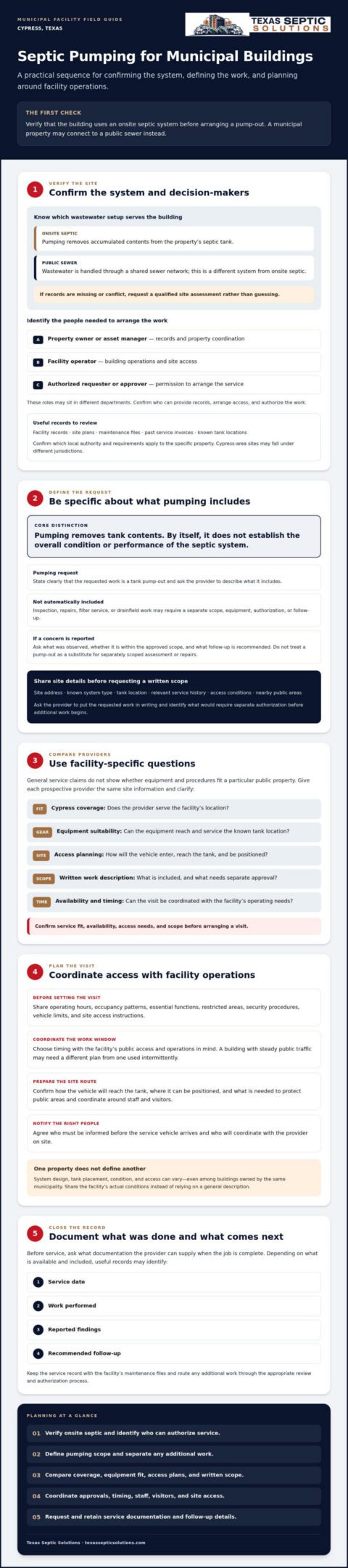
A coordinated visit follows a sequence your team can track: verify the system, define the work, obtain approvals, schedule the visit, and file the completion record. For septic tank pumping for municipal buildings Cypress, allow time to coordinate facility operations and the municipality’s purchasing process. The governing jurisdiction and applicable requirements depend on the specific site. Confirm them with the appropriate municipal or local authority rather than assuming one rule applies throughout Cypress.
What should happen before the service date?
Gather available system records and identify an authorized on-site contact. That person can meet the provider, explain access conditions, and reach the person approving the work. Share the agreed scope and scheduling assumptions in advance, including what would require separate authorization if conditions differ from expectations.
Check the route to the tank, vehicle positioning needs, restricted work areas, security procedures, and building notification requirements. Confirm the facility’s procurement steps and who can approve the service. Use this preparation checklist:
- Verify the system information and locate available site records.
- Confirm the authorized contact, approval path, and service scope.
- Agree on timing, access instructions, and required documentation.
- Notify relevant staff and follow the provider’s site-preparation instructions.
How can a facility reduce disruption during pumping?
Choose a service window that accounts for operating hours, expected public traffic, and essential building functions. Coordinate with staff responsible for public access so they can communicate any temporary restrictions or direct visitors as needed. If the site has security procedures, explain them to the provider before arrival and identify the facility contact.
Follow the provider’s instructions for preparing the work area, and avoid blocking access to the tank or nearby building entrances. After service, record the completion date and file the documentation. Send reported findings or recommended follow-up to the department responsible for facility maintenance. Keeping pumping records with the site’s other system documents helps future staff make informed decisions.
Before dispatch, confirm the system, written scope, approvals, service window, access plan, on-site contact, and follow-up records. This checklist helps align the visit with public needs and keeps responsibilities clear. Texas Septic Solutions lists Cypress among its service areas and offers septic pumping. Its septic pumping information can be reviewed alongside the facility’s coverage, equipment, access, and procurement requirements.
Choose a Cypress Septic Pumping Partner and Set the Next Step
A sound decision rests on confirmed details, not broad service claims. Before arranging work, verify that the building has an onsite septic system, clarify the pumping scope, confirm workable access, obtain approvals, and check that the provider can serve the specific facility. Agree on what documentation you will receive and how recommended follow-up will be handled.
For septic tank pumping for municipal buildings Cypress, Texas Septic Solutions is a local option to consider. The company lists Cypress among its service areas and provides septic pumping for residential and commercial clients. Confirm that the specific municipal site is within its coverage and that the equipment, access arrangements, availability, and scope suit the facility. General commercial service information does not confirm municipal-specific experience or site readiness.
What information should the reader have ready?
Prepare a concise request with the facility address, known system details, available service history, tank location, and access constraints. Identify who can approve the work, the procurement contact, and the person who can meet the provider on-site. Include your preferred service window, then list questions about what pumping includes, what records are available, and how additional work or findings would be authorized.
How should the facility request service?
Share those details with the provider and ask it to confirm coverage in Cypress and suitability for the specific facility. Verify availability and response arrangements directly before relying on a proposed schedule. Ask for the agreed scope and scheduling assumptions in writing so facility staff and procurement contacts can review them before approving the visit.
Use this final check before proceeding:
- Is the onsite system and requested work confirmed?
- Have access, operating constraints, and approvals been addressed?
- Has the provider confirmed facility fit, availability, and documentation?
- Does the municipality know who will handle follow-up recommendations?
With those answers in hand, your team can move forward with a clearer plan and fewer last-minute questions. Discuss septic pumping for your Cypress facility and share the site details needed to verify service fit.
Move Forward With a Clear Pumping Plan
Reliable municipal pumping starts with verified site information. Confirm that the building uses an onsite septic system, define what the requested service includes, and address access, approvals, scheduling, and documentation before the visit. These steps help your team compare providers fairly and plan around public access and building operations.
For septic tank pumping for municipal buildings Cypress, check that the provider can serve the specific facility and that its equipment and proposed scope fit the system. A clear record of completed work and follow-up recommendations also gives facility staff a practical starting point for future decisions.
Texas Septic Solutions lists Cypress among its service areas and offers septic pumping, maintenance, repair, and emergency service. Discuss the facility’s details and confirm coverage, service fit, availability, and procurement requirements before making arrangements.
Discuss septic pumping for your Cypress facility to plan service around your building and the people who rely on it.
Frequently Asked Questions
Does every municipal building in Cypress have a septic tank?
No. A municipal building may connect to a public sewer rather than an onsite septic system. Check site plans, facility records, maintenance files, or past service invoices, then confirm the system type with the responsible facilities contact. If records are missing or unclear, arrange a qualified site assessment instead of assuming. Verifying the wastewater setup first helps ensure you request the appropriate service.
How often should a municipal building septic tank be pumped?
There isn’t one schedule that fits every municipal system. The Texas Commission on Environmental Quality recommends pumping conventional septic tanks every three to five years. For aerobic systems, pumping depends on sludge accumulation, and they often need it every two to three years. Treat these as general guidance, not a facility-specific schedule. Review the system type, service history, and provider recommendations before setting the next pumping date.
What does septic tank pumping include for a public building?
Pumping generally means removing accumulated contents from the septic tank. It does not automatically include a full system inspection, repairs, filter service, or drainfield work. For septic tank pumping for municipal buildings Cypress, ask the provider to define the work in writing and identify anything that would require separate approval. Confirm what documentation will be available afterward, such as the service date, work performed, reported findings, and suggested follow-up.
Can septic pumping disrupt a municipal building’s operations?
It can affect access or routine activity if the service vehicle needs to enter a restricted area or work near public entrances. Coordinate the visit with facility staff, security, and the provider. Choose a service window that accounts for operating hours and expected public traffic, and confirm where the vehicle can park and which areas need to remain clear. Advance planning can help reduce interruptions, though site conditions affect the work.
What should a Cypress facility manager ask a septic pumping provider?
Ask the provider to confirm service coverage for the specific facility, fit with the known system, equipment and vehicle access needs, written scope, scheduling assumptions, and available service records. Clarify who will contact the municipality if unexpected conditions arise and whether additional work requires approval. Texas Septic Solutions lists Cleveland, Houston, Cypress, Huffman, and Shepherd among its service locations. Confirm specific site coverage and municipal procurement fit directly.
Does septic pumping fix a slow drain or wastewater backup?
Not necessarily. Pumping removes accumulated tank contents, but a slow drain or backup can have other causes, and pumping alone does not confirm the overall system’s condition. Share the symptoms and service history with a qualified provider, and ask what assessment is appropriate before authorizing work. If the facility has an active backup, follow its internal response procedures and seek timely professional guidance rather than assuming a routine pump-out will resolve the problem.
Do municipal buildings in Cypress need a permit for septic pumping?
Do not assume a permit is required for routine pumping or that one rule applies to every Cypress property. Requirements depend on the specific site, its jurisdiction, and the proposed work. Confirm with the municipality’s procurement or environmental contact and the relevant local authority before scheduling. Rules for installation, alteration, or repair may differ from those for a pumping visit, so verify the specific scope rather than relying on a general answer.