
Cypress Car Wash Septic Pumping: Buyer’s Guide
The right pumping plan for a Cypress car wash may not involve a septic tank at all. If you’re searching for septic tank pumping for car washes Cypress, the key distinction is that car wash process wastewater must go to a municipal sewer, while a grit trap or interceptor captures sediment and oil before discharge. If sewer access isn’t available, an alternative requires authorization from the Texas Commission on Environmental Quality.
It’s understandable to focus on pumping when a trap is filling up or wastewater problems keep returning. But pumping alone may not address the cause, and the right provider needs to understand your system, wastewater, and operating schedule. This guide explains what to evaluate before arranging service, including provider qualifications, service scope, site details to share, and documentation to confirm.
You’ll also learn how the 25% solids threshold and the 90-day evacuation requirement can inform planning, and why follow-up should reflect the system’s condition and guidance from qualified professionals. With the right information up front, you can better coordinate maintenance with car wash operations and clarify which local requirements apply to your facility.
Key Takeaways
- Before booking, gather your business hours, site-access details, tank or trap location, known system type, and prior service records.
- When comparing providers for septic tank pumping for car washes Cypress, ask what they’ll assess and include in the service, not just when they can come.
- Share current symptoms and wastewater conditions so the provider can help determine whether pumping alone may be enough.
- Plan site access around business operations, then keep service records and discuss follow-up based on the system’s observed condition.
- Confirm that the provider handles your specific system and wastewater profile, and check applicable requirements with the relevant local authority.
Septic Tank Pumping for Cypress Car Washes: What the Service Can, and Cannot, Do
Septic tank pumping removes accumulated contents from a septic tank so the system can continue operating as intended. In a conventional system, solids settle while wastewater moves through treatment stages; a septic tank also relies on anaerobic digestion. Pumping removes built-up material, but it doesn’t confirm that every part of the system is working properly.
There’s an important distinction for Cypress car wash operators: car wash process wastewater must not be discharged into a septic system. It must go to a municipal sewer, or an alternative discharge option must be authorized by the Texas Commission on Environmental Quality if sewer access isn’t available. A grit trap or interceptor captures sediment and oil before wastewater enters the sewer. So, the relevant pumping may be grit trap service, not septic tank pumping. Confirm your actual system and service needs before scheduling.
How a car wash’s wastewater profile affects the conversation
Describe the wash process and what enters each drain. Share details about detergents or other chemicals, floor drains, water-recycling equipment, and connected systems. Don’t assume every drain leads to the same tank or trap. Ask the provider to review available site plans or confirm the connections on site. Grit, oils, and cleaning products can affect what equipment and waste handling are appropriate, so have these conditions reviewed for your facility rather than relying on a generic pumping plan.
When pumping may not be the whole solution
Pumping is a maintenance task, not a diagnosis or repair. If backups, odors, alarms, or slow drainage continue, tell the provider and seek a professional evaluation instead of assuming another pump-out will resolve the cause. The issue may involve a blockage, damaged equipment, or another part of the system that needs attention. Wastewater suitability and any additional treatment needs also require site-specific verification.
For car wash grit traps, ask whether the proposed service covers the trap or interceptor that actually receives the wash-area runoff. Wet grit trap waste is classified as special waste, and the research brief states it must be pumped and transported by a TCEQ-registered sludge transporter. It also notes a Houston-area requirement to fully evacuate interceptors at least every 90 days. Verify how these requirements apply to your facility with the relevant authority and provider.
In short, the phrase septic tank pumping for car washes Cypress may not describe the service your wash needs. Share the wastewater sources, connected equipment, symptoms, and system records so a provider can confirm whether septic pumping is appropriate for a separate system or whether grit trap service is the right conversation.
What Cypress Car Wash Operators Should Share Before Booking Septic Pumping
A clear first conversation helps the provider determine whether the requested service fits the equipment at your site. Since car wash wastewater systems can differ, don’t rely on the label “septic tank” alone. If you’re looking into septic tank pumping for car washes Cypress, describe what you know and flag anything you’re unsure about. The provider can then confirm the service scope and what’s needed before scheduling.
Site and system details to have ready
Gather the records you have, even if they’re incomplete. Useful details can help identify the equipment, plan access, and understand how the site has been maintained. Don’t guess at capacity or system type; simply tell the provider when information isn’t available.
- Your business hours and preferred service window
- Site address, gate or entry instructions, and contact for access
- Tank or trap location, known system type, and available capacity
- System plans, inspection notes, previous pumping dates, and service records
- Vehicle restrictions, work-area hazards, and site safety procedures
- Current symptoms, such as slow drainage, odors, alarms, or backups
- Recent changes in wash volume, equipment, products, or operating hours
Note which areas need to stay open for customers or staff. If a service vehicle may need to cross a lot or work near active bays, explain that before the visit so access and disruption can be discussed in advance.
Questions to ask a commercial septic pumping provider
Ask what the visit includes, which equipment the provider expects to service, and what concerns would require a separate evaluation. Confirm how arrival, access, and work areas will be coordinated with your wash schedule. The U.S. Environmental Protection Agency offers general septic system maintenance guidance, but your commercial setup and wastewater conditions still need site-specific review.
- What system details do you need confirmed before scheduling?
- What observations or service records will you provide afterward?
- How should we report persistent symptoms or changes in operations?
Keep the answers with your service history. They’ll help you compare providers by scope and communication, not availability alone. You can also share your facility details with Texas Septic Solutions about commercial septic pumping and confirm whether the specific system and wastewater profile fit the requested service.
How to Compare Septic Pumping Providers for a Car Wash in Cypress
Availability matters, but it’s only one part of choosing a provider. For septic tank pumping for car washes Cypress, compare whether each provider understands commercial sites and will confirm the equipment and wastewater profile before agreeing on a scope. A clear answer about what the visit includes is more useful than a general promise to pump.
Provider-fit criteria beyond availability
Ask whether the provider works with commercial clients and can discuss your specific facility. Compare how clearly they explain access, the equipment they plan to service, what they’ll observe, and what follow-up may be needed. If they identify a possible repair or a concern outside the pumping scope, ask who can discuss the next evaluation. Keep confirmed service details separate from qualifications or capabilities you still need to verify.
| What to compare | Questions to ask |
|---|---|
| Service scope | Which tank, trap, or other identified equipment is included? What concerns would require separate evaluation? |
| Commercial-site readiness | What do you need to know about vehicle access, operating areas, and site procedures before scheduling? |
| Communication | How will arrival, access, and any disruption to wash operations be coordinated? Who should our staff contact with questions? |
| Documentation | What service record or observations will we receive, and how will recommended follow-up be explained? |
Questions about Cypress-area requirements and wastewater handling
Don’t assume a Cypress mailing address alone identifies the authority or rules that apply to the property. Ask which local authority governs the site, then verify requirements directly with that authority. Check whether permits, records, or separate wastewater controls apply to your facility, and ask the provider to distinguish what they can confirm from what you’ll need to verify elsewhere.
For example, a provider may explain the pumping work they’re proposing, while the applicable authority clarifies site-specific requirements. Ask how any waste removed during the visit will be handled and what documentation is available. Treat these as questions to confirm, not assumptions about your obligations.
Use the same questions with each provider so you can compare the actual scope, communication, and follow-up offered. Pumping doesn’t by itself guarantee compliance, confirm overall system health, or prevent operational interruptions. A sound choice starts with a provider who will discuss the site in detail and clearly explain what the service can and cannot cover.
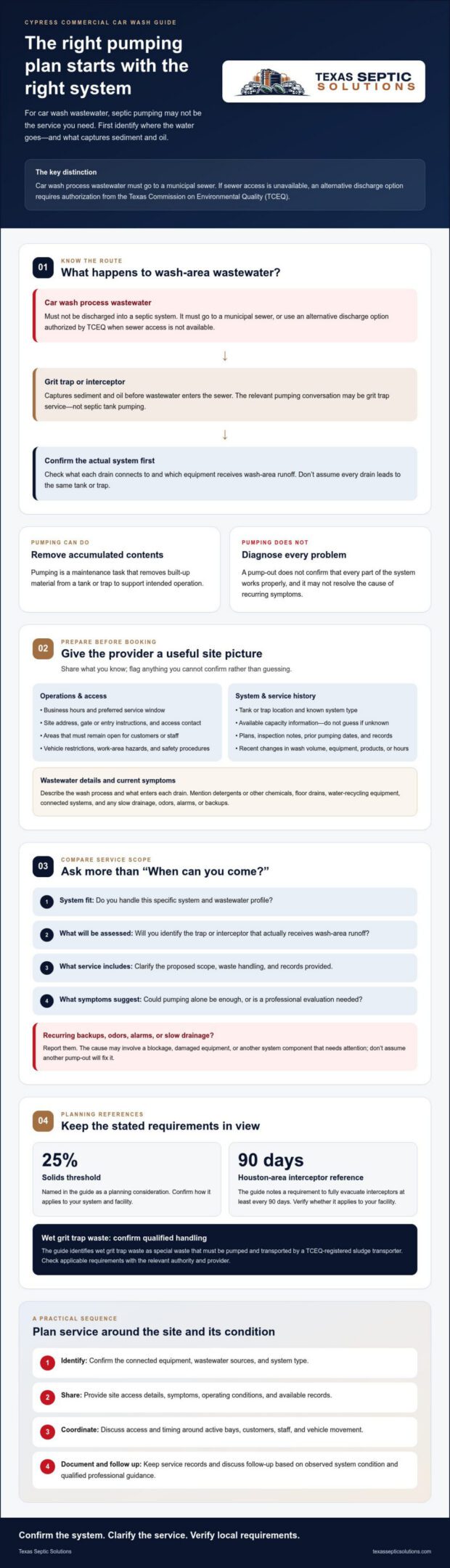
Plan Car Wash Septic Pumping Around Operations and System Condition
A useful service plan starts with the equipment your facility actually has, not a calendar copied from another site. Car wash process wastewater may require grit trap or interceptor service rather than septic tank pumping, so confirm the system and requested work with the provider before setting a schedule. For septic tank pumping for car washes Cypress, plan around documented conditions, site use, and qualified recommendations rather than assuming one interval fits every facility.
A simple pre-service planning sequence
Start by reviewing prior service records and noting any changes since the last visit. Higher or lower wash volume, new equipment, changes in products, and recurring symptoms can help the provider understand what may have affected the system. Then agree on the service window, access route, and staff coordination before the appointment.
- Gather records: Pull together previous service dates, system plans, inspection notes, and current symptoms.
- Discuss conditions: Tell the provider about changes in wash volume, site use, or drainage behavior.
- Coordinate access: Confirm gates, vehicle routes, restricted areas, and who will meet the service team.
- Plan operations: Let staff know which areas may be affected and ask whether any temporary adjustments are recommended.
- Document the visit: Save the service record and ask which observations need monitoring or follow-up.
Good coordination can make the visit easier to manage, but don’t assume it will leave operations uninterrupted. Confirm the work area and timing with the provider, then communicate the plan to employees who may be affected.
Set follow-up based on evidence, not guesswork
Future service timing should reflect the identified equipment, its condition, how the site operates, and recommendations from a qualified professional. Tank capacity alone doesn’t establish a suitable interval. If symptoms return or operating conditions change, share that information and ask whether the plan should be reassessed.
For broader background, review this Texas septic system maintenance guide, keeping in mind that car wash wastewater arrangements may differ from residential systems. A written septic system maintenance plan guide can also help explain the value of recording recurring care. Confirm any commercial recommendations for your facility with a provider familiar with its actual system and wastewater profile.
Use the records and operating details you’ve gathered to discuss the right scope and follow-up for your site. Discuss commercial septic pumping needs with Texas Septic Solutions, and confirm that the specific equipment and wastewater conditions fit the requested service.
Arrange Commercial Septic Pumping for Your Cypress Car Wash
The right next step is to match the provider’s capabilities and proposed service to the equipment and wastewater conditions at your property. Car wash process wastewater may require grit trap or interceptor service rather than septic tank pumping, so confirm what system you have before requesting a specific job. A clear service request helps the provider assess whether the work fits their services and what details still need to be checked.
What to include in a service request
Start by identifying the property as a car wash in Cypress. Describe the equipment as accurately as you can, and say plainly when the system type or connections are unknown. Include operating constraints so the provider can discuss access and scheduling, then ask whether they handle that specific system and wastewater profile.
- Property location and best contact for coordinating service
- Known system type, tank or trap location, and available capacity details
- Prior service dates, records, and inspection notes
- Gate instructions, vehicle restrictions, and access limitations
- Business hours, operational constraints, and areas that need to remain open
- Current symptoms, including when they occur and whether they are recurring
Ask the company to confirm its service scope and current availability for your facility before arranging a visit. If you’re searching for septic tank pumping for car washes Cypress, these details can help clarify whether septic pumping is appropriate or whether another type of wastewater equipment needs attention.
Know when to ask about repair or further evaluation
Describe recurring backups, slow drainage, odors, or alarms instead of assuming pumping will solve the problem. Ask what the proposed service can address and whether symptoms point to a need for separate evaluation. Texas Septic Solutions provides septic pumping, maintenance, and repair, but confirm the specific system and requested scope before relying on a service fit. For general repair context, review the Texas septic system repair guide.
Share your location, system details, access notes, service history, and current symptoms with Texas Septic Solutions to discuss commercial septic needs and possible next steps. The conversation can begin with what you know; unknown details are useful to flag, not guess.
Choose a Service Plan That Fits Your Car Wash
The best next step is to confirm what equipment your site actually uses and match the provider’s service scope to its wastewater conditions. The phrase septic tank pumping for car washes Cypress may not describe the right work for your facility, so share system details, service history, access needs, and any recurring symptoms before scheduling. Pumping can support maintenance, but it doesn’t confirm overall system health or resolve every problem.
Texas Septic Solutions lists commercial clients among those it serves, offers septic system pumping, and includes Cypress in its stated service area. Contact the team to discuss your facility and confirm whether its system and wastewater profile fit the requested service. Contact Texas Septic Solutions to discuss commercial septic pumping.
With clear information and a service plan grounded in your site’s condition, you can take the next step with greater confidence.
Frequently Asked Questions
How often should a car wash septic tank be pumped?
A Cypress car wash shouldn’t send process wastewater to a septic tank; it generally needs a grit trap or interceptor before discharge to the municipal sewer. The Houston-area requirements in the research brief call for full interceptor evacuation at least every 90 days, with cleaning when solids reach 25% of trap volume. Confirm what applies to your property with the relevant authority and a qualified provider. The phrase septic tank pumping for car washes Cypress may not describe the required service.
Can a septic system handle wastewater from a car wash?
No, car wash process wastewater in Cypress must not be discharged into a septic system. It must go to a municipal sewer; if sewer access isn’t available, an alternative discharge option requires authorization from the Texas Commission on Environmental Quality. Car washes use grit traps or interceptors to capture solids and oil before wastewater enters the sewer. Confirm your site’s connections and applicable requirements with the relevant authority rather than assuming a septic system is suitable.
What should I tell a septic pumping company before booking for a car wash?
Share your Cypress location, the system or trap type if known, its location, site access limits, business hours, and prior service records. Describe current symptoms, such as slow drainage, odors, alarms, or backups, and note changes in wash volume, equipment, or products. Be clear about unknown details instead of guessing. Ask the provider to confirm it handles your specific equipment and wastewater profile, what the visit includes, and what records it will provide.
Does pumping fix a car wash septic backup?
Not necessarily. Pumping removes accumulated contents, but a recurring backup may have another cause and pumping alone doesn’t confirm that the system is functioning correctly. Describe when the backup occurs, which drains are affected, and whether odors or alarms are present. Ask for professional evaluation if symptoms persist, and confirm whether the affected equipment is a septic system or a car wash grit trap. The right follow-up depends on the site’s actual system and condition.
Do Cypress car washes need a permit for septic pumping?
Don’t assume a pumping visit has one permit rule for every Cypress property. Requirements can depend on the actual system, wastewater arrangement, and authority with jurisdiction over the site. Ask the relevant local authority whether permits, records, or other controls apply, and verify any requirements directly before scheduling. If your car wash handles process wastewater, confirm the proper discharge arrangement as well. A provider can explain its service scope, but shouldn’t replace the authority’s site-specific guidance.
Can pumping be scheduled without closing a car wash?
Possibly, but uninterrupted operation can’t be guaranteed. The answer depends on where the equipment is located, vehicle access, the work area, and the provider’s service plan. Before booking, explain your operating hours, customer traffic patterns, access restrictions, and areas that need to remain open. Ask what parts of the site may be affected and coordinate any temporary adjustments with staff. Confirm the schedule and access plan with the provider before the visit.
What records should a car wash keep after septic pumping?
Keep the service date, the equipment serviced, provider details, and any service report or observations you receive. Save recommendations, noted symptoms, and follow-up actions alongside prior service and inspection records. For grit trap waste, request and retain any available documentation about its removal, transport, and disposal, and verify record requirements with the authority that governs your property. A consistent file helps your team track system history and share accurate details when arranging future service.