
Texas Horse Property Septic Pumping: 2026 Owner’s Guide
Did you know an adult horse exerts up to 45 pounds of pressure per square inch on your soil, which is significantly more than a typical passenger vehicle? When you combine that constant hoof traffic with the unique demands of a busy boarding stable or training barn, your waste system faces challenges a standard residential setup never sees. Managing septic tank pumping for horse properties Texas requires more than just a routine service call. It demands a specialized strategy that protects your animals, your pastures, and your bottom line.
We know that your ranch is both a sanctuary and a significant investment, and the last thing you need is a 40,000 pound pumper truck rutting up your expensive paddocks or crushing delicate lateral lines. This guide shows you how to maintain your equine facility’s septic system with specialized pumping strategies designed specifically for the needs of Texas ranch owners. You’ll learn how to identify providers with long-reach hoses to keep heavy equipment off your grass, how to mitigate the impact of wash stall runoff, and how to set a maintenance schedule that prevents system failure during peak facility use. From the clay soils of Cleveland to the grazing lands in Cypress, we’ll help you keep your facility running safely and efficiently.
Key Takeaways
- Understand why high-volume equine facilities require specialized pumping strategies and larger tank capacities than standard residential systems.
- Learn how to manage wash stall greywater and sediment to prevent horse hair from clogging your drain field’s soil pores.
- Identify the critical questions to ask to ensure safe septic tank pumping for horse properties Texas, specifically regarding hose length and TCEQ registration.
- Establish a clear maintenance schedule that adjusts for your “Ranch Load,” including staff, boarders, and seasonal event spikes.
- Discover low-impact pumping techniques that protect your expensive pastures and animals from heavy equipment damage.
Why Horse Properties Require Specialized Septic Pumping in Texas
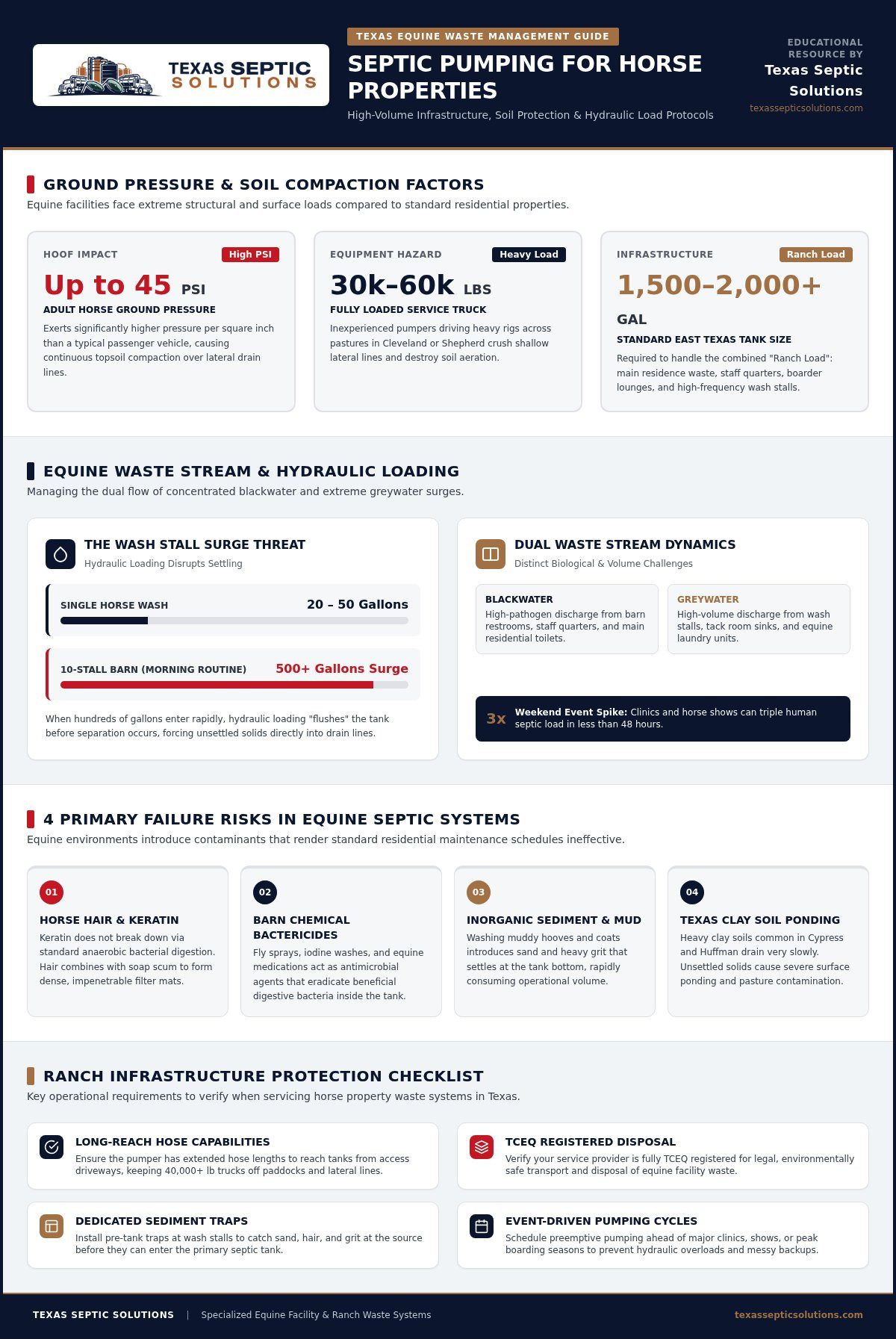
Equine facilities aren’t just larger versions of residential homes; they are high-performance utilities that face unique biological and physical demands. Most horse properties in East Texas utilize tanks ranging from 1,500 to over 2,000 gallons to manage what we call the “Ranch Load.” This load includes waste from the main residence plus the added volume from staff quarters, boarder lounges, and busy wash stalls. Managing septic tank pumping for horse properties Texas requires a deep understanding of how these components interact with our local environment. Unlike a standard suburban setup, a ranch system must handle massive water surges while protecting the surrounding pasture land from contamination and runoff.
Physical protection of your property is just as critical as the internal chemistry. A fully loaded pumper truck can weigh between 30,000 and 60,000 pounds. If an inexperienced provider drives that heavy equipment across your pastures in Cleveland or Shepherd, they can cause immediate soil compaction. This pressure crushes shallow lateral lines and destroys the soil’s ability to breathe, eventually leading to system failure. Routine pumping is the only way to prevent solids from escaping into the drain field, which is especially important for preventing manure-laden runoff from reaching your grazing areas or local water sources.
The Impact of High Water Volume
Wash stalls are often the biggest culprit behind system stress. Washing a single horse can consume between 20 and 50 gallons of water. In a 10-stall boarding facility, you might be sending 500 gallons of greywater into your tank in just a few hours. Hydraulic loading is the volume of liquid entering the system relative to its capacity. When too much water enters too quickly, it “flushes” the tank, pushing unsettled solids directly into your drain field. In the heavy clay soils common around Cypress and Huffman, this excess volume can’t dissipate quickly, which often results in surface ponding and messy backups during peak facility use.
Manure and Sediment Risks
Horse hair and mud are the primary enemies of ranch septic filters. Unlike typical organic waste, horse hair is made of keratin, which doesn’t break down through the standard principles of septic tank operation. This hair binds with mud and soap scum to form dense mats that choke outlet filters. Furthermore, common barn supplies like fly sprays, iodine washes, and equine medications can act as bactericides. These chemicals wipe out the beneficial bacteria your system needs to digest waste. Because of these factors, a standard residential pumping schedule usually fails for active stables, making more frequent service essential for long-term health.
The Unique Loads of Equine Facilities: Wash Stalls and Staff
Successful ranch management requires balancing two distinct waste streams: blackwater and greywater. Blackwater refers to the high-pathogen waste from toilets and sinks, while greywater generally comes from your wash stalls and tack room laundry. While greywater might seem less concerning, its sheer volume often creates a “surge” that disrupts the settling process inside your tank. To handle this, horse property systems need larger septic baffles and high-capacity filters. These components act as a final gatekeeper, ensuring that the turbulence caused by a morning of heavy stall cleaning doesn’t push solids into your drain field. If you’re looking for a baseline of care, our septic system maintenance plan offers proactive steps to keep these filters clear.
Spikes in usage are the norm for Texas horse properties. A weekend clinic or a local show can triple the human load on your system in less than 48 hours. These events often lead to emergency calls if the system isn’t prepared for the sudden influx of water and waste. Coordinating your septic tank pumping for horse properties Texas around these seasonal events ensures your facility stays operational when you have guests on the property.
Managing Wash Stall Runoff
Sediment traps are your first line of defense. These traps catch the heavy sand, grit, and mud before the water ever enters your main plumbing lines. Without them, your tank will fill with inorganic material that bacteria can’t break down, necessitating much more frequent pumping. It’s also vital to confirm how your facility is plumbed. Many owners are surprised to find their wash stalls aren’t legally tied into a treatment system. Following the TCEQ On-Site Sewage Facility guidelines is essential to remain compliant and avoid environmental fines. You can reduce the load further by using rubber mats and ensuring horses are picked clean of heavy mud before they enter the wash bay.
Staff and Boarder Usage Spikes
Calculating the “human load” is different on a ranch than in a house. You must account for full-time staff, daily boarders, and occasional visitors. Barn bathrooms often take a heavier beating than the main residence because they’re used by people in a hurry. This leads to the common problem of “flushable” wipes and barn trash ending up in the system. These items don’t decompose; they clog baffles and ruin pumps. If your barn sees high traffic, you’ll need to pump that specific tank more often than your home system to avoid a backup during a busy boarding day. If you’re unsure of your current capacity, scheduling a professional inspection can help you determine the right service frequency for your specific headcount.
Choosing a Septic Pumper for Your Texas Ranch: What to Ask
Selecting a service provider for an equine facility requires more scrutiny than a standard residential call. You’re trusting a team to bring heavy machinery onto your land, and the wrong choice can lead to thousands of dollars in landscape damage or system failure. When scheduling septic tank pumping for horse properties Texas, your first priority is ensuring the company has the specific equipment and local credentials to handle a high-volume ranch system. You need a partner who views themselves as a guardian of your property’s functionality, not just a waste hauler.
Equipment and Access Considerations
A standard pumper truck can weigh between 30,000 and 60,000 pounds when full of waste. In the soft, sandy loams of Cleveland or the heavy clays of Huffman, that weight will sink and create deep ruts if the driver leaves the pavement. Ask your provider exactly how much hose they carry before they arrive. Long-reach pumping is the gold standard for horse properties because it allows the truck to stay on a stable, all-weather driveway or gravel road while reaching tanks situated 100 feet or more away. This protects your expensive paddocks from compaction and keeps your animals safe from the hazards of disturbed ground.
Vetting for Reliability and Local Expertise
Certifications are non-negotiable. In Texas, anyone hauling septage must hold an active TCEQ Sludge Transporter Registration. This ensures that your waste is handled legally and disposed of at authorized facilities, protecting you from potential environmental liability. Beyond the paperwork, look for a “neighborly expert” who understands the specific drainage challenges of East Texas. A provider with local experience knows how our seasonal rains affect the water table and can offer advice tailored to your specific acreage.
Maintaining your system according to EPA septic system maintenance standards is a great start, but ranch life often throws curveballs. If you notice pooling water or slow drains even after a recent pump, you might be facing a structural issue. In those cases, you may need a professional septic system repair rather than a simple cleanout. Finally, always verify if the company offers 24/7 availability. A backup on the morning of a major clinic or boarding event is a crisis that can’t wait until Monday morning. Having a reliable authority on speed dial gives you the peace of mind to focus on your horses, not your pipes.
Pumping Frequency and Maintenance for Healthy Texas Pastures
Standard residential septic tanks typically require service every three to five years, but your ranch operates on a completely different scale. When you manage a boarding stable or a professional training facility, your system processes a much higher volume of waste and water. For these reasons, septic tank pumping for horse properties Texas is a task that needs to happen much more frequently to protect your land. We recommend using the “Rule of Three” to gauge your needs: account for your full-time staff, your daily boarders, and the number of horses using your wash stalls. This combined load determines how quickly solids accumulate in your tank.
Seasonal timing is another critical factor for Texas property owners. We experience heavy saturation during the spring and fall rainy seasons, especially in areas like Cleveland and Shepherd. If your tank is already near capacity when a week of heavy rain hits, your drain field won’t be able to absorb the effluent. This leads to surface ponding in your pastures, which is a health hazard for your horses. Pumping your tank before these wet seasons ensures you have maximum capacity when the ground is at its most saturated.
Creating Your Pumping Schedule
Your specific interval depends on your animal count and your soil type. If you have more than 10 horses on the property or a high number of daily riders, your system faces constant stress. Properties in Cypress and Huffman often deal with heavy clay soils that drain slowly, making routine maintenance even more vital. If you use an aerobic system, the treated spray helps maintain pasture health, but only if the pretreatment tank is kept clear of sludge. The optimal pumping window is once every 12-24 months for high-use ranch systems.
Protecting the Drain Field from Compaction
A healthy drain field is the heart of your septic system, yet it’s often the most vulnerable part of a horse property. An adult horse exerts between 30 and 45 pounds of pressure per square inch with every step. If horses graze or walk over your leach field, they will compact the soil and eventually crush the lateral lines. Signs of a compacted field include unusually lush, dark green patches of grass or areas where water stands long after a rain. Routine pumping reduces the pressure on an aging leach field by ensuring only clear effluent, not heavy solids, moves into the soil. To keep your system and your pastures in top shape, schedule your routine maintenance with a team that understands ranch logistics.
Maintaining a detailed pumping log is also essential. This record-keeping proves your compliance with TCEQ standards and adds significant value to your property if you ever decide to sell. It shows prospective buyers that the facility has been managed with professional care and that the underground infrastructure is sound.
Texas Septic Solutions: Expert Care for Your Horse Property
Managing an equine facility requires a partner who understands that your ranch is both a business and a sanctuary. Texas Septic Solutions has earned its reputation as the “Reliable Local Authority” for Cleveland and Houston ranches by providing more than just a standard pump-out. We recognize that horse properties face unique biological loads and physical access challenges that suburban homes don’t. Our team is committed to providing low-impact septic tank pumping for horse properties Texas, ensuring that our equipment respects your land and your animals. We don’t just show up; we arrive with the specific tools and local knowledge needed to keep your facility running smoothly.
We provide a comprehensive suite of services tailored to the needs of the East Texas ranching community. Whether you’re planning a new septic system installation for a guest barn or you need a critical septic system repair for an aging drain field, we have the expertise to help. Our 24/7 service is a vital safeguard for boarding facilities and training centers. If a backup occurs during a weekend show or a major clinic, our emergency septic service ensures that your operations aren’t grounded by a utility failure. We’re built for both the routine upkeep that keeps your property healthy and the high-pressure demands of unexpected system issues.
The Neighborly Expert Advantage
Our roots in Cleveland, Huffman, and Shepherd run deep. Being local means we understand the specific drainage patterns and soil conditions that affect your ranch’s health. We pride ourselves on a straightforward, professional approach that prioritizes clear communication. You won’t deal with detached corporate scripts; instead, you get a “neighborly expert” who understands ranch logistics and respects your schedule. For those looking for a total property care strategy, our guide to septic system maintenance Texas offers the foundational steps needed for long-term reliability.
Ready to Protect Your Ranch?
Protecting your investment starts with a proactive maintenance assessment. We can help you determine the ideal pumping frequency based on your horse count, staff size, and soil type, giving you the peace of mind that comes with a professionally managed system. Don’t wait for a slow drain or a surface puddle to tell you there’s a problem. Contact Texas Septic Solutions today to schedule your next pump and ensure your equine facility remains a safe, functional environment for your horses and your clients. We’re ready to show you why so many Texas ranch owners trust us with their most critical infrastructure.
Protect Your Texas Ranch with Professional Septic Care
Managing a successful equine facility means staying ahead of the infrastructure challenges that others might overlook. By accounting for the unique water surges from wash stalls and the heavy human load of staff and boarders, you protect your system from premature failure. Remember that septic tank pumping for horse properties Texas is about more than just a clean tank; it’s about preserving your pastures and ensuring your animals have a safe, well-drained environment. Routine maintenance prevents the soil compaction and drain field clogs that lead to costly repairs during your busiest seasons.
Our expert technicians serve Houston, Cleveland, and the surrounding East Texas communities with specialized equipment designed for large acreage. We offer comprehensive maintenance plans for large properties and provide 24/7 Emergency Septic Service to keep your facility operational around the clock. Don’t let a utility issue disrupt your boarding or training schedule. Schedule your horse property septic pumping with Texas Septic Solutions today and enjoy the peace of mind that comes with a professionally managed ranch. We’re here to be your long-term partner in keeping your facility at its best.
Frequently Asked Questions
How often should a horse property septic tank be pumped compared to a house?
A horse property typically requires pumping every 1 to 2 years, which is much more frequent than the standard 3 to 5 year residential cycle. This increased frequency is necessary due to the heavy “Ranch Load,” which includes wash stall runoff and waste from staff or boarders. Regular septic tank pumping for horse properties Texas prevents hair and sediment from overwhelming your system. Staying on this schedule ensures your facility remains operational during peak boarding seasons.
Can horse manure runoff damage my septic system’s drain field?
Manure runoff poses a risk because it introduces concentrated organic matter and nitrates into the soil. If this runoff reaches your drain field, it can lead to soil clogging and reduced percolation. While the septic system is designed for human waste, the added environmental load from nearby paddocks can stress the drainage area. Maintaining a healthy buffer zone and ensuring routine pumping helps keep your leach field clear of these external contaminants.
Will the septic pump truck damage my horse pastures or paddocks?
Heavy pumper trucks can cause significant soil compaction, especially in the sandy loams of Cleveland or the heavy clays of Huffman. A full truck can weigh up to 60,000 pounds, which is enough to crush lateral lines if driven over a pasture. We use long-reach hoses to perform the service from a stable driveway or gravel road. This strategy protects your expensive paddocks and ensures your horses aren’t grazing on compacted soil after the service.
What happens if my septic alarm goes off during a boarding event?
If your septic alarm sounds, it indicates a high-water condition or a pump failure that requires immediate attention. You should limit water use in the barn and house to prevent a backup. Texas Septic Solutions provides 24/7 emergency septic service to handle these critical situations during shows or clinics. Our technicians can quickly diagnose the issue and perform the necessary repairs to get your facility back to full functionality without disrupting your event or guests.
Can I use wash stall water to irrigate my pastures instead of the septic?
Direct irrigation with wash stall water is generally prohibited under TCEQ guidelines without a specific permit. Most equine facilities must route this water through an approved On-Site Sewage Facility to ensure it is treated properly. Discharging untreated greywater can create public nuisances or health hazards in your pastures. We recommend consulting with a professional to ensure your wash stall plumbing meets local environmental standards while protecting the water quality of your specific acreage.
Are there specific septic filters recommended for barn and ranch use?
Ranch systems benefit from high-capacity effluent filters and specialized hair interceptors. Horse hair contains keratin, which does not break down in a standard tank and can easily clog your drain field. Installing a robust filter at the outlet baffle helps trap these solids before they leave the tank. We often recommend these upgrades during routine septic tank pumping for horse properties Texas to extend the life of your leach field and prevent expensive backups.
Does Texas Septic Solutions offer emergency pumping for ranches in Cleveland, TX?
Yes, we provide rapid 24/7 emergency response for ranch owners in Cleveland, Huffman, and the surrounding areas. We understand that a system failure at a boarding stable is an immediate threat to your business and animal health. Our technicians are available at any hour to handle urgent pumping or repairs. Whether you are in Shepherd or Cypress, you can count on us for dependable, round-the-clock support when your facility faces a crisis.
How do I find my septic tank lids if they are buried in a pasture?
You can locate buried lids using an insulated soil probe or by checking original permit maps for properties in Houston or Shepherd. If the lids are deep in a pasture, we use electronic locating equipment to find them without excessive digging. To save time on future service calls, we recommend installing septic risers. These bring the access point to the surface, making it easier for our team to perform maintenance without disturbing your grazing land.