
2026 Texas Winery & Brewery Septic Pumping Guide
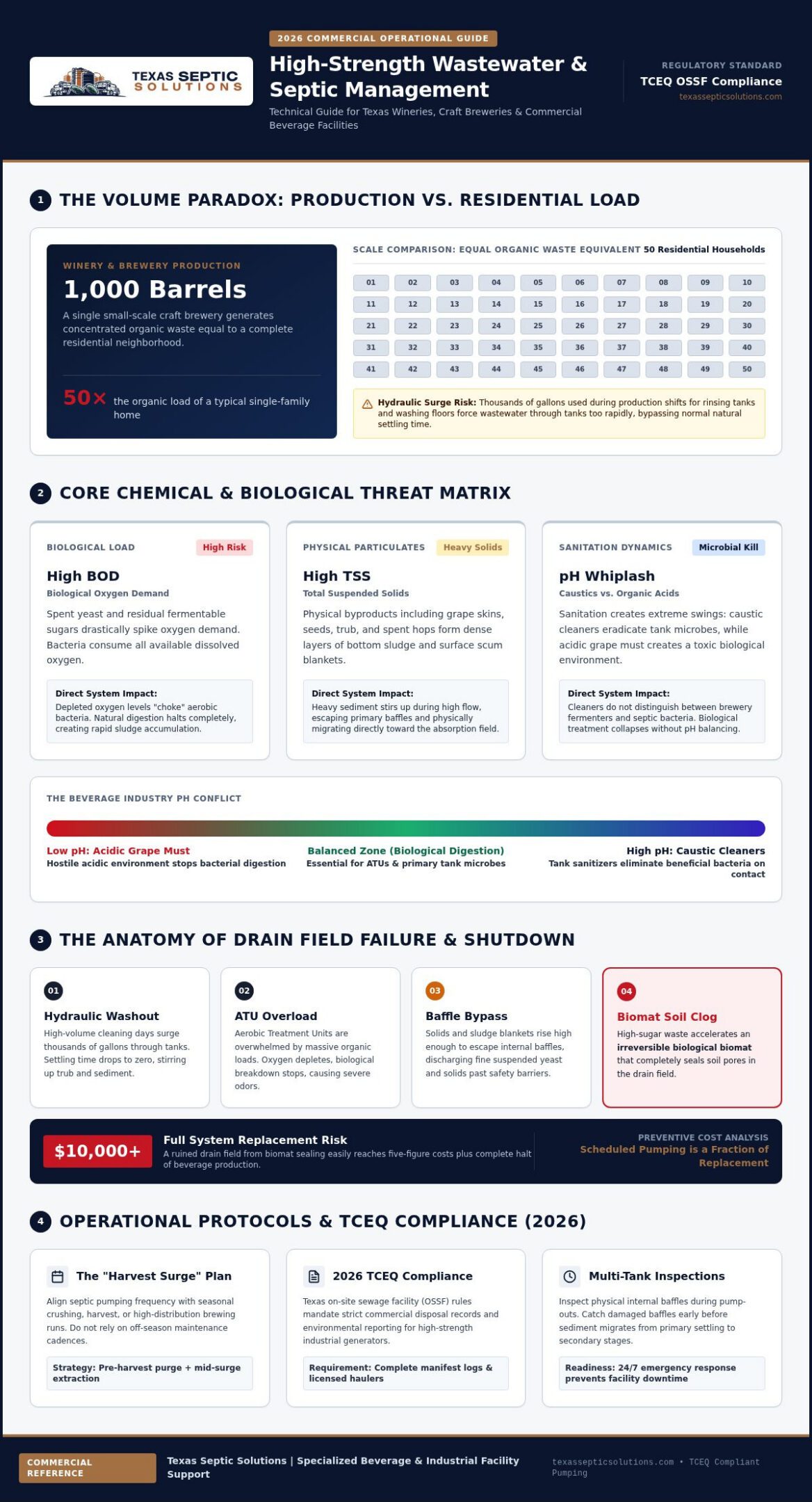
Did you know that a small 1,000-barrel craft brewery generates as much organic waste as 50 residential homes? When you’re in the middle of a peak harvest or a busy weekend shift, the last thing you need is a system failure that halts your entire production line. Managing septic tank pumping for wineries and breweries Texas requires a specialized strategy because your wastewater is “high-strength” and chemically complex. Between acidic grape must and high-pH caustic cleaners, your system faces unique threats that can lead to expensive emergency repairs if not handled correctly.
We know that you can’t afford downtime when the fruit is on the vine or the tanks are full. This guide provides a clear roadmap for 2026, helping you navigate the latest TCEQ regulations and specialized maintenance schedules. You’ll learn how to protect your expensive aerobic or anaerobic systems from biological shock, maintain compliance with Texas environmental laws, and establish a reliable pumping routine that keeps your production facility running smoothly through every season.
Key Takeaways
- Identify the specific risks of high-strength wastewater and how yeast or sugar solids can disrupt your system’s biological balance.
- Implement a proactive schedule for septic tank pumping for wineries and breweries Texas to prevent solids from washing into and destroying your drain field.
- Prepare for the “Harvest Surge” by aligning your pumping frequency with seasonal production peaks to avoid unexpected downtime.
- Navigate the latest 2026 TCEQ commercial compliance rules and record-keeping requirements to keep your beverage production facility in good standing.
- Secure your production schedule with 24/7 emergency support designed to handle the high-volume demands of industrial-scale brewing and winemaking operations.
The Unique Challenges of Winery and Brewery Septic Systems
Operating a beverage production facility in Texas is a far cry from managing a standard residential property. While a typical home relies on primary wastewater treatment and septic tank mechanics to process domestic sewage, a Houston brewery or a Hill Country winery is essentially running an industrial plant. The byproduct of fermentation and brewing is classified as high-strength wastewater. This waste contains dense concentrations of organic matter that a standard system simply isn’t built to handle. When you’re dealing with yeast, residual sugars, and grape solids, the biology of your tank changes completely.
Standard residential math doesn’t apply here. A family of four produces a predictable, low-impact waste stream. In contrast, a production day at a winery involves high-volume water usage that can put immense stress on your infrastructure. Thousands of gallons of water used for rinsing tanks and washing floors can create a hydraulic surge. This surge often pushes untreated waste through the system too quickly. For producers in Cleveland and Shepherd, this means that septic tank pumping for wineries and breweries Texas must be scheduled with industrial loads in mind, rather than following a typical residential timeline.
High BOD and TSS: What It Means for Your Tank
Biological Oxygen Demand (BOD) and Total Suspended Solids (TSS) are the two biggest hurdles for your system. BOD measures how much oxygen the bacteria in your tank need to break down organic material. In a brewery, spent yeast and sugars send these levels skyrocketing. TSS refers to the physical particles like grape skins, seeds, and hops that settle at the bottom or float as scum. High BOD levels can effectively “choke” a septic system by depleting the oxygen required for beneficial bacteria to survive. Without that oxygen, the digestion process stops, leading to rapid sludge buildup and potential field failure.
The Impact of Cleaning Agents and pH Shifts
Sanitation is the backbone of quality beverage production, but your cleaning routine can be a silent killer for your septic health. Caustic cleaners used for tank sanitization are designed to eliminate microorganisms. Unfortunately, they don’t distinguish between the bacteria in your fermenter and the beneficial microbes in your septic tank. Acidic waste streams from wine production also create a hostile environment. If your tank’s pH swings too wildly, the biological treatment process fails. This makes regular pH balancing and consistent pumping cycles a prerequisite for protecting your investment and ensuring your system stays operational during your busiest production weeks.
Why Specialized Pumping is Vital for Beverage Production
Standard pumping isn’t enough for the heavy sediment found in brewery trub or winery pomace. Without a specialized approach, you risk a “washout” event. This happens when high-volume production days force water through the tank so quickly that solids don’t have time to settle. These solids then flow directly into your drain field, which is a recipe for disaster. Regular septic tank pumping for wineries and breweries Texas is the most effective way to prevent these “sludge blankets” from migrating and causing permanent damage.
If these materials are left to accumulate, they can overwhelm Aerobic Treatment Units (ATUs). An ATU relies on a delicate biological balance. When hit with a massive organic load, the system can’t process the waste fast enough, leading to foul odors and total system failure. The cost of a few extra pump-outs per year is a fraction of the price of a full system replacement, which can easily reach five figures. Staying ahead of these issues ensures you remain compliant with TCEQ on-site sewage facility requirements and avoids the headache of a production shutdown.
Managing Settleable Solids
In a multi-tank system, hops and grape sediment usually settle in the primary chamber. However, heavy production can stir these solids up and send them toward the outlet. During every service, it’s vital to inspect internal components. If you notice backing up or slow drains, you might need a Septic System Repair to fix damaged baffles before solids escape into the secondary treatment stages. Checking these components during a pump-out is a proactive way to catch small issues before they become production-stopping failures.
Avoiding Drain Field Clogging
Fine particles from the brewing process are particularly dangerous because they can seal soil pores. High-sugar waste promotes the growth of an irreversible “biomat.” This thick, slimy layer prevents water from soaking into the ground. Once a drain field is sealed by this byproduct, it often cannot be saved. We use specialized vacuum trucks to ensure deep-tank sediment removal, pulling out the heavy solids that standard trucks might leave behind. It’s always better to invest in professional septic system maintenance now than to dig up your entire property later. Routine septic tank pumping for wineries and breweries Texas keeps your soil healthy and your production schedule on track.
Scheduling Pumping: Peak Season vs. Off-Season
A standard residential septic schedule is a recipe for disaster in the beverage industry. While a typical homeowner might wait three or four years between services, a working vineyard or taproom needs a far more aggressive approach. Effective septic tank pumping for wineries and breweries Texas relies on a custom schedule that mirrors your production volume. If you’re doubling your barrel count or increasing your brewing frequency, your maintenance cadence must shift accordingly to prevent the system from reaching its breaking point.
Monitoring your system is essential during high-production months. We recommend using tools like a “Sludge Judge” to measure the actual accumulation of solids in your primary tank. This data-driven approach aligns with the EPA septic pumping and inspection guidance, which suggests pumping when the sludge layer reaches a specific percentage of the tank’s capacity. By tracking these levels, you can avoid the guesswork that leads to backups during your busiest weeks. Coordinating service during low-traffic hours also ensures that maintenance doesn’t interfere with your guest experience or production flow.
The Winery Harvest Pumping Strategy
For wineries in Cypress and the surrounding areas, the “Harvest Surge” is the most critical time for system health. In August and September, the influx of grape solids and high-volume wash water can overwhelm a tank in days. We advise a mandatory pre-harvest pump-out to ensure you have 100 percent capacity before the crush begins. Once the season ends, a post-harvest “deep clean” of the primary tank is necessary to remove the acidic sediment that settled during the rush. This preparation helps your system handle the increased visitor traffic that typically follows in the tasting rooms during the festive fall months.
Brewery Production Cycles and Maintenance
Breweries operate on a more consistent, year-round cycle, but they still face peaks around major release events or beer festivals. Depending on your brewing frequency, you may need monthly or quarterly pumping to manage the heavy yeast and trub buildup. It’s often best to schedule these services around your brewing calendar to avoid conflicts with late-night production shifts. Scheduling a pump-out early on a weekday morning prevents guest disruption in the taproom and ensures our trucks are out of the way before your team starts their next batch. This proactive coordination keeps your facility running without the smell or sight of maintenance equipment during peak business hours.
Texas Compliance and Environmental Standards for 2026
Staying compliant with the Texas Commission on Environmental Quality (TCEQ) is a non-negotiable part of running a beverage business. In 2026, the state’s oversight of high-strength wastewater has become even more rigorous. Standard domestic permits don’t cover the industrial-grade effluent produced during a heavy brewing cycle or a winery crush. This is why specialized septic tank pumping for wineries and breweries Texas is essential. If an inspector finds evidence of illegal discharge or a system that’s clearly failing due to neglect, the resulting fines can be devastating. Working with a licensed professional means you’re not just getting a pump-out; you’re getting a partner who understands the legalities of waste transport and disposal.
Maintaining Your TABC Standing
Your standing with the Texas Alcoholic Beverage Commission (TABC) is more closely tied to your utility management than you might think. A major environmental violation or a public health hazard can lead to a suspension of your liquor licensing or a delay in permit renewals. For producers in Harris and Liberty Counties, local health department regulations often add another layer of complexity. Environmental stewardship is also a powerful brand value. Texas consumers value businesses that protect the local landscape and water table. Keeping your system in peak condition shows that you’re a responsible member of the local economy and helps avoid the PR nightmare of a public system failure.
Proactive Maintenance Plans
The best way to manage these requirements is to integrate your pumping into a formal septic system maintenance plan. This document serves as your operational playbook, ensuring that no inspection or pump-out date is ever missed. Proactive inspections are the only way to catch structural issues like baffle erosion before they trigger a TCEQ audit. After every service, facility managers must secure a detailed manifest or trip ticket that includes the date, the volume of waste removed, and the authorized disposal site used by the licensed transporter. This paper trail is your primary defense if a regulatory agency ever questions your waste management practices. To ensure your facility meets all current standards, reach out to Texas Septic Solutions for a comprehensive system evaluation today.
Texas Septic Solutions: Specialized Support for Beverage Producers
We understand that your winery or brewery is more than just a business; it’s a vital part of the East Texas community. Managing septic tank pumping for wineries and breweries Texas requires a level of technical expertise that residential companies simply don’t possess. We’ve spent years servicing high-volume commercial systems in Cleveland and Shepherd, developing a deep understanding of how industrial effluent behaves in our local soil. Our team acts as a neighborly expert, providing straightforward solutions that keep your production line moving while protecting your long-term infrastructure. We don’t just pump tanks; we partner with you to ensure your facility remains a sturdy, functional part of the local economy.
Our approach is built on accountability and readiness. We know that beverage production involves complex variables, from seasonal surges to the specific chemistry of your cleaning cycles. Because of this, we offer customized maintenance contracts tailored to your unique production schedule. Whether you need monthly service during your peak brewing months or a pre-harvest clean-out for your vineyard, we align our visits with your business needs. This proactive service model prevents the high-pressure demands of unexpected failures and fosters a long-term relationship based on trust and local expertise.
24/7 Emergency Readiness
Brewing and fermentation don’t always follow a 9-to-5 schedule. If you’re running a midnight shift at a Huffman brewery and a tank begins to overflow, you can’t wait until the next business day for a solution. A backup at 2 AM can halt your entire operation and lead to significant product loss. We provide 24/7 emergency septic service across the Houston metro area to ensure that a utility failure never turns into a financial catastrophe. If you’re dealing with a Emergency Septic Repair alarm or noticing slow drains during a critical production window, our rapid response team is ready to mobilize immediately. We’re built for these high-pressure moments, ensuring your facility stays functional around the clock.
Get a Professional Pumping Assessment
Every beverage producer has a unique wastewater profile. The effluent from a boutique winery is fundamentally different from the high-TSS waste of a large-scale craft brewery. We begin our partnership with a professional assessment of your system’s current health and capacity. This evaluation helps us determine the ideal frequency for septic tank pumping for wineries and breweries Texas based on your specific output. Our commitment to community growth means we want to see your business thrive without the stress of wastewater non-compliance. Reach out to us today for a site-specific consultation. Let’s build a reliable pumping strategy that protects your production schedule and your property for years to come.
Secure Your Production Schedule for the 2026 Season
Managing high-strength wastewater doesn’t have to be a source of stress for your facility. By staying ahead of the unique chemical impacts of brewing and fermentation byproducts, you can prevent the system failures that threaten your bottom line. A proactive approach to septic tank pumping for wineries and breweries Texas ensures that your facility remains compliant with TCEQ standards and avoids the costly repairs associated with drain field failure. Whether you’re preparing for a harvest surge or managing year-round brewing cycles, consistent maintenance is the key to protecting your production schedule and your property value.
As commercial maintenance specialists, we’re ready to serve as your dependable local partner. We provide 24/7 emergency availability and expert care for systems across Cleveland, Houston, and the surrounding East Texas region. Don’t let a utility failure interrupt your next batch or tasting event. Schedule Your Specialized Winery or Brewery Pumping Service Today and gain the peace of mind that comes with professional oversight. We’re here to help your business grow and stay functional for years to come.
Frequently Asked Questions
How often should a Texas winery pump its septic tank?
Wineries typically require more frequent service than residential properties, often needing a pump-out before the harvest season begins and another once the crush ends. High-volume production days send massive amounts of grape solids into the tank, which can lead to rapid sludge buildup. For most facilities in Cypress and Cleveland, we recommend a customized schedule based on your annual barrel count to ensure your system never reaches its breaking point during peak visitor months.
Can brewery yeast kill the bacteria in my septic system?
Live brewery yeast can significantly disrupt the biological balance of your system by triggering “biological shock.” When high concentrations of yeast and sugar enter the tank, they can cause excessive foaming and lower the pH levels, which kills the beneficial bacteria needed for waste digestion. This leads to a “fermenter effect” where the tank stops processing waste correctly, making specialized septic tank pumping for wineries and breweries Texas a necessity to restore system health.
What happens if my winery septic system fails during harvest?
A system failure during the harvest can halt your entire production line and lead to immediate environmental violations. If your drains back up when the fruit is on the vine, you risk losing product and facing steep fines from the TCEQ. Beyond the production downtime, a failure can cause irreversible damage to your drain field. We offer rapid response in Shepherd and Huffman to help producers manage these high-pressure situations before they become catastrophes.
Are there specific Texas regulations for brewery wastewater?
Texas regulations under the TCEQ classify most beverage production byproduct as industrial or high-strength wastewater, which carries stricter requirements than standard domestic sewage. Commercial facilities must maintain detailed records of their pumping activities and disposal manifests to prove they are managing waste responsibly. Failing to follow these 2026 compliance standards can result in license suspensions or heavy penalties, particularly if untreated waste impacts local groundwater or aquifers in the East Texas region.
Can I dump cleaning chemicals from the brewery down the drain?
You should never dump concentrated caustic or acidic cleaning chemicals directly into your septic system without proper neutralization. These industrial-grade sanitizers are designed to kill microorganisms, meaning they will also wipe out the essential bacteria in your septic tank. Over time, these chemicals can also corrode concrete tank walls and baffles. It’s best to side-stream these chemicals or use a dedicated holding tank that is serviced by a professional pumping team.
How do I know if my commercial septic tank is full?
You can identify a full tank by watching for slow-draining sinks, gurgling pipes, or foul odors near the tank area. Many commercial systems also feature high-water alarms that trigger when levels exceed the normal operating range. For a more accurate assessment, we use tools to measure the sludge and scum layers. If these layers occupy more than one-third of the tank’s liquid capacity, it’s time to schedule a professional service to prevent a backup.
Does Texas Septic Solutions offer emergency pumping for businesses?
Yes, we provide 24/7 emergency septic tank pumping for wineries and breweries Texas across our entire service area, including Houston and Huffman. We understand that brewing shifts and fermentation cycles don’t stop at 5 PM, so our team is always ready to respond to critical failures. Whether it’s a late-night alarm or a sudden backup during a weekend festival, we offer the rapid response needed to keep your business running and your guests comfortable.
What is the cost difference between residential and winery septic pumping?
Commercial winery pumping involves higher costs than residential service because of the high-strength nature of the waste and the larger volumes processed. The effluent from beverage production requires specialized disposal and more intensive labor to remove heavy sediment like grape skins or yeast trub. While we don’t provide flat rates, the investment in frequent commercial pumping is significantly lower than the price of replacing a failed aerobic system or a contaminated drain field.