
Septic Alarm Emergency Guide: Step-by-Step Instructions
It’s 2:00 AM, and a piercing, high-pitched wail is echoing through your backyard, turning your peaceful Texas night into a stressful emergency. You likely feel a mix of annoyance at the noise and a sinking dread about what this means for your home’s plumbing. We understand that the immediate fear isn’t just the sound. It’s the uncertainty of knowing what to do when septic alarm goes off and whether you can even flush your toilet without causing a disaster. You need answers fast to protect your property and your peace of mind.
This guide provides a clear, step-by-step protocol to help you silence the alert safely and identify the root cause. You’ll learn how to distinguish a minor float issue from a system failure, along with the specific water-conservation rules you must follow until the air clears. We will also highlight when it is time to bring in the local experts at Texas Septic Solutions to ensure your system stays compliant with state regulations and your home stays protected. By the end of this article, you’ll understand how to use your system’s built-in warning window to resolve the issue before it becomes a true crisis.
Key Takeaways
- Silence the audible alarm immediately using the mute switch and implement a total water blackout to protect your home from a potential backup.
- Understand exactly what to do when septic alarm goes off by checking your control panel for high-water or air-pressure indicators.
- Identify how unique Texas issues, such as fire ant infestations and lightning strikes, can disrupt your system’s electrical components.
- Recognize the warning signs, like persistent alarms or surfacing sewage, that signal it’s time to call for professional emergency service.
- Learn how regular septic pumping and professional maintenance plans prevent alarms and keep your system running smoothly year-round.
Immediate Steps: What to Do the Second the Alarm Sounds
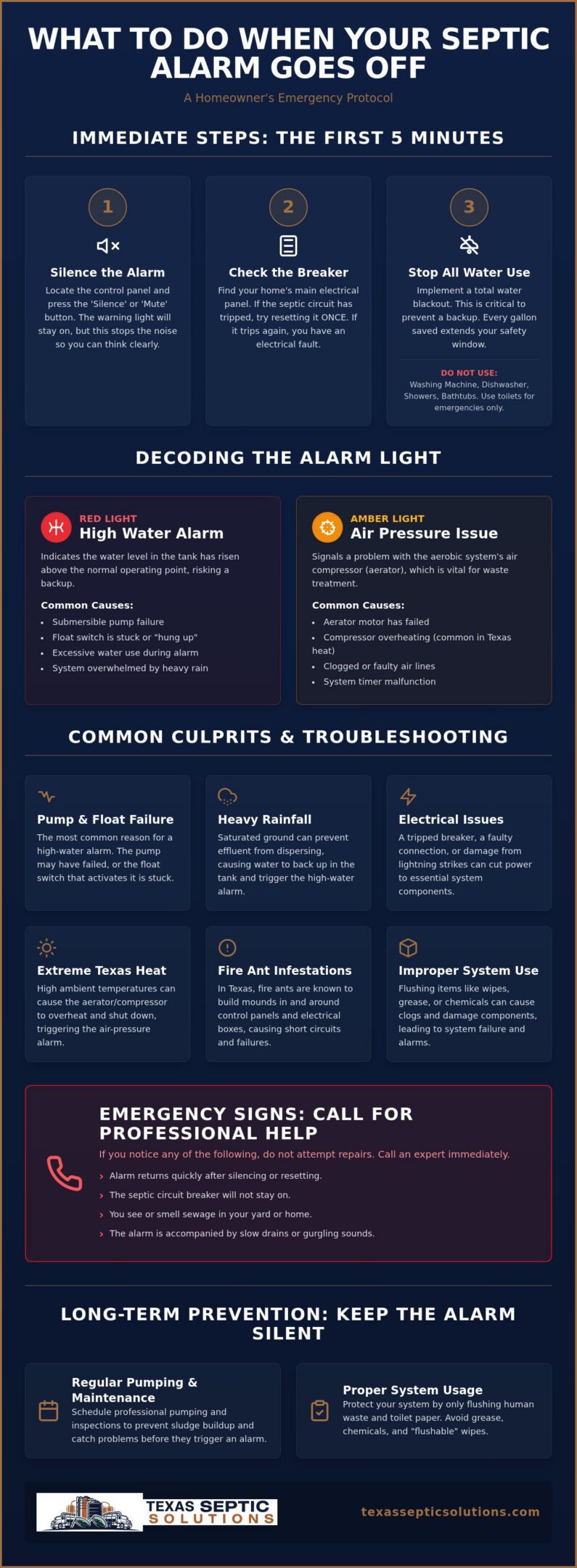
The alarm is designed to get your attention, and it is certainly doing its job. Your first move is to walk to the control panel, which is typically found on the side of your house or near the tank. Find the ‘Silence’ or ‘Mute’ button to stop the piercing sound. This allows you to think clearly and address the situation without the stress of a constant siren. While the noise stops, the warning light will remain lit. This is a visual reminder that your system requires attention. Knowing exactly what to do when septic alarm goes off begins with this simple act of reclaiming your focus.
Look closely at the indicator light. A red light generally signals a high-water emergency, which means the effluent level has risen past the normal operating point. An amber or yellow light often indicates a mechanical issue, like a failing aerator or compressor. Before you assume the worst, check your home’s main electrical breaker panel. Make sure the circuit for the septic system is still engaged. If it tripped, you can try resetting it once. If it pops again immediately, you have an electrical fault that requires a professional inspection; do not attempt to repair the wiring yourself.
The 24-Hour Rule for Septic Emergencies
Don’t worry about an immediate flood the second the buzzer sounds. Modern tanks are engineered with a specific safety margin built into the design. Reserve capacity is the safety buffer between an alarm and a household backup. By understanding how a septic system works, you can see that you usually have a 24-hour window of very restricted water use before the tank overflows. This period is your opportunity to diagnose the problem or wait for a technician to arrive. If the alarm sounds after a heavy rain, the system might just need time to catch up.
Implementing an Emergency Water Budget
You must enforce a strict water blackout for all non-essential activities. This means no laundry, no dishwashers, and no showers until the issue is resolved. Running the washing machine is the most dangerous action during an alarm because it pushes a massive volume of water into the system in a short time. Tell everyone in your home that toilets are for essential use only. Every gallon you keep out of the tank extends your safety window. Knowing what to do when septic alarm goes off involves managing your household’s behavior as much as checking the equipment. If you continue using water normally, you are inviting a backup into your home’s lowest drains.
Decoding the Alarm: High Water vs. Air Pressure
Not all alarms mean the same thing. In Texas, your home likely uses an aerobic treatment unit (ATU) because of our dense clay soils. These systems are more complex than traditional anaerobic tanks. When you are figuring out what to do when septic alarm goes off, the first step is identifying which light is glowing on your control panel. A red light is almost always a high-water warning, while an amber or yellow light usually points to an air pressure issue. Knowing the difference helps you provide the right information to a technician.
Timer malfunctions also play a role in late-night alerts. If your alarm triggers at the exact same time every night, it might not be a total mechanical failure. Many aerobic systems are set to spray treated effluent during the early morning hours when people are asleep. If the timer is stuck or the pump doesn’t engage during its scheduled cycle, the control panel will alert you immediately. This is often a sign that the electrical components are out of sync rather than the tank being full.
Recognizing Aerobic System Alerts
The air compressor, or aerator, is the heart of an aerobic system. It pumps oxygen into the tank to support the “good” bacteria that break down waste. If you notice the amber light, walk over to the compressor housing and listen. A healthy unit has a steady hum and a slight vibration. If it’s silent or feels excessively hot to the touch, the motor may have seized. Texas heat is a frequent culprit here. During our brutal summer months, poorly ventilated compressor housings can reach temperatures that trip internal thermal resets, causing the system to shut down to prevent a fire.
The High-Water Float Switch Explained
The high-water alarm is triggered by a float switch, which works much like the ball in your toilet tank. As water rises, the float tips up and sends an electrical signal to the panel. While this often means the pump has failed, it can also be caused by a “hung” float. Grease buildup, feminine hygiene products, or intrusive tree roots can physically trap the float in the “up” position, causing a false alarm even if the water level is normal. Proper septic system care involves keeping these mechanical parts free of obstructions to avoid unnecessary stress.
| Symptom | High Water (Red Light) | Low Air (Amber Light) |
|---|---|---|
| Primary Cause | Pump failure or excessive water use | Compressor or aerator failure |
| Sound from Tank | Silent or humming pump | Complete silence or loud buzzing |
| Immediate Risk | Potential sewage backup in home | Loss of bacterial treatment |
If you’re unsure which alert you’re seeing or if the light won’t reset, a professional septic system maintenance plan can help you stay ahead of these technical glitches and prevent future emergencies.
Common Culprits and Simple Troubleshooting
When you’re trying to figure out what to do when septic alarm goes off, it’s helpful to look at the local environment. Not every alarm signals a total system collapse. In many cases, external factors unique to our region are the primary cause. For instance, Houston-area thunderstorms frequently cause power surges that trip the sensitive breakers protecting your pump or aerator. If the power flickers during a summer storm, your system might simply be waiting for a manual reset to resume its work.
Another uniquely Texas problem involves fire ants. These pests are notoriously attracted to the electromagnetic fields produced by electrical contactors. They can swarm inside your control box, creating nests that physically prevent the electrical points from closing or causing a direct short. Additionally, consider your recent water usage. If you hosted a large gathering or have a leaking faucet, you may have triggered a hydraulic overload. This happens when the volume of water entering the tank exceeds its processing capacity, even if the mechanical parts are working perfectly. Finally, a clogged effluent filter can mimic a pump failure by preventing water from leaving the tank, causing the high-water float to rise.
Checking the Electrical Basics Safely
Before you assume the pump is dead, check the external GFI outlet often located near the tank or the control panel. These outlets are designed to trip if they detect moisture or a surge, cutting power to the system. You can safely press the “reset” button on the outlet to see if power returns. Similarly, check your home’s main electrical panel for a tripped septic breaker. If the breaker trips again immediately after resetting, stop and call for an emergency septic service. Never open the control panel box or touch internal wiring; these components carry high voltage and require a licensed professional for safe handling.
Environmental Triggers in East Texas
Heavy rainfall in areas like Shepherd or Huffman can saturate the ground so thoroughly that your drain field cannot accept more water. During these periods, the system may struggle to discharge effluent, leading to a high-water alarm. This is especially common during the humid Texas summer when the soil remains damp. Tree roots are also a major factor, causing an estimated 30% of septic system problems in Texas by infiltrating pipes or blocking spray heads. If you notice physical damage to your spray heads or see water pooling in specific areas, the alarm is likely reacting to a physical blockage in the distribution lines.
When to Call Texas Septic Solutions for Emergency Repair
While basic troubleshooting can resolve minor glitches, certain signs indicate a serious mechanical failure that requires immediate professional attention. If you have strictly followed the water blackout protocol and the alarm remains active for more than 12 hours, the system is clearly unable to process effluent on its own. This is a critical moment in deciding what to do when septic alarm goes off. You should also watch for physical signs of trouble outside, such as persistent sewage odors or unusually lush, wet spots forming over your drain field or spray area. These symptoms suggest that untreated waste is escaping the system or that the soil is no longer absorbing liquid properly.
Electrical issues also demand an expert eye. If the alarm triggers again the moment you try to reset the breaker, you likely have a short in the pump motor or a compromised electrical line. Inside the home, listen for gurgling sounds in your sinks or toilets. If drains throughout the house are moving slowly, a total sewage backup is imminent. At this stage, continuing to use water will almost certainly result in property damage. It’s essential to contact a professional team that understands the urgency of the situation before the damage spreads.
The Dangers of DIY Septic Repair
Attempting to repair a septic system yourself carries significant risks to both your health and your property. Septic tanks produce methane and hydrogen sulfide gases which can be lethal in enclosed spaces; you should never, under any circumstances, lean into or enter a septic tank. Aerobic systems are particularly complex, featuring intricate control boards and precisely calibrated timers that are easy to damage. Furthermore, improper DIY interventions can lead to costly mistakes and may void your septic system maintenance plan, leaving you responsible for the full cost of future failures. Professional technicians have the specialized tools and protective gear required to handle these repairs safely.
What to Expect During an Emergency Service Call
When our technicians arrive, they perform a comprehensive diagnostic check of your float switches, effluent pump, and air compressor. In many cases, emergency septic pumping is the first step to lower the water level. This allows the technician to inspect the mechanical components safely. We provide rapid response and 24/7 availability to homeowners in Cleveland, Houston, and Cypress. Our team is ready. If you are unsure what to do when septic alarm goes off and the water level is rising, contact Texas Septic Solutions immediately for reliable emergency septic service to protect your home and family.
Long-Term Prevention: Keeping the Alarm Silent
While mastering what to do when septic alarm goes off is a critical skill for any homeowner, the ultimate goal is to ensure that buzzer never sounds. Preventing emergencies is far more cost-effective than managing a midnight crisis. The foundation of a healthy system starts with routine septic tank pumping every three to five years. This schedule prevents solid waste from accumulating to a level where it can block your filters or damage your pump. Without regular pumping, solids can migrate into the secondary compartments, leading to the mechanical failures we discussed in earlier sections.
Protecting your system also requires a change in household habits. You should avoid flushing so-called “flushable” wipes, as these do not break down like toilet paper and are a leading cause of float hang-ups. Similarly, keep grease and heavy oils out of your drains; they solidify in the tank and coat sensitive electrical components. Outside the home, ensure that heavy vehicles never drive over your tank or drain field. In East Texas, where soil saturation is common, you should also divert excess irrigation water away from the spray area to prevent hydraulic overload.
The Value of Proactive Maintenance
Signing up for a professional septic maintenance plan is the most reliable way to catch small issues before they become expensive repairs. For aerobic systems, Texas regulations actually require a continuous maintenance contract with three inspections per year. During these visits, a technician cleans the air filters on your compressor and checks the aerator’s output. These routine checkups identify worn-out pumps and aging float switches months before they would have triggered a 2:00 AM emergency call-out. It’s about shifting from a reactive mindset to one of consistent care.
Upgrading Your System for Peace of Mind
If your system is older, consider strategic upgrades to simplify its upkeep. Installing risers provides easier access to the tank for inspections or a septic system repair, saving you the labor costs of digging up your yard. You might also look into advanced control panels that offer remote monitoring, alerting you to performance dips before the high-water alarm even trips. If your current unit is chronically failing despite regular care, it may be time to consult with TSS about a septic system replacement. A modern, efficient system is a long-term investment in your property’s functionality and your family’s comfort.
Restore Peace and Protection to Your Texas Home
A septic alarm is a helpful warning system, not an immediate catastrophe. By silencing the buzzer and implementing a strict water blackout, you buy yourself the time needed to troubleshoot the root cause. Whether you are dealing with a tripped breaker from a Houston thunderstorm or a mechanical failure in your aerobic unit, knowing exactly what to do when septic alarm goes off ensures your home remains safe and sanitary. Regular maintenance and timely pumping are your best defenses against future alerts.
If your alarm is still active after troubleshooting or you suspect a pump failure, don’t wait for a backup to happen. Our team of licensed Texas septic experts is ready to help with 24/7 emergency response throughout Cleveland, Houston, and the surrounding areas. Hearing an alarm right now? Contact Texas Septic Solutions for 24/7 Emergency Service. We are here to provide the reliable, professional care your system needs so you can get back to your normal routine with total peace of mind.
Frequently Asked Questions
Can I still flush my toilet if the septic alarm is going off?
You can still flush for essential needs, but you must limit water use immediately. The alarm indicates that your tank has reached its reserve capacity, which is the safety buffer before a total backup occurs. You typically have about 24 hours of very limited usage. Avoid all high-volume activities like running the dishwasher or doing laundry until a technician inspects the system to prevent sewage from entering your home.
How do I silence the buzzing sound on my septic control panel?
Look for a switch or button on the outside of your control panel labeled “Silence,” “Mute,” or “Audio.” Flipping this switch will stop the loud buzzing while keeping the warning light illuminated. This allows you to focus on what to do when septic alarm goes off without the stress of a constant siren. Remember that silencing the sound does not fix the underlying problem; it only mutes the alert.
Is a septic alarm a sign that I need to pump my tank immediately?
Not necessarily, though it is a possibility. An alarm often signals a mechanical failure, such as a broken pump or a stuck float switch, rather than a tank that is simply full of solids. However, if you haven’t scheduled septic system pumping in the last three to five years, accumulated sludge could be interfering with your components. A professional inspection is the only way to determine if you need a pump-out or a repair.
What is the red light on my aerobic septic system control box?
The red light is a high-water alarm, indicating that the liquid level in your tank is higher than it should be. This happens when the effluent pump fails to discharge water or when a float switch becomes trapped by debris. In areas like Houston and Cleveland, heavy rainfall can also cause the water level to rise quickly. If the light stays on, it means your system is no longer processing waste effectively.
Will a septic alarm reset itself once the water level goes down?
Yes, most septic alarms are designed to reset automatically once the liquid level drops below the float switch. If the alert was triggered by a temporary event, such as a long shower or a heavy rainstorm in Cypress, the light should turn off within a few hours. If you are unsure what to do when septic alarm goes off and the light remains active for more than 12 hours, you should call for professional service.
Why does my septic alarm go off only when it rains?
Rainwater can enter your system through cracked pipes, unsealed tank lids, or saturated drain fields, a problem known as hydraulic overload. In East Texas communities like Huffman and Shepherd, heavy storms can overwhelm the soil’s ability to absorb treated water. This causes the tank level to rise and triggers the alarm. If this happens frequently, your system may have a leak that allows groundwater to infiltrate the tank, requiring a professional repair.
How much does it typically cost to fix a septic alarm issue in Texas?
The cost to resolve an alarm issue depends entirely on which component has failed. Replacing a simple float switch is a relatively minor repair, while replacing a heavy-duty effluent pump or an aerobic air compressor is a more significant investment. Diagnostic fees also vary by location and time of day. Because every situation is unique, we recommend having a licensed expert perform a site visit to provide a specific, documented estimate for the necessary repairs.
Can fire ants really cause my septic alarm to go off?
Fire ants are a frequent cause of septic emergencies across Texas. These pests are attracted to the electromagnetic fields inside your control panel and often build nests directly on the electrical contactors. This prevents the system from getting power or causes a short circuit that trips your breaker. If you see ants swarming near your control box, it is likely they have compromised the wiring, which will require a technician to safely clear and repair.