
Protecting Your Septic System from Tree Root Damage: A Houston Homeowner’s Guide
Imagine waking up to a slow-draining shower on a humid morning, only to realize the majestic oak tree in your backyard is actually strangling your plumbing. It’s a frustrating scenario that many of our neighbors face, especially given how aggressively roots seek out moisture in our thick Texas clay. You shouldn’t have to choose between a beautiful, shaded yard and a functional home. We understand the stress that comes with potential repair bills and the confusion over which local plants are actually safe to grow near your tank.
In this guide, you’ll learn exactly how to balance your landscaping with the technical needs of your utility lines. We’re focused on protecting your septic system from tree root damage Houston homeowners often overlook until it’s too late. We will provide a clear list of septic-safe versus dangerous trees for our region, actionable steps to block root growth, and the specific signs that tell you it’s time for professional maintenance. By the end of this article, you’ll have a proactive plan to keep your yard green and your pipes clear.
Key Takeaways
- Spot early warning signs like lush green grass over your drain field or persistent slow drains that typical plunging won’t fix.
- Apply the “mature height” rule when landscaping to keep aggressive trees like Live Oaks and Willows a safe distance from your underground lines.
- Discover effective methods for protecting your septic system from tree root damage Houston, including physical root barriers and specialized chemical deterrents.
- Use professional camera inspections and routine pumping to identify root intrusion early and avoid the high cost of a full system replacement.
- Learn how mechanical root cutting and hydro-jetting can clear existing blockages and restore your system’s functionality without digging up your entire yard.
The Silent Threat: Why Houston Trees Target Your Septic System
In the humid environment of East Texas, trees are constantly searching for resources to survive the heat. This biological drive is called hydrotropism, a process where roots sense and grow toward moisture and nutrients. Your septic lines are essentially an all-you-can-eat buffet for a thirsty tree. They contain a steady flow of water and nitrogen-rich organic matter, making them an irresistible target for local vegetation. Roots aren’t just growing randomly; they’re on a mission to find the most reliable water source on your property.
Houston’s heavy clay soil complicates this relationship. This dense soil doesn’t allow water to penetrate easily; when it does rain, the water often sits near the surface or follows the path of least resistance. When the ground dries out during our intense summer droughts, the clay shrinks and creates deep fissures. Tree roots use these natural highways to reach deeper levels, eventually finding the moist environment around your tank and drain field. Understanding these patterns is the first step in protecting your septic system from tree root damage Houston homeowners often face during the hottest months of the year.
For those new to the area or property management, reviewing septic system basics can help you visualize how these underground components are laid out. If you ignore these silent invaders, the long-term costs are steep. What starts as a tiny root hair can eventually crack a concrete tank or completely clog a drain field, leading to messy backups and expensive system failures that could have been prevented with early detection.
How Roots Enter Your Septic System
Roots don’t need a large hole to cause trouble. They typically start as microscopic hairs that find their way into hairline cracks in concrete or small gaps in pipe joints. Once inside, they find a perfect environment to thrive. They grow rapidly, thickening until they eventually force the joint apart or shatter the pipe entirely. Aerobic systems, which are common in many Houston neighborhoods, are particularly vulnerable because their distribution lines are often shallower and more spread out, providing more surface area for roots to encounter.
The Houston Climate Factor
Our local weather creates a push-pull effect on root growth. During a Houston drought, roots extend further and deeper in a desperate search for water. Then, when seasonal heavy rains arrive, the clay soil swells and shifts. This movement can stress pipe connections and create new entry points for roots that were previously blocked. Water-loving trees common to the Gulf Coast, like Willows and Silver Maples, are especially aggressive in these cycles. They can sense a leak from dozens of feet away, making proactive maintenance essential for any property with large trees.
Identifying the Damage: Signs of Root Intrusion in Your Houston Property
Recognizing the early warning signs of root intrusion can save you thousands of dollars in replacement costs. While some plumbing issues are minor, others indicate that roots have already breached your lines. If you notice your toilets or sinks are draining slowly and a plunger doesn’t fix the problem, it’s likely not a simple clog. Roots inside a pipe act like a net, catching debris and toilet paper until the flow stops completely. You might also hear strange gurgling noises from your pipes after running a load of laundry or taking a long shower. This sound is often air trapped behind a root-induced blockage. Early detection is the most effective way of protecting your septic system from tree root damage Houston properties often experience.
In our region, the weather often hides these problems until they become emergencies. During dry spells, look for unusually lush, green patches of grass specifically over your tank or drain field. While the rest of your lawn might be turning brown in the Houston heat, these areas stay vibrant because they’re being “irrigated” by leaking nutrient-rich effluent. If you see standing water or soggy spots in your yard when it hasn’t rained in days, your system is likely struggling. Consistently following a schedule for septic system maintenance is the best way to catch these issues before they escalate.
Visual Cues in Your Houston Landscape
Keep an eye on the trees closest to your system. A sudden, unexplained growth spurt in one specific tree often means its roots have found a high-protein food source: your septic tank. You should also watch for soil depressions or small sinkholes. These often appear when a pipe has collapsed or when roots have displaced enough soil to create a void. In extreme cases, you might even see roots surfacing near your septic lid or risers as they search for oxygen and entry points.
When to Call for a Professional Inspection
A routine pumping can clear your tank, but it won’t remove roots from your pipes. If you suspect an intrusion, a diagnostic camera inspection is necessary to see exactly where the roots entered. Ignoring minor gurgling or slow drains often leads to a complex septic system repair that could have been avoided. When a total backup occurs during a sweltering Houston summer, don’t wait. We recommend contacting a professional for emergency septic service to restore your home’s functionality before the damage spreads.
Smart Landscaping: Which Trees Are Safe to Plant Near Septic Lines?
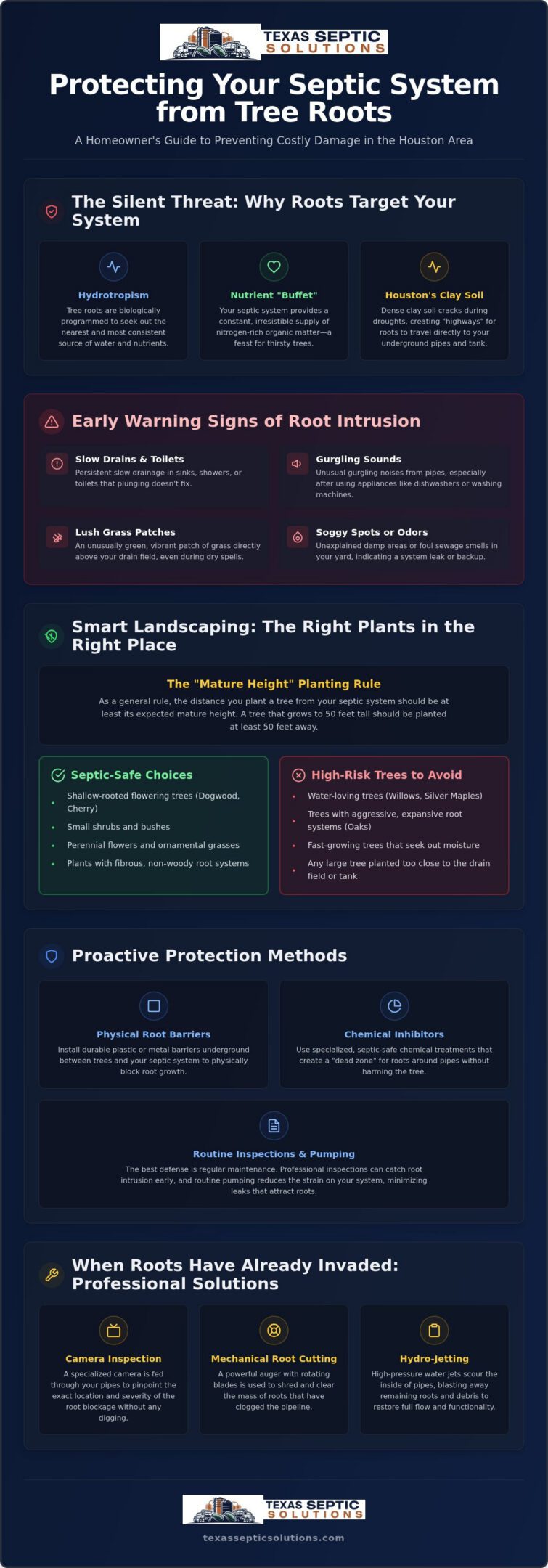
Choosing the right plants for your Houston property involves more than just curb appeal. You must consider what’s happening underground to ensure you’re protecting your septic system from tree root damage Houston weather often triggers. A reliable rule of thumb is to plant any new tree at a distance from your septic system that is at least equal to its expected mature height. If you plant a tree that eventually reaches 50 feet, it belongs 50 feet away from your tank and drain lines. This simple calculation prevents roots from ever reaching the “buffet” of moisture provided by your septic components.
Creating a “Safe Zone” buffer is your best defense. This area, typically extending 10 to 20 feet around your entire septic layout, should be kept clear of all woody vegetation. Instead, use this space for low-maintenance ground covers that won’t compromise your infrastructure. By keeping aggressive species at bay, you prevent the slow, silent intrusion that leads to system failure. These choices matter because once a root finds a pipe joint, the damage is often irreversible without professional intervention.
Top 5 Aggressive Trees to Avoid in Houston
Some of our favorite local trees are the worst offenders for plumbing health. These species are known for having invasive root systems that can penetrate even small cracks in search of water.
- Live Oaks: These are Houston staples, but their lateral roots are incredibly strong and can travel great distances to find moisture.
- Pecan Trees: Their deep taproots are designed to seek out consistent water sources, making your septic tank a prime target during dry seasons.
- Weeping Willows: These are notoriously water-loving and can detect even the smallest leak in a pipe joint from far away.
- Silver Maples: Known for fast growth, their shallow, aggressive roots can easily lift or crush drain lines in heavy clay soil.
- Cottonwoods: Their root systems are massive and highly invasive, seeking out nutrients with enough force to crack concrete tanks.
Septic-Safe Plants for Texas Yards
You can still have a beautiful landscape without risking your utility lines. Herbaceous perennials, native grasses, and wildflowers are the best choices for planting over or near a drain field. Their shallow root systems help prevent soil erosion without penetrating your pipes. These plants also allow for proper evaporation and oxygen exchange, which is critical for the health of your drain field.
- Native Grasses: Species like Little Bluestem or Sideoats Grama provide stability for the soil without deep, woody roots.
- Slow-growing Shrubs: Boxwoods and certain types of Hollies offer privacy and structure with manageable, non-invasive root balls.
- Wildflowers: Planting a meadow of Bluebonnets or Indian Blanket adds color and requires minimal water, reducing the hydraulic load on your system.
Proactive Protection: How to Stop Roots Before They Reach Your Tank
Technical defenses provide an extra layer of security that landscaping choices alone cannot offer. While keeping distance is helpful, roots are patient and will travel surprisingly far during a dry season. Implementing specific barriers and treatments is the most reliable method for protecting your septic system from tree root damage Houston properties face when clay soil shrinks and cracks. These proactive steps stop roots from ever touching your infrastructure, which keeps your pipes clear and your household running smoothly.
Installing Physical Barriers
Physical barriers are highly effective when installed during new system construction or major upgrades. You can choose between heavy duty plastic, metal, or geotextile root shields. In our local clay soil, these barriers should be buried deep enough to prevent roots from simply diving underneath them. If you don’t install them correctly, roots will eventually find a gap and continue their path toward your tank. Professional installation ensures these shields are positioned to deflect growth away from vulnerable joints and seals, providing a permanent solution that doesn’t rely on chemicals.
Maintenance and Chemical Treatments
Chemical deterrents like copper sulfate or specialized products such as RootX and Roebic provide an invisible line of defense. These treatments are designed to kill root tips on contact within the pipes without harming the rest of the tree. We recommend using septic safe root killers twice a year to maintain clear lines. Regular septic system maintenance is also vital for checking your effluent filter. If we find root debris in the filter during an inspection, it’s a clear signal that an intrusion has started. Integrating these checks into a formal septic system maintenance plan ensures you never miss a critical inspection window.
Don’t forget to protect your drain field from soil compaction. Heavy vehicles or equipment can crush pipes and create small fractures that invite root growth. Keep the area over your system clear of anything heavier than a lawnmower to maintain the integrity of your lines. If you are ready to secure your property with professional grade protection, contact our team today to schedule a comprehensive maintenance visit.
Professional Solutions for Root Damage in the Houston Area
When preventative measures aren’t enough, professional intervention becomes the only way to save your property from a total utility failure. We use advanced camera inspections to see exactly where roots have breached your system. This technology allows us to pinpoint the intrusion without digging up your entire yard. Once we identify the location, we choose the best removal method for your specific situation. Mechanical root cutting uses rotating blades to physically sever growth, while hydro-jetting uses high-pressure water to scrub the pipe walls clean. Both are effective, but hydro-jetting is often preferred for protecting your septic system from tree root damage Houston homeowners want to resolve quickly and thoroughly.
Advanced Repair Techniques
If roots have caused structural failure, we look for ways to repair rather than replace. Pipe relining is a modern technique where we create a “pipe within a pipe” to seal cracks and prevent future intrusion. We also replace damaged components like baffles or risers that have been warped by root pressure. Restoring drain field health is another critical step; roots often clog the gravel or soil around your pipes, preventing proper drainage. However, if the damage is extensive or the tank itself has cracked, a full septic system replacement may be the only safe option to ensure your home remains functional. Working with a local expert who understands East Texas soil is vital because the way clay shifts affects how these repairs hold up over time.
Why Choose Texas Septic Solutions?
Texas Septic Solutions provides comprehensive care for neighbors in Houston, Cleveland, Cypress, Huffman, and Shepherd. We offer everything from routine pumping to complex new installations. Our team remains available 24/7 because we know that a septic backup doesn’t wait for business hours, especially in the heat of a Texas summer. We take pride in being the reliable partner you call when your utility lines are under threat. Our team is dedicated to providing immediate, expert response to ensure Houston families never have to deal with the stress of a septic emergency alone.
Secure Your Property’s Long-Term Health
Maintaining a functional septic system in East Texas requires more than just occasional pumping. It demands a strategy that accounts for our aggressive local vegetation and shifting clay soils. By choosing septic-safe plants and establishing a clear “safe zone” around your tank, you’re already ahead of the curve. Combining these landscaping choices with proactive barriers and regular inspections is the most effective way of protecting your septic system from tree root damage Houston homeowners can employ to avoid costly failures.
We’ve seen how quickly a small root hair can turn into a major plumbing emergency. Our team brings deep expertise in Texas-specific soil conditions to every job, serving neighbors in Houston, Cleveland, and the surrounding communities. Whether you’re dealing with a slow drain or want to prevent future intrusion, we’re here to help. We offer 24/7 emergency repair services to ensure you’re never left stranded by a system backup. Worried about roots? Schedule a professional septic inspection with Texas Septic Solutions today! You can rest easy knowing your home is in expert hands.
Frequently Asked Questions
Can tree roots really grow through a concrete septic tank in Houston?
Yes, tree roots can penetrate concrete tanks. They usually find tiny fissures or weak points in the seals where the inlet and outlet pipes connect. In the Houston area, our heavy clay soil shifts frequently during weather cycles, which causes concrete to develop hairline cracks. Once a microscopic root hair enters, it expands and exerts enough pressure to shatter the concrete. This is a primary reason why protecting your septic system from tree root damage Houston is critical for long-term home stability.
How far should I plant a Live Oak from my septic system?
You should plant a Live Oak at least 50 to 80 feet away from any part of your septic system. These trees are famous for their massive, lateral root systems that can spread twice as wide as the tree’s canopy. Since a mature Live Oak can reach a height of 50 feet or more, following the “mature height” rule is the best way to ensure those aggressive roots never reach your underground utility lines or drain field.
Is copper sulfate safe for my septic system and the environment?
Copper sulfate is a common chemical deterrent that is generally safe for septic systems when used in recommended amounts. It effectively kills the root tips that have entered your pipes without poisoning the entire tree or destroying the beneficial bacteria in your tank. You should always consult with a professional to ensure the treatment won’t adversely affect your specific system type, especially if you have an aerobic system with sensitive components that require specific care.
What should I do if my septic tank alarm is going off due to root blockage?
If your septic tank alarm is going off due to a root blockage, you must stop all indoor water use immediately. This includes laundry, dishwashers, and showers. A root-induced blockage prevents effluent from leaving the tank, which causes the water level to rise and trigger the sensor. You should call for emergency septic service right away to have a technician clear the obstruction before waste backs up into your home or causes further damage.
Can I kill tree roots in my septic line without killing the tree?
Yes, you can effectively clear roots from your lines without harming the health of the tree. Methods like mechanical root cutting or hydro-jetting remove the specific roots inside the pipe while leaving the main root ball intact. Chemical treatments also work by cauterizing the root ends that come into contact with the solution. This allows you to maintain your beautiful Houston landscape while ensuring your septic system remains free of invasive growth and expensive blockages.
How much does it cost to fix root damage in a Houston septic system?
The cost to address root damage depends entirely on the extent of the intrusion and the type of repair required. Minor blockages might only require a professional cleaning or hydro-jetting to restore flow. However, if the roots have crushed a pipe or cracked the main tank, the repairs will be more extensive. While we don’t provide flat pricing due to the unique nature of every yard, catching the problem early through routine maintenance is always the most affordable path.
Will a root barrier protect my drain field permanently?
A high-quality root barrier provides excellent long-term protection, but its effectiveness depends on the installation. In our local clay soil, these barriers must be buried at a specific depth to prevent roots from growing underneath them. While they are a sturdy defense for many years, they aren’t always a permanent fix if the surrounding landscape changes or if the barrier is bypassed. Combining barriers with smart planting choices is the most reliable strategy for protecting your septic system from tree root damage Houston.
How often should I have my Houston septic system inspected for roots?
We recommend having your system inspected for root intrusion at least once every three to five years during your scheduled pumping. If you have aggressive trees like Willows or Live Oaks near your drain field, an annual inspection is a safer choice. Our technicians can use camera technology to check the internal health of your pipes. This proactive approach helps identify small root hairs before they have a chance to cause a major backup or structural failure.