
Septic Tank Alarm Going Off in Houston? Step-by-Step Emergency Guide
Imagine it is 2:00 AM and a piercing, high-pitched wail starts echoing through your backyard. It is not a smoke detector or a car alarm; it is your septic system telling you something is wrong. Finding your septic tank alarm going off in Houston is a stressful experience that usually leads to two immediate thoughts: how do I stop that noise, and how much is this going to cost? You are likely worried about the potential for a messy sewage backup or a massive repair bill hitting your bank account at the worst possible time.
We understand that feeling of uncertainty, but there is no need to panic. A beeping alarm is actually a helpful 24-hour warning window that gives you time to act before a true disaster occurs. In this guide, we will show you exactly how to silence the noise immediately so you can think clearly. You will learn how to identify the difference between a simple tripped breaker and a serious pump failure, ensuring you only pay for the repairs you actually need.
We will walk you through a step-by-step emergency plan to protect your home and help you decide when to call in a reliable 24/7 repair team to get your system back in balance.
Key Takeaways
- Discover the exact steps to locate your control panel and silence the alarm immediately without cutting power to essential components.
- Identify the most common causes for a septic tank alarm going off in Houston, including high water levels and air compressor failures.
- Understand how Houston’s heavy rainfall can impact your system’s drainage and learn how to check for floodwater intrusion.
- Learn about the critical 24-hour reserve capacity window that allows you to address the issue before a sewage backup happens.
- Know when it’s time to call for 24/7 emergency repair and how professional maintenance can prevent future alarm triggers.
Immediate Actions: How to Silence Your Septic Alarm Safely
That high-pitched scream from your backyard is designed to get your attention, and it clearly works. When you find your septic tank alarm going off in Houston, your first priority is regaining some peace and quiet so you can assess the situation. Dealing with a septic tank alarm going off in Houston requires a calm approach to avoid turning a mechanical issue into a plumbing disaster inside your home.
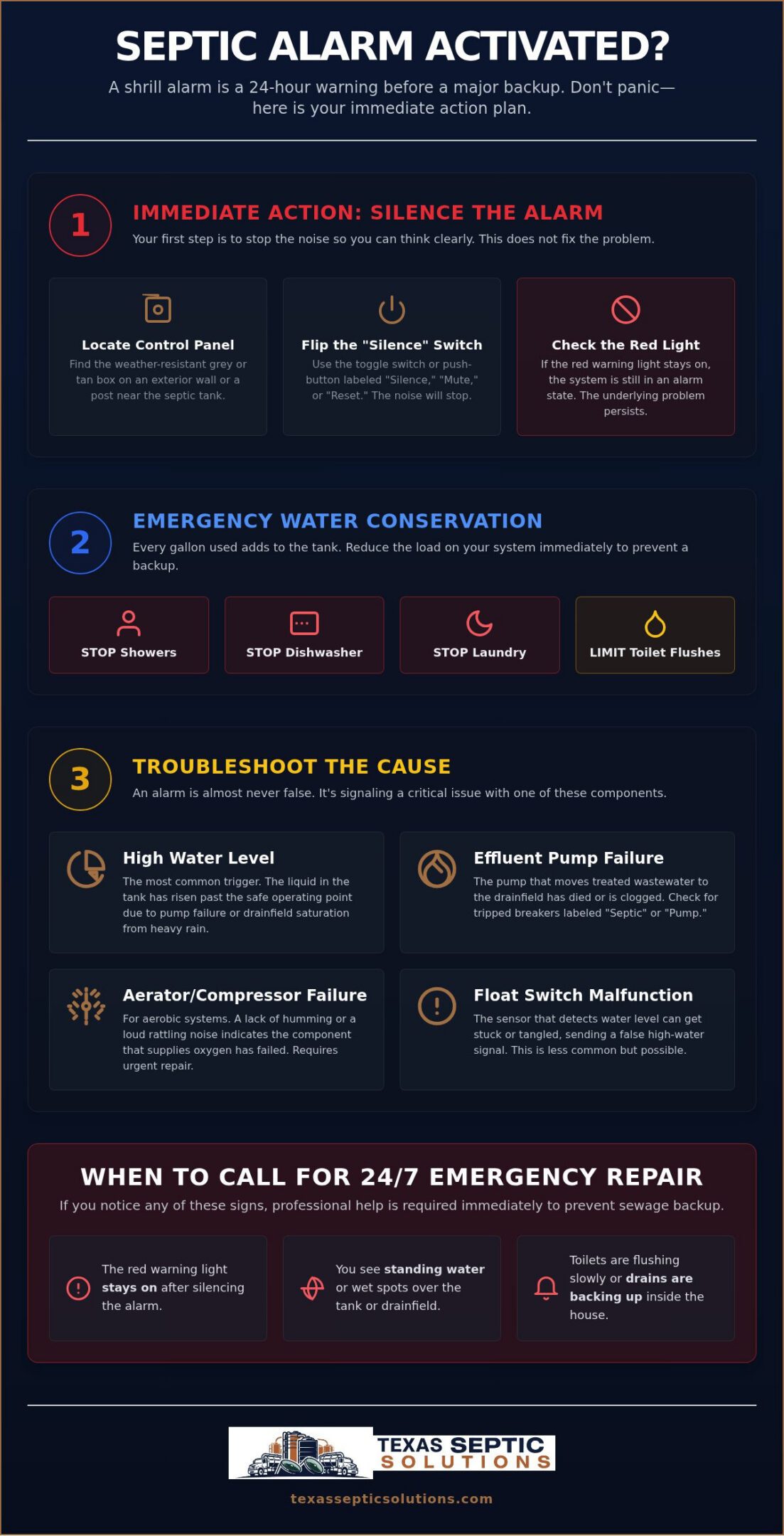
Step outside and look for a weather-resistant grey or tan box. It is usually mounted on the exterior wall of your house or on a post near the tank itself. This control panel is the command center for your system. On the bottom or side of this box, you will find a toggle switch or a push button clearly labeled “Silence” or “Reset.” Understanding septic system basics helps you realize this box is constantly monitoring water levels and mechanical parts to keep your property safe.
It’s vital to understand that flipping this switch does not repair your system. You are simply turning off the audible buzzer. Think of it like silencing a smoke detector while the kitchen is still full of smoke. If the red warning light stays illuminated after the sound stops, your system is still in an alarm state. The light is a visual confirmation that the underlying problem remains and needs professional attention immediately.
Step-by-Step Silencing Guide
Locate the toggle switch on the exterior of the panel or behind the front cover. Flip the switch to the “Silence” or “Mute” position. The buzzer should stop immediately. Watch the red light; if it stays on, your tank level is likely too high or a component has failed. Don’t turn off the main circuit breaker unless you smell electrical burning or see smoke. Cutting all power stops the aerator or pumps that are trying to process waste, which can make the situation much worse.
Emergency Water Conservation
Once the alarm is silent, you must immediately reduce the “hydraulic load” on your system. Every gallon of water you send down the drain right now stays in the tank because the pump is likely not discharging effluent. Stop all high-water activities like running the dishwasher, starting a load of laundry, or taking long showers. Limit toilet flushes to essential use only until a technician arrives. By cutting back on water usage, you maximize your tank’s remaining storage capacity and give yourself a larger window of time to secure an emergency repair.
Troubleshooting the Cause: Why is the Alarm Going Off?
Now that you have silenced the noise, you need to understand what triggered it. A septic tank alarm going off in Houston is almost always a signal that the water level is too high or a mechanical component has failed. It is rarely a false alarm. When you experience a septic tank alarm going off in Houston, it is usually one of four common issues that requires immediate investigation.
In most cases, the trigger is a high water event. This means the liquid level in your tank has risen past the safe operating point. Another common culprit, especially for homeowners with aerobic systems, is an air compressor or aerator failure. These systems require constant oxygen to break down waste. If the compressor stops, the alarm sounds to prevent untreated effluent from leaving the tank. Electrical issues can also be deceptive. A tripped breaker might cut power to your effluent pump, but your control panel often stays powered by a battery backup to ensure you are alerted. Finally, check for a float switch malfunction. These tethered sensors can sometimes get tangled on pipes or debris, sending a high water signal even if the level is actually normal.
High Water vs. Pump Failure
Distinguishing between a temporary overload and a total pump failure is the first step in troubleshooting. If you just hosted a large party or did five loads of laundry, your tank might simply be temporarily full. If the water level doesn’t drop after a few hours of zero water use, your pump may have died. Check your home’s main electrical panel for any tripped breakers labeled “Septic” or “Pump.” Walk out to the drainfield or spray area. If you see standing water or unusually lush, wet spots over the tank, your pump is likely failing to move water out of the system. Proper septic system care involves monitoring these signs before they become a full-blown backup.
Aerator and Compressor Issues
If you have an aerobic system, listen closely to the control box or the small housing nearby. You should hear a steady, low hum. If it is silent or making a loud rattling noise, the compressor has likely failed. Check for clogged air filters or disconnected airline hoses that might be starving the system of oxygen. Without a working aerator, your system will quickly develop foul odors. If these basic checks don’t resolve the issue, it is best to consult a professional for expert septic troubleshooting to avoid damaging expensive components.
Houston Environmental Factors: Rain, Soil, and Drainage
Living in the Greater Houston area means dealing with unique environmental challenges that don’t exist in other parts of the country. When you hear a septic tank alarm going off in Houston, the cause is often tied directly to our local weather and geology. Our city sits on a massive layer of heavy clay, frequently called “gumbo” soil, which behaves very differently than sandy or loamy earth. During the wet seasons, this clay becomes saturated and expands, making it nearly impossible for a leach field to absorb processed water at its normal rate.
Heavy Gulf Coast storms can dump several inches of rain in just a few hours. This rapid rainfall often leads to inundation, where floodwater finds its way into your septic tank through unsealed risers or loose lids. Even if your pump is working perfectly, the sheer volume of stormwater entering the system can trigger a high-water alarm. This is why many homeowners find their septic tank alarm going off in Houston immediately following a major thunderstorm. The system simply cannot keep up with the extra liquid entering from the surface.
The High Water Table Effect
When the ground is completely soaked, the water table rises. This creates significant upward pressure on your tank and prevents the drain field from accepting any more effluent. Homeowners in low-lying areas like Cypress or Huffman are particularly vulnerable to this effect. One critical piece of advice: never pump your tank while the ground is still flooded. Removing the weight of the liquid inside can cause the entire tank to float out of the ground or even collapse under the pressure of the surrounding saturated soil. It’s better to wait for the ground to dry out before attempting a pump-out.
Houston Storm Recovery
If your septic system was submerged during a storm, wait for the floodwaters to recede before taking action. Once the ground is dry, check the spray heads on aerobic systems for debris like grass clippings or mud that high winds might have deposited. It is also wise to schedule a post-storm inspection. This ensures that electrical components in your control panel remained dry and that no silt has entered the tank. Silt and sand in the tank can cause premature wear on your pump or aerator, leading to much more expensive repairs down the road.
The 24-Hour Rule: When to Call for Emergency Septic Repair
When you discover your septic tank alarm going off in Houston, you are officially on a ticking clock. Most modern systems are engineered with a “reserve capacity,” which is a safety buffer of space in the tank above the high-water alarm float. This buffer typically buys you between 24 and 48 hours of limited water use. It is designed to give you enough time to find a technician before the tank physically overflows. However, this is a safety margin, not a reason to delay.
If your alarm triggers on a Friday night, you likely cannot wait until Monday morning for a standard business-hours appointment. The risk is simply too high. You should watch for immediate emergency signs like gurgling drains, foul odors inside the house, or water backing up into your bathtubs. At this stage, your reserve capacity has been exhausted. Comparing the cost of a weekend service call to the massive expense of cleaning a raw sewage spill in your home makes the choice clear. If your system is currently in alarm, contact our team for 24/7 emergency septic repair to protect your property.
Assessing the Urgency
Your household size dictates how fast that 24-hour window closes. A family of five will fill that reserve space much faster than a couple. Ignoring the red warning light often leads to solids washing into the discharge area, which can clog your drain field pipes. This turns a simple pump repair into a total system replacement. For a deeper look at your immediate priorities, see our guide: Septic Tank Alarm Going Off? Here Is Exactly What to Do Right Now.
Preventing Future Alarms
The most effective way to manage a septic alarm is to prevent it from ever sounding. Routine inspections allow professionals to catch worn-out floats or aging pumps before they fail during a rainstorm. You can find a full breakdown of these preventative steps in our Septic System Maintenance Texas: The Complete Homeowner’s Guide for 2026. Ultimately, signing up for a septic system maintenance plan is the best way to ensure your system stays healthy and your backyard remains quiet.
24/7 Emergency Septic Solutions in Greater Houston
Dealing with a septic tank alarm going off in Houston is never convenient. Most failures happen during heavy rains or late at night when you’re least prepared. Texas Septic Solutions understands that utility emergencies don’t stick to a 9-to-5 schedule. We provide rapid, reliable response to homeowners in Houston, Cypress, Cleveland, and Huffman. Whether your alarm triggered because of a failed pump or a saturated drain field, our team arrives ready to solve the problem on the spot.
We offer a comprehensive suite of emergency services to keep your household running. This includes emergency septic pumping to lower tank levels, full pump replacements, and specialized aerator repairs for aerobic systems. We pride ourselves on transparent diagnostics. You’ll receive a clear explanation of exactly why the alarm triggered and what is needed to fix it permanently. Our goal is to stabilize your system and restore your peace of mind as quickly as possible. We are available 365 days a year because we know that a septic tank alarm going off in Houston requires immediate action to prevent a disaster.
Our Emergency Repair Process
When you call us, we immediately dispatch a licensed technician to your property. Upon arrival, we perform a thorough inspection of your floats, effluent pumps, and control panel wiring. We don’t just silence the alarm; we find the root cause. If your tank is at risk of overflowing, we take immediate steps to stabilize the level. This proactive approach prevents backups and protects your home’s interior from costly water damage. We carry the most common replacement parts on our trucks to ensure repairs happen during the first visit whenever possible.
Why Choose Texas Septic Solutions?
We’ve spent years navigating the unique soil and drainage challenges of East Texas. We know how Houston’s “gumbo” clay affects drainage and how Gulf Coast storms put stress on even the best-designed systems. As a family-owned and operated business since 2010, we treat every customer like a neighbor. We prioritize your home’s safety and provide professional, straightforward advice you can trust. Don’t let a beeping alarm ruin your night or lead to a raw sewage backup. Contact Texas Septic Solutions for 24/7 Emergency Service and let our experts restore your system to perfect working order.
Secure Your Home and Restore Your System Today
Finding your septic tank alarm going off in Houston is a high-pressure situation, but you now have a clear roadmap to handle it. You know how to silence the buzzer, check your breakers, and manage your water usage during that vital 24-hour reserve window. While silencing the alarm stops the noise, the red light remains a signal that your system needs professional attention to prevent a messy and expensive backup.
Texas Septic Solutions stands ready to help whenever DIY steps aren’t enough. Our licensed and insured technicians have served the Houston area for 15+ years, specializing in the unique soil and drainage challenges of our region. We provide a dependable 24/7 emergency response to keep your home safe and functional. Don’t risk your property’s health by delaying a necessary repair. Get 24/7 Emergency Septic Help in Houston Now and let our team restore your system to perfect working order. We are just a call away and ready to help.
Frequently Asked Questions
Is it an emergency if my septic alarm is going off?
Yes, you should treat a beeping alarm as an urgent situation that requires immediate attention. While most systems have a small reserve capacity to prevent an instant overflow, ignoring the warning can lead to raw sewage backing up into your home or surfacing in your yard. It’s best to address the issue within the first few hours to avoid expensive property damage and potential health hazards for your family.
Can I still flush my toilets if the septic alarm is beeping?
You should limit toilet flushing to absolute necessity once the alarm sounds. Every flush adds more liquid to a tank that is already at its maximum safe operating level. If your effluent pump has failed, that extra water has nowhere to go. You must also avoid high-water activities like running the dishwasher or doing laundry until a professional technician can inspect the system and restore proper drainage.
How much does it cost to fix a septic tank alarm in Houston?
The cost to resolve an alarm depends entirely on the underlying cause, such as a simple tripped breaker, a stuck float switch, or a total pump failure. While we don’t provide flat rates without an on-site inspection, our technicians offer transparent diagnostics so you know exactly what is wrong. Investing in a professional repair is much more affordable than the high costs of cleaning up a sewage spill inside your home.
Why does my septic alarm go off after it rains?
Heavy rainfall in the Greater Houston area often saturates the local clay soil, which slows down the drainage process in your leach field. Additionally, stormwater can enter the system through unsealed tank lids or risers, causing the water level to rise rapidly. If you find your septic tank alarm going off in Houston after a major storm, it’s a sign that your system is temporarily overwhelmed and needs professional stabilization.
How do I silence the red light on my septic tank?
You cannot manually turn off the red warning light on your control panel. While the “Silence” button or toggle switch will stop the audible buzzer, the red light will remain illuminated as long as the system is in an alarm state. The light serves as a critical visual reminder that the high-water level or mechanical failure hasn’t been resolved yet and still requires a technician’s attention to ensure safe operation.
Will the septic alarm reset itself once the water level goes down?
Most modern septic alarms are designed to reset automatically once the liquid level drops below the high-water float. If the alarm was triggered by a temporary overload from a long shower or a heavy rain event, the light should turn off on its own after the system catches up. If the light stays on for more than a few hours without any water use, it’s a clear sign of a mechanical component failure.
What is the most common reason for a septic alarm to go off?
The most frequent cause for a septic tank alarm going off in Houston is a high water level caused by a failed effluent pump or a malfunctioning float switch. In aerobic systems, an air compressor failure is also a very common trigger. These mechanical parts work hard every day and eventually wear out. Routine maintenance is the best way to catch these issues early before they result in a loud, stressful emergency alarm.
Can I replace a septic pump myself?
We don’t recommend attempting a DIY pump replacement because it involves high-voltage electrical work in a wet, hazardous environment. Handling septic components also requires specialized safety gear to protect against harmful bacteria. A licensed technician ensures the new pump is correctly sized for your system’s specific requirements and that all wiring is water-tight. Professional installation also protects your equipment warranty and ensures your system stays compliant with Texas state environmental regulations.