
Septic Drain Field Repair Cypress TX: Your 2026 Guide to Saving Your System
Most homeowners assume a soggy, smelly backyard means it’s time to dig up the entire lawn and spend five figures on a brand new system, but the truth is often much less catastrophic. If you’re currently dealing with slow drains or standing water, you’re likely feeling the weight of potential replacement costs and the confusion of local Harris County regulations. It’s a stressful position to be in, especially when you just want a functional yard where your family can actually play without worrying about what’s bubbling up from the ground.
We’re here to tell you that a failing system doesn’t always require a total overhaul. This 2026 guide to septic drain field repair Cypress TX is designed to help you save your system by identifying when a “clog” is being mistaken for a “collapse.” You’ll learn how to navigate the latest TCEQ standards and discover cost-effective restoration methods that breathe new life into your drain field without the need for a total system replacement. We will walk through the specific signs of failure, compare the real costs of repair versus replacement, and show you exactly how to get your home back to normal quickly and reliably.
Key Takeaways
- Learn why a clogged system doesn’t always mean a collapsed one and how to spot the difference before committing to expensive replacements.
- Discover how specialized methods like hydro-jetting can clear sludge and roots to restore your backyard’s functionality.
- Navigate Harris County permitting for septic drain field repair Cypress TX to ensure your restoration meets the latest 2026 standards.
- Understand the site assessment process that local experts use to evaluate soil absorption and system longevity.
- Find out how 24/7 professional support can address emergency backups and prevent long-term damage to your property.
Understanding Septic Drain Field Failure in Cypress, TX
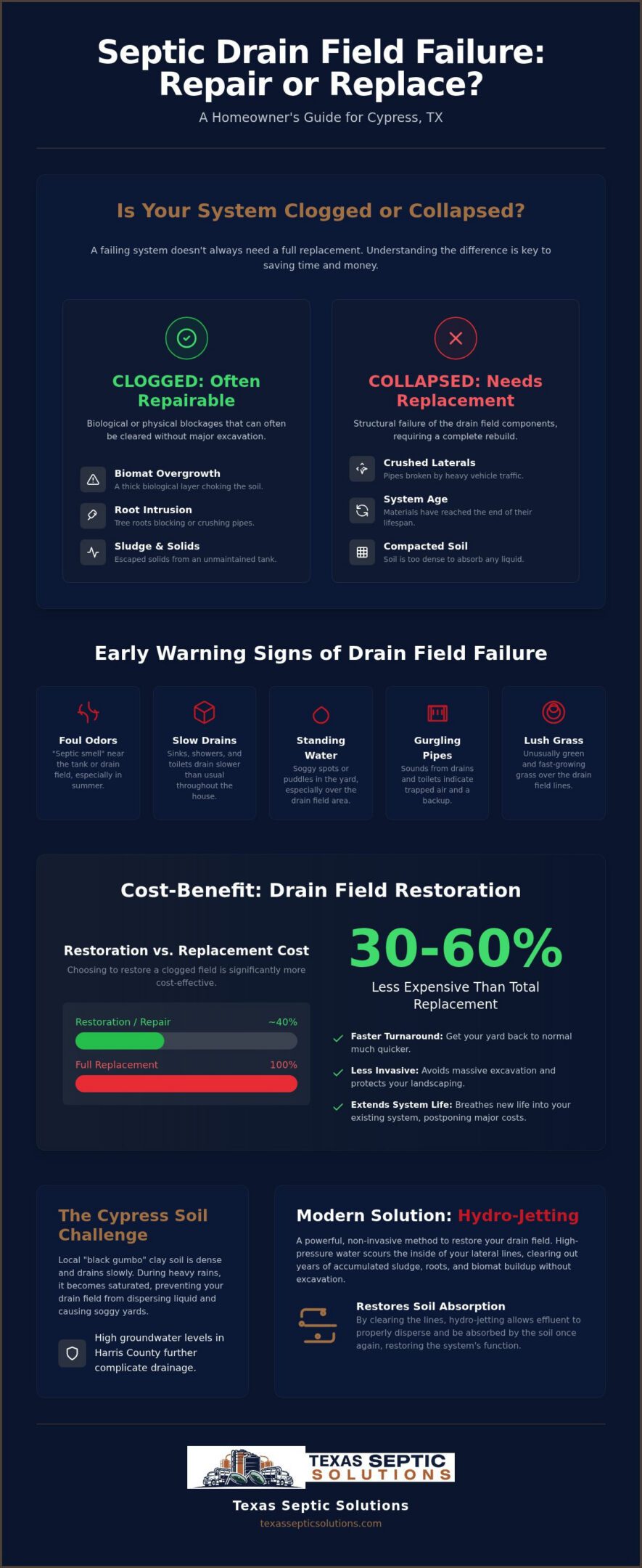
A septic system isn’t just a tank in the ground; it’s a multi-stage waste treatment facility. Septic drain fields, also known as absorption fields, represent the final and most critical stage of this process. This is where the liquid waste, after leaving the tank, is dispersed into the soil for natural filtration. Over time, a biological layer known as “biomat” naturally forms at the soil interface. While some biomat is necessary for treatment, excessive growth eventually chokes off the soil’s ability to absorb liquid. When this happens, you’ll need professional septic drain field repair Cypress TX to restore the balance before the system completely backs up into your home.
The Anatomy of a Cypress Septic System
In our local area, systems generally fall into two categories: conventional gravity-fed systems and aerobic treatment units. Conventional systems rely on the natural slope of your yard and soil bacteria, while aerobic systems use oxygen to speed up the breakdown of waste. Effluent is the clarified liquid that exits the septic tank and flows through a network of perforated lateral pipes to be absorbed by the surrounding earth. If the tank isn’t maintained, solids can escape into these laterals, accelerating biomat growth and leading to premature failure.
Why Cypress Soil Presents Unique Drainage Challenges
Cypress is famous for its “black gumbo” and heavy clay soils. Unlike sandy soils that drain quickly, clay particles are tightly packed, which significantly slows down the soil’s “perking” or absorption rate. During the heavy rainfall common in East Texas, this clay becomes saturated and expands, leaving no room for your septic system to discharge liquid. This is why many homeowners notice “Cypress soggy spots” or standing water in their backyards after a storm. It doesn’t always mean your pipes are broken; often, the soil is simply overwhelmed. High groundwater levels in parts of Harris County further complicate this, as the water table can rise and push back against your system’s output. Understanding these local factors is essential when evaluating septic drain field repair Cypress TX, as a solution that works in other regions might fail here in the humid, clay-heavy environment of Cypress.
Repair vs. Replacement: Evaluating Your Options
Facing a yard full of standing water is enough to make any homeowner panic. You might immediately worry about the massive expense of a full system overhaul. However, many issues that look like total failures are actually solvable problems. Deciding between a repair and a full replacement comes down to a professional assessment of whether your field has physically collapsed or is simply clogged with biomat. Most homeowners find that a targeted septic drain field repair Cypress TX is the most practical path forward.
When we evaluate a system, we look for the “Point of No Return.” A collapsed field occurs when the structural integrity of the lateral lines has failed, often due to heavy vehicle traffic or extreme root intrusion. Conversely, a clogged field is usually a biological issue that can be reversed. Choosing to restore a field typically costs between 30% and 60% less than a total replacement. This makes restoration a financially sound choice for most properties in Harris County, especially when the existing tank is still in good condition.
Warning Signs You Can’t Ignore
Identifying problems early is the best way to avoid a total system failure. You should keep an eye out for common signs of a failing septic system, such as patches of exceptionally lush, green grass over the drain lines or a persistent “septic smell” caused by hydrogen sulfide. These odors often get worse during the humid Cypress summers when the ground is saturated.
If you notice slow-draining sinks or hear gurgling noises in your pipes, your system is likely struggling to push effluent into the soil. These symptoms are your first line of defense. You can find a detailed breakdown of these indicators in our guide to septic system repair. Addressing these early warning signs can be the difference between a simple cleaning and a massive excavation project that ruins your landscaping.
The Cost-Benefit Analysis of Restoring Your Field
Choosing to restore your existing field offers a much higher long-term ROI compared to the immediate hit of a full septic system replacement cost. A brand new installation involves new permits, heavy machinery, and significant landscaping restoration. In contrast, repair methods focus on the existing infrastructure, minimizing the footprint of the work on your property.
A restored system can last for many more years if paired with a consistent maintenance plan. While a brand-new field has a longer theoretical lifespan, the cost per year of extended life often favors repair for homeowners who plan to stay in their homes. We recommend starting with a professional site assessment to see if your property is a candidate for restoration. If you are unsure about the state of your yard, reaching out for expert troubleshooting can provide the clarity you need before making a major financial commitment.
Common Septic Drain Field Repair Methods
Restoring a system doesn’t always involve a massive excavation project. We utilize several specialized techniques to target the root cause of the failure, whether it’s a physical blockage or a biological imbalance. Choosing the right septic drain field repair Cypress TX method depends on the results of our initial diagnostic testing. When residents ask Why Do Septic Systems Fail?, the answer often involves a mix of biological buildup and soil compaction that requires more than just a simple tank pumping.
Hydro-Jetting and Lateral Line Cleaning
Hydro-jetting uses high-pressure water streams to scrub the interior of your lateral lines. It’s much more effective than traditional snaking because it removes the greasy sludge and fine roots that typical plumbing tools leave behind. This process is vital for clearing out “flushable” wipes and household fats that should never have reached the field in the first place. Jetting restores the full capacity of your pipes and helps prevent the immediate recurrence of backups by ensuring effluent moves freely to the soil interface.
Chemical and Biological Field Restoration
Bio-remediation introduces specialized aerobic bacteria directly into the absorption area. These microbes are specifically chosen to “eat” through the thick biomat layer that chokes off soil drainage. While many big-box stores sell “miracle” septic additives, these products often fail because they lack the concentration or professional delivery systems needed to reach the source of the problem. Our professional applications are designed to be safe for local Cypress groundwater while effectively dissolving the biological barrier that prevents effluent from soaking into the earth.
Soil Fracturing and Targeted Fixes
In areas with heavy Cypress clay, soil fracturing can be a game-changer. This process uses a probe to inject air into the ground at high pressure, creating tiny fissures and air pockets in the compacted soil. These cracks allow effluent to bypass the “black gumbo” clay and reach more absorbent layers. If only a specific section of your field is damaged, we can perform a targeted lateral line replacement. This allows us to fix crushed pipes or specific root-damaged sections without the cost or mess of digging up your entire backyard.
What to Expect During a Professional Septic Repair
A professional repair doesn’t start with a shovel; it starts with data. We begin every project with a comprehensive site assessment to determine the exact levels of sludge and scum in your tanks. Using a tool called a “sludge judge,” our technicians can see the internal layers of your system without any guesswork. This diagnostic step is the core of effective septic system maintenance, as it tells us whether the issue is a simple maintenance lapse or a deeper structural failure in the field.
The Inspection and Permitting Phase
Understanding local Cypress regulations is essential for any field modification. In Harris County, specific permits are often required if we need to alter the footprint of your absorption area or replace significant sections of the lateral lines. We handle the logistics of this permitting process to ensure your septic drain field repair Cypress TX remains fully compliant with 2026 environmental codes. If you’re currently dealing with a septic tank alarm going off, don’t ignore the warning. Emergency stabilization is usually our first priority to prevent a total backup into your home while we finalize the repair plan.
Execution and Cleanup
Once the plan is set and permits are secured, the physical work begins. We utilize specialized, low-impact equipment designed to navigate residential yards without destroying your landscaping. Modern repair methods like hydro-jetting or targeted lateral replacement allow us to work efficiently within a small footprint. This approach is much less invasive than the massive excavation required for a full system replacement.
The timeline for a typical repair usually spans 1 to 3 days. We start by clearing any blockages and then move into the restoration phase, whether that involves bio-remediation or soil fracturing. After the physical work is complete, we perform a final stress test to ensure the soil is absorbing effluent at the required rate. We’ll leave you with a clear set of post-repair instructions, such as managing water loads and avoiding heavy traffic over the field, to protect your restored system. If you want to avoid the high cost of a total replacement, you can book a professional diagnostic inspection to see if restoration is right for your property.
Why Texas Septic Solutions is the Best Septic Company in Cypress
Choosing a partner to handle your septic system is about more than just finding someone with a shovel. You need a team that understands the specific environmental demands of East Texas. We’ve built our reputation on deep roots within the Cypress and Houston community, providing a level of local expertise that larger, out-of-town franchises simply can’t match. Our team operates with a strict “Repair First” philosophy. We know that a full system replacement is a significant financial burden, so we exhaust every restoration option, from hydro-jetting to bio-remediation, before ever suggesting a total overhaul. This commitment to saving homeowners money while ensuring long-term system health is what makes us a reliable local authority.
Emergencies don’t stick to a nine-to-five schedule, and neither do we. We provide 24/7 emergency response for critical failures because we know that a backed-up drain field is a high-pressure situation that requires immediate resolution. To help you avoid these stressful scenarios altogether, we offer comprehensive septic system maintenance plans. These proactive programs are designed to catch small issues before they turn into the need for a major septic drain field repair Cypress TX, keeping your yard dry and your home functional year-round.
The Neighborly Expert Advantage
Understanding the unique behavior of Cypress clay soil is non-negotiable when it comes to septic work. We’ve spent years troubleshooting systems in the “black gumbo” of Harris County, learning exactly how local groundwater levels and heavy rainfall patterns impact drainage. Our approach is straightforward and “no-fluff.” We provide clear explanations and honest assessments rather than confusing technical jargon. Property owners across Cleveland, Shepherd, and Cypress trust us because we treat every system as if it were on our own property. This local pride manifests in every project we take on, ensuring you receive dependable service from a neighbor you can trust.
Ready for Your Cypress Septic Solution?
Don’t wait for a soggy patch in the yard to become a total system backup. Booking a priority inspection is the fastest way to get an honest look at your system’s current state and viability for repair. When our technicians arrive, having any previous maintenance records or a map of your system ready can help speed up the diagnostic process. We are built for both the routine upkeep that extends system life and the high-pressure demands of unexpected failures. If you’re ready to secure the future of your home’s utilities, Get Your Septic System Inspected Today and experience the peace of mind that comes with professional, local care.
Secure Your Home’s Future with Expert Restoration
Saving your septic system starts with moving past the fear of a total replacement. We’ve explored how identifying the “point of no return” and utilizing targeted methods like hydro-jetting can restore your yard without the massive expense of a new install. It’s clear that the unique clay soil in Harris County requires a specific approach that generic additives simply can’t provide. By choosing a professional septic drain field repair Cypress TX, you’re investing in the long-term functionality of your property.
Our licensed and insured Texas technicians understand the specific challenges of local soil and are ready to help you navigate current regulations. Whether you need 24/7 emergency service or a routine site assessment, we are here to be your reliable local authority. Don’t let a soggy backyard wait until it becomes a total failure. Schedule Your Cypress Drain Field Inspection Now and get back to enjoying a functional, worry-free home. We look forward to helping you save your system today.
Frequently Asked Questions
How do I know if my septic drain field is failing?
Common signs include standing water, sewage odors, and unusually lush grass over the absorption area. Inside the home, you might notice gurgling sounds in the pipes or slow drains. These symptoms indicate that the soil is no longer absorbing effluent properly. If you see these issues in your Cypress yard, call for a professional evaluation before the problem forces a total system replacement. Early detection is your best chance at avoiding a massive excavation project.
Is it possible to unclog a septic drain field without digging?
Yes, modern methods like hydro-jetting and bio-remediation can often clear blockages without extensive excavation. Hydro-jetting uses high-pressure water to scrub the lateral lines, while bio-remediation introduces specialized bacteria to consume the biomat layer. These techniques are highly effective for systems that are clogged rather than structurally collapsed. They allow us to restore functionality while keeping your landscaping intact, which is a major advantage for homeowners in the Cypress area.
How much does it cost to repair a septic drain field in Cypress, TX?
Repair costs vary significantly based on the severity of the clog and the specific restoration method required. Factors like soil compaction in the Cypress area and the total length of your lateral lines play a role in the final investment. While we don’t provide exact price quotes online, targeted repairs are typically much more affordable than a full system replacement. A professional site assessment is the only way to get an accurate estimate for your specific property.
Can I drive over my septic drain field?
No, you should never drive or park vehicles over any part of your septic system. The weight of a car or truck can crush lateral pipes and compact the soil, which permanently destroys the field’s ability to absorb liquid. In the heavy clay soils of Cypress, this compaction is particularly damaging and often leads to the need for septic drain field repair Cypress TX. Keep heavy equipment, sheds, and pools away from this area.
How long does a septic drain field repair last?
A professionally repaired drain field can last for many years if it’s supported by a consistent maintenance plan. Longevity depends on your household’s water usage and how well you protect the area from compaction and harsh chemicals. Regular pumping and avoiding “flushable” wipes are essential for protecting the work. Many restored systems in the Houston area continue to function reliably for a decade or more after a successful, professional restoration process.
Does a full septic tank mean the drain field is broken?
Not necessarily, as a septic tank is designed to be “full” of liquid at its normal operating level. However, if the water level is high enough to submerge the inlet or outlet pipes, it usually indicates that the drain field isn’t accepting effluent fast enough. This backup is a clear warning sign. If your tank stays overfilled even after a recent pump, the issue likely lies within the absorption field’s soil interface or lateral lines.
What is the best way to prevent drain field failure in Cypress?
Routine maintenance is the single most important factor in preventing failure. This includes scheduled pumping every three to five years and sticking to a septic drain field repair Cypress TX prevention plan that avoids overloading the system with water. Using high-efficiency fixtures and spreading out laundry loads helps the soil keep up with the volume. In Cypress, staying ahead of biomat growth with professional bacterial treatments can also significantly extend the life of your system.
Will insurance cover septic drain field repair?
Most standard homeowners insurance policies don’t cover septic repairs caused by wear and tear or lack of maintenance. Coverage is typically only available if the damage was caused by a sudden, accidental event like a pipe bursting or a falling tree. It’s important to review your specific policy or speak with your agent in Cypress to understand your coverage limits. Investing in a professional maintenance plan is usually the most reliable way to manage long-term costs.