
Who Inspects Septic Systems in Harris County? Your 2026 Guide to Compliance
Imagine receiving a formal notice from the Harris County Office of the County Engineer stating your aerobic system is out of compliance, yet your yard looks dry and your alarms are silent. It’s a stressful moment that leaves most property owners asking the same urgent question: who inspects septic systems in Harris County and how do I get them here fast? You aren’t alone in this confusion. Between the county’s strict 2026 requirements for quarterly aerobic checks and the specific inspections needed for real estate deals, the rules often feel like a moving target.
We understand that the fear of misdemeanor violations or expensive legal fees is heavy. That’s why we’ve built this guide to give you total clarity. You’ll learn exactly which professional to call for your specific situation, whether you’re dealing with a new installation or a routine maintenance contract. We’ll also provide a clear roadmap for passing your next Harris County inspection and tips for handling the ePermits portal without the headache. By the end of this guide, you’ll have a straightforward plan to stay compliant and keep your system running smoothly.
Key Takeaways
- Identify the differences between Harris County Office of the County Engineer (OCE) officials, licensed maintenance providers, and private sanitarians to ensure you call the right expert.
- Understand the role of the OCE in regulatory compliance and how to use the ePermits portal to manage your septic documentation effectively.
- Learn why aerobic systems in unincorporated Harris County require four inspections per year and a continuous maintenance contract to avoid fines.
- Discover the specific credentials required for private inspectors during real estate transactions in areas like Cypress and Huffman.
- Gain a clear roadmap for passing your final inspection by knowing exactly who inspects septic systems in Harris County and how to prepare your system for their arrival.
Understanding the Different Septic Inspectors in Harris County
Determining who inspects septic systems in Harris County depends entirely on the current status of your property. If you’re breaking ground on a new build in Cypress or Huffman, you’ll deal with the county government. If you’re buying a home, you’ll likely hire a private expert. Understanding how septic systems work helps clarify why these different roles are necessary to protect the local groundwater and public health.
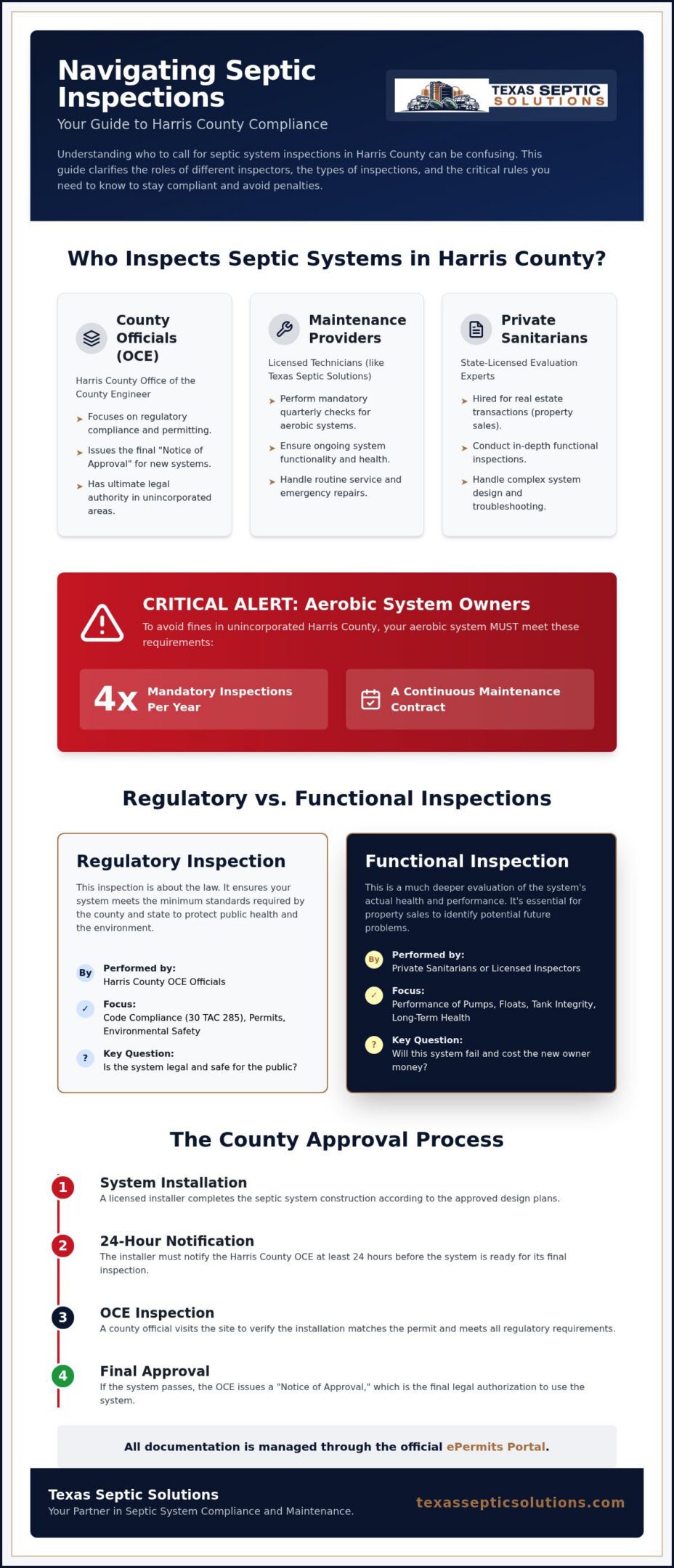
There are three primary types of professionals you’ll encounter in the field:
- County Officials: These inspectors work for the Harris County Office of the County Engineer (OCE). Their focus is strictly on regulatory compliance and permitting.
- Maintenance Providers: These are licensed technicians, like our team at Texas Septic Solutions, who perform the mandatory quarterly checks required for aerobic systems.
- Private Sanitarians: A Registered Sanitarian is a state-licensed professional capable of high-level system design and evaluation.
While the OCE handles the legal paperwork for permits, private inspectors are typically hired for real estate transactions or complex system troubleshooting. Each plays a distinct role in keeping your home functional and legal.
Regulatory vs. Functional Inspections: What’s the Difference?
A regulatory inspection is all about the law. These visits ensure your system meets the standards set by 30 TAC 285 and the Harris County Local Order. The inspector checks for things like proper setback distances and environmental safety. However, a regulatory check doesn’t always tell you if the system is truly “healthy” for long-term use.
A functional inspection is much deeper. This is what you need during a property sale in unincorporated Harris County. It evaluates the actual performance of the pumps, floats, and tank integrity. While the county cares about code, the buyer cares about whether they’ll be facing a repair bill next month. In many cases, you’ll need both to get a full picture of the system’s status before closing a deal.
Who Has the Final Say in Harris County?
The OCE holds the ultimate authority for any system in unincorporated Harris County. They function as the “Authorized Agent” for the Texas Commission on Environmental Quality (TCEQ). This means they have the legal power to issue the “Authorization to Construct” and the final “Notice of Approval” that allows you to actually use your system. It’s the gold standard for compliance.
While a private inspector can give you an opinion on a system’s health, their report doesn’t carry the same legal weight as a county official’s findings. If a county inspector identifies a violation, it’s a legal mandate to fix it. We work closely with these standards to ensure your system meets every requirement before the official inspector even pulls into your driveway. This proactive approach helps you avoid failed inspections and unnecessary delays.
The Role of the Harris County Office of the County Engineer (OCE)
If you’re wondering who inspects septic systems in Harris County for regulatory approval, the answer is the Harris County Office of the County Engineer (OCE). This office is the primary authority for all On-Site Sewage Facilities (OSSF) in unincorporated Harris County. Within the OCE, two specific groups manage the process: the Watershed Protection group and the Wastewater Quality Permitting group. Together, they ensure every system installed is environmentally sound and won’t contribute to local water pollution.
The county has modernized its process through the ePermits portal. This digital gateway is where all septic documentation lives. Whether you’re a homeowner tracking an application or an installer submitting a design, the portal is the only place to handle business. It’s replaced the old paper-based filing systems, making the process faster but also more rigid. You’ll need to use this portal for new installations, major system overhauls, and feasibility studies. It’s the central hub for maintaining your property’s compliance records.
One critical rule to remember is the 24-hour notification requirement. Once your licensed installer has the system ready for a final inspection, they must notify the OCE at least 24 hours in advance. This ensures a county inspector can be dispatched to verify the installation matches the approved plans exactly. Without this notice, you can’t move forward with burying the tanks or starting the system.
Scheduling Your County Inspection
Your licensed installer typically handles the scheduling. They use specific Inspection Forms found on the OCE website to request a visit. It’s best for the professional to lead this because they understand the technical milestones that must be reached before an inspector arrives. If a system fails its initial inspection, the county will list specific deficiencies that must be corrected. You’ll likely face a reinspection fee and a delay in your final approval timeline. We recommend having our team at Texas Septic Solutions review the site first to ensure everything is perfect before the county official shows up.
Feasibility Studies and Plats
If you’re dividing land or creating a new plat, Harris County often requires an OSSF Feasibility Study. This study proves the land can actually support a septic system without failing. These documents must be sealed by a Professional Engineer (PE) or a Registered Sanitarian. Getting this right from the start is the best way to prevent future septic system repair needs. It ensures the soil and site conditions are suitable for the specific system type you plan to install, saving you thousands in potential headaches later.
Private Septic Inspectors: When to Hire a Licensed Professional
When you’re trying to figure out who inspects septic systems in Harris County for a home sale or a sudden repair, you aren’t looking for a government official. While the county handles the legal permits, private inspectors focus on the actual health and longevity of your equipment. These professionals are your best defense against buying a property with a failing drainfield or a cracked tank. In communities like Cypress and Huffman, where septic systems are the norm, a private inspection is a standard part of the due diligence process.
Before you hire anyone, you must perform a credential check. A valid private inspector should be a TCEQ-licensed Installer II or a Registered Sanitarian. These individuals have the specific training to evaluate systems according to Texas’s septic system regulations. Unlike a county official who mainly checks if the system meets minimum code, a private inspector dives into the details. They’ll measure sludge levels, test pump cycles, and check the structural integrity of the tanks. This level of detail is essential for creating a reliable septic system maintenance plan that protects your investment for years to come.
Real Estate Septic Inspections in Harris County
Texas doesn’t have a statewide mandate for septic inspections during a property sale, but most lenders in Harris County won’t approve a mortgage without a functional report. These “point-of-sale” inspections provide a snapshot of the system’s current performance. Inspectors look for common red flags like surfacing sewage, saturated soil over the drainfield, or evidence of past backups. In older Harris County systems, they specifically check for outdated materials or undersized tanks that might struggle with modern water usage. Having a clean report in hand makes the closing process much smoother for both buyers and sellers.
Troubleshooting and Diagnostic Inspections
You don’t have to wait for a home sale to call an expert. If your septic tank alarm is going off, you need a diagnostic inspection immediately. This is different from a formal real estate report; it’s a targeted visit to find a specific mechanical or electrical failure. A professional evaluation can often identify a small issue, like a stuck float or a blown fuse, before it turns into a catastrophe. Catching these problems early is the only way to avoid a full septic system replacement, which is a significantly more expensive and invasive project. We recommend keeping these diagnostic reports in your records to show the county or future buyers that you’ve been proactive with your system’s care.
Compliance Rules: Maintenance Inspections for Aerobic Systems
Harris County takes water quality seriously. If you own an aerobic system, the law requires you to maintain a continuous contract with a licensed provider. This isn’t a suggestion; it’s a mandate enforced by the Harris County Office of the County Engineer. When you’re trying to figure out who inspects septic systems in Harris County for these routine checks, you’re looking for a licensed Maintenance Provider, not a county employee. While the state of Texas generally requires three inspections per year, Harris County has opted for a stricter “4 inspections per year” rule. This means a professional must visit your property every three months to ensure the system is treating wastewater effectively.
Knowing who inspects septic systems in Harris County for these quarterly visits helps you stay ahead of the law. Your OSSF Maintenance Provider acts as the bridge between you and the county. After each visit, they’re responsible for submitting a detailed report to the OCE. If you let your contract lapse, the consequences are more than just a dirty tank. Non-compliance often leads to misdemeanor violations filed in local Justice of the Peace Courts. We’ve seen neighbors face significant legal fees and stress just because they forgot to renew a simple maintenance agreement. It’s much easier to keep a contract active than it is to explain a lapse to a judge.
What Happens During a Routine Maintenance Visit?
A maintenance visit is a comprehensive health check for your system. Our technicians focus on several critical components to keep you in the clear. First, we test the chlorine residual levels and effluent quality to ensure the water being sprayed is safe and bacteria-free. We also clean the air filters and check the aerator’s performance, as these parts are the heart of the aerobic process. Without a working aerator, the beneficial bacteria in your tank will die, leading to foul odors and system failure. Finally, we attach an inspection tag to your system and file a digital report. This tag is your physical proof of compliance if a county official ever stops by for a spot check.
Managing Your Contract via ePermits
The Harris County ePermits portal allows you to verify if your current maintenance contract is officially on file. If you’re unhappy with your current service, you have the right to switch providers at any time. You just need to ensure the new contract is submitted promptly to avoid a gap in coverage. All new or renewed contracts should be sent to the [email protected] address for processing. If you’re unsure about your system’s current status or need to renew, our team can handle the paperwork and get your septic system maintenance back on track today.
How Texas Septic Solutions Ensures Your System Passes Inspection
Facing a county official can be stressful, especially when your permit or property closing is on the line. Our team takes the guesswork out of the process by preparing your equipment for a successful pass on the first try. We know exactly who inspects septic systems in Harris County and the specific items they prioritize during a final walk-through. Whether you’re located in Cypress or further out in Cleveland and Shepherd, we provide the local expertise needed to meet every regulatory hurdle. We don’t just fix problems; we act as your advocate to ensure your system meets the high standards of the Harris County Office of the County Engineer.
The best way to guarantee a pass is through consistent, professional care. Our septic system maintenance in Texas is designed to catch small mechanical issues before they become “deficiencies” on a county report. If a critical failure is identified right before a scheduled inspection, you can rely on our 24/7 emergency response to get the system back in order. We’re built for both the routine upkeep and the high-pressure demands of unexpected failures, ensuring your property remains compliant year-round.
The Pre-Inspection Checklist for Homeowners
Before the inspector arrives, there are several physical checks you should perform to avoid an automatic failure. Accessibility is often the biggest hurdle. You must ensure all risers are fully accessible and not buried under mulch or landscaping. Inspectors will also check that lids are bolted down and secure for safety. Take a walk around your yard and look for surface moisture or unusual odors in the drain field, as these are immediate red flags. Finally, verify that your electrical control panel is receiving power and that the visual and audible alarms are functional. If your alarm is buzzing, call us immediately before the county official pulls into your driveway.
Rapid Response for Inspection Deficiencies
If your system doesn’t pass, the OCE inspector will provide a formal list of deficiencies. This can feel like a setback, but we specialize in rapid turnarounds to resolve these issues. We handle everything from replacing faulty pumps to repairing broken spray heads. Our goal is to complete these repairs quickly so you can schedule a return visit and avoid secondary reinspection fees. Knowing who inspects septic systems in Harris County allows us to speak their language and provide the exact documentation they need to close out your file. We partner with you for the long term, ensuring your system isn’t just legal today, but healthy for years to come.
Secure Your Property’s Compliance Today
Staying compliant in unincorporated Harris County doesn’t have to be a source of anxiety. You now know that who inspects septic systems in Harris County depends entirely on whether you’re permitting a new build, selling a home, or maintaining an existing aerobic system. By keeping your ePermits records updated and adhering to the mandatory quarterly inspection schedule, you protect both your property value and the local environment from costly failures.
Our team is here to handle the technical details so you don’t have to. With licensed OSSF professionals serving Houston, Cypress, and Cleveland, we provide the steady expertise your system needs to pass every check. We even offer 24/7 emergency service to handle those high-pressure failures before they turn into legal headaches or misdemeanor violations. Schedule your Harris County septic inspection or maintenance with Texas Septic Solutions today and enjoy the peace of mind that comes with a perfectly functioning system. You’ve got a clear roadmap now, and we’re ready to help you every step of the way.
Frequently Asked Questions
Is a septic inspection required when selling a home in Harris County?
Texas law doesn’t strictly require a septic inspection at the time of sale. However, most mortgage lenders and savvy buyers in unincorporated Harris County will demand a functional report before closing. When determining who inspects septic systems in Harris County for a sale, you’ll need to hire a licensed private professional. The county doesn’t perform these health checks for real estate transactions, so a private report is your best protection.
How often does Harris County require aerobic septic inspections?
Aerobic systems in this region must be inspected four times per year. This every three months rule is a local requirement from the Harris County Local Order, which is more frequent than the state’s minimum standard. These visits must be conducted by a licensed maintenance provider who then submits the results to the county. Staying on this schedule is the only way to avoid misdemeanor violations and potential court dates.
Can I perform my own septic inspection in Harris County?
You cannot perform your own regulatory or maintenance inspections for an aerobic system in Harris County. The law requires a licensed professional to verify that the system is treating wastewater safely. While you can certainly monitor your own alarms and chlorine levels, the county only accepts reports from certified providers. This ensures that environmental standards are met and that the local groundwater remains protected from contamination.
What is the difference between a Registered Sanitarian and a County Inspector?
A County Inspector works for the OCE and focuses on whether your system meets the legal permit requirements. A Registered Sanitarian is a private, state-licensed professional who handles high-level system design and performance evaluations. If you’re wondering who inspects septic systems in Harris County for a home purchase, you’re usually looking for a Sanitarian or a licensed Installer II rather than a government official who only checks for code compliance.
How do I find a copy of my septic permit in Harris County?
Most modern septic permits are stored digitally in the Harris County ePermits portal. You can search this database using your property address or the original permit number. If your system was installed decades ago, the digital record might not exist. In those cases, you’ll need to contact the Office of the County Engineer directly to request a search of their physical archives. Having this permit is essential for proving your system’s legality.
What happens if my septic system fails a county inspection?
If your system fails, the inspector will issue a list of deficiencies that must be addressed. You’ll then need to hire a licensed professional to make the necessary repairs. Once the work is complete, you’ll have to pay a reinspection fee to have the county verify the fix. Ignoring these deficiencies can lead to significant fines and legal action in a local Justice of the Peace court, so it’s best to act quickly.
Do I need an inspection if I am just repairing a septic pump?
Minor maintenance like replacing a fuse might not require a county visit. However, major repairs like replacing a pump or modifying the tank usually require an amended permit and a follow-up inspection. It’s vital to check the ePermits portal or ask your installer before starting work. Performing major repairs without the proper county oversight can result in a red tag and a total system shutdown until the work is permitted.
How much does a septic inspection usually cost in the Houston area?
The cost of a professional inspection in the Houston area depends on whether you need a routine maintenance check or a full real estate evaluation. For aerobic systems, these inspections are usually included as part of a multi-visit maintenance contract. Real estate inspections are often a separate one-time fee. Because every property has different needs, we recommend getting a custom quote to ensure your specific system components and tank integrity are fully covered.