
Septic Tank Filter Alarm: The Essential Guide to Preventing Backups in 2026
Imagine it’s a humid Saturday evening in Cleveland and you’re finally relaxing when a sharp, persistent buzzing starts echoing from your backyard. Your mind immediately jumps to the worst-case scenario: a sewage backup in your guest bathroom and a massive bill for an emergency pump-out. This is exactly where a septic tank filter alarm becomes your best friend. It’s a fear every homeowner knows too well, especially when you aren’t sure what those different alarm sounds actually mean.
We understand that managing your own utility system can feel overwhelming and expensive. That’s why we’ve put together this essential guide to help you stay ahead of trouble. You’ll learn how this specific sensor acts as a proactive guardian for your plumbing, stopping clogs at the source before they cause a disaster. We’ll break down the critical difference between filter and high-water alarms, show you how to respond when things get noisy, and explain how regular maintenance keeps your drain field healthy for the long haul.
Key Takeaways
- A septic tank filter alarm acts as your system’s first line of defense, signaling a clog before wastewater has a chance to back up into your home.
- Differentiate between filter and high-water alarms to quickly identify whether you’re facing a routine maintenance task or a mechanical pump failure.
- Protect high-value components like aerobic spray heads by catching debris at the filter baffle before it moves downstream.
- Master the immediate steps to take when an alarm sounds, from silencing the alert to performing a quick visual check of your tank risers.
- Ensure long-term system health by integrating professional filter monitoring into your regular maintenance schedule to avoid costly emergency repairs.
What is a Septic Tank Filter Alarm and Why Does It Matter?
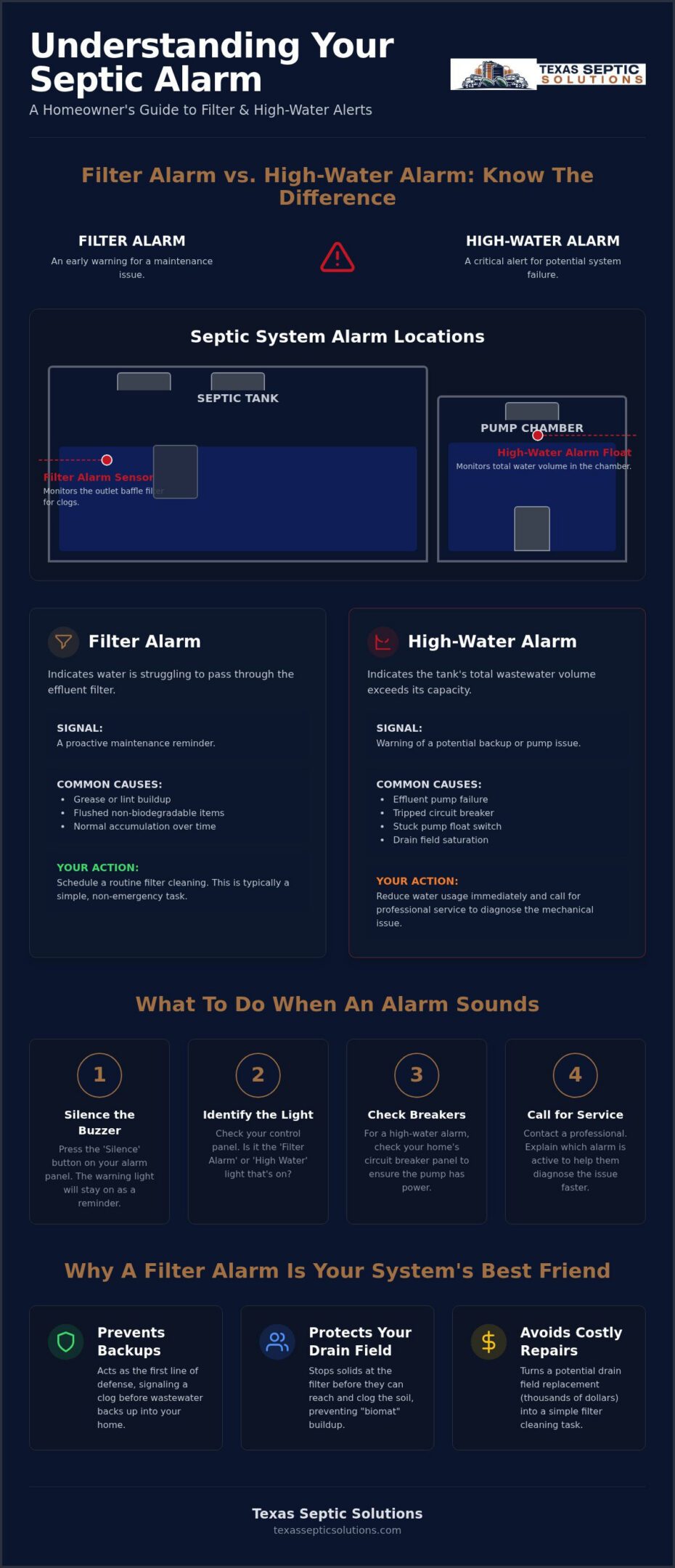
A septic tank filter alarm is a precision sensor designed to monitor water levels specifically at your tank’s outlet baffle. While a standard high-water alarm tells you the entire tank is full, this device focuses on the effluent filter itself. In 2026, industry standards have shifted toward these preventative alerts because they give you time to act before a total system failure occurs. The system uses a specialized reed switch housed in a waterproof enclosure to detect exactly when water is struggling to pass through the filter mesh. By triggering an alarm module early, it prevents the messy, expensive backups that often plague homeowners who rely on reactive maintenance. This “early warning” concept is the most effective way to manage a modern on-site sewage facility without the constant fear of a plumbing disaster.
How the Effluent Filter Protects Your Drain Field
Think of your effluent filter as the last line of defense for your property. To understand how septic systems work, you have to realize that the liquid leaving the tank needs to be clear of large solids. If the filter clogs and you don’t have a septic tank filter alarm, those solids eventually bypass the baffle and reach your soil. This leads to “biomat” buildup, which is a thick, slimy layer that seals off your leach field and prevents drainage. Once biomat takes over, your soil can no longer absorb wastewater. Cleaning a filter is a simple maintenance task that takes minutes; replacing an entire drain field is a massive construction project that can cost thousands of dollars. Protecting your soil from these solids is the best way to extend the life of your system.
Anatomy of a Modern Filter Alarm System
Modern systems are built to withstand the harsh, humid conditions common in East Texas. Look for a module with a NEMA 4X outdoor rating. This rating ensures the enclosure is completely watertight and corrosion-resistant, which is vital for the long-term health of the electronics. Most units use standard 120 VAC power and feature both an audible buzzer and a bright red-light indicator. This dual-alert system ensures you won’t miss the signal, even if you’re inside the house or the weather is loud. High-quality septic tank filter alarm modules often include a “silence” button to stop the noise while you wait for service, but the red light stays on as a constant reminder that your filter needs attention. These components work together to provide a reliable, straightforward solution for any property owner.
Filter Alarms vs. High-Water Alarms: Knowing the Difference
Understanding the difference between these two sensors is the key to avoiding a panic-induced service call. A high-water alarm typically sits on a float near the top of your tank or inside the pump chamber. It triggers when the total volume of wastewater exceeds the system’s capacity. In contrast, a septic tank filter alarm is mounted directly inside the filter baffle. This means it can go off even if your tank isn’t technically ‘full’ yet. It’s telling you that water can’t get through the mesh, not necessarily that your pump has failed. Many modern aerobic systems in Texas now require both sensors to provide a complete picture of system health. Your control panel will usually have distinct lights or labels to help you identify which sensor has been triggered. Knowing which light is glowing can save you hundreds in unnecessary emergency fees.
The Pump Float: Managing Total Volume
The pump float is your system’s volume manager. It reacts when the water level rises too high, which often happens during heavy rain or back-to-back laundry days. There is a direct relationship between the pump circuit and the alarm circuit. If the high-water light stays on but the pump isn’t running, you likely have a pump motor failure or a tripped circuit breaker. Sometimes the float itself gets stuck on a pipe or debris, sending a false signal. If you’re seeing these signs, it’s a good idea to schedule a professional inspection to prevent a total backup. A stuck float is a common issue that can lead to constant buzzing, even when the tank levels are normal.
The Filter Switch: Monitoring Maintenance Needs
The filter switch acts more like a proactive maintenance reminder. It’s designed to catch issues like grease buildup or non-biodegradable items that have accidentally been flushed. Because these switches are on a separate circuit from the pump, they won’t interfere with the pump’s ability to clear the rest of the tank. This separation is vital for troubleshooting. A septic tank filter alarm tells you it’s time to pull and clean the cartridge, whereas a high-water alarm suggests a mechanical issue that needs immediate attention from a technician. Using separate circuits ensures that even if your filter is clogged, the rest of your alarm system stays functional. This diagnostic value allows you to tell a technician exactly what’s wrong before they even arrive at your property.
Key Benefits of Installing a Filter Alarm in Texas Systems
Living in Houston or Cleveland means dealing with high humidity and intense seasonal rainfall. These local conditions put unique stress on your plumbing. A septic tank filter alarm serves as a critical safeguard for your home’s interior, preventing raw sewage from backing up into tubs and sinks during a system failure. Many East Texas properties utilize aerobic systems, which feature expensive spray heads to distribute treated water. If a filter becomes clogged and isn’t caught early, solids can bypass the baffle and ruin those spray components. Protecting these parts isn’t just about avoiding a mess; it’s about avoiding high repair bills.
Installing a dedicated sensor also helps maintain compliance with local environmental standards and can even boost your property value. Potential buyers in Texas look for systems that show a history of proactive care. You’ll also gain significant peace of mind during our heavy spring rainy season. When the ground is already soaked, you need to know exactly how your system is performing without having to guess if a backup is imminent. It’s a small investment that provides a massive sense of security for any property owner.
Navigating East Texas Soil and Drainage Challenges
The soils in Shepherd and Cypress are notoriously clay-heavy, which creates significant drainage hurdles. Clay doesn’t allow water to pass through quickly, especially after a typical Texas downpour. When the ground becomes saturated, your drain field’s capacity to absorb effluent drops. A septic tank filter alarm acts as a gatekeeper during these periods. It ensures that if your system is struggling to process wastewater, you’re notified before the soil becomes completely overwhelmed and fails. Proactive monitoring is always a smarter choice than facing a full septic system replacement cost due to a neglected, saturated leach field.
Integrating Alarms with Your Maintenance Plan
An alarm works best when it’s part of a comprehensive septic system maintenance plan. Instead of treating the alarm as a one-time fix, use the data it provides to understand your household’s water habits. If the alarm triggers more frequently than it should, it might indicate that your tank needs a pump-out or that your family needs to be more careful about what goes down the drain. Regular professional inspections are vital to keep these sensors accurate. This structured approach reduces the frequency of emergency pumping calls and ensures your system remains reliable for years to come. It’s about being the expert on your own home’s functionality.
Troubleshooting: What to Do When Your Filter Alarm Sounds
When that persistent buzzer starts ringing in your backyard, your first instinct might be to panic. Don’t. Your septic tank filter alarm is doing exactly what it was designed to do: giving you a head start before a minor clog becomes a major household disaster. The most important thing you can do right now is stay calm and follow a logical diagnostic process. Start by checking your home’s electrical panel. Sometimes a heavy storm or a power surge can trip the breaker for the alarm circuit, causing a false alert. If the power is fine and the light is still glowing, it’s time to move to your immediate emergency response steps.
The 4-Step Emergency Response
You don’t need to be a plumber to manage the first few minutes of an alarm event. Following these four steps will minimize the risk of a backup while you determine the severity of the issue:
- Step 1: Locate the “Silence” button on your NEMA enclosure. This will stop the audible buzzing so you can think clearly, but the red warning light will remain active as a reminder.
- Step 2: Stop all high-water appliances immediately. This means no dishwasher cycles, no laundry, and no long showers until the alarm is resolved.
- Step 3: Check the alarm light status. A steady light usually indicates a constant high-level condition, while a flashing light might suggest an intermittent electrical fault or a float that’s bouncing.
- Step 4: Consult our detailed guide on septic tank alarm going off for deeper diagnostics and specific system types.
Safe Filter Cleaning Basics
If you feel comfortable performing basic maintenance, you might attempt to rinse the filter yourself. However, safety is non-negotiable. Never reach into a septic tank without heavy-duty waterproof gloves and eye protection. Septic gases are dangerous, so stay back from the opening and never work alone. Many professionals recommend the “wash-back” technique for minor clogs. This involves using a garden hose to spray water directly into the filter mesh while it’s still in the baffle, knocking debris back into the tank. If the water doesn’t begin to recede after a few minutes of rinsing, your septic tank filter alarm is telling you that the clog is too deep for a simple fix. Look for signs of physical damage, such as warped plastic or torn mesh. If the filter looks compromised, it’s time to stop and call for a professional replacement.
If you’ve silenced the alert and reduced your water usage but the red light won’t clear, don’t wait for the situation to get worse. You can request emergency septic service to have a licensed technician handle the dirty work and ensure your system is fully functional again.
Professional Maintenance and Alarm Installation in East Texas
Texas Septic Solutions has built a reputation as the reliable local authority for homeowners in Cleveland, Houston, and Cypress. When you choose professional installation for your septic tank filter alarm, you aren’t just paying for parts. You’re securing a guarantee that the system will work when you need it most. Many manufacturers require professional installation to keep the hardware warranty valid. If a DIY attempt goes wrong, you could be left with a useless sensor and a voided warranty. We provide 24/7 support for alarm emergencies in Shepherd and Huffman, ensuring that a buzzing tank never ruins your weekend.
Expert Installation vs. DIY Risks
Mixing wastewater with 120V electricity is a dangerous game. It’s one of the primary reasons we advise against DIY electrical work on septic systems. Our technicians are trained to handle these high-voltage connections safely in wet environments. Beyond the physical danger, there’s the issue of precision. A septic tank filter alarm must be installed at a very specific depth to provide an accurate “early warning.” If the sensor is too high, you’ll get the alert too late to stop a backup. If it’s too low, you’ll deal with constant false alarms. We calibrate every sensor to match your specific tank size and household usage patterns. This level of accuracy is something a standard DIY kit simply can’t offer.
Schedule Your System Health Check Today
We believe in a “one-stop” service model that takes the stress out of home maintenance. That’s why we bundle filter alarms into our comprehensive maintenance packages. Whether you have a gravity system or a modern aerobic setup, we create a plan that fits your property’s needs. If your alarm is already sounding or you’ve noticed sluggish drains, we provide rapid response for septic system repair across the Greater Houston area. Don’t wait for a small maintenance light to turn into a major emergency. Contact Texas Septic Solutions today to speak with a neighborly expert who understands the unique challenges of East Texas soil. We’re here to be your long-term partner in keeping your home functional and your family safe.
Secure Your Home’s Future with Proactive Monitoring
A septic tank filter alarm is more than just a piece of hardware; it’s the most effective early warning system for your property. By distinguishing between a simple maintenance clog and a mechanical pump failure, you can avoid the stress of unnecessary emergency calls. We’ve seen how these sensors protect expensive aerobic components and extend the life of your drain field, especially in the challenging clay soils of East Texas. Taking action when the buzzer sounds ensures that a small filter rinse doesn’t turn into a full system replacement.
Our team of licensed septic professionals is here to help you navigate these technical details with confidence. We provide 24/7 emergency response and comprehensive maintenance plans tailored for families in Cleveland, Houston, and Cypress. Don’t leave your home’s functionality to chance. Protect your home from backups with Texas Septic Solutions and gain the peace of mind you deserve. We’re ready to ensure your system remains a silent, reliable partner in your daily life.
Frequently Asked Questions
Is a septic tank filter alarm the same as a high water alarm?
No, these two sensors monitor different areas of your system. A high water alarm tracks the overall liquid level in the main tank or pump chamber to detect volume overloads. The filter alarm specifically monitors the water level inside the outlet baffle to tell you if the mesh is clogged. Knowing the difference helps you decide whether to clean a filter or call for pump repairs.
What causes a septic tank filter alarm to go off?
A buildup of hair, grease, or non-biodegradable solids typically triggers the sensor. When these items block the filter mesh, the water level inside the baffle rises and engages the internal reed switch. This is a clear signal that the filter needs immediate cleaning to restore proper flow. It often happens after hosting guests or during periods of heavy water usage.
Can I still use my water if the filter alarm is beeping?
You should minimize water usage immediately to prevent a backup into your home. While the tank itself might not be full, the wastewater cannot exit through the clogged filter mesh. Stop running high-volume appliances like dishwashers and washing machines. Reducing flow gives the system time to slowly drain while you wait for a maintenance check or attempt a filter rinse.
How often should I clean my septic filter to prevent alarms?
Most residential filters require cleaning every six to twelve months depending on your household size. Checking the filter during your mandatory four-month aerobic inspections is the best way to stay ahead of alerts. Regular maintenance prevents the debris buildup that leads to an active septic tank filter alarm. Consistent cleaning ensures the sensor remains a backup rather than a frequent nuisance.
How much electricity does a septic alarm system use?
These systems use a negligible amount of power, typically adding less than one dollar to your monthly utility bill. Most modules operate on a standard 120 VAC circuit and remain in a low-power standby mode. They only draw significant current when the audible buzzer or visual red light is active. It’s an extremely cost-effective way to protect your property from expensive sewage damage.
What happens if I ignore my septic tank filter alarm?
Ignoring the alert eventually leads to a sewage backup into your home’s lowest drains and tubs. Additionally, a neglected clog can force solids to bypass the baffle and enter your drain field, causing permanent soil damage. Addressing the alarm early is the only way to avoid these high-cost repairs. It’s much cheaper to clean a filter than it is to replace a saturated leach field.
Do I need a special alarm for an aerobic septic system?
Yes, aerobic systems often require integrated control panels that monitor both the filter and the aerator motor. A specialized septic tank filter alarm ensures that the expensive spray heads aren’t ruined by stray solids bypassing the tank. These sensors are calibrated for the specific flow rates and pressures found in aerobic units. Using the correct module ensures your system remains compliant with Texas regulations.
Can heavy rain trigger my septic filter alarm?
Heavy rain typically triggers a high-water alarm rather than a filter alarm unless your tank has a structural leak. If groundwater enters the tank through a cracked riser or lid, the overall water level rises and may submerge the filter baffle. This indicates your system is being overwhelmed by outside water. If this happens frequently after storms, you should have a technician check the tank’s seal.