
7 Critical Signs of a Failing Septic Drain Field: A 2026 Homeowner’s Guide
What if that suspiciously lush, green patch of grass in your backyard isn’t a sign of a healthy lawn, but the first warning of a major utility failure? For many homeowners, the earliest signs of a failing septic drain field are easy to overlook until sewage starts backing up into the kitchen sink. With more than 2.6 million septic systems across Texas, many properties in Cleveland and Houston are currently dealing with saturated clay soils that can no longer process wastewater. It is a stressful situation that leaves you wondering if you just need a routine pump-out or a completely new system.
We know how overwhelming it feels to hear gurgling pipes or catch a whiff of foul odors near your leach field. You want an honest assessment, not a high-pressure sales pitch. This guide is designed to give you back control by providing a clear diagnosis of your system’s health. We will explore the seven critical red flags of failure, discuss how our local geography impacts your drainage, and help you determine if a repair is still possible. By the end, you will know exactly how to handle the mess and how to find a reliable local expert to get your home back in working order.
Key Takeaways
- Learn to spot the early signs of a failing septic drain field, such as unusually lush grass or slow-moving drains, before they turn into a yard-swamping emergency.
- Understand how “biomat” buildup and heavy East Texas clay soil can suffocate your system’s ability to filter wastewater properly.
- Discover the immediate “triage” steps you can take to reduce system pressure and prevent sewage backups in your home.
- Get a clear breakdown of when a professional pump-out can save your drain field and when it is time to consider a full replacement.
- Gain the confidence to differentiate between minor clogs and major structural failures so you can make an informed decision for your property.
Understanding Why Septic Drain Fields Fail
Think of your septic system as a two-stage process. While the tank is the settling chamber, the Septic drain fields act as the final filtration center for your home’s wastewater. This is where the real work happens as liquid effluent seeps into the ground for biological treatment. It’s important to distinguish between a simple tank backup and a total field failure. A backup often means the tank is simply overdue for a pump-out. A field failure, however, means the ground can no longer process liquid. This creates a serious environmental and health hazard. Raw effluent carries pathogens that can contaminate groundwater or sit on the surface, posing a risk to your family and pets.
The Role of Soil Saturation
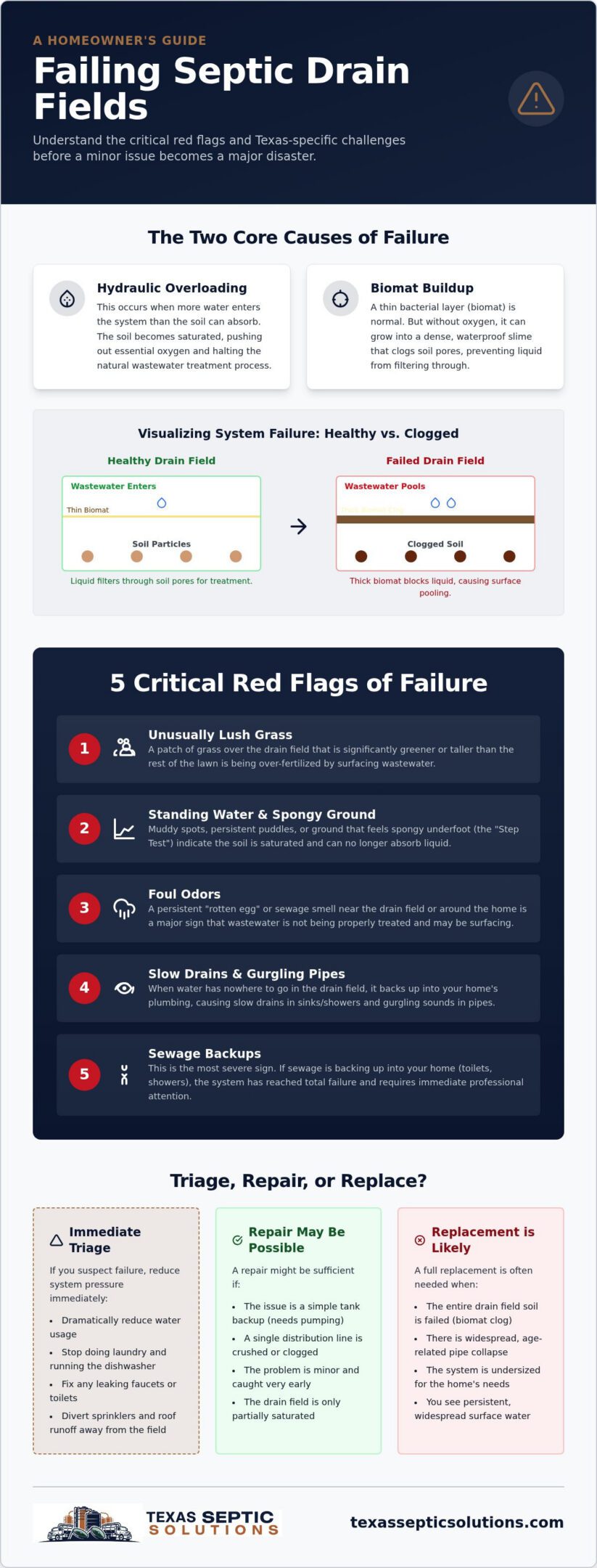
To work correctly, soil needs open pores to breathe and accept liquid effluent. When those pores stay filled with water, the oxygen is pushed out and the biological treatment process stops. This often happens because of “hydraulic overloading.” Hydraulic overloading is the primary cause of premature field death, occurring when more water enters the system than the soil can naturally process. When this happens, you will notice the signs of a failing septic drain field, such as wet spots in the yard that never seem to dry out, even after a week of Texas sunshine.
Biomat Buildup: The Invisible Clog
Inside every healthy system, a thin layer of specialized bacteria called “biomat” forms at the soil interface to help break down organic matter. Problems start when this layer grows out of control. Without enough oxygen, the biomat turns into a dense, waterproof slime that seals off the soil pores like a layer of thick paint. Many homeowners try to dump chemical “septic additives” down the drain to eat away this layer. In reality, these products rarely fix a thick biomat and can actually kill the beneficial bacteria your system needs. You’ll know the biomat has become a barrier when you see persistent puddles or dark, foul-smelling liquid on the surface. These are late-stage signs of a failing septic drain field that suggest the soil has lost its ability to filter and absorb effluent properly.
5 Red Flags of a Failing Septic Drain Field
Identifying a problem early can be the difference between a simple repair and a total system overhaul. While the internal mechanics of your tank are hidden, the signs of a failing septic drain field usually present themselves in plain sight. These warnings often start small, like a faint smell on a humid evening, before escalating into soggy patches in your yard. According to the EPA, recognizing common signs of a failing septic system is the first step toward protecting your property and the local water supply.
Visual Cues in Your Yard
Your lawn is often the most honest indicator of what’s happening underground. If you notice a strip of grass that is significantly greener, taller, or more lush than the rest of the yard, don’t assume your fertilizer is finally working. This “septic-fed” grass is a classic sign that effluent is surfacing rather than soaking deep into the soil. As the failure progresses, you might see standing water or muddy patches even during dry spells. We recommend performing the “Step Test” on your leach field. Walk across the area where the pipes are buried; if the ground feels spongy or bounces like a waterbed under your feet, the soil is likely saturated and can no longer absorb liquid. If you’re seeing these puddles, it’s a good time to have a local expert provide an honest assessment of your system’s health.
Auditory and Olfactory Warning Signs
Your nose and ears often catch a failure before your eyes do. A persistent “rotten egg” or sulfur smell wafting through the yard is a major red flag. While a dry P-trap in an unused guest bathroom can cause indoor odors, a failing drain field creates a smell that lingers outside or travels through your home’s vent stacks. These odors often get worse in the evening when the air is still or immediately after a heavy rain. Listen to your pipes as well. If you hear a distinct gurgling sound after the dishwasher runs or while the shower is draining, it’s the sound of air being trapped in the lines. This happens because the water has nowhere to go in a backed-up field, creating a “hydraulic heart attack” for your plumbing. Slow drains that don’t respond to a plunger are rarely just a simple clog; they are often the final signs of a failing septic drain field that has reached its limit.
Texas-Specific Factors: Clay Soil and Heavy Rains
Living in East Texas means dealing with soil that behaves differently than in other parts of the country. If you’re in Cleveland, Cypress, or Houston, you’re likely sitting on a thick layer of heavy clay. This “Houston Clay” is notorious for being dense and slow to absorb liquid. When you combine this with our high annual rainfall, it’s easy to see why homeowners here face unique challenges. Understanding these local factors helps you identify the signs of a failing septic drain field before a minor drainage issue turns into a yard-wide swamp.
The East Texas Clay Barrier
Perc tests are non-negotiable in our region because clay soil acts more like a barrier than a filter. When clay gets wet, it swells, effectively sealing off the tiny pores that allow effluent to drain away. This is why many new installations in Liberty and Harris counties require aerobic systems instead of conventional ones. Aerobic systems use oxygen to break down waste more efficiently, making them much better suited for ground that doesn’t “perc” well. If your conventional field is struggling with clay saturation, you will notice the ground stays wet and spongy long after the rain stops.
Weather Patterns and Septic Stress
Flash flooding and tropical storms are part of life here, but they’re incredibly hard on your septic system. During heavy downpours, the local water table rises, leaving your drain field with nowhere to push the effluent. This saturation is one of the most common Signs of Septic System Failure during the stormy spring season. Homeowners in river-adjacent towns often see their systems “lock up” when the ground becomes fully submerged, leading to immediate backups.
It’s not just the rain; our “Texas-sized” water usage plays a role too. Heavy irrigation for lush lawns or draining a swimming pool can overwhelm a field that’s already struggling with clay soil. To protect your system, ensure your gutters and landscape run-off are directed far away from the leach field area. If your pipes start gurgling every time we get a typical afternoon thunderstorm, these are early signs of a failing septic drain field that shouldn’t be ignored. Keeping a close eye on these local environmental stressors can save you from a high-pressure failure during the next big storm.
Triage: What to Do If You Suspect Failure
Discovering the signs of a failing septic drain field can feel like a race against time. Before the situation escalates into a full-scale backup, you need to take immediate control of your home’s water flow. Think of this as emergency triage for your property. By acting quickly, you might prevent permanent damage to the soil structure or save yourself from a costly indoor sewage mess. Our goal is to help you stabilize the system while we determine the best path forward for a long-term fix.
Step 1: Water Conservation Triage
Stop all laundry and dishwasher cycles right away. These appliances send large volumes of water into the tank in a short window, which a struggling field simply cannot handle. Limit your shower times to just a few minutes and only flush the toilets when it is absolutely necessary. Resting the field allows the soil to drain and the water table to drop slightly. While this won’t fix a structural failure or a thick biomat, this pause can sometimes provide a temporary reprieve and stop an active backup while you wait for a technician to arrive.
Step 2: Professional Diagnostic Inspection
You should schedule a septic system repair diagnostic rather than trying to guess the cause yourself. A professional will check the sludge levels in your tank and the integrity of the baffles, which are the components that prevent solids from flowing into your drain field. They’ll also use specialized tools to check for soil saturation levels and determine if the pipes are physically crushed or just clogged with biomat.
It is vital to understand the difference between a “full tank” and a “failed field” diagnosis. A full tank is part of the natural cycle and simply needs pumping to remove solids. A failed field, however, means the ground itself has lost its ability to absorb effluent. Pumping a tank when the field has failed is like emptying a bucket while it’s still sitting in a pond; it will fill right back up with groundwater or effluent within days. If you are ready for a clear answer on your system’s health, our team is standing by to provide a professional diagnostic inspection and honest advice on your next steps.
Solutions: Repair, Replacement, and Prevention
Once you have spotted the signs of a failing septic drain field, the next question is always about the fix. Don’t panic; not every wet spot in the yard requires a complete overhaul. Sometimes, a professional pumping can relieve the pressure on a struggling field, especially if the issue was caused by a temporary surge in water use. We also look at mechanical components like adding risers for easier access, replacing broken baffles, or installing an effluent filter to keep solids out of your lines. These smaller interventions can often extend the life of a system that is just starting to show its age.
Is Repair an Option?
We focus on identifying “fixable” issues first. If a heavy vehicle or piece of equipment crushed a lateral line, we can often replace that specific section of pipe to restore function. For fields clogged by minor biomat buildup, professional “field jetting” or specialized aeration can sometimes restore flow by breaking up the waterproof slime layer. However, it’s important to accept that a field has reached its end of life if the soil itself is completely saturated or “dead.” If a full rebuild is the only path forward, understanding the septic system replacement cost in Texas helps you plan for the investment without any surprises.
Long-Term Prevention for Texas Homeowners
Protecting your investment starts with routine septic system maintenance. A proactive septic system maintenance plan is the best way to prevent future field death by catching small issues before they turn into “hydraulic heart attacks.” Beyond professional care, you play a daily role in system health. Never drive or park over your drain field, as the weight compacts the soil and can easily snap buried pipes. Your landscaping choices also matter. Consider these tips for a healthy leach field:
- Plant only grass or shallow-rooted native plants over the leach field area.
- Avoid planting trees or large shrubs nearby, as roots will seek out the moisture in your pipes and cause massive blockages.
- Keep heavy equipment, trailers, and livestock off the area to maintain the soil’s ability to breathe and absorb water.
- Redirect all gutter downspouts and surface runoff away from the field to prevent soil drowning during our heavy Texas rains.
Staying ahead of the signs of a failing septic drain field through regular inspections ensures your system lasts for decades rather than years. We are here to help you navigate these choices with the honest, local expertise you expect from a neighbor. Whether you need a simple pump-out or a new installation, taking action now is the best way to protect your home and your wallet.
Protect Your Property with Proactive Care
Identifying the signs of a failing septic drain field early is the best way to avoid the stress of a yard-wide emergency or a costly interior backup. Whether you’re dealing with the slow drainage typical of Houston clay or the aftermath of an East Texas flash flood, you don’t have to face these utility challenges alone. We’ve explored how to spot the red flags, from lush grass to gurgling pipes, and the immediate steps you can take to stabilize your system. Now, it’s time to move from worry to a permanent resolution with an expert partner you can trust.
Texas Septic Solutions is your reliable local authority for expert troubleshooting and repair. We provide 24/7 emergency service to homeowners across Cleveland, Houston, and the surrounding communities. Our team is built to handle everything from routine maintenance to complex new installations with the straightforward, neighborly care you deserve. We take pride in helping our community maintain healthy, functional properties through honest assessments and high-quality workmanship.
Get a Professional Septic Inspection Today and ensure your home stays functional for years to come. We’re ready to help you solve the mess and get your system back on track.
Frequently Asked Questions
Can I fix a failing drain field myself?
No, you cannot legally perform major repairs or installations on a septic system yourself in Texas. State law requires all work to be performed by a TCEQ-licensed installer. Attempting a DIY fix often leads to more damage and potential fines from local health departments. It’s best to call a professional who understands the specific soil requirements and permit laws for your county.
How much does it cost to replace a drain field in Texas?
The total investment for a replacement depends on your soil type and whether you need a conventional or aerobic system. Aerobic units generally require a higher initial investment due to the mechanical components and required maintenance contracts. Factors like the size of your home and local permit fees also play a role. We recommend getting a site-specific evaluation to understand the exact scope of your project.
Will pumping my septic tank fix a failing drain field?
Pumping your tank is a maintenance task that removes solids, but it won’t fix a field where the soil is already saturated. If you are seeing signs of a failing septic drain field, the issue is likely a thick biomat or crushed pipes. Pumping might provide a few days of relief, but the tank will quickly fill back up if the ground can’t absorb the effluent.
How long does a typical septic drain field last in East Texas?
A well-maintained system typically lasts between 15 and 25 years. However, our local East Texas clay and heavy rainfall can shorten this lifespan if the system is overloaded. Regular pumping every three to five years is the best way to ensure you reach that 25-year mark. Without proper care, solids can escape the tank and clog your field much sooner than expected.
What happens if my septic tank alarm is going off?
An alarm indicates either a pump failure or a high-water situation in your tank. You should immediately stop all non-essential water use and check your breaker box to ensure the system has power. If the alarm persists, it means the effluent isn’t moving out to the drain field as it should. This is an urgent situation that requires a professional diagnostic to prevent a backup into your home.
Is standing water over my septic tank always a sign of failure?
Not necessarily, but it is a major red flag that needs investigation. Standing water could be caused by a leaky tank lid, a broken pipe, or simply poor surface drainage after a storm. However, if the water is foul-smelling or persists during dry weather, it is one of the clearest signs of a failing septic drain field. A quick inspection can determine if it’s a simple surface fix.
Can heavy rain cause my septic system to back up?
Yes, heavy rain can temporarily saturate the soil around your drain field, leaving the wastewater with nowhere to go. During tropical storms or prolonged wet spells, the ground becomes a full sponge that can’t accept more liquid. If your drains slow down only when it rains, it is a sign that your field is struggling with the local water table and may need better run-off management.
What is the best way to prevent drain field failure?
The most effective prevention is a combination of regular pumping and mindful water usage. Pumping every three to five years prevents solids from entering and clogging the soil pores. Additionally, avoiding water spikes from doing all your laundry on one day helps the field stay unsaturated. Protecting the area from heavy vehicles and planting only grass also ensures the soil remains loose and absorbent for decades.