
Septic System Replacement Cost in Cypress, TX: 2026 Price Guide
What if the most expensive part of your Cypress home isn’t the foundation or the roof, but the hidden system buried in your backyard? For many residents in Harris County, a failing septic unit is a source of constant anxiety, especially when modern environmental standards mean a simple repair is no longer an option. Understanding the septic system replacement cost Cypress homeowners face in 2026 is the first step toward regaining your peace of mind and protecting your property value.
It’s frustrating to watch your lawn turn into a swamp while you wait on paperwork and worry about your budget. You want a solution that works without destroying your landscaping or draining your savings. This guide provides a clear, transparent breakdown of the costs, regulations, and specific soil factors involved in upgrading your system this year. We will examine why Cypress clay often requires specific aerobic designs, explain how to handle Harris County permitting delays, and help you set a realistic budget for a professional, mess-free installation that lasts for decades.
Key Takeaways
- Cypress clay soil often dictates the type of system you need because traditional drainage fields frequently fail in heavy Texas dirt.
- Calculating the septic system replacement cost Cypress homeowners should expect involves more than just the tank; it includes decommissioning old units and site re-engineering.
- Aerobic systems are the gold standard for the local environment, offering high-tech reliability despite a higher initial investment than conventional options.
- Don’t overlook secondary expenses like Harris County permitting fees and the restoration of your landscaping once the heavy machinery leaves.
- Successful replacement depends on a professional soil perc test and engineering plans that meet strict 2026 environmental standards.
Why Septic System Replacement Cost in Cypress is Unique
Replacing a septic system in Cypress isn’t as simple as swapping out a water heater. It’s a comprehensive engineering project that involves decommissioning your old equipment and re-evaluating your land’s capacity to process waste. Many homeowners expect a “plug and play” solution, but modern environmental standards in Harris County require a full site re-design. This complexity is the primary driver for the septic system replacement cost Cypress residents encounter today.
The “Cypress Clay” factor is the biggest hurdle. Our local soil is famously dense, often classified as Class IV clay. This heavy material doesn’t absorb water well, which is why older conventional systems often fail. In 2026, Harris County regulations prioritize aerobic systems for these conditions to prevent groundwater contamination. While residential replacements focus on household capacity based on bedroom count, commercial systems must handle higher waste strength and fluctuating usage patterns, requiring more robust engineering.
The Impact of Cypress Soil on Your Budget
Your soil’s absorption rate, determined by a professional perc test, dictates your system type. If your land is primarily heavy clay, a traditional drain field won’t pass inspection. You’ll likely need an aerobic treatment unit that uses sprayers or drip irrigation. While these systems are more effective for our local geography, they require more components and professional design, which directly affects the septic system replacement cost Cypress homeowners pay. Finding “unsuitable” soil isn’t a dealbreaker, but it does shift the project from a simple installation to a specialized treatment solution.
New Construction vs. Septic Replacement Complexity
Installing a system on a “clean slate” lot is relatively straightforward. Replacement projects are different. We have to navigate around your existing home, mature trees, and perhaps a swimming pool or driveway. The process includes several labor-intensive steps:
- Pumping out the old tank to remove all residual waste.
- Crushing or filling the abandoned tank with sand or gravel to prevent future cave-ins.
- Carefully excavating near established utilities without causing damage.
These extra precautions ensure your property remains safe and stable. They also explain why a replacement often carries a higher price tag than a new installation where no existing structures or old tanks are in the way.
Comparing System Types: Conventional vs. Aerobic Costs
Choosing between a conventional and aerobic system is the most significant decision impacting your budget. While some property owners hope for the simpler gravity-fed option, the reality of Harris County soil often makes that impossible. The size of your home also plays a major role. Engineers calculate the required tank capacity based on the number of bedrooms rather than current occupancy. This ensures the system can handle the maximum potential load of the house, which directly influences the final septic system replacement cost Cypress contractors will quote.
Investing in the right technology prevents the nightmare of a second leach field failure. A modern aerobic system offers a much higher return on investment by providing a permanent solution to the drainage issues common in our area. If you aren’t sure which system your property qualifies for, you can consult with our team to review your soil requirements and local regulations. By choosing the system that matches your land’s specific needs, you avoid the hidden costs of premature repairs and environmental fines.
When is a Conventional System Still an Option?
Conventional systems are generally the most affordable to install, but they require specific sandy or loamy soil profiles to function. In many older Cypress subdivisions, these were the standard for decades. However, if your original drain field failed due to soil saturation, replacing it with another conventional system is often a gamble. Unless your site evaluation shows high absorption rates, Harris County inspectors may reject a conventional design. Saving money upfront doesn’t help if the system fails again because the clay won’t accept the effluent.
The Aerobic Advantage in Harris County
Aerobic systems act like a miniature municipal waste plant in your yard. They use oxygen to break down waste faster and more thoroughly than traditional tanks. This is the gold standard for Cypress because the treated water can be safely distributed through spray heads or drip irrigation lines on top of the clay. This technology is vital for smaller lots where a massive traditional drain field simply won’t fit. You should also account for the mandatory maintenance contracts required by Texas law for aerobic systems. These add a recurring cost but protect your long-term investment by ensuring the mechanical components, like aerators and pumps, stay in peak condition.
The Hidden Costs of Septic Replacement in Cypress
Most homeowners focus on the price of the new tank, but the total septic system replacement cost Cypress residents pay includes several logistical factors that aren’t always obvious in an initial estimate. Engineering and design fees are a prime example. Because Harris County requires stamped professional drawings for any On-Site Sewage Facility (OSSF) replacement, you can’t simply dig a hole and hope for the best. These professional plans ensure your new system is sized correctly for your home’s capacity and your land’s specific soil profile.
Electrical upgrades are another frequent “hidden” expense. Modern aerobic systems aren’t passive; they require a dedicated electrical circuit to power the aerator pump and the high-water alarm. If you’re replacing a 30-year-old conventional system, your existing electrical panel might need an upgrade or a new sub-panel to meet 2026 safety codes. This isn’t just a technicality. It’s a critical safety requirement that prevents system failure and ensures your alarms function during heavy Texas rains.
Decommissioning and Site Preparation
Old, failing tanks can’t just be left in the ground to rot. They represent a significant environmental and safety hazard. Proper decommissioning involves a specific sequence of actions:
- Pumping the tank completely empty to remove all residual waste.
- Crushing the lid or the tank itself to prevent future cave-ins.
- Filling the remaining cavity with clean sand or gravel to stabilize the ground.
Site preparation also involves managing your property’s existing features. If you have mature oak trees near the proposed drain field, we may need to remove them or install specialized root barriers. Roots are naturally drawn to the moisture in septic lines and can cause thousands of dollars in damage within just a few years if not managed during the initial installation phase.
Restoring Your Property Post-Installation
The heavy machinery required for excavation, such as backhoes and skid steers, will leave a footprint on your property. While we aim for minimal disruption, you should budget for site restoration. This often includes fresh sod to cover the disturbed earth and potentially repairing sections of your driveway if heavy delivery trucks had to cross concrete surfaces.
Soil settling is the final piece of the puzzle. After the installation, the dirt over the tank and lines will naturally settle over the first few months. We typically leave a slight mound to account for this compression, but you may want to plan for a final grading once the ground has stabilized. Understanding these logistical details helps you decide if your current issues require a septic system repair or if a complete replacement is the more cost-effective long-term move.
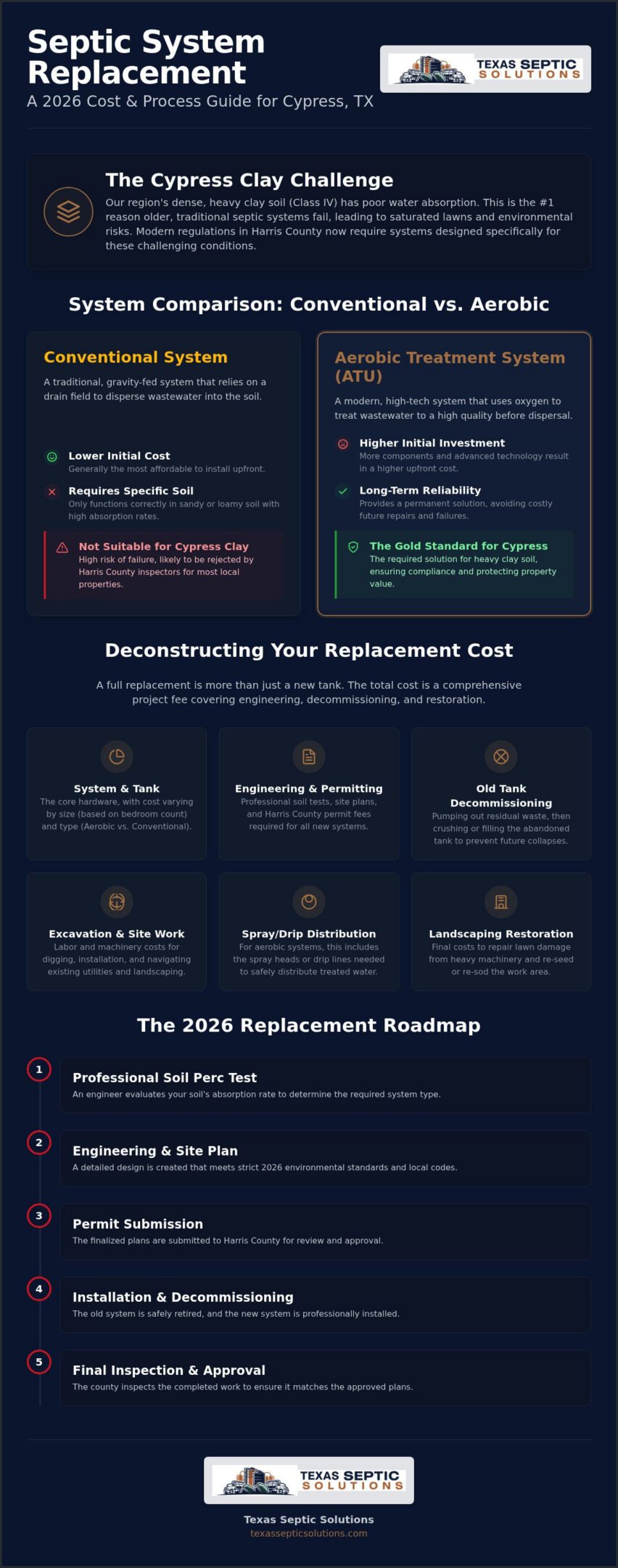
The 2026 Replacement Roadmap: Permits to Final Approval
Replacing your septic system follows a strict legal and technical sequence. Skipping a step doesn’t just invite fines; it can lead to system failure or significant issues when you try to sell your home. Understanding this timeline helps you manage expectations regarding the septic system replacement cost Cypress contractors provide, as each phase carries its own set of requirements and professional fees.
The process begins with a site evaluation and soil perc test. This data determines whether your land can support a conventional system or if an aerobic unit is mandatory. Once the soil data is in hand, a professional engineer creates the design. This stage is where your septic system replacement cost Cypress is finalized, as the engineering plans specify the exact components and materials needed for your specific lot. For a broader look at how these steps compare across the state, see our guide on septic system replacement cost in Texas.
Navigating Harris County OSSF Regulations
In 2026, Harris County has maintained a 30-business-day review cycle for all OSSF permit applications. This means you should plan for at least six weeks of lead time before any shovels hit the ground. While permit fees vary based on the system’s daily gallon capacity, they are a mandatory part of your initial budget. Trying to bypass this permit is a major mistake. Without a valid permit and a final inspection, your system is technically illegal. This can lead to heavy county fines and will almost certainly block the sale of your property during a title search. We handle the paperwork to ensure your project stays on the right side of the law from day one.
Working with a Professional Design Team
A skilled engineer does more than just draw lines on a map; they optimize the layout to save you money on materials and labor. They coordinate directly with the installer and county inspectors to ensure the design is practical for your backyard’s footprint. All Cypress residents must obtain an On-Site Sewage Facility (OSSF) permit from Harris County before beginning any replacement or installation work to ensure the system meets public health and environmental safety standards. Our team manages this entire coordination process so you don’t have to play middleman between engineers and bureaucrats. If you are ready to start your site evaluation, contact our team today to schedule a professional soil test.
Once the permit is issued, the messy phase begins. Excavation and installation usually take three to five days, depending on weather and site complexity. After the components are in the ground but before they are covered, a county inspector must verify the installation matches the approved plans. Only after this final check will you receive your Authorization to Operate (ATO), which is the official green light to start using your new system.
Choosing Texas Septic Solutions for Your Cypress Replacement
Choosing the right partner for your project is just as important as the system itself. At Texas Septic Solutions, we understand that a major utility failure is stressful. We treat every property like it belongs to a neighbor. Our team has extensive experience navigating the unique challenges of our local environment, from the dense Class IV clay to the specific expectations of Harris County inspectors. This local knowledge ensures that the septic system replacement cost Cypress homeowners receive from us is accurate, comprehensive, and free from the “surprises” that often plague less experienced contractors.
We don’t just finish the installation and disappear. A new system is a long-term investment that requires consistent care to function properly. We transition our clients from the installation phase directly into comprehensive care, providing 24/7 emergency support during those critical first weeks of operation. If a pump alarm sounds at midnight, you won’t be left searching for answers. We’re built for both the planned maintenance and the high-pressure demands of unexpected failures, ensuring your home stays functional and your family stays comfortable.
Our Local Expertise in Harris County
Permitting can be the most frustrating part of a replacement. We take that burden off your shoulders by managing the entire Harris County OSSF application process from start to finish. Our crews also prioritize the physical integrity of your land. We use specialized equipment and careful excavation techniques to minimize damage to your existing landscaping. Once your new unit is operational, we offer septic system maintenance plans to protect your investment and keep your property in compliance with state regulations.
Ready for a Reliable Replacement?
Securing your project slot for 2026 starts with a simple site evaluation. When you call to schedule your consultation, it’s helpful to have a copy of your property survey and any records of your current system’s location. This allows our designers to hit the ground running and provide an accurate assessment of your needs. We provide transparent, line-item breakdowns of the septic system replacement cost Cypress residents can expect, ensuring you can budget with confidence. Don’t wait for a total system collapse to take action. Contact our team today to schedule your professional site assessment and get your replacement roadmap started.
Secure Your Property’s Future with a Modern Septic System
Replacing a failing septic unit is a significant project, but it’s also an opportunity to upgrade your home’s infrastructure for the long haul. Dense Cypress clay and strict 2026 Harris County regulations make professional oversight essential. By understanding the factors that drive the septic system replacement cost Cypress homeowners face, you can make an informed decision that protects your property value and the local environment. A successful replacement requires a design that works with your land’s specific soil profile rather than fighting against it.
Texas Septic Solutions is here to guide you through every step. We are Harris County permitting specialists who include professional engineering in our comprehensive quotes. Whether you need 24/7 emergency service or a planned installation, our team ensures the process is transparent and stress-free. Don’t let a failing system disrupt your life any longer. Request Your Cypress Septic Replacement Estimate today and let our local experts handle the mess. You’ll gain the peace of mind that comes with a reliable, professionally installed system built to last.
Frequently Asked Questions
How much does it cost to replace a septic tank and drain field in Cypress, TX?
Your total investment depends on the soil type, home size, and system design. Since Cypress often features heavy clay, most replacements involve aerobic units which have higher component costs than conventional ones. A professional site evaluation is the only way to get an accurate quote for the septic system replacement cost Cypress properties require, as each lot presents unique engineering challenges and permitting fees.
Can I replace my own septic system in Harris County?
No, you cannot legally replace your own septic system in Harris County. Texas law requires that all On-Site Sewage Facilities (OSSF) be installed by a licensed professional. This ensures the system meets strict environmental codes and prevents groundwater contamination. Attempting a DIY replacement can lead to significant legal penalties and will prevent you from obtaining the mandatory Authorization to Operate.
How long does a septic system replacement take from start to finish?
The entire process typically takes six to eight weeks. The majority of this time is spent in the administrative phase, as Harris County currently maintains a 30-business-day review cycle for permit approvals. Once the permit is in hand, the physical excavation and installation usually take between three and five days, followed by a final inspection from the county before the system is covered.
Do I have to install an aerobic system if my conventional one fails?
You aren’t always forced into an aerobic system, but it’s the most common requirement for Cypress clay. If your soil perc test shows that the ground cannot absorb water at a specific rate, a conventional drain field will likely be rejected by inspectors. Aerobic systems are the reliable standard for local soil because they treat waste more effectively before distribution through spray or drip lines.
What happens to my old septic tank during a replacement?
Old tanks must be properly decommissioned according to state health codes. This involves pumping out all remaining waste, crushing the tank lid or the structure itself, and filling the void with clean sand or gravel. This process prevents the abandoned tank from becoming a safety hazard or collapsing in the future as the material degrades, ensuring your backyard remains stable and safe for use.
Will a septic replacement damage my existing landscaping or driveway?
Excavation requires heavy machinery like backhoes and skid steers, which will naturally disturb the immediate area. While we take every precaution to protect your property, you should expect some impact on your lawn. We work to minimize damage to driveways and mature trees, but planning for some minor landscaping restoration after the soil settles is a standard part of any replacement project.
Are there any permits required for septic replacement in Cypress?
Yes, an On-Site Sewage Facility (OSSF) permit from Harris County is mandatory for all replacements. This permit covers the review of your professional engineering plans and the final site inspection. Without this document and the subsequent Authorization to Operate, your system isn’t legally recognized, which can create major hurdles during a future home sale or lead to significant county fines.
How often should I maintain my new replacement system to avoid another failure?
Maintenance frequency depends on the system type, but aerobic units generally require a professional inspection every four months. Texas law mandates a maintenance contract for these systems to ensure aerators and pumps are functioning correctly. Regular upkeep prevents the septic system replacement cost Cypress homeowners just paid from being wasted on premature failures caused by neglect or simple mechanical issues that went unnoticed.