
Expert Septic Service for Commercial Properties in Cypress, TX
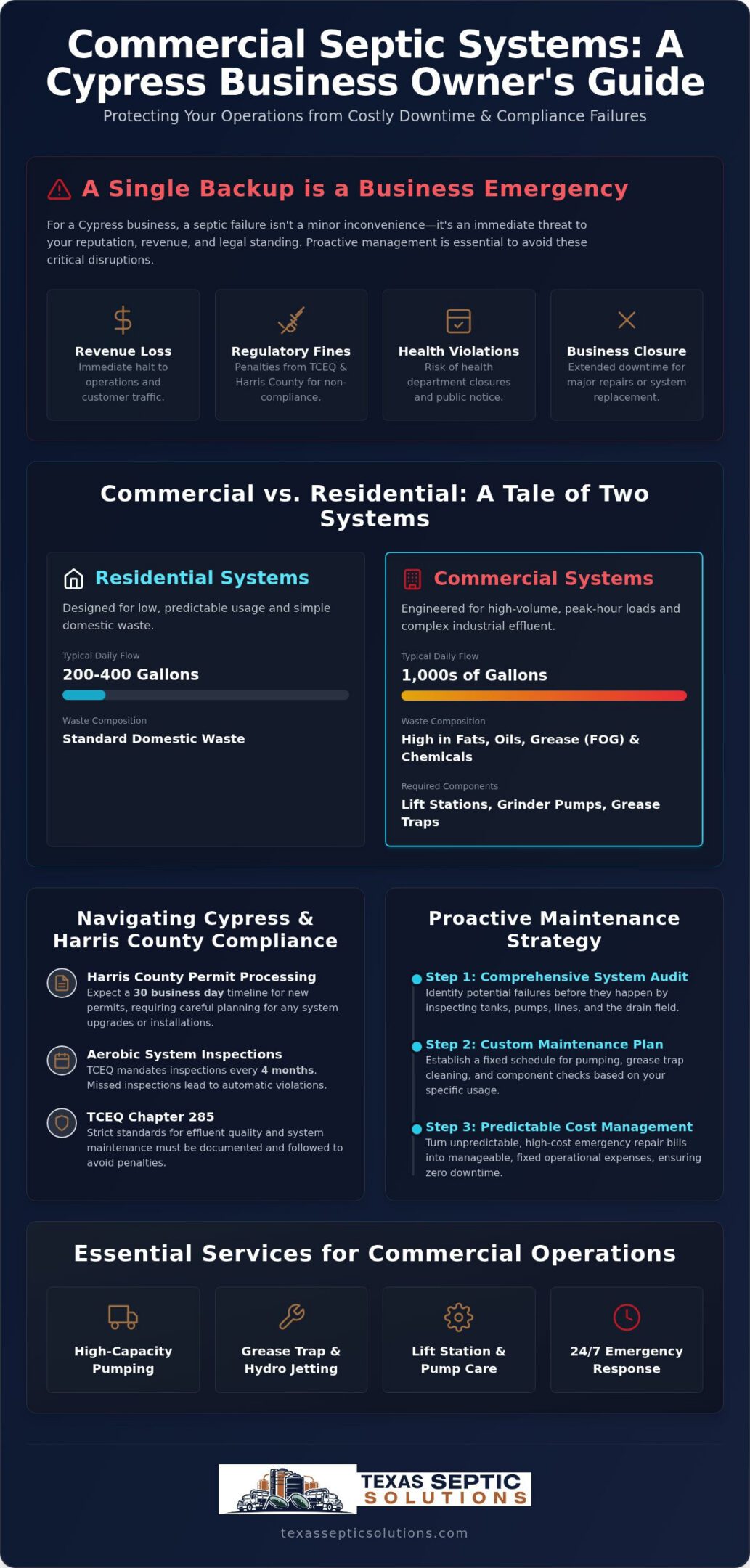
A single septic backup isn’t just a plumbing issue; for a Cypress business, it’s an immediate threat to your doors staying open and your revenue flowing. You’ve worked hard to build your reputation, and the last thing you need is a regulatory fine or a health department closure. Securing a dependable septic service for commercial properties Cypress business owners can rely on is essential when Harris County permit processing takes 30 business days and aerobic systems require inspections every four months.
We understand that you want your utilities to work quietly in the background so you can focus on your customers. You shouldn’t have to guess whether you’re meeting the latest TCEQ Chapter 285 requirements or if your next maintenance check is overdue. This guide simplifies the technical side of commercial septic management, ensuring you maintain zero downtime while staying fully compliant with local codes. We’ll walk you through essential maintenance schedules, permit renewal timelines, and the proactive strategies that turn unpredictable repair bills into manageable, fixed costs.
Key Takeaways
- Understand the critical differences between residential and commercial systems, specifically regarding high-volume flow rates and complex effluent chemistry.
- Discover why specialized septic service for commercial properties Cypress businesses depend on must include high-capacity pumping and routine grease trap care.
- Learn how to navigate strict TCEQ standards and Harris County permitting cycles to keep your business fully compliant and avoid legal penalties.
- Establish a proactive maintenance strategy by starting with a comprehensive system audit to identify potential failures before they cause downtime.
- Identify the value of a 24/7 emergency response partner to protect your business reputation and operational continuity during unexpected utility failures.
Why Commercial Septic Systems in Cypress Demand Specialized Service
A commercial septic system is a high-capacity infrastructure designed specifically for non-residential use. While the basic principles of how septic systems work remain the same, the scale and chemistry of the waste are fundamentally different. A typical home might process 200 to 400 gallons of water daily; a busy Cypress restaurant or office complex can easily exceed thousands. Because of this intensity, finding a specialized septic service for commercial properties Cypress business owners can rely on is a necessity for daily operations.
The geography of Cypress adds another layer of complexity. Our local area is dominated by heavy clay soils that don’t naturally drain well. For a high-volume business, this means the drain field must be engineered with precision. If the soil becomes saturated, you face the high cost of failure: health code violations, foul odors that drive away customers, and potential business shutdowns. Professional septic service for commercial properties Cypress helps prevent these disasters through targeted engineering and maintenance.
Industry-Specific Septic Requirements
Retail and office complexes primarily manage high-volume domestic waste. The challenge here is the sheer number of flushes during business hours. In contrast, restaurants and food service providers deal with effluent high in fats, oils, and grease (FOG). Without integrated grease trap maintenance, these substances solidify and choke the system. For HOAs and multi-family units, the choice between centralized and decentralized management depends on the property layout, but both require consistent monitoring to ensure every resident stays connected and compliant.
The Science of High-Flow Effluent
Large-scale systems must process heavy loads during peak business hours. To handle this, many commercial setups utilize lift stations and grinder pumps to move waste efficiently, even across flat or uneven terrain. These components are the workhorses of the system, preventing clogs and ensuring waste reaches the treatment tank at a steady rate. Peak flow management refers to the system’s engineered capacity to process maximum wastewater volume during a business’s busiest operating hours without backing up or flooding the drain field. Without this specialized design, a system that works fine at 9:00 AM might fail completely by the noon lunch rush.
Essential Commercial Septic Services for Cypress Businesses
Maintaining a business facility in Cypress requires more than just reactive fixes. It demands a suite of specialized solutions designed to handle the high stress of commercial use. Professional septic service for commercial properties Cypress provides the heavy-duty equipment and technical expertise necessary to manage infrastructure that a standard residential truck simply can’t handle. Choosing a local expert for septic service for commercial properties Cypress ensures that your specific soil conditions and Harris County regulations are always prioritized.
Commercial Septic Pumping and Sludge Management
Unlike residential tanks, commercial units accumulate sludge at an accelerated rate. Determining your pumping frequency depends on your specific business type and daily occupancy levels. While standard tanks vary, TCEQ rules require aerobic septic systems to be inspected every four months. Following a consistent commercial septic maintenance strategy ensures that sludge never reaches the outlet pipe, which would cause a catastrophic backup. When we perform large-scale pumping, we manage the entire process from extraction to environmental documentation, keeping your business compliant with local standards.
Lift Station and Grinder Pump Care
In many Cypress properties, gravity isn’t enough to move waste to the treatment tank. Lift stations act as the heart of these systems, using powerful pumps to move effluent uphill or across long distances. Grinder pumps are equally vital, breaking down solids to prevent clogs in smaller diameter lines. Common failure points include float switch malfunctions or electrical issues caused by heavy storms. Because a pump failure can shut down your entire building in minutes, many high-risk properties benefit from 24/7 monitoring systems that alert you to issues before the alarms sound.
For our local food service partners, grease trap cleaning isn’t optional. It’s a critical hygiene requirement. When lines do get sluggish, advanced hydro jetting uses high-pressure water to scrub the interior of your pipes, removing years of scale and debris. This proactive clearing prevents the emergency calls that always seem to happen during your busiest shift. If you aren’t sure when your system was last serviced, scheduling professional septic system maintenance is the best way to establish a baseline for your property’s health.
Navigating Cypress and Harris County Septic Compliance
Compliance isn’t just about filing paperwork; it’s a legal requirement for keeping your doors open. In Cypress, the Texas Commission on Environmental Quality (TCEQ) sets the baseline standards through Chapter 285, but Harris County Environmental Health acts as the local enforcement authority. This means local officials handle the permitting, inspections, and enforcement of state rules. When you hire a septic service for commercial properties Cypress business owners can trust, you’re getting a partner who understands the role of the Designated Representative (DR). This official is responsible for reviewing your site plans and issuing the critical Authorization to Construct.
Permitting for New Commercial Installations
The path to a new system begins with a rigorous design phase. Because of the unique soil conditions in our area, a site evaluation and soil testing are mandatory before any blueprints are drawn. For a commercial food establishment, Harris County requires that the design be signed and sealed by a Professional Engineer registered in the State of Texas. Other commercial properties might use a Licensed Registered Sanitarian. Once your application is submitted, the permit processing time is 30 business days. It’s vital to coordinate your construction schedule around this window, as your permit is only valid for one year from the date of issuance.
Mandatory Maintenance Contracts
Most commercial properties in Cypress utilize aerobic treatment units to handle high waste volumes. Harris County requires all owners of permitted On-Site Sewage Facilities (OSSF) to maintain a continual contract with a licensed maintenance provider. According to TCEQ rules, these systems must be inspected every four months to ensure they meet water quality standards. Choosing a reliable septic service for commercial properties Cypress ensures these inspections are performed on time and reported correctly to the county. Failing to maintain this contract can lead to permit revocation and significant fines. If a system fails an inspection, a reinspection fee of $97 is typically charged, making proactive care the most cost-effective path for your business.
Accurate record-keeping is your best defense during a regulatory audit. You should always keep a physical or digital log of every pumping visit, repair, and inspection report on-site. These documents prove that you’re operating within the law and help maintain the value of your property. If you’re taking over a new commercial location, remember that the fee to transfer an existing septic permit is $138, and this must be handled promptly to avoid compliance gaps.
Developing a Commercial Septic Maintenance Strategy
A successful strategy starts with a comprehensive system audit to establish a baseline of health. You can’t manage what you haven’t measured. This audit identifies current sludge levels, the condition of your baffles, and the mechanical efficiency of your pumps. Once we have this data, we can customize a pumping schedule that matches your actual business load rather than relying on generic estimates. Implementing a proactive septic system maintenance plan is the most effective way to prevent the sudden failures that disrupt your operations and irritate your customers.
Your staff plays a daily role in system health. Training your team on what should and shouldn’t go down a commercial drain is vital for long-term functionality. Common culprits that cause blockages include:
- “Flushable” wipes and paper towels that don’t break down like toilet tissue.
- Fats, oils, and grease from kitchen operations.
- Harsh chemical cleaners that kill the beneficial bacteria in your tank.
- Large food scraps that should go in the trash or compost.
A simple sign in the restroom or a brief training session for your kitchen crew can save thousands in avoidable repairs. When everyone is on the same page, your septic service for commercial properties Cypress runs much more smoothly.
Proactive Troubleshooting and Early Warning Signs
If you ever hear a septic tank alarm going off, treat it as an emergency. It usually indicates a high water level or a pump failure that requires immediate attention to prevent a backup into your building. Other signs of stress include slow-moving drains and persistent odors around the property. Monitoring your drain field health is also essential; if the grass is unusually lush or the ground feels spongy, your system is struggling to process effluent. Addressing these early warning signs through expert septic service for commercial properties Cypress prevents a minor issue from becoming a total system failure.
Budgeting for Long-Term System Health
Smart business owners allocate funds for routine maintenance to avoid the high costs of emergency repairs. While maintenance has a fixed cost, the septic system replacement cost for a commercial property can be a significant capital expense. Regular care extends the lifespan of expensive components like lift station pumps and aerators. By investing in professional care, you turn a potential liability into a predictable utility cost. Contact us today to schedule your commercial system audit and build a plan tailored specifically to your facility’s needs.
Texas Septic Solutions: Cypress Commercial Septic Experts
Texas Septic Solutions stands as a dedicated partner for the local business community. We know that when your utilities fail, your revenue stops. That’s why we provide the most reliable septic service for commercial properties Cypress has to offer, backed by a commitment to keeping our neighbors operational. We don’t just fix pipes; we protect your business reputation by ensuring your facility remains clean, compliant, and open for customers.
Our team remains on standby 24/7 for commercial emergencies. We arrive quickly with the heavy-duty equipment needed to handle high-capacity tanks and complex lift stations that smaller residential trucks can’t manage. We offer a comprehensive one-stop model, managing everything from initial system design to professional septic system repair. Property managers appreciate our transparent reporting. We provide all necessary compliance documentation to satisfy Harris County audits, so you never have to scramble for paperwork when an inspector visits.
Why Local Expertise Matters
Cypress presents specific challenges that outside contractors often overlook. Our heavy clay soils and frequent flash flooding can put immense pressure on a commercial drain field, leading to premature failure if the system isn’t managed correctly. We understand these local patterns because we live and work here. We’ve also built long-term relationships with Harris County inspectors, which helps us navigate the permitting and approval process with minimal friction. We approach every complex commercial problem with the calm authority of a neighbor who has seen it all before and knows exactly how to resolve it.
Get Started with a Commercial System Audit
Starting with us is simple and direct. You can schedule your first commercial system audit by contacting our office today. During our initial site visit, we perform a thorough inspection of your tanks, lift stations, and alarm systems to identify any hidden vulnerabilities. We don’t believe in one-size-fits-all pricing. Instead, we provide customized service quotes based on your specific industry needs and waste volume. This ensures you only pay for the level of care your facility actually requires to stay healthy. Whether you run a busy restaurant or manage a large office complex, we’re ready to build a maintenance plan that fits your budget and your schedule.
Secure Your Business Continuity with Expert Septic Care
A functional septic system is the backbone of your property’s daily operations. By shifting from reactive repairs to a proactive maintenance strategy, you protect your business from the sudden closures and regulatory headaches that plague unprepared managers. Managing the heavy clay soils of Cypress and the high wastewater volumes of a commercial facility requires a specialized touch. Staying ahead of Harris County’s strict inspection cycles and managing high-flow effluent ensures that your utilities remain a silent, reliable asset rather than a constant source of stress.
Partnering with a dedicated septic service for commercial properties Cypress businesses trust provides the peace of mind you need to focus on growth. Our Licensed Harris County Technicians are ready to handle everything from 24/7 Emergency Response to Comprehensive Compliance Management. We understand the local landscape and the importance of keeping your doors open without interruption. Reliability isn’t just a promise; it’s the standard we bring to every property we serve.
Ready to stabilize your maintenance costs and ensure long-term system health? Schedule Your Commercial Septic Audit with Texas Septic Solutions today. We’re here to help your business stay operational and compliant for years to come.
Frequently Asked Questions
How often should a commercial septic tank be pumped in Cypress?
Pumping frequency depends on your specific business volume and the size of your tank. While residential tanks might go years, high-traffic businesses often need service annually or even quarterly. Regular septic service for commercial properties Cypress facilities use includes checking sludge levels during your mandatory four-month inspections. This ensures your tank never reaches a critical point where solids escape into the drain field, which would cause an expensive failure.
What are the main differences between residential and commercial septic services?
Commercial services handle significantly higher wastewater volumes and more complex effluent, such as fats and oils from restaurants. These systems often require specialized infrastructure like lift stations and grinder pumps that aren’t found in standard homes. Additionally, commercial properties face much stricter regulatory audits and more frequent mandatory inspections from Harris County to ensure public health standards are met across the Cypress community.
Do I need a special permit for a commercial septic system in Harris County?
Yes, all commercial septic systems in Harris County require specific permits from the Environmental Health department. You must obtain an Authorization to Construct before breaking ground and an Authorization to Operate once the installation is complete. These permits are valid for one year, and the application process typically takes 30 business days. Working with an expert helps ensure your engineering plans meet all local requirements on the first submission.
Can a failing commercial septic system cause my business to be fined?
A failing system can lead to substantial fines and even the immediate closure of your business by the health department. TCEQ and Harris County officials enforce strict standards to prevent environmental contamination. If your system overflows or leaks untreated waste, you’re liable for cleanup costs and legal penalties. Maintaining a reliable septic service for commercial properties Cypress business owners trust is the best way to prevent these liabilities.
What should I do if my commercial septic alarm goes off after hours?
You should immediately minimize water usage and silence the alarm, then call for professional assistance. An active alarm usually means the water level in your tank is too high or a pump has stopped working. Because commercial systems process large amounts of waste, you have a limited window before a backup occurs. We provide 24/7 emergency support to address these critical failures before they impact your morning opening.
How much does a commercial septic maintenance plan cost?
Maintenance plan costs are customized based on the complexity of your system and your industry’s specific waste output. A retail center with standard restrooms has different needs than a large-scale food processing facility or an apartment complex. We provide detailed quotes after a site audit to ensure you aren’t overpaying for services you don’t need while still meeting every mandatory Harris County inspection requirement.
Are grease traps required for all commercial properties in Cypress?
Grease traps are only mandatory for facilities that prepare or serve food, such as restaurants, laundries, or school cafeterias. These devices prevent fats, oils, and grease from entering the main septic tank where they could cause massive clogs. If your commercial property only has standard office restrooms, you likely don’t need one. However, we can verify your specific requirements during a routine system evaluation.
How long does a commercial septic system installation take?
A complete installation typically takes several weeks from the initial design phase to final county approval. The actual construction on-site might only take five to ten days, but you must account for the 30-day permit processing window required by Harris County. Soil testing and professional engineering design also add time to the front end. We coordinate the entire timeline to minimize disruptions to your property’s development or operations.