
Septic Inspection for New Construction in Houston: The 2026 Homeowner’s Checklist
Imagine moving into your brand new home, only to find your backyard transformed into a soggy, foul smelling swamp after the very first week. It’s a nightmare scenario that happens more often than most Houston homeowners realize, especially when subcontractors rush through the critical underground work. A professional septic inspection for new construction Houston is your primary defense to ensure your waste management system is actually prepared for the reality of our local environment.
We understand the stress of managing a new build, especially when you’re trying to decode the differences between Harris and Montgomery County regulations or worrying about how our infamous “black gumbo” clay soil will affect your drainage. You deserve to know that the system you paid for matches the permitted design exactly. This 2026 checklist provides the peace of mind you need before your builder’s warranty period begins. We’ll walk you through the necessary verification steps, from analyzing soil absorption to confirming the final installation, so you can move in with total confidence in your new home’s longevity.
Key Takeaways
- Understand why Houston’s unique “black gumbo” clay soil requires specialized system verifications to prevent drainage failure in your first year of homeownership.
- Learn how a professional septic inspection for new construction Houston protects your investment by identifying installation shortcuts before the pipes are buried.
- Get a step-by-step checklist to verify tank integrity, level placement, and riser accessibility during the critical open-trench phase of construction.
- Navigate the 2026 regulatory landscape, including updated TCEQ standards and specific permitting nuances for Harris, Montgomery, and Liberty counties.
- Discover the importance of transitioning immediately from a builder’s installation to a long-term maintenance plan to satisfy Texas law and ensure system longevity.
Why New Construction Septic Inspections Are Critical in Houston
A septic inspection for new construction Houston is a specialized audit designed to verify that your On-Site Sewage Facility (OSSF) meets both Texas state standards and local county health requirements. While your builder might tell you the county already signed off, it’s vital to distinguish between a basic regulatory check and a comprehensive private evaluation. County officials typically look for minimum code compliance. A private professional inspection, however, verifies that the system is actually built to survive the specific environmental pressures of Southeast Texas. We look for the small installation errors that lead to big headaches once the moving trucks arrive.
Houston Soil and Drainage Challenges
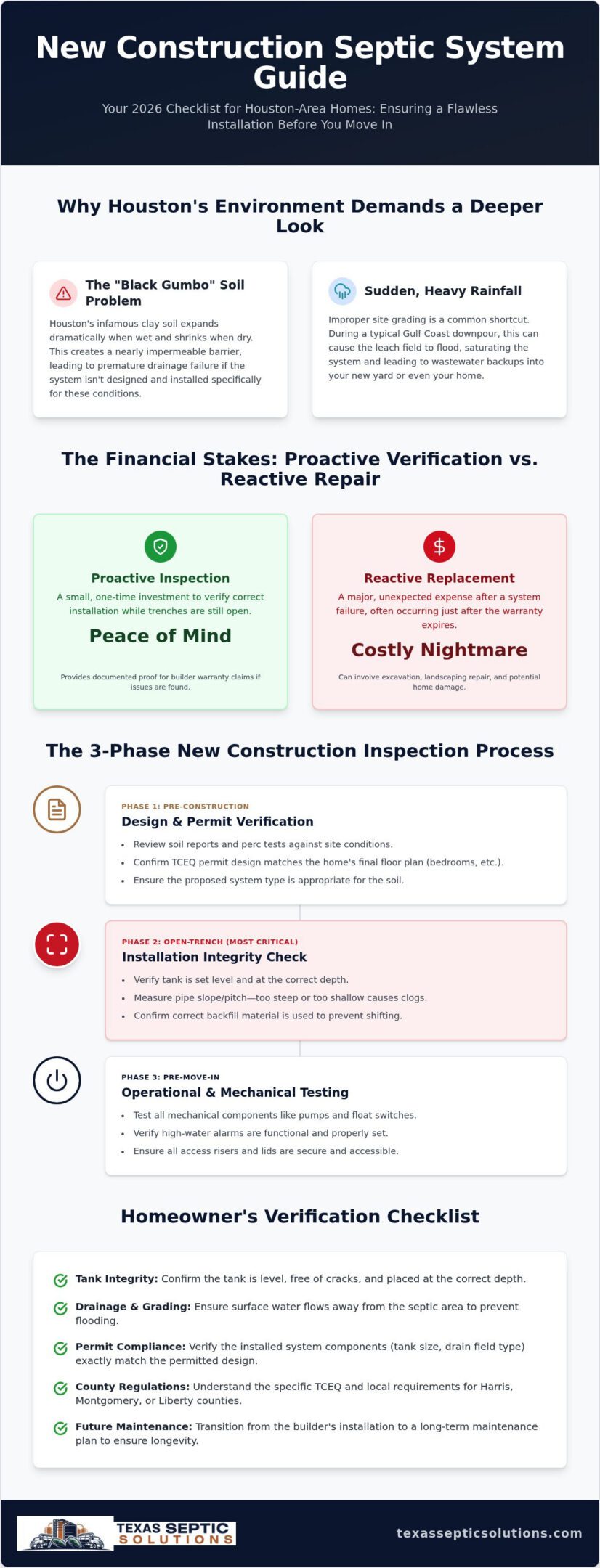
The primary antagonist for any local septic system is our infamous “Black Gumbo” soil. In 2026, Black Gumbo remains the most challenging soil type for local septic design because its high clay content expands when wet and shrinks when dry, creating a virtually impermeable barrier for wastewater. In areas like Cypress and Huffman, this soil often dictates a move away from traditional gravity systems toward advanced aerobic treatment units. These aerobic systems are better suited for clay because they treat the water more thoroughly before it ever touches the ground.
Without proper drainage, Houston’s heavy, sudden rainfall can quickly saturate a leach field that wasn’t graded correctly during the construction phase. If the builder hasn’t ensured that surface water flows away from the septic area, your brand new system could be underwater before you even unpack. We check for these grading errors to ensure your system remains functional even during a typical Gulf Coast downpour. Understanding how septic tanks work helps you realize that the soil around the tank is just as important as the tank itself.
The Financial Stakes of a Faulty Installation
Discovering a failure after the builder has moved on is an expensive lesson. If a subcontractor cut corners on the pipe slope or used the wrong backfill material, the resulting backup can occur within months. These issues are often difficult to prove as builder defects once the ground is settled and the grass is grown. An independent inspection provides the documented evidence you need for home warranty claims. It ensures you aren’t left footing the bill for a septic system replacement cost that could have been avoided with a simple pre-burial check. Protecting your investment starts with verifying the work while the trenches are still open.
The 3-Phase Inspection Process for New Septic Systems
A typical real estate inspection happens on a single afternoon. However, a proper septic inspection for new construction Houston requires a multi-stage approach. You can’t verify the integrity of a buried tank or the pitch of a pipe once the yard is landscaped. By breaking the process into three distinct phases, we ensure every “invisible” component is installed correctly. This proactive strategy catches errors while they are still easy and inexpensive to fix.
Verifying the Design and Soil Perc Test
The first phase happens on paper before construction begins. We review the soil morphology report and the perc test to ensure they align with the actual site conditions we see on the ground. It’s surprisingly common for a system to be designed for a three-bedroom home when the final floor plan includes a fourth bedroom or a heavy-use “bonus” room. We verify that your TCEQ permit documents reflect the true load your family will place on the system. Starting with the right design prevents the system from being overwhelmed in its first year of service.
Open-Trench Verification
Phase two is the most critical step for long-term reliability. During the open-trench inspection, we verify the tank depth and the specific slope of the pipes. If the pitch is too shallow, waste won’t move; if it’s too steep, liquids outrun solids, leading to clogs. We also confirm the tank is level and that the backfill material won’t cause shifting later. If you’re currently in the middle of a build, now is the time to schedule a professional review of your installation while the components are still visible.
Operational Testing Before Move-In
The final phase is the operational walkthrough. This is where we transition from physical layout to mechanical performance. We test the float switches, verify the high-water alarms, and ensure the control panel is wired safely and remains accessible for future service. For aerobic systems common in the Houston suburbs, we also check the spray pattern of the heads to ensure even distribution and prevent “dead zones” in the yard. This thorough process is about more than just checking boxes; it’s about maintaining your septic system for the decades to come. Catching a misaligned baffle or a faulty pump before the builder hands over the keys saves you from emergency repairs during your first holiday in the new house.
The Ultimate New Build Septic Checklist for Houston Homeowners
Walking through your new home site can be overwhelming, but your septic system requires specific attention before the final landscape is installed. A comprehensive septic inspection for new construction Houston ensures that the installation isn’t just finished, but functional. We’ve developed this checklist to help you verify the most critical components alongside your inspector. From physical tank integrity to site setbacks, these points protect you from the “black gumbo” soil issues and drainage failures common in our region.
- Tank Integrity and Leveling: Confirm the tank is perfectly level and shows no manufacturing cracks. In shifting Houston clay, a tank that starts off-level will only worsen as the ground settles.
- Drain Field Protection: Verify that heavy construction machinery hasn’t driven over the leach field area. Compacted soil ruins the absorption capacity of even the best-designed systems.
- Electrical Compliance: Ensure the septic pump and aerator are on a dedicated circuit. We often see systems piggybacked onto other outdoor outlets, which leads to frequent tripped breakers.
- Distance Requirements: Confirm all setbacks are met. This includes staying at least 50 feet from water wells and 5 to 10 feet from property lines and home foundations, depending on your specific county permit.
Component-Specific Checkpoints
Pay close attention to the septic tank risers. These should be installed at or slightly above grade with secure, watertight lids. This allows for easy maintenance without digging up your yard later. For those installing aerobic systems, check the sprinkler head placement. They should never spray directly onto your home’s foundation, driveway, or neighboring properties. We also verify that the control box has proper weatherproof warning labels and that the high-water alarm is clearly audible from the house.
Documentation and Warranty Checklist
Your physical system is only half the story; you also need the right paperwork to satisfy Texas law. Secure the “As-Built” drawings from your contractor. These show the exact location of every buried pipe and tank, which is invaluable for future repairs. Under Texas Commission on Environmental Quality (TCEQ) regulations, every new aerobic system must include a mandatory two-year maintenance contract. This contract should provide at least three inspections per year by a licensed provider. Finally, verify the manufacturer warranties on the aerator and pump. Having these documents in hand before the builder leaves the site ensures you are fully protected during the critical first years of operation.
Navigating Houston Regulations and County Requirements
Understanding the regulatory web is a vital final hurdle for your new build. In Texas, the Texas Commission on Environmental Quality (TCEQ) sets the baseline for On-Site Sewage Facilities (OSSF) through Chapter 285 regulations. However, the actual enforcement happens at the local level. Whether you are building in Harris, Montgomery, or Liberty County, the specific rules for your septic inspection for new construction Houston will vary based on local health department priorities. A common mistake is assuming your system can mirror a neighbor’s older setup. Grandfathered rules never apply to new projects; your 2026 build must meet the most current, stringent standards for wastewater treatment and environmental safety.
Harris County often implements more frequent design audits and stricter electronic reporting compared to the more rural requirements sometimes found in Liberty County. Montgomery County has its own specific nuances, particularly regarding how close aerobic spray heads can be to neighboring property lines. Regardless of the county line, Texas law mandates a two-year initial maintenance contract for every new aerobic system. This ensures the system is monitored by a professional during its most vulnerable early stage of operation.
Permitting and Compliance in the Houston Area
Verification is your best tool for long-term protection. Always confirm that your installer is a Licensed On-Site Sewage Facility (OSSF) professional in good standing with the state. The timeline for your project is also regulated; the typical window from submitting an application to receiving a final “Authority to Construct” notice ranges from 4 to 10 weeks. In 2026, Harris County mandates that all maintenance providers must electronically file inspection reports within 14 days of a site visit to ensure real-time regulatory oversight. This level of scrutiny helps prevent environmental contamination in our densely populated suburbs.
Local Setback and Landscape Rules
Your yard layout must respect the “dead zone” created by your septic system. You cannot plant heavy-rooted trees like oaks or willows near the drain field, as their roots will eventually seek out and destroy your pipes. Similarly, swimming pools and heavy outbuildings must maintain strict setbacks to prevent soil compaction or structural damage to the tanks. Managing water runoff is equally important. Ensure that gutters and driveways don’t dump excess water onto your leach field, which could lead to premature saturation. Integrating a septic system maintenance plan early in the process helps you manage these landscape choices effectively. If you are ready to ensure your new build is fully compliant, schedule your final inspection with our expert team today.
Partnering with Texas Septic Solutions for Your New Home
Choosing a partner for your septic inspection for new construction Houston is about more than just checking a box for the county. It’s about having a dedicated advocate who ensures your builder’s subcontractors didn’t take shortcuts that will cost you thousands later. Our team brings deep local expertise to projects in Cleveland, Houston, and Cypress. We understand the specific soil conditions and water tables in these areas, allowing us to spot potential issues that a general home inspector might miss. We aren’t just looking at the tank; we are looking at the future of your property.
Moving into a new home is a whirlwind, and the last thing you need is a waste management failure during your first month. While new systems are designed to be robust, “first-month” hiccups can happen as the system adjusts to your family’s actual usage patterns. We provide 24/7 emergency support to address these rare but stressful events immediately. This level of readiness is part of our commitment to being your reliable local authority, standing by our work and our community long after the final inspection is signed.
Beyond the Inspection: Long-Term Reliability
A successful inspection is just the beginning of your system’s lifecycle. To keep your investment healthy for decades, it’s essential to transition into a proactive maintenance program. Regular oversight helps you avoid the high costs of premature septic repairs and ensures your system remains compliant with Texas state law. We also provide expert pumping services, which are critical for preventing solids from entering and damaging your drain field. We take pride in being your neighborly expert, offering straightforward advice and dependable service for the life of your home.
Get Started with Your Houston Septic Inspection
Scheduling a phase inspection during your build is the smartest way to protect your new investment. We work around your construction timeline to ensure we are on-site during the critical open-trench and final operational phases. After our visit, you’ll receive a comprehensive inspection report that documents every component’s status and highlights any areas requiring the builder’s attention before you close. Don’t leave your home’s most vital utility to chance. Schedule your new construction septic inspection with Texas Septic Solutions today!
Secure Your New Home’s Future Today
Building a home in the Greater Houston area is a significant milestone, but don’t let a hidden installation error overshadow your move-in day. By following a structured 3-phase inspection and verifying every component before the trenches are filled, you protect your property from the unique challenges of our local environment. A professional septic inspection for new construction Houston is the most effective way to ensure your system is ready for the demands of your household and the realities of our heavy clay soil.
Our TCEQ licensed professionals serve Houston, Cypress, and Cleveland with dependable, expert care. We understand the local regulations and provide the 24/7 emergency response you need for total confidence in your new utility. Whether you are still in the design phase or nearing the final walkthrough, we are here to act as your reliable local authority and long-term maintenance partner.
Protect your new investment-Book your Houston septic inspection now!
You’ve put immense effort into every detail of your new house. Let’s work together to make sure your septic system is built to last just as long as the foundation above it.
Frequently Asked Questions
Is a septic inspection required for new construction in Houston?
Yes, all new On-Site Sewage Facilities (OSSF) must be permitted and inspected to comply with TCEQ and local county health department standards. While the county performs a final sign-off, a private septic inspection for new construction Houston is highly recommended to verify that the installation meets the design specifications and will function correctly in local soil. This ensures the system is safe before the house is occupied.
Who pays for the septic inspection on a new build house?
The homeowner or the builder typically covers the cost, depending on your construction contract. In many custom builds, the homeowner hires an independent expert to verify the subcontractor’s work. It’s a small investment that provides documentation for your home warranty. Checking your contract early helps clarify if these professional verification fees are included in your closing costs or if they are an out-of-pocket expense.
How long does a new construction septic inspection take?
A single phase of the inspection usually takes between one and two hours on-site. However, a full septic inspection for new construction Houston is best performed in stages, such as the open-trench phase and the final operational test. This multi-visit approach ensures we see the components before they are buried. We provide a detailed report shortly after each visit so you can stay on schedule with your builder.
What happens if the septic system fails the inspection before I move in?
If we identify a failure or a code violation, the builder must correct the issue before the county issues a final “Authority to Use” permit. Common fixes include adjusting the pipe slope or replacing a faulty pump. Having an independent report allows you to hold the builder accountable while their crew is still on-site. We then perform a re-inspection to confirm the repairs meet the necessary standards.
Can I use a regular home inspector for my septic system check?
Most general home inspectors lack the specialized licensing and equipment needed for a thorough OSSF evaluation. Texas law requires specific licensing for septic professionals who design, install, or maintain these systems. A dedicated septic expert understands the mechanics of aerobic units and the nuances of local soil morphology. We use specialized tools to verify tank integrity and pump performance that a general inspector simply won’t have.
Why do new aerobic systems in Texas require a maintenance contract?
Texas Commission on Environmental Quality (TCEQ) rules mandate a two-year initial maintenance contract for all new aerobic systems. These systems are essentially small-scale wastewater treatment plants that require regular monitoring to stay safe and effective. The contract ensures a licensed professional checks the aerator, clarifies the tank, and tests the chlorine levels at least three times a year. This requirement protects the local groundwater and your system.
What are the signs that a new septic system was installed incorrectly?
Immediate red flags include foul odors, gurgling drains, or soggy spots in the yard where the sprinklers shouldn’t be saturating the ground. You might also notice the high-water alarm tripping frequently or the air compressor running constantly without a break. These signs often point to improper grading, poor pipe pitch, or faulty electrical wiring. Catching these issues during a professional inspection prevents them from becoming catastrophic failures later.
Does the Houston clay soil require a special type of septic system?
Yes, the heavy “black gumbo” clay common in Houston usually necessitates an aerobic treatment system rather than a traditional gravity-fed drain field. Clay soil doesn’t absorb water well, which can cause conventional systems to fail or back up. Aerobic systems treat the effluent to a higher standard and then spray it over the surface or use drip irrigation. This design bypasses the drainage limitations of our local soil.