
The Ultimate Septic Certification Checklist for Home Sales in Cleveland, TX (2026)
Imagine you’re just days away from closing on your property in Cleveland, but your buyer’s lender suddenly halts the process because they’re missing a formal Liberty County septic verification report. It’s a nightmare scenario that happens more often than most homeowners realize during the high-pressure option period. Whether you’re dealing with tight deadlines or complex FHA and VA loan requirements, the uncertainty of a septic inspection shouldn’t be what keeps you up at night.
We understand that you’ve worked hard to get your home ready for the market, and the last thing you need is a surprise repair bill or a “failed” status on an inspection report. This guide is designed to help you secure a septic certification for home sale Cleveland TX transactions without the usual stress. We’ll provide a clear, expert-backed checklist to help you navigate 2026 regulations, satisfy your lender’s requirements, and ensure your system is ready for a “Pass” on the very first visit. From understanding Liberty County permit fees to prepping for the inspector, here’s everything you need to know to keep your closing on track.
Key Takeaways
- Understand why local Liberty County regulations require specific functional verification to keep your real estate transaction legal and on schedule.
- Save on inspection costs and avoid delays by uncovering tank risers and organizing your maintenance history before the professional arrives.
- Navigate the strict FHA and VA “Functional Flow” tests required to secure a septic certification for home sale Cleveland TX.
- Identify common deal-breakers like root intrusion or missing filters early so you can address them with rapid repairs during the option period.
- Discover how a comprehensive service model that handles both inspection and immediate repairs can protect your closing date from unexpected failures.
Understanding Septic Certification for Home Sale Cleveland TX Transactions
A septic certification is much more than a routine checkup. It’s a formal, legal document that verifies your entire waste treatment system meets the strict functional standards set by the Texas Commission on Environmental Quality (TCEQ) and local county authorities. While a general home inspector might glance at the toilets to see if they flush, a septic professional dives deeper into the actual septic tank and soil absorption area to ensure the system isn’t just “working” but is actually compliant with state law.
In our area, property owners face a unique regulatory environment. Cleveland sits within Liberty and San Jacinto Counties, both of which act as “Authorized Agents” for the TCEQ. This means these local departments have the power to enforce rules that are often stricter than the state’s minimum requirements. When you list your home, the Texas Real Estate Commission (TREC) On-Site Sewerage Facility Addendum becomes a vital part of your contract. This document creates a clear trail of accountability, making a professional septic certification for home sale Cleveland TX a non-negotiable step for a successful closing.
Why Lenders Demand a Formal Certification
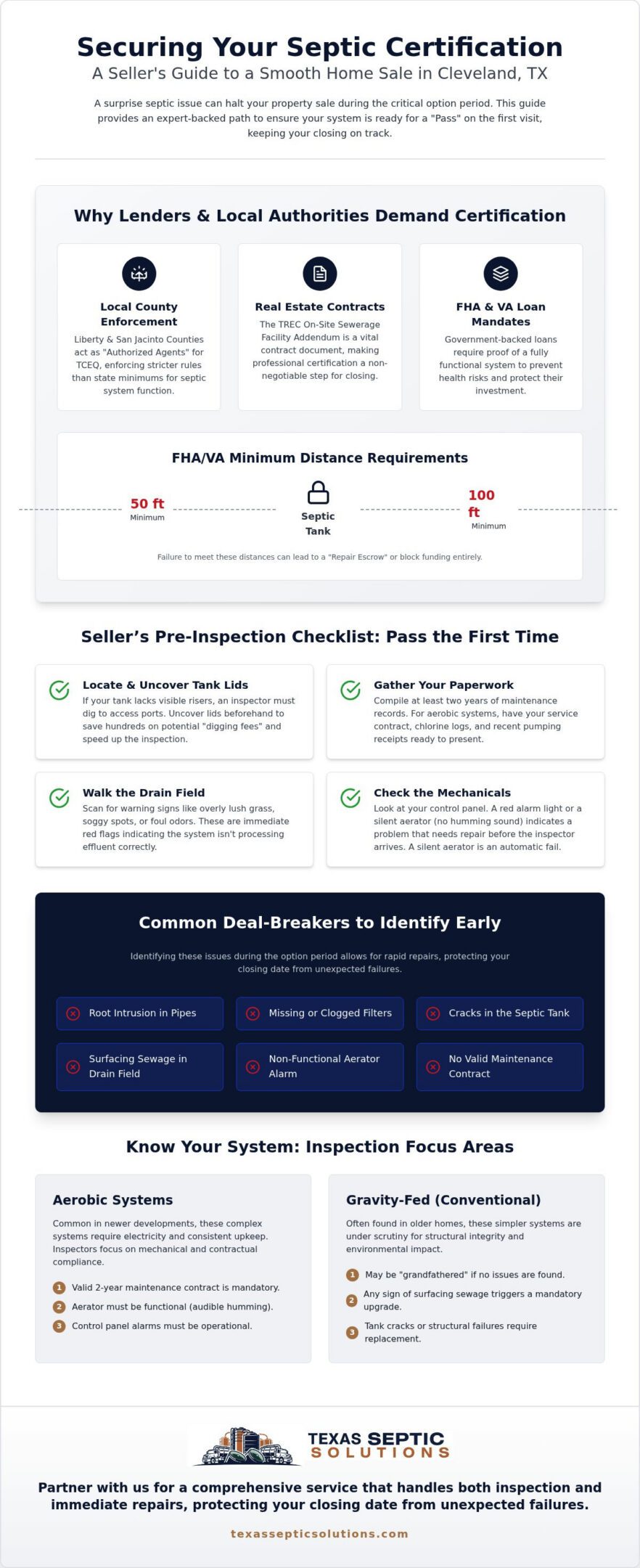
If your buyer is using an FHA or VA loan, the septic system is under a microscope. These government-backed lenders require proof that the system is fully functional and poses no health risks. For example, FHA guidelines are very specific about distance requirements. A septic tank must be at least 50 feet from any well, while the drain field needs a 100-foot clearance. If an inspector finds a failure or a lack of proper documentation, the lender might demand a “Repair Escrow.” This move can tie up thousands of dollars of your home equity or, in many cases, block the funding entirely until the system is brought up to code.
TCEQ Standards and Local Cleveland Enforcement
As of 2026, TCEQ Chapter 285 requirements have placed a heavier emphasis on the structural integrity of older systems. Many homes in the Cleveland area still use traditional gravity-fed units, while newer builds often feature complex aerobic systems. Local inspectors look for very different things in each. For an aerobic unit, they’ll verify a valid two-year maintenance contract is in place. If you have an older “grandfathered” system, it might pass a visual test, but any sign of surfacing sewage or tank cracks will trigger a mandatory upgrade to modern standards before the property can change hands. We help you identify these hurdles early so they don’t become deal-killers during the final walk-through.
Seller’s Pre-Inspection Checklist: Pass the First Time
Preparation is your best defense against a delayed closing. Many sellers in Cleveland assume that if their toilets flush, their system will pass. However, a professional inspector looks far beyond the bathroom. Taking a few proactive steps before the appointment can save you hundreds in “digging fees” and prevent the stress of a last-minute failure. By following this checklist, you ensure the process for your septic certification for home sale Cleveland TX remains smooth and predictable.
- Locate and uncover your tank lids: If your septic tank doesn’t have visible risers, the inspector will have to dig to access the main ports. Most professionals charge an additional fee for this labor. Save money by uncovering the lids yourself or installing permanent risers before the inspection date.
- Gather your paperwork: Compile at least two years of maintenance records. For aerobic systems, which are common in newer Cleveland developments, having your service contract and chlorine logs ready is essential. If you’ve recently had septic system pumping performed, keep that receipt at the top of the pile.
- Walk the drain field: Look for “lush green grass” that seems out of place compared to the rest of the yard. While it looks healthy, it often indicates that the soil is oversaturated and the system isn’t processing effluent correctly. Watch for soggy spots or foul odors, which are immediate red flags for any inspector.
- Check the mechanicals: Walk out to your control panel. If the red alarm light is on or the aerator isn’t making a steady humming sound, you need a repair before the inspector arrives. A silent aerator is an automatic “Fail” on a certification report.
Site Preparation for the Inspector
Inspectors need clear, unobstructed access to do their job. Clear away any overgrown brush, high weeds, or debris from the tank area and the perimeter of the drain field. If you have an aerobic system, clearly mark the location of the secondary treatment unit. Ensure the inspector has a clear path to the electrical control panel and verify that the power to the system is turned on. If they can’t test the pumps and alarms, they can’t issue a certification.
Interior “Red Flag” Self-Check
Your plumbing often speaks to you before a system fails. Test all faucets and toilets; listen for gurgling sounds or watch for slow drains that suggest a blockage in the main line. Check under the house or in the yard for “greywater” discharge pipes. Some older Cleveland properties still bypass the septic system for washing machine water, which is a violation of Texas law and will block your certification. Finally, avoid running high-volume laundry or long showers for the 24 hours leading up to the inspection to ensure the system is at its normal operating level.
Navigating FHA and VA Septic Inspection Requirements
Lenders for FHA and VA loans have a specific set of rules designed to protect the buyer from inheriting a failing system. If you’re applying for a septic certification for home sale Cleveland TX, you must be prepared for the inspector to look at more than just the tank’s age. These federal programs prioritize Minimum Property Requirements that focus on health and safety. One of the biggest hurdles is the distance requirement. FHA mandates that the septic tank must be at least 50 feet from any well, and the drain field must stay 100 feet away. If your property is on a smaller lot common in some older East Texas neighborhoods, these measurements are the first thing an appraiser or inspector will verify.
The Functional Flow Test Explained
The FHA Handbook 4000.1 requires a “Functional Flow” test. This isn’t just a visual check. The inspector will run water into the system for a set period, often 20 to 30 minutes, to simulate a high-usage day. They are looking to see if the system can handle the volume without the water levels in the tank rising excessively or backing up. In Cleveland, our heavy clay soils can be a major factor here. Clay doesn’t always absorb water as quickly as sandy soil, which can lead to a failed flow test if the drain field is even slightly compromised. If the water levels rise too high, it’s often a sign that an emergency septic repair is necessary to clear out blockages or fix a saturated field before the lender will sign off on the loan.
Aerobic System Maintenance Contracts
For homes with aerobic systems, the paperwork is just as important as the hardware. FHA and VA lenders require a valid, active maintenance contract to be in place at the time of closing. If your contract has lapsed, it can halt the entire title process. You’ll also need to ensure that an “Affidavit to the Public” has been recorded in the Liberty County property records. This document notifies future owners that the system requires ongoing maintenance. Securing a septic certification for home sale Cleveland TX often hinges on these administrative details as much as the physical inspection. If your contract is expired, you’ll need to renew it quickly to satisfy the title company’s requirements. We often help sellers get these documents in order during the option period to avoid any last-minute surprises that could kill the deal.
Common Failures and Rapid Fixes During the Option Period
Discovering a problem during the 10-day option period feels like a disaster, but most issues have a clear path to resolution. If your inspector identifies a failure, don’t panic. Many deal-breakers in Cleveland are actually minor repairs that we can handle quickly to keep your closing date on the calendar. A successful septic certification for home sale Cleveland TX depends on addressing these red flags before they derail the lender’s approval. Our team specializes in “Closing Saver” repairs that target the most common failures found during real estate inspections.
- Root intrusion in the main line: Tree roots are naturally drawn to the moisture in your pipes. While a root-clogged line can cause backups, it’s often a fixable issue that doesn’t require a full system overhaul.
- Broken baffles or missing effluent filters: These small components prevent solids from entering your drain field. Replacing a broken baffle is a low-cost repair that can turn a “Fail” into a “Pass” instantly.
- Drain field saturation: If you have a leaking toilet or a dripping faucet, you’re essentially drowning your drain field 24 hours a day. Fixing these internal plumbing leaks weeks before the sale gives the soil time to recover.
- Aerobic pump failures: If you see a septic tank alarm active, it usually points to a pump or float issue. Catching this early prevents the buyer from seeing a red light during their first visit.
Mechanical vs. Structural Failures
Mechanical issues are often the easiest “quick wins” for a seller. Replacing a worn-out aerator or fixing broken spray heads on an aerobic system can be done in a single afternoon. These components are essential for the system to meet TCEQ standards, but they don’t require heavy machinery to fix. On the other hand, structural failures like tank cracks are more serious. If the tank’s integrity is compromised, a full septic system replacement might be the only way to satisfy a lender. We also frequently see “Hydraulic Overload,” where the system is simply overwhelmed by excessive water use. This is often solved by a period of water conservation combined with professional pumping.
The “Emergency Pumping” Solution
Pumping the tank is almost always a requirement for a full structural inspection. It allows the technician to see the bottom of the tank and check for cracks that would otherwise be hidden under sludge. It also acts as a system reset. If your drain field is struggling with saturation, a professional pump-out gives the soil a much-needed break to dry out before the buyer’s final walk-through. When you’re facing a tight deadline, coordinating with a team that offers 24/7 rescue service is the best way to protect your equity. If your inspection didn’t go as planned, contact Texas Septic Solutions immediately to handle the pumping and repairs in a single visit.
The Texas Septic Solutions Advantage for Cleveland Home Sales
When you’re in the middle of a real estate transaction, you don’t just need an inspector who can find problems; you need a partner who can solve them. Our comprehensive “Inspection-to-Repair” model is built specifically for the high-stakes environment of property transfers. We understand that a failed report can be a deal-killer, so we prioritize speed and accuracy. If we find an issue during your septic certification for home sale Cleveland TX, we provide the necessary repairs or pumping on the spot. This one-stop approach eliminates the need to coordinate with multiple contractors while your closing clock is ticking.
Our team brings deep expertise in both traditional anaerobic systems and the modern aerobic units common in newer Cleveland neighborhoods. We ensure your system meets every local and state requirement, from structural integrity to functional flow standards. Beyond the immediate sale, our commitment to septic system maintenance helps add long-term value to your property. We don’t just hand over a piece of paper; we provide the peace of mind that your home’s most critical utility is in peak condition for the next owner.
Real Estate Professional Partnership
We work closely with Cleveland realtors to prioritize inspections during the critical 10-day option period. We know that timing is everything. Our reporting is simplified and direct, clearly outlining “Pass” status versus “Recommended Improvements” so that all parties stay informed without the confusion of technical jargon. If a lender has a specific question about a distance requirement or a permit fee, we speak their language. We’re here to resolve technical septic questions directly with title companies and lenders, removing the burden from the seller and the agent alike.
Ready for Your Cleveland Closing?
A professional septic certification is the best insurance policy a seller can have. It protects your equity, satisfies your legal disclosure requirements, and keeps your buyer’s lender happy. Don’t wait for the appraiser to flag an issue that could have been fixed weeks ago. By addressing your system needs early, you maintain control over the process and avoid the stress of last-minute repairs. We’re ready to help you cross the finish line with confidence and a clear certification in hand.
Schedule your septic certification for home sale in Cleveland, TX today!
Secure Your Closing with Confidence
Closing on your home should be a moment of celebration, not a race against the clock to fix utility issues. By following our checklist, you’ve already taken the biggest step toward a successful property transfer. You now understand how to prep your site, what lenders expect for FHA and VA loans, and how to spot red flags before they become deal-breakers. A professional septic certification for home sale Cleveland TX is your final safeguard, ensuring that both you and the buyer move forward with total transparency.
As your local Cleveland authority, we’re built to handle the high-pressure demands of the real estate option period. Whether you need a routine inspection or a last-minute rescue, our team provides 24/7 emergency service and expert pumping and repair to keep your sale on track. We don’t just identify problems; we resolve them so you can focus on your move. Book Your Cleveland Septic Certification Now and let’s get your home ready for a smooth, successful closing. You’ve done the hard work of listing your home; let us handle the heavy lifting underground.
Frequently Asked Questions
Do I need a septic inspection to sell my house in Texas?
Texas law doesn’t strictly mandate a septic inspection for every property transfer, but most lenders and buyers will require one as a condition of the sale. If your buyer is using an FHA or VA loan, a formal functional verification is a mandatory requirement for funding. Even in cash transactions, having a professional report protects you from future liability if the system develops issues after the closing date.
How much does a septic certification cost in Cleveland, TX?
A comprehensive septic certification for home sale Cleveland TX typically ranges between $300 and $600 in the local market. This price generally includes a full structural inspection and the necessary pumping to view the interior of the tank. The final cost often depends on the size of the system and whether the inspector needs to dig to access the tank lids.
How long is a septic certification valid for a real estate transaction?
Most lenders and title companies consider a septic certification valid for 30 to 90 days. Because system conditions can change with heavy use or weather events, many parties prefer the inspection to be performed as close to the closing date as possible. If your closing is delayed beyond three months, the lender may request a fresh inspection to ensure the system is still functional.
Who is responsible for paying for the septic inspection: buyer or seller?
Payment for the inspection is entirely negotiable and should be outlined in your sales contract. In many Cleveland real estate deals, the buyer pays for the inspection as part of their due diligence, while the seller pays for the tank pumping. However, it’s common for sellers to pay for the entire process upfront to provide a “clean bill of health” to potential buyers.
What happens if my septic system fails the inspection during the option period?
A failed inspection gives the buyer the right to back out of the deal or negotiate for repairs. If this happens, don’t panic; many failures are caused by minor mechanical issues or a saturated drain field that can be fixed quickly. Getting a professional repair estimate immediately allows you to present a solution to the buyer and keep the transaction moving toward a successful closing.
Can I sell my house with a failing septic system in Texas?
You can sell a house with a failing system as long as you disclose the condition in the Seller’s Disclosure Notice. However, keep in mind that most traditional lenders will not fund a loan for a property with a non-functional septic system. This usually means you’ll need to find a cash buyer or be prepared to lower your asking price significantly to cover the buyer’s replacement costs.
Does an aerobic system require a different type of certification?
Yes, aerobic systems have more complex requirements than traditional gravity systems. The inspector must verify that the aerator, control panel, and spray heads are all functioning correctly. Additionally, you must provide proof of an active maintenance contract and a recorded Affidavit to the Public to satisfy the requirements of Liberty County and most mortgage lenders.
How do I find my septic permit and maintenance records in Liberty County?
You can find your original septic permit and site design by contacting the Liberty County Permit & Inspection Department. For maintenance records, you should reach out to the licensed provider that has been performing your routine aerobic service. Having these documents ready before your inspection can prevent delays and help the inspector verify that your system has been cared for properly.