
Essential Septic Backup Prevention Tips: The 2026 Homeowner’s Checklist
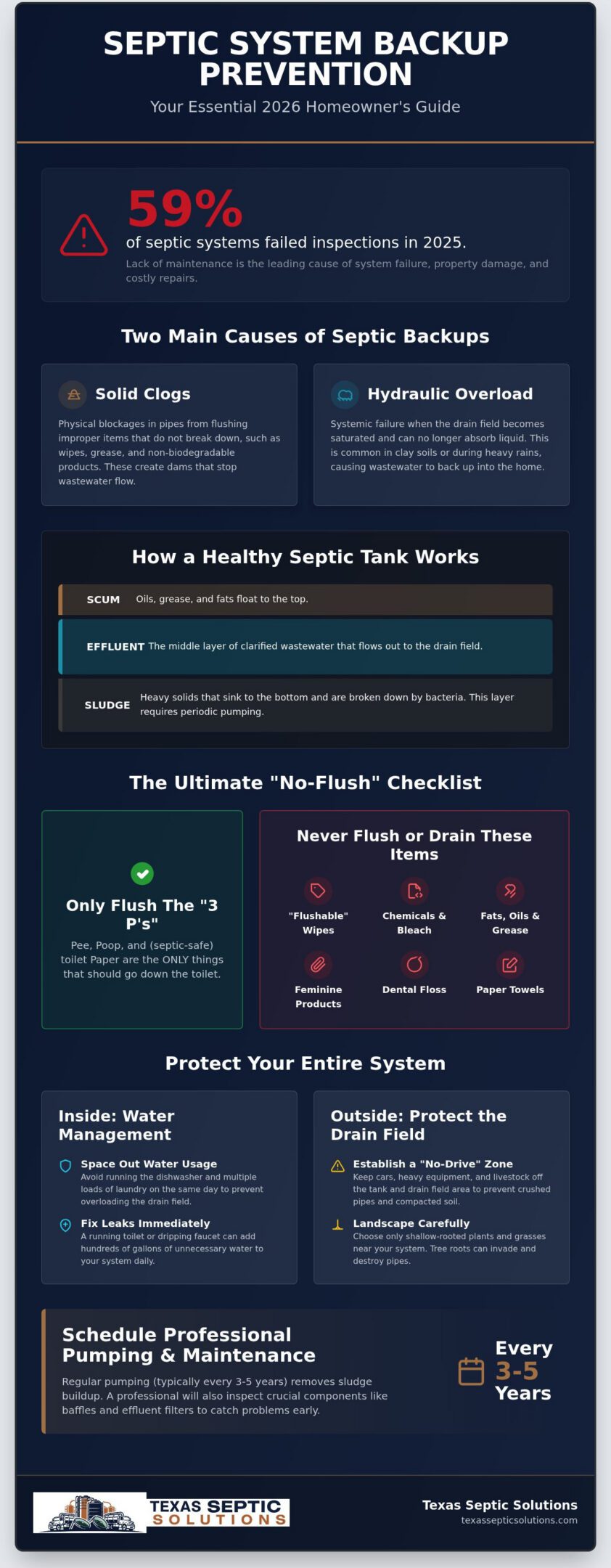
Did you know that 59% of septic systems failed their inspections in 2025? It’s a sobering statistic that highlights how quickly a lack of maintenance can turn into a household disaster. We know the anxiety that sets in when heavy Texas rain starts to fall and you’re left wondering if your drain field can handle the pressure. Nobody wants to face the foul smells or the property damage that comes with a system failure. That’s why mastering these septic backup prevention tips is the most effective way to protect your home and your wallet.
You deserve to feel confident that your utilities are working exactly as they should. We’ve put together this guide to help you understand the simple habits and maintenance steps that keep your system flowing smoothly. We’ll walk you through the essential “dos and don’ts” of what goes down your drains, how to manage water loads during storms, and the specific signs that tell you it’s time for a professional checkup. With this 2026 checklist, you can stop worrying about what’s happening underground and get back to enjoying your home with total peace of mind.
Key Takeaways
- Learn the critical difference between a simple pipe clog and a total hydraulic overload to better diagnose system issues before they escalate.
- Implement essential septic backup prevention tips by following the “Three Ps” rule and keeping “flushable” wipes out of your plumbing.
- Protect your drain field from saturation by spreading out high-water tasks like laundry and fixing minor leaks immediately.
- Maintain a strict “no-drive” zone over your septic area and choose shallow-rooted landscaping to prevent crushed pipes and root intrusion.
- Determine the ideal pumping frequency for your household size to ensure your system’s filters and baffles are inspected regularly.
Understanding the Root Causes of Septic System Backups
A septic backup is more than just a plumbing inconvenience; it’s a sanitation crisis that occurs when wastewater reverses its flow from the tank back into your home’s drains. When this happens, sewage can emerge from toilets, bathtubs, or basement floor drains, creating an unhygienic environment and risking expensive property damage. To apply effective septic backup prevention tips, you first need to understand the two main culprits: solid clogs and hydraulic overload.
Solid clogs are physical blockages in the pipes, often caused by flushing items that don’t break down. Hydraulic overload, on the other hand, is a systemic failure. It happens when your system’s drain field becomes so saturated that it cannot absorb any more liquid. In regions like Cleveland and Houston, the type of soil on your property plays a massive role in how your system performs. Clay soils, common in many parts of East Texas, act like a sponge that’s already full. These soils process water slowly, making the system much more vulnerable to failure during heavy rain. Understanding how a septic tank works is the first step in recognizing why these soil conditions matter so much for your home’s functionality.
The Mechanics of a Septic Failure
Inside your tank, waste separates into three distinct layers. The top layer is the scum, made of oils and grease. The middle layer is the liquid effluent, and the bottom is the heavy sludge. A healthy system keeps these layers balanced. However, if the sludge layer grows too high because you haven’t scheduled a pumping, it can enter the outlet pipe and travel into the drain field. This leads to permanent soil damage. An effluent filter acts as a final safety net by catching small particles before they leave the tank, but it can’t save a neglected system. To put it simply, hydraulic overload is the result of the drain field receiving more water than it can absorb.
Early Warning Signs You Should Not Ignore
Your system usually tries to tell you there’s a problem before a full backup occurs. Don’t ignore these signals:
- Gurgling sounds in the plumbing after running the dishwasher or a large load of laundry.
- Slow-draining sinks and tubs that don’t respond to standard plunging.
- Unpleasant, sulfur-like odors near the tank or the drain field area.
- Patches of unusually lush, green grass over the drain field, even during dry spells.
If you notice these issues, it’s a good idea to check the common signs septic tank is full to see if you need professional help. Catching these signals early and following consistent septic backup prevention tips will save you from the stress of an emergency repair.
The Ultimate “No-Flush” Checklist for Homeowners
Keeping your system healthy starts at the drain. The most effective septic backup prevention tips involve a simple rule of thumb: the “Three Ps.” Only pee, poop, and toilet paper should ever enter your plumbing. Anything else increases the risk of a messy and expensive emergency that could have been easily avoided with a little caution.
“Flushable” wipes are a major threat to Texas septic pumps. Despite their marketing, they don’t dissolve like standard tissue. Instead, they catch on internal components and create massive clogs that can burn out your pump motor. This is a frequent cause for emergency calls in our service area, as these wipes stay intact for months inside your tank.
Your tank is a living ecosystem. It relies on a healthy population of microorganisms to function. Harsh chemicals and excessive bleach kill the beneficial bacteria that break down solids. When these bacteria die, the sludge layer grows faster, leading to the failures discussed in the previous section. Following septic system care guidelines helps maintain this biological balance and keeps your system working efficiently.
Pouring fats or oils down the kitchen sink is a recipe for disaster. These substances solidify as they cool, forming “fatbergs” that can completely seal off your inlet pipes. Once these pipes are blocked, wastewater has nowhere to go but back into your home.
Bathroom and Laundry Room Culprits
Small items often cause the biggest headaches. Cotton balls, dental floss, and feminine hygiene products never break down in water. They act like a net, catching other debris until a solid wall forms in your pipes. In the laundry room, avoid using too much detergent. Excessive soap creates a film that reduces soil permeability in your drain field, slowing down the absorption process. Installing hair catchers in your showers is one of those simple septic backup prevention tips that prevents long-term drainage issues and keeps your pipes clear.
Kitchen Habits That Save Your Septic
Your kitchen is often the source of hidden system stress. We recommend a “No Garbage Disposal” policy. Food scraps add a significant amount of solid waste to your tank, requiring more frequent pumping. Coffee grounds are another common offender; they are incredibly resistant to decomposition and will quickly fill your tank’s capacity. Always scrape your plates into the trash and collect cooking oils in a separate container for disposal. If you’re worried your current habits have already caused a slowdown, reaching out for professional septic system maintenance can help clear the path and ensure your system is ready for the road ahead.
Water Management: Preventing Hydraulic Overload
While Section 2 focused on what shouldn’t go down your drains, managing the total volume of water is just as critical for system health. Hydraulic overload occurs when you send more water into the tank than the drain field can process. This is especially dangerous during heavy East Texas rainstorms when the soil is already saturated. Integrating smart water habits into your daily routine is one of the most effective septic backup prevention tips you can adopt to avoid a messy situation.
Many homeowners fall into the “Laundry Day” trap, where they save all their washing for Saturday or Sunday. This sudden surge of water can flood your tank and push solids into the drain field before they have time to settle. Spreading your laundry loads throughout the week gives your system the time it needs to recover. Similarly, “silent” leaks from faucets or toilets can slowly drown your system. We recommend checking your water meter before and after a two-hour period when no water is being used. If the meter moves, you have a leak that needs immediate attention.
Smart Water Usage Habits
Reducing the daily load on your system doesn’t require a lifestyle overhaul. Simple changes, like staggering shower times and running the dishwasher only when it’s completely full, make a massive difference. Installing high-efficiency fixtures is another proactive step for maintaining your septic system over the long term. These low-flow showerheads and toilets significantly reduce the gallons per flush and per minute. A single running toilet can add 200 gallons of water a day to your tank. By modernizing your fixtures, you provide your drain field with much-needed breathing room.
Proactive Hardware: Backwater Valves and Alarms
Sometimes, habit changes aren’t enough, and you need physical safeguards. A backwater valve is a vital piece of hardware that acts as a one-way gate. It allows wastewater to leave your home but physically blocks it from flowing back in if the system fails. For homeowners with aerobic systems, the septic alarm is your most important diagnostic tool. These alarms trigger when water levels are too high or the air pump fails. If your septic tank alarm is going off, you must reduce water usage immediately and call for a professional inspection. Using these septic backup prevention tips ensures that you catch mechanical failures before they result in a sewage backup in your home.
Outdoor Maintenance: Protecting the Drain Field
While indoor habits are crucial, your system’s longevity depends on the health of the drain field. This area is responsible for the final treatment of wastewater. If the soil becomes too compact or saturated, the entire process grinds to a halt. Following outdoor septic backup prevention tips is especially important in East Texas, where our unique soil patterns can easily become overwhelmed by heavy weather or physical weight.
Establish a strict “No Drive” zone over your entire septic area. Parking cars, trucks, or even heavy riding mowers on the drain field leads to soil compaction and crushed PVC pipes. Compacted soil loses the oxygen-rich air pockets needed for beneficial bacteria to break down waste. Without these microbes, your system cannot process effluent effectively. Similarly, avoid placing “add-on” structures like decks, sheds, or above-ground pools over any part of your system. These structures block access for necessary maintenance and prevent the natural evaporation required for a functional field.
Managing Runoff and Surface Water
Houston and Cleveland see significant rainfall that can quickly saturate the ground. If your gutters dump water directly onto the drain field, you’re inviting hydraulic overload. Divert downspouts at least 10 feet away from the septic area to prevent the soil from becoming a swamp. Proper grading is also vital; your yard should be sloped so that water flows away from the tank and field. If you notice “ponding” after a storm, don’t just add extra soil to level it out. Adding soil without professional advice can suffocate the system and lead to a total failure.
Root Intrusion and Physical Protection
Landscaping for a septic-ready yard requires a strategic approach. Choose shallow-rooted plants like native grasses or small shrubs. Thirsty trees like willows, oaks, or elms are a major threat; they should stay at least 30 to 50 feet away from your lines. These roots are experts at finding moisture and will grow directly into your pipes, causing massive, solid blockages. If you have existing trees nearby, installing physical root barriers can help protect your underground infrastructure. During home renovations or pool installations, ensure contractors keep heavy equipment far away from your septic components to avoid accidental pipe breakage. If you’re planning a landscape project or worried about recent soil saturation, our team can provide a professional septic system inspection to ensure your drain field remains in top shape.
Professional Prevention: Pumping and Maintenance Plans
Professional care is the ultimate insurance policy for your home’s infrastructure. While the habits we’ve discussed are vital, they can’t replace the necessity of periodic professional intervention. Determining your ideal pumping frequency is a math problem based on your tank’s capacity and the number of people in your home. For most families in the Houston area, a standard 1,000 to 1,500-gallon tank needs attention every three to five years. However, if you’re frequently hosting guests or using a garbage disposal, you may need a more aggressive schedule. These scheduled visits are the cornerstone of effective septic backup prevention tips because they clear out the accumulated sludge before it can ever reach your drain field.
A professional visit isn’t just about removing waste. It’s a comprehensive health check for your entire system. A qualified pumper won’t just suck out the sludge; they will inspect the inlet and outlet baffles to ensure they aren’t damaged or clogged. They also clean the effluent filter, which acts as a key safety net for your system. Investing in a structured septic system maintenance plan is the most cost-effective way to manage these needs. These plans ensure you never miss a service date and provide a level of oversight that catches minor mechanical issues before they become four-figure repair bills.
The Pumping Process Decoded
During a pumping visit, we use high-powered vacuum equipment to remove all layers of waste from the tank. We also check the structural integrity of the tank walls and lids. You might see “additive” chemicals marketed as a way to avoid pumping, but these are often unnecessary if your tank’s biology is healthy and you pump on schedule. We keep detailed records of every visit. This becomes an invaluable asset if you ever decide to sell your property. Buyers in Texas often demand proof of maintenance, and having a professional paper trail provides immediate confidence.
When Prevention Fails: Emergency Readiness
Even with the best septic backup prevention tips, unexpected failures can occur due to extreme weather or mechanical wear. If you smell sewage inside your house or see wastewater pooling near your drains, stop all water usage immediately. Do not flush toilets, run the dishwasher, or take a shower. This prevents further volume from forcing more sewage into your living space. We provide Texas Septic Solutions for 24/7 emergency service across Cleveland and Houston to ensure you’re never left alone during a crisis. Our team is ready to respond at any hour, providing the professional resolution you need to protect your home and restore your peace of mind.
Secure Your Home’s Health with Proactive Septic Care
Taking control of your home’s wastewater system doesn’t have to be overwhelming. By adopting the “Three Ps” rule for your drains and managing your water loads during heavy East Texas rains, you’ve already taken the biggest steps toward protecting your property. Remember that your drain field is just as important as your tank; keeping it clear of heavy vehicles and deep-rooted trees ensures it can process effluent for years to come. These septic backup prevention tips are your first line of defense against the stress and cost of a utility failure.
We’re here to be your long-term partner in maintaining a functional, healthy home. Whether you’re in Houston, Cleveland, or the surrounding communities, our team provides the local expertise needed to handle our unique soil and weather challenges. We offer comprehensive maintenance plans for peace of mind and 24/7 emergency service if the unexpected happens. Don’t wait for a disaster; schedule your professional septic pumping with Texas Septic Solutions today. You’ve done the work to understand your system; now let us help you keep it running perfectly.
Frequently Asked Questions
How do I stop my septic from backing up when it rains?
You can prevent rain-related backups by ensuring your gutter downspouts and yard grading divert water at least ten feet away from the drain field. During heavy East Texas storms, the soil becomes saturated and loses its ability to absorb wastewater. Reducing your indoor water usage during these periods is one of the most effective septic backup prevention tips to keep the system from overflowing when the ground is soaked.
Can I use a plunger or chemical drain cleaner on a septic backup?
A plunger is safe for clearing a simple clog in a toilet or sink, but you should never use harsh chemical drain cleaners. These chemicals kill the beneficial bacteria needed to break down solids in your tank. If a plunger doesn’t resolve the issue, you likely have a systemic backup that requires professional pumping rather than a quick chemical fix which could damage your pipes and tank biology.
How often should a septic tank be pumped to prevent backups?
Most Texas households should have their septic tank pumped every three to five years to maintain proper function. This frequency depends on your tank size and the number of people in your home. Regular pumping is the most reliable way to prevent solids from escaping the tank and clogging your drain field pipes, which is the primary cause of long-term system failure.
What are the first signs that my septic system is failing?
The earliest signs of failure include gurgling sounds in your pipes, slow-draining sinks, and sewage smells near the tank. You might also notice patches of bright green, spongy grass over the drain field even during dry weather. Catching these warnings early allows for repairs before a total backup occurs inside your home, saving you from much higher emergency costs later.
Is a septic backup covered by homeowners insurance in Texas?
Standard homeowners insurance policies in Texas often exclude septic backups unless you have specifically added a “water backup and sump overflow” rider to your coverage. Protection usually depends on whether the backup was caused by a sudden, accidental failure or years of neglect. We recommend reviewing your policy details with your insurance agent to ensure you have the necessary protection for sewage-related property damage.
Can tree roots cause my septic system to back up?
Tree roots are a leading cause of backups because they naturally seek out the moisture and nutrients inside your septic lines. Once they penetrate a pipe, they grow quickly and create a solid barrier that traps waste and toilet paper. To prevent this, keep thirsty trees like oaks or willows at least 30 feet away from your system’s infrastructure to avoid expensive root-clearing repairs.
What should I do if my septic alarm starts buzzing?
If your septic alarm sounds, you should immediately stop all non-essential water usage and check your breaker box to ensure the pump has power. The alarm indicates either a high water level in the tank or a mechanical failure with the pump or aerator. After silencing the buzzer, call for professional service to diagnose the issue before wastewater has a chance to back up into your home.
Is it safe to stay in a house with a septic backup?
Staying in a home with an active septic backup is generally unsafe because raw sewage contains harmful bacteria, viruses, and parasites. Exposure to these pathogens can cause serious illness, and the moisture can quickly lead to toxic mold growth. If you cannot use your plumbing without sewage entering the house, it is best to relocate until the system is repaired and the area is professionally sanitized.