
How to Use Your Septic Alarm Reset Button: A Step-by-Step Guide
It is 2 AM and a piercing, high-pitched buzz suddenly echoes through your home, accompanied by a glowing red light on your control panel. Your first instinct is likely to hit every switch you can find just to make the noise stop. We understand how stressful that sound is. It is designed to grab your attention, but it often just triggers a fear of expensive pump replacements or a messy sewage backup. You are probably staring at the septic alarm reset button and wondering if pressing it will actually fix the issue or just mask a looming disaster.
The good news is that an alarm does not always mean your system has failed. You will learn exactly how to use your septic alarm reset button safely, what that red light signifies, and how to troubleshoot the system yourself before you need to call in the professionals. This guide covers the crucial difference between silencing and resetting, common causes for triggers, and the immediate steps you should take to protect your property and keep your system running smoothly.
Key Takeaways
- Learn how to identify the specific signals on your control panel, including the difference between a steady red light and a flashing alert.
- Master the correct way to use your septic alarm reset button to silence the buzzing while you investigate the underlying cause.
- Discover the most common triggers for high water alarms, such as excessive laundry or long showers, and how to resolve them without a service call.
- Perform a quick DIY inspection of your system’s air compressor and spray heads to rule out simple mechanical issues before calling for help.
- Understand the risks of ignoring a persistent alarm and when it is time to contact a professional for emergency repairs to prevent property damage.
What is the Septic Alarm Reset Button? (Understanding Your Control Panel)
The control panel acts as the central brain of your home’s waste management system. It manages the timing of the pump and monitors the health of your septic tank to ensure everything is flowing as it should. If you live in the Houston or Cleveland area, your panel is likely housed in a NEMA 4X rated enclosure. These heavy-duty plastic or fiberglass boxes are designed to protect sensitive electronics from the harsh Texas sun and heavy seasonal rains. You’ll usually spot a red plastic lens on the top or front of the box, which serves as the visual alarm beacon.
When the system detects a problem, it uses a two-fold signal to grab your attention: a loud audible buzzer and a flashing red light. The septic alarm reset button serves as a vital communication tool between you and your system. It isn’t a “repair” button, but rather a way to acknowledge that you’ve heard the alert. This feature exists so you don’t have to listen to a piercing noise for hours while the system recovers or while you wait for a service team to arrive on-site.
Silence vs. Reset: Knowing the Difference
Many homeowners find the interface confusing because buttons are often labeled differently depending on the manufacturer. A “Silence” toggle is generally a switch that you flip to one side to kill the noise. This stops the buzzing but leaves the red light glowing as a reminder that the fault hasn’t been fixed. On the other hand, a true septic alarm reset button is typically a push button that tries to clear the internal logic of the panel. If you press reset while the high-water float is still lifted by too much liquid, the alarm will simply restart. You can’t reset your way out of a physical tank issue if the sensors are still detecting a problem.
Common Control Panel Brands in Texas
In our region, you’ll frequently see brands like Squall or Bio-Microbics. These panels are standard for the aerobic systems required by many local soil conditions in East Texas. You can usually find the septic alarm reset button or silence toggle located on the bottom or the side of the enclosure. This placement keeps the switch accessible for you while protecting it from direct rain and moisture. Knowing where this button is before an emergency happens can save you a lot of frustration in the dark. It allows you to take control of the situation quickly so you can move on to the actual troubleshooting steps without the stress of a constant siren.
How to Safely Use the Septic Alarm Reset Button
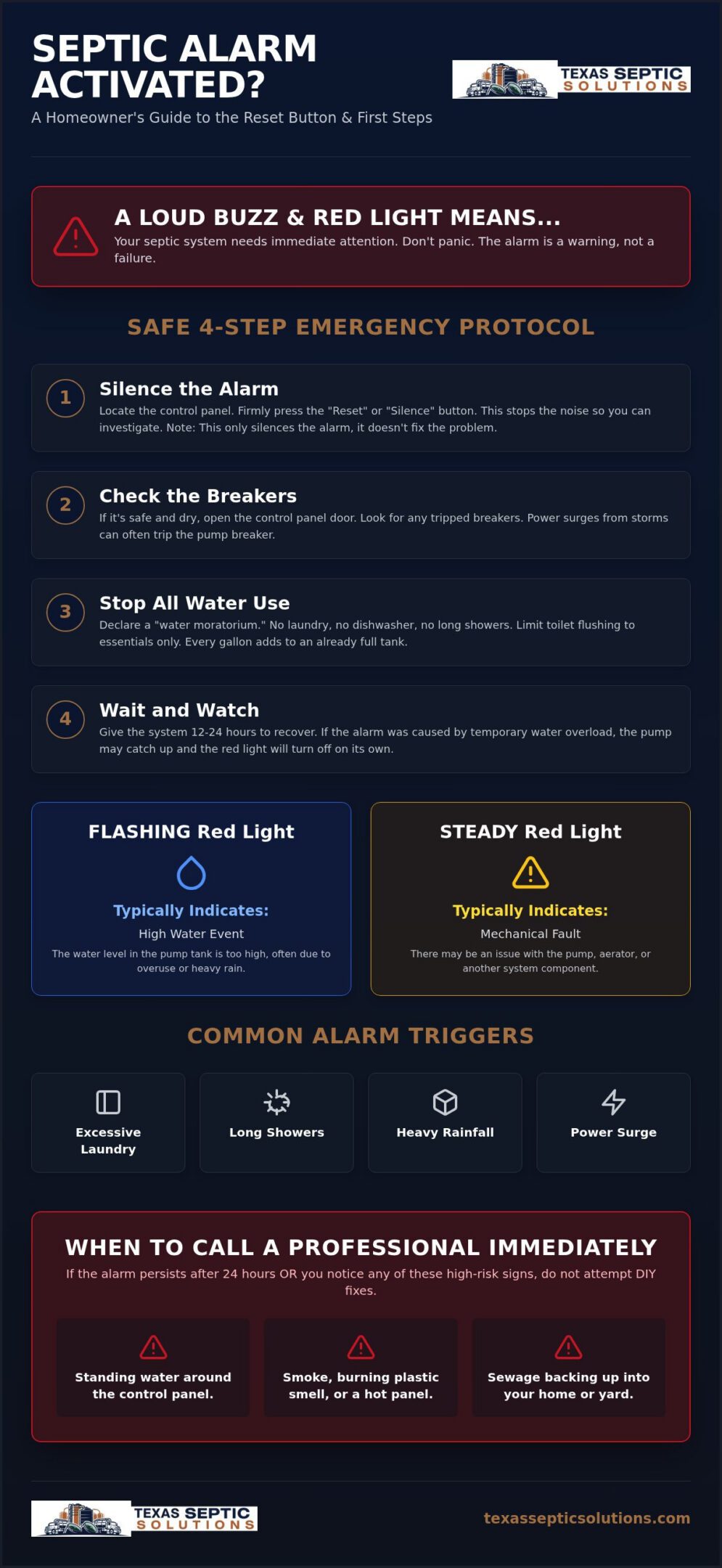
When your alarm triggers, the immediate goal is to stop the noise so you can think clearly and assess the situation. Follow these steps to manage the alert without putting yourself or your system at risk. First, locate your control panel and look at the red beacon. If the light is flashing, it typically indicates a high-water event. If it is steady, it may signal a mechanical fault. Once you have identified the light pattern, firmly press the septic alarm reset button or flip the silence toggle. This action should kill the audible buzzer instantly, giving you the quiet you need to investigate further.
After silencing the noise, follow these additional troubleshooting steps:
- Check the breakers: Open the panel door only if it is dry and you are not standing in water. Look for any tripped breakers. In the Houston area, lightning or power surges during storms often trip the pump breaker.
- Declare a water moratorium: Stop all high-volume water use immediately. This means no laundry, no dishwashers, and no long showers until the alarm clears.
- Implement the “One Flush” rule: Limit the household to essential toilet flushes only. Understanding how septic systems work helps you realize that every drop you put down the drain adds to a tank that is already struggling to keep up.
- Wait and watch: Give the system 12 to 24 hours to recover. If the issue was simply a temporary overload of water, the pump should eventually lower the level and the light will turn off on its own.
Immediate Safety Precautions
Your safety is the priority. Never attempt to open or service your control panel during heavy rainfall or if you see standing water around the base of the unit. Electricity and water are a lethal combination. If you see smoke, smell burning plastic, or notice that the septic alarm reset button feels hot to the touch, do not attempt further DIY fixes. In these high-risk scenarios, it is best to keep the panel closed and contact our team for emergency septic service to prevent a total system failure.
The 24-Hour Observation Period
It is normal for the red light to stay on even after you have pressed the button to stop the buzzing. The light is a visual confirmation that the high-water float is still up. As the pump works to discharge effluent, that float will eventually drop. If the buzzer returns after you have already silenced it, this is a sign that the water level is continuing to rise despite your efforts. This often means the pump has failed or there is a major blockage that requires professional tools to diagnose. If you’re concerned about a potential backup, scheduling a routine check-up through our septic system maintenance plans can help catch these issues before they become midnight emergencies.
Why Your Septic Alarm is Triggered (Beyond the Button)
Understanding why your alarm is sounding is the first step toward a permanent fix. While the septic alarm reset button stops the noise, it doesn’t solve the underlying problem. Most alarms are triggered by a high-water event, meaning the liquid level in your pump tank has risen above the safe operating limit. In East Texas, our heavy clay soils don’t absorb water quickly, especially after a tropical storm or a week of steady rain. This environmental factor often leads to saturated drain fields, preventing your system from discharging effluent as fast as it should. When the ground is soaked, there is simply nowhere for the water to go.
Other common triggers include:
- Pump Failure: The mechanical heart of your system may have seized or reached the end of its life cycle. Without the pump, waste cannot be moved to the dispersal field.
- Aerator Malfunction: For homeowners in Cypress or Huffman with aerobic systems, a failed air compressor will trigger an alert. This happens because the beneficial bacteria lack the oxygen needed to treat waste effectively.
- Float Switch Issues: Sometimes the mechanical float that signals the alarm gets stuck on debris or tangles with other wires inside the tank.
Refining your knowledge of Septic System Basics can help you distinguish between a temporary overload and a mechanical breakdown. This foundational understanding ensures you aren’t guessing when your property’s health is on the line.
The ‘Laundry Day’ Surge
One of the most frequent reasons people reach for the septic alarm reset button is simply using too much water in too short a time. Running five back-to-back loads of laundry, followed by a series of long showers, can send hundreds of gallons into the tank faster than the pump can move it out. If your system is otherwise healthy, the light will likely clear once the pump has a few hours of quiet time to catch up. For a more detailed look at these scenarios, read our septic tank alarm going off guide to see if your situation requires immediate professional intervention or just a few hours of patience.
Electrical and Breaker Trips
Houston’s unpredictable weather and frequent lightning strikes are notorious for causing electrical issues. A power surge can easily trip the septic breaker in your main house panel or the smaller breakers inside the control box itself. Check your breakers first. It is common to find that the “Pump” breaker has tripped while the “Alarm” breaker is still active. This results in an alarm that won’t stop because the pump has no power to lower the water level. If you reset the breaker and it trips again immediately, you likely have a short circuit in the pump motor or wiring that needs a licensed technician’s attention.
Troubleshooting Your Septic System Before Calling a Pro
Before you assume your pump has reached the end of its life, there are several mechanical components you can check yourself. While the septic alarm reset button gives you a temporary reprieve from the noise, a few simple inspections can help you determine if the issue is a minor fix or a major repair. Start by walking out to your system and listening to the air compressor or aerator. In a healthy aerobic system, you should hear a steady, low hum and feel a slight vibration when you place your hand on the housing. If the unit is silent or excessively hot, the compressor may have a broken diaphragm or a failed motor, which will trigger an air loss alarm.
Next, take a look at your spray heads if you have an aerobic system. If you notice that one head is barely misting while another is shooting a geyser of water, you likely have a clog or a broken head. These imbalances can cause the pump to work harder than necessary, eventually leading to a high-water alert. You should also consider the possibility of “clear water” intrusion. A single leaky toilet flap or a dripping faucet can add hundreds of gallons of unnecessary water to your tank every day. This constant flow prevents the pump from ever catching up, making the septic alarm reset button feel like a temporary bandage rather than a solution.
The ‘Visual Inspection’ Checklist
Perform a quick walk-around of your property in Cleveland or Shepherd to look for physical clues. High water isn’t always the culprit; sometimes the treatment process itself has failed. Use this checklist to narrow down the problem:
- Check for soggy spots: Look for unusually lush, green grass or pooling water near the tank or spray field, which suggests a dispersal issue.
- Identify the light: Look closely at your panel. Some modern panels have separate indicators for “High Water” and “Air Loss.” Knowing which one is active helps your technician arrive prepared.
- Sniff for odors: A strong “rotten egg” smell usually indicates that the aerator has failed and the system has turned anaerobic, meaning the waste isn’t being treated properly.
When DIY Troubleshooting Ends
There is a limit to what a homeowner should handle. If you find that you have to press the septic alarm reset button more than three times in a 48-hour period, your system is trying to tell you that something is fundamentally broken. Never, under any circumstances, attempt to enter a septic tank or stick your head inside. The toxic gases produced during the decomposition process, such as methane and hydrogen sulfide, can be fatal within seconds. If your basic checks don’t reveal a simple fix like a tripped breaker or a leaky toilet, it is time to consult our septic system repair guide for professional next steps. Preparing a brief history of when the alarm started and what you’ve observed will help our team get your home back to normal faster.
If your troubleshooting has reached a dead end, don’t wait for a backup to reach your house. Contact us for emergency septic service to protect your property and your family’s health.
When the Reset Button Fails: Professional Solutions in Texas
If you have pressed the septic alarm reset button and the light returns within hours, you are facing a persistent fault that requires more than a manual override. Ignoring a red light that refuses to stay off is a gamble with your property’s health. A continuous high-water state can lead to wastewater surfacing in your yard or, even worse, backing up into your home’s indoor drains. Over time, this saturation causes permanent drain field damage and environmental contamination. These issues are far more expensive to remediate than a standard pump repair. In the Houston area, our technicians use specialized diagnostic tools to pinpoint exactly where the communication between your floats and your pump has broken down.
Many homeowners don’t realize that a triggered alarm is often the final symptom of a neglected tank. If you haven’t scheduled septic system pumping in several years, solid waste can accumulate and clog the pump intake or interfere with the float switches. When these mechanical parts are buried in sludge, they can’t function correctly, no matter how many times you hit the septic alarm reset button. Routine pumping and cleaning ensure these components remain clear and operational, which significantly extends the lifespan of your entire system and keeps your home’s waste management system running as it should.
24/7 Emergency Response for Cleveland and Beyond
Critical failures rarely happen at convenient times. Whether you are in Huffman, Cypress, or Shepherd, a failing septic system requires immediate attention to prevent property damage and health hazards. We provide 24/7 emergency septic service because we understand the stress that comes with a midnight alarm or a glowing red beacon during a holiday weekend. Our team arrives with the necessary parts to handle pump replacements or electrical repairs on the spot. You can rest easy knowing a neighborly expert is handling the technical details while you focus on your family’s comfort.
Preventing Future Alarms with Maintenance
The most effective way to handle a septic alarm is to prevent it from ever sounding in the first place. Investing in a septic system maintenance plan provides scheduled inspections that catch worn floats, aging pumps, and clogged aerators before they trigger an emergency alert. Our technicians check every component of your aerobic or conventional system to ensure everything is in top shape for the long term. Don’t let a sudden alarm ruin your weekend or lead to an unexpected repair bill. Contact Texas Septic Solutions for a professional inspection today and keep your system running reliably year-round.
Take Control of Your Septic System Health
Dealing with a blaring alarm is never how you want to spend your evening. You now know that while the septic alarm reset button is a helpful tool for silencing the noise, it’s merely a starting point for troubleshooting. Whether you’re facing a temporary water surge from a busy laundry day or a serious mechanical failure, understanding your control panel allows you to stay calm and proactive. Remember to prioritize safety and never ignore a persistent red light, as catching small issues now prevents expensive repairs later.
If your red light stays on or the buzzer keeps returning, don’t wait for a sewage backup to reach your home. Our team of local Cleveland and Houston experts provides A+ rated septic maintenance and 24/7 emergency service. We have the experience to diagnose pump or float issues quickly so you can get back to your normal routine without the stress of a failing system.
Stop the buzzing and protect your home—Schedule an Emergency Septic Repair now! You don’t have to face septic stress alone. We’re here to ensure your system remains a reliable, worry-free part of your home for years to come.
Frequently Asked Questions
Is it okay to just hit the reset button and ignore the alarm?
No, you should never ignore a persistent alarm after silencing it. The septic alarm reset button is designed to acknowledge the alert, not to repair the mechanical or hydraulic issue that triggered it. If you ignore the warning, you risk a sewage backup into your home or permanent damage to your drain field.
Why is my septic alarm red light still on after I pressed reset?
The red light stays on because the high-water float in your tank is still in the “up” position. Pressing the septic alarm reset button only silences the audible buzzer. The visual light will remain active until the pump successfully lowers the water level and the float drops back down to its normal operating range.
Can heavy rain cause my septic alarm to go off?
Yes, heavy rain is a very common trigger for septic alarms in East Texas. Our local clay soils become saturated quickly, which can prevent the system from discharging effluent into the drain field. Additionally, surface water can sometimes leak into the tank through unsealed lids or risers during flash flooding events.
How long do I have before my house backs up after the alarm sounds?
Most residential systems have about 24 to 48 hours of reserve capacity once the alarm sounds, provided you stop all non-essential water use. This window gives the pump time to catch up or a technician time to arrive. However, if you continue running laundry or taking long showers, that capacity disappears much faster.
What should I do if the alarm goes off in the middle of the night?
First, use the silence toggle to stop the noise so you can sleep. Once the house is quiet, tell everyone to stop using water immediately. Check your breakers the following morning to see if a simple reset solves the problem, or call our 24/7 emergency line if you notice water pooling in the yard.
Does a septic alarm always mean the pump is broken?
No, a triggered alarm does not always mean your pump is dead. It could be something as simple as a tripped breaker, a blown fuse, or a float switch that has become tangled on a pipe. High usage events, like hosting a large party, can also temporarily overwhelm the system without any mechanical failure occurring.
How much does it cost to have a professional fix a septic alarm issue?
The cost of a professional repair depends entirely on the specific component that failed. A simple float replacement is significantly less expensive than replacing a heavy-duty effluent pump. A professional diagnosis ensures you only pay for the parts you actually need rather than guessing with expensive DIY replacements.
Can I still use my shower and toilet if the septic alarm is on?
You should limit water use to emergency only flushes while the alarm is active. Avoid running the dishwasher, doing laundry, or taking showers until the red light has cleared. Every gallon you add to the system while the alarm is on brings you one step closer to a backup in your tubs or sinks.