
Pre-Listing Septic Inspection Houston: The Seller’s 2026 Success Checklist
The most expensive mistake a Houston homeowner can make isn’t pricing their house too high. It’s letting a buyer’s inspector find a major septic failure during the option period. When a potential buyer discovers a problem you didn’t know existed, they often use it as a high-stakes negotiation lever to slash your asking price. Scheduling a pre-listing septic inspection Houston residents can rely on is the best way to keep the upper hand and ensure your sale stays on track.
We understand that selling a property involves many moving parts, and the stress of potential repairs can feel overwhelming. You’ve worked hard to maintain your home, and you deserve a smooth closing process without last-minute surprises from your aerobic or conventional system. This guide will walk you through the essential steps to prepare your system for the market, from understanding local Harris County requirements to fixing minor issues before they become deal-breakers. You’ll learn how a proactive approach protects your home’s value and provides the documented peace of mind that today’s buyers demand.
Key Takeaways
- Prevent high-stakes price negotiations by identifying system failures before a buyer’s inspector finds them during the option period.
- Learn why a pre-listing septic inspection Houston sellers perform is the most effective way to build immediate trust and transparency with prospective buyers.
- Understand the specific TCEQ standards and aerobic maintenance contract requirements necessary for a legal property transfer in the Houston area.
- Discover which minor repairs, such as fixing broken floats or managing sludge levels, should be handled now to avoid a “fail” rating on a final report.
- Use a clean, professional inspection report as a competitive advantage to streamline your closing and eliminate last-minute septic surprises.
Why a Pre-Listing Septic Inspection is Essential for Houston Sellers
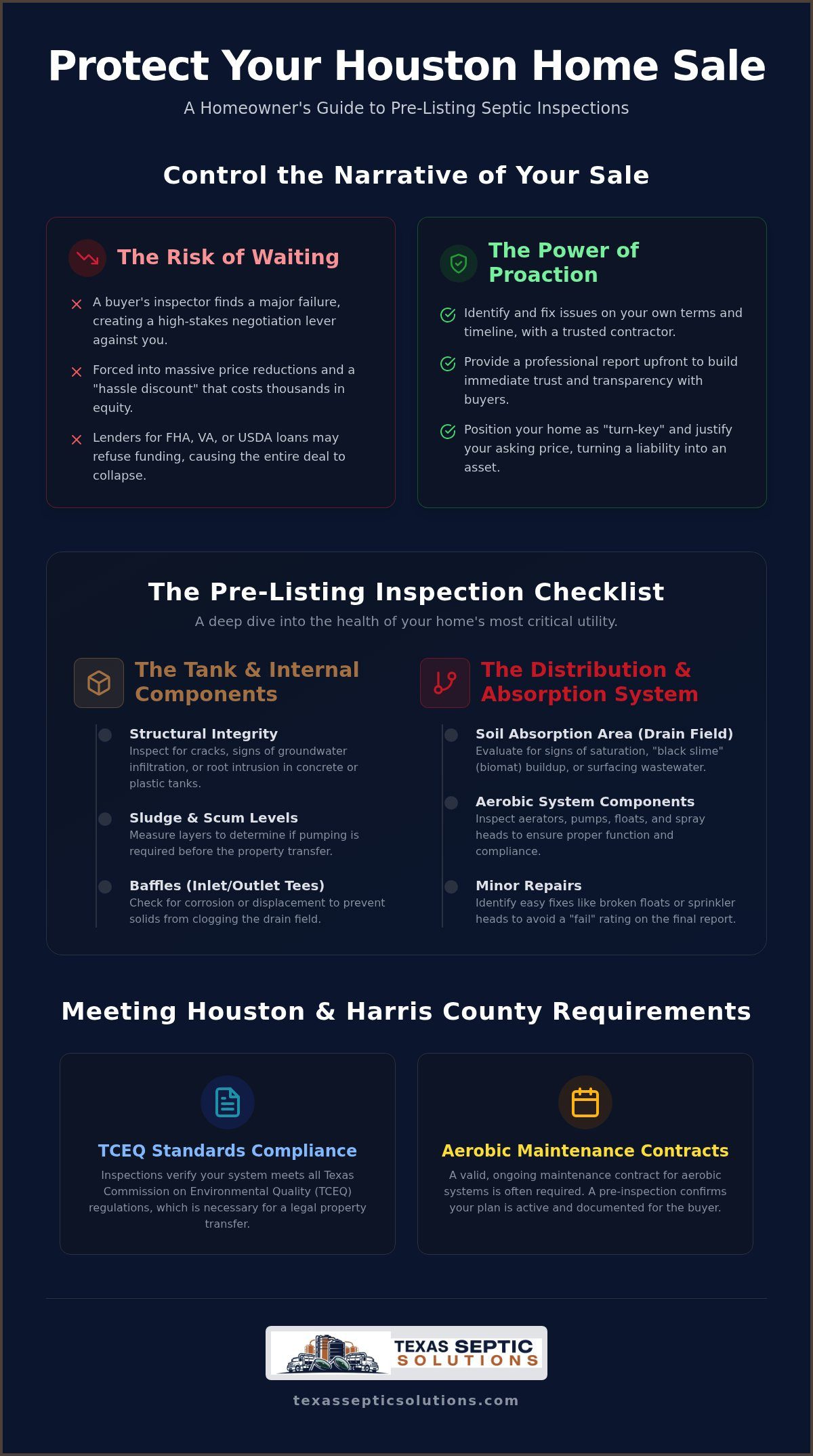
In the suburban stretches of Cypress and Huffman, septic systems are the standard, not the exception. Most buyers moving from the city aren’t used to managing their own waste treatment, which makes them naturally nervous. A pre-listing septic inspection Houston sellers provide can bridge that gap in confidence immediately. It’s about taking control of the narrative before a third-party inspector starts poking around your yard and scaring off your best lead.
When you wait for the buyer to hire their own inspector during the option period, you’re essentially walking into a trap. In Texas real estate, this period is a high-pressure window where a buyer can walk away for nearly any reason. If an inspector flags a saturated drain field or a cracked tank, the buyer’s first instinct is to ask for a massive price reduction. They aren’t just asking for the cost of the repair; they’re asking for a “hassle discount” that can cost you thousands of dollars in equity. Understanding How Septic Systems Work helps you realize that small, neglected issues can look like catastrophic failures to an untrained eye. By performing a pre-listing septic inspection Houston homeowners can identify these issues on their own terms before the house ever hits the market.
Eliminating the “Deal-Killer” Factor
Septic failures are one of the top reasons Houston home sales fall through in 2026. This isn’t just about buyer cold feet. Many mortgage lenders, particularly those handling FHA, VA, or USDA loans, have strict requirements for on-site sewage facilities. If the system doesn’t meet their specific safety and functional criteria, they simply won’t fund the loan. The financial impact of a failed inspection during the closing process is often measured in lost time and thousands of dollars in forced concessions. By identifying these issues early, you can perform repairs on your own schedule with a contractor you trust, rather than being forced into an emergency fix by a buyer’s timeline.
Positioning Your Home as “Turn-Key”
In a competitive market, transparency is a premium selling point. When you provide a professional inspection report upfront, you’re telling prospective buyers that there are no skeletons in the closet. This eliminates the “hidden problem” anxiety that often plagues rural and suburban property sales. You can go a step further by showing that the system is already enrolled in a septic system maintenance plan. This level of documentation proves you’ve been a responsible steward of the property, making your home the safest bet on the block. It transforms a potential liability into a verified asset that justifies your asking price.
The Ultimate Pre-Listing Septic Inspection Checklist
A professional pre-listing septic inspection Houston sellers request is far more than a cursory glance at the backyard. It is a technical deep dive into the health of your home’s most critical utility. While a general home inspector might check if the toilets flush, a septic specialist examines every hidden component from the tank lid to the edge of the drain field. This thoroughness ensures that when you hand over your keys, you’re doing so with a clean bill of health that meets all Texas septic system regulations.
The Tank and Internal Components
The core of the inspection starts with the tank’s structural integrity. Inspectors probe the area to check for signs of groundwater infiltration or root intrusion, which can cause concrete or plastic tanks to crack over time. They also measure the sludge and scum layers to determine if immediate septic tank pumping is required before the property changes hands. A critical but often overlooked part is the septic tank baffle. These components prevent solids from escaping the tank and clogging the rest of the system. If a baffle is corroded or displaced, it can lead to a total system failure that is much more expensive to fix later.
The Distribution and Absorption System
Once the tank is cleared, the focus shifts to where the treated water goes. For conventional systems, this means evaluating the soil absorption area for signs of saturation or “black slime” (biomat) buildup. These indicators suggest the soil can no longer process wastewater effectively. For aerobic systems, the inspection is more mechanical. The specialist will test the aerator pump, high-water alarms, and float switches to ensure they trigger correctly. They also verify the chlorine residual levels and the spray pattern of the heads to ensure the effluent is dispersed safely and evenly across the yard.
Checking these mechanical parts is essential because a simple broken float switch can trigger a “fail” on a buyer’s report. If you aren’t sure when your system was last checked, you can schedule a professional evaluation to get your checklist started. This proactive step ensures your spray field or drain lines won’t be the reason a buyer walks away from the closing table. A pre-listing septic inspection Houston homeowners perform early allows you to address these small mechanical hiccups on your own terms, keeping your sale moving forward without delay.
Houston-Specific Septic Standards and Aerobic Requirements
Houston isn’t a one-size-fits-all market for utility management. In Texas, the Texas Commission on Environmental Quality (TCEQ) sets the baseline for on-site sewage facilities (OSSF), but local “Authorized Agents”—usually the county health or engineering departments—handle the actual enforcement. For a smooth sale, a pre-listing septic inspection Houston homeowners arrange must account for these varying local rules. Whether your property is in Harris, Liberty, or Montgomery County, your paperwork needs to be airtight before you reach the closing table.
Aerobic System Compliance in Texas
Aerobic systems are the standard for most modern installations in the Houston metro area because they treat wastewater more effectively in our climate. However, they come with a specific legal catch. Texas law requires owners of these systems to maintain a valid service contract with a licensed provider, which includes three mandatory inspections per year. If your contract has lapsed or you have a septic tank alarm going off, you’ll likely face an automatic failure on a buyer’s inspection report. It’s a simple mechanical check, but it carries heavy weight during negotiations. Ensure your chlorine tablets are topped off and your service records are organized before the inspector arrives to avoid unnecessary delays.
Conventional System Longevity in Houston Soil
Older homes in areas like Cypress or Shepherd often rely on conventional gravity systems. These are particularly vulnerable to Houston’s heavy clay soil, which doesn’t absorb water as easily as the sandy loam found in other parts of the state. Over time, this clay can become “tight,” leading to a failing leach field that can’t process effluent. You can find research-based guidance on septic system operation and maintenance through the Texas A&M AgriLife Extension Service, which highlights how local geology dictates system lifespan. For sellers, this means checking for “wet spots” in the yard even during dry spells. If a replacement is needed in 2026, regulations enforce strict setback distances, typically five feet from property lines and 50 feet from private wells, which can significantly limit your repair options.
Finally, don’t overlook the permit transfer process. The title company will require a valid “Permit to Operate” to finalize the sale. While some counties allow for a simple administrative transfer, others may require an updated site plan if modifications were made. Having these documents ready alongside your pre-listing septic inspection Houston report proves to the buyer that the system is not only functional but fully legal under current Texas standards. This level of preparation prevents the “paperwork trap” that often stalls closings in the final week.
Interpreting the Report: Repairs vs. Disclosure
Receiving your pre-listing septic inspection Houston report is a defining moment for your home sale. It transforms vague worries into a clear, actionable document. The key is knowing how to distinguish between a “hard fail” and a “maintenance suggestion.” A hard fail usually involves a public health hazard, such as surfacing sewage in the yard or a structural collapse in the tank. These issues will stop a mortgage approval in its tracks. On the other hand, a maintenance recommendation, like a suggestion to pump the tank in the next year, is a minor detail you can simply disclose to the buyer without slowing down the process.
Common “Quick Fixes” That Save Sales
Many sellers are surprised to learn that a “failed” inspection often stems from small, replaceable parts. If you catch these before the buyer’s inspector arrives, you maintain your “turn-key” status. Consider these common strategic repairs:
- Mechanical Components: Replacing a faulty aerator or a struggling pump is a relatively quick process that prevents an automatic failure on the report.
- Filtration: Clearing a clogged effluent filter restores proper flow and prevents the backup issues that terrify prospective buyers.
- Safety and Aesthetics: Leveling a lopsided riser lid or replacing a cracked one ensures the system looks as well-maintained as it actually is.
Navigating Major System Failures
If the inspection reveals a condemned drain field or a cracked tank, don’t panic. You have two primary paths: repair the system now or offer a financial credit at closing. If you choose to sell the home “as-is,” you must be prepared to negotiate. Buyers will almost always overestimate the price of work, so having a professional quote in hand is essential. You can research the septic system replacement cost to ensure the credit you offer is fair and based on current 2026 market rates.
A pre-listing septic inspection Houston report allows you to set a firm price. Instead of the buyer demanding a massive discount for “potential” problems, you can point to your documented estimate and offer a precise credit. This transparency often saves the deal because it removes the fear of the unknown. If you find yourself facing an unexpected failure, it is vital to have a partner ready for emergency septic repair to keep your closing date on the calendar. We are built to handle these high-pressure situations, ensuring your property transfer remains as smooth as possible. If you’ve just received a challenging report and need a second opinion or a repair estimate, contact our Houston team today for a straightforward resolution.
Get Your Houston Home Market-Ready with Texas Septic Solutions
Preparing your home for the 2026 market doesn’t have to be a source of anxiety. While other sellers are crossing their fingers during the option period, you can move forward with the certainty that your system is fully compliant. Our team at Texas Septic Solutions is built to handle the high-pressure demands of the real estate cycle. We provide the specialized pre-listing septic inspection Houston sellers need to secure their equity and close on time.
Getting your property ready for a successful sale follows a straightforward, four-step process designed to eliminate surprises:
- Step 1: Schedule your specialized pre-listing septic inspection with our Houston team to get an honest, professional baseline of your system’s health.
- Step 2: Receive a detailed, easy-to-read report that clearly outlines any issues, separating minor maintenance needs from critical safety concerns.
- Step 3: Address any “red flag” items immediately with our 24/7 repair and pumping services, ensuring your system meets all local standards before the first showing.
- Step 4: Present your clean, professional report to potential buyers, allowing you to sell with total confidence and justify your full asking price.
The Texas Septic Solutions Difference
We aren’t just general home inspectors who happen to look at tanks. We are dedicated septic professionals who live and work in the communities we serve. From the clay-heavy soils of Cypress and Huffman to the growing developments in Cleveland and Shepherd, we understand the specific environmental challenges your system faces. Our “one-stop” model means you don’t have to coordinate between an inspector, a pumper, and a repair contractor. We handle the entire scope of work, which keeps your timeline tight and your stress levels low. Our technicians are trained to be prompt and professional, recognizing that in real estate, time is always of the essence.
Contact Us for a Pre-Listing Consultation
When a closing date is on the line, every hour counts. We’ve seen how a last-minute discovery can derail a sale, and we’re here to prevent that from happening to you. Our 24/7 emergency service availability means that even if a problem is found just days before closing, we can mobilize quickly to perform the necessary repairs. We’re more than a service provider; we’re your partner in a successful property transfer. Don’t leave your most valuable asset to chance. A proactive pre-listing septic inspection Houston homeowners trust is the best defense against lost equity. Schedule your Houston pre-listing septic inspection today!
Secure Your Home Sale and Sell with Confidence
Selling a property in the Houston area requires more than just curb appeal; it requires documented proof that your home’s infrastructure is ready for the next owner. By addressing system health before the first showing, you eliminate the risk of a buyer using septic issues as a high-stakes negotiation tool. Whether you have an aerobic system in Cypress or a conventional setup in Huffman, knowing your system meets all current Texas standards provides the peace of mind needed for a smooth closing.
Scheduling a pre-listing septic inspection Houston sellers can trust is the final step in making your home market-ready. Our team of specialized aerobic and conventional system experts is ready to support you with 24/7 emergency septic services to handle any last-minute repairs. We take pride in serving homeowners across Houston, Cypress, Huffman, and Cleveland with the reliable local authority you deserve.
Protect Your Sale—Book Your Houston Pre-Listing Septic Inspection Now. You’ve worked hard to maintain your home. Let us help you protect its value and ensure your transition to your next chapter is completely surprise-free.
Frequently Asked Questions
Does a pre-listing septic inspection replace the buyer’s inspection in Texas?
A pre-listing inspection doesn’t legally replace the buyer’s right to conduct their own evaluation during the option period. However, it serves as a powerful transparency tool that can discourage buyers from looking for reasons to renegotiate. By providing a clean report upfront, you set the standard for the system’s condition and reduce the likelihood of a second inspector finding surprises that could stall the sale.
How long is a septic inspection report valid for a home sale in Houston?
Most septic inspection reports are considered current for 30 to 90 days in the Houston real estate market. While there isn’t a strict state law defining an expiration date, mortgage lenders for FHA or VA loans often require an inspection performed within 30 days of the closing date. If your home stays on the market longer than expected, you might need a quick re-evaluation to keep the documentation valid for the title company.
Do I have to pump my septic tank before the inspection?
Yes, pumping the tank is usually a requirement for a comprehensive pre-listing septic inspection Houston homeowners schedule. An empty tank allows the inspector to check the structural integrity of the walls and floor for cracks or leaks. If the tank is full, it’s impossible to see the internal components or verify if groundwater is seeping in through the seams, which is a common failure point that could derail a sale.
What happens if my septic system fails the pre-listing inspection?
If your system fails, you have the opportunity to fix the issues before the house is even listed on the market. This is the primary advantage of a pre-listing evaluation; you aren’t under the pressure of a 10-day option period. You can choose to perform the repairs yourself or disclose the failure to potential buyers while offering a specific financial credit based on a professional repair estimate you’ve already obtained.
How much does a septic inspection usually cost in the Houston area?
The cost of a septic inspection in the Houston metro area depends on several factors, including the size of your tank and whether you have a conventional or aerobic system. More advanced evaluations, such as those using sewer cameras to inspect drain lines, will naturally carry a higher fee. It’s best to request a quote that includes both the inspection and the necessary pumping to get an accurate total for your specific property needs.
Can I sell a house in Texas with a failing septic system?
You can sell a house with a failing system in Texas, but you’re legally required to disclose the condition on the Seller’s Disclosure Notice. The biggest hurdle isn’t the law; it’s the lender. Most traditional mortgage providers won’t fund a loan for a property with a malfunctioning on-site sewage facility. In these cases, the sale often has to be a cash transaction or requires the seller to complete repairs prior to closing.
Is an aerobic system inspection different from a conventional one?
Aerobic inspections are more technical because they involve mechanical components like aerators, pumps, and electrical float switches. While a conventional inspection focuses on gravity and soil absorption, an aerobic evaluation also checks for chlorine residual levels and ensures the spray heads are dispersing effluent correctly. Because aerobic systems require a pre-listing septic inspection Houston professionals perform with specific mechanical knowledge, the process is slightly more intensive than a standard gravity check.
Who is responsible for the septic inspection: the buyer or the seller?
Traditionally, the buyer pays for the septic inspection as part of their due diligence during the option period. However, in the current 2026 market, many savvy Houston sellers choose to pay for a pre-listing inspection themselves. This proactive step helps them avoid option period surprises and allows them to present a turn-key property that attracts higher offers and more serious buyers who aren’t afraid of septic-related delays.