
Lift Station Alarm Troubleshooting in Houston: A 2026 Step-by-Step Guide
That high-pitched siren ringing across your Houston property at 2 AM isn’t just an annoyance; it’s a stressful signal that your wastewater system is in trouble. It’s a sound that instantly triggers a knot in your stomach. You probably find yourself worrying about sewage backing up into your home or business while wondering how much a 2026 emergency repair might cost. We understand that pressure, especially with Texas’s wastewater infrastructure recently receiving a D- grade. You need answers fast so you can stop the noise and keep your drains flowing.
This expert guide to lift station alarm troubleshooting Houston property owners can rely on will help you take control of the situation. We’ll show you how to silence the alarm safely without ignoring the underlying problem. You’ll learn how to identify if the issue is a simple float jam caused by grease and humidity or a more serious pump failure that requires professional attention. By following this step-by-step process, you can diagnose the fault and decide if you need a fast local repair before a minor glitch turns into a major disaster.
Key Takeaways
- Learn how to safely silence the siren and check your control panel without risking contact with standing water.
- Use our step-by-step guide for lift station alarm troubleshooting Houston to determine if you’re facing a simple float jam or a mechanical pump failure.
- Discover how local environmental factors like shifting gumbo clay and high humidity contribute to system wear in 2026.
- Identify which tasks are safe for property owners and why you should never enter a wet well due to dangerous gas risks.
- Find out how proactive maintenance and wet well cleaning can eliminate grease caps and prevent future emergency alarms.
Immediate Response: What to Do When Your Houston Lift Station Alarm Sounds
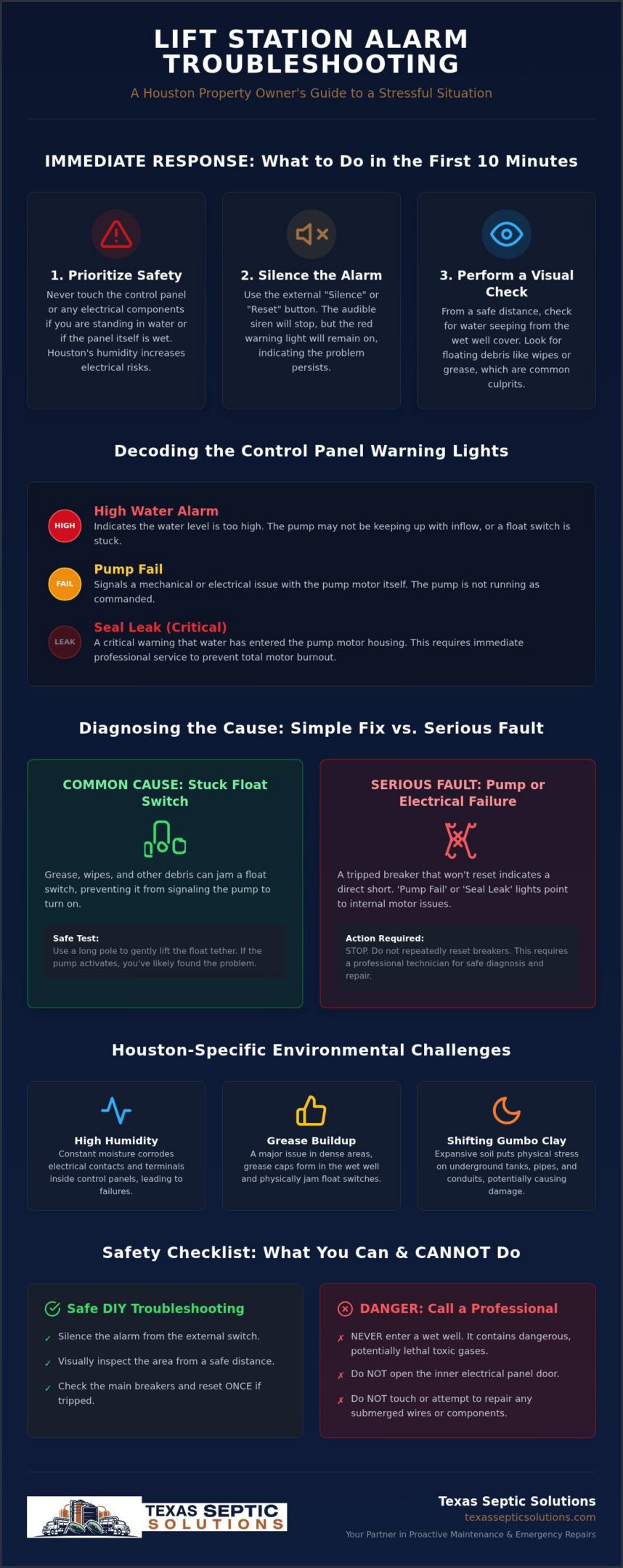
When that alarm starts blaring, your first instinct is probably to make the noise stop. It’s a jarring sound designed to get your attention before a backup occurs. Before you rush to the control panel, take a breath. Safety is the absolute priority. Houston’s high humidity and frequent rain can make electrical components unpredictable. Never touch a control panel if you are standing in water or if the panel itself is wet. This is the first rule of lift station alarm troubleshooting Houston property owners should follow.
To understand why your system is reacting this way, it helps to know the basics of What is a Lift Station? Essentially, it’s a collection point that pumps wastewater to a higher elevation or into a municipal sewer line. When the water level gets too high or a pump fails, the alarm triggers to prevent an overflow. Given that Texas’s wastewater infrastructure received a D- grade in 2025, these systems are under more pressure than ever.
Silencing the Siren Safely
Most Houston area control panels feature an external toggle switch or a push button clearly labeled “Silence” or “Reset.” Flipping this switch will stop the audible siren, but it won’t turn off the flashing red light. That light is a persistent reminder that the high-water condition or mechanical fault still exists. If you silence the alarm and it starts screaming again within minutes, your system is likely facing an active inflow it can’t handle. Don’t keep resetting it. Repeatedly forcing a reset can burn out the remaining functional components and lead to more expensive repairs.
The 10-Minute Visual Inspection
Once the noise is gone, perform a quick visual check. Look at the wet well cover. If you see water seeping out, you have an active overflow. If the lid is secure, peek inside if it’s safe to do so. Houston’s heavy rain events often overwhelm systems with inflow and infiltration, where rainwater leaks into sewer lines. You might also spot non-flushable debris like wipes or grease caps floating at the top. These are common culprits during lift station alarm troubleshooting Houston residents perform.
Pay close attention to the specific indicator lights on your panel:
- High Water: This usually means the pump isn’t keeping up with the flow or a float is stuck in the down position.
- Pump Fail: This indicates a mechanical or electrical issue with the motor itself.
- Seal Leak: This is a critical warning that water is entering the pump motor housing. This requires rapid professional repair to prevent a total motor burnout.
Diagnosing the Source: Is It a Float, a Pump, or an Electrical Issue?
Identifying the root cause of a system failure is the difference between a quick fix and an expensive replacement. Effective lift station alarm troubleshooting Houston requires a methodical look at three main areas: floats, power, and the pump itself. While the siren is scary, many alarms are actually ‘nuisance’ triggers caused by simple obstructions rather than a total mechanical collapse. Understanding these components helps you communicate clearly with a technician and potentially avoid unnecessary service fees.
Testing the Float Switches
Houston’s commercial kitchens and residential developments often struggle with grease buildup. This sludge creates a thick cap that can ‘tether’ a float switch, holding it in the down position even as water levels rise. You can sometimes perform a safe check by using a long pole or hook to gently ‘fish’ for the float tether. If the pump kicks on when you lift the float, you’ve found your problem. Standard systems use three distinct floats: the stop float, the start float, and the high-water alarm float. If any of these become tangled or coated in grease, the logic of the control panel fails. Following a schedule of proactive maintenance can prevent these floats from getting stuck and triggering false alarms.
Electrical Breaker and Fuse Checks
The brutal Houston humidity is a silent killer for electrical contacts. Over time, moisture leads to corrosion on the terminals inside your control box. Start by checking the main disconnect and individual pump breakers. A tripped breaker is a common culprit, especially after a lightning storm. However, if you reset a breaker and it immediately trips again, stop. This indicates a direct short in the pump motor or the wiring. You should never open the inner panel door or touch exposed wiring without professional training. If you find a tripped breaker that won’t stay reset, it’s time to contact Texas Septic Solutions for a professional inspection.
If the power is on and the floats are clear, listen to the pump. A loud mechanical hum usually means the impeller is seized by a foreign object like a ‘non-flushable’ wipe or a clump of hair. Total silence often points to a burned-out motor or a broken power lead. Modern submersible pumps also include seal leak sensors. These are early warning systems that detect moisture inside the motor housing before it causes a total short. Ignoring a seal leak light is a guaranteed way to turn a minor repair into a full system replacement. Taking ten minutes to check these basics during lift station alarm troubleshooting Houston can save you hours of downtime and significant property damage.
Houston-Specific Factors Affecting Your Lift Station in 2026
Houston isn’t just another city; it’s a unique environment that tests the limits of wastewater equipment every single day. Between the sweltering humidity and the infamous “gumbo” clay, your system faces challenges that property owners in other states never deal with. When you’re performing lift station alarm troubleshooting Houston systems require, you have to account for these local variables. If you ignore the environment, you’re only fixing half the problem. With Texas’s wastewater infrastructure recently receiving a D- grade, staying on top of these local stressors is more important than ever to prevent property damage.
Soil Shifting and Conduit Damage
In areas like Cypress and Huffman, the soil is notorious for its high clay content. This “gumbo” clay expands when wet and shrinks when dry, creating massive physical pressure on anything buried underground. This constant movement can actually pull electrical wires loose from their terminals or snap underground conduits. If your alarm triggers but your breakers aren’t tripped and your floats look fine, you might be looking at a broken wire buried three feet down. Thermal expansion in Houston soil affects PVC piping by causing joints to pull apart or crack under the pressure of shifting clay. This movement is a frequent culprit for intermittent alarm signals that seem to happen for no reason.
Meeting 2026 Houston Municipal Codes
Staying compliant in 2026 means more than just keeping the water flowing. The City of Houston has strict requirements for lift station alarm logs, especially for commercial properties. Health inspectors now look for a documented history of every alarm event to ensure environmental safety and proper system response. Remember that as of February 1, 2026, the annual permit year for solid and special waste transporters is in full effect. You must have a current permit with a special waste number before a transporter can legally service your system. For a deeper look at staying ahead of these rules, check out our guide on Septic System Maintenance Texas.
Don’t forget the impact of Houston’s flash floods. Heavy rain events often lead to inflow and infiltration, where stormwater enters your sewer lines and overwhelms the lift station. This is a primary reason for high water alarms during the spring and summer months. Simultaneously, the persistent humidity acts as a silent killer for your control panel. Moisture leads to rapid oxidation on copper contacts, which can cause intermittent signals and false alarms. Effective lift station alarm troubleshooting Houston property owners perform must include a check for these environmental factors to ensure long-term reliability.
DIY Troubleshooting vs. When to Call Texas Septic Solutions
Taking a hands-on approach can save you time and money, but lift station alarm troubleshooting Houston systems require a balance of curiosity and caution. We encourage property owners to handle the basics like silencing the siren or checking a tripped breaker. These simple steps often resolve “nuisance” alarms caused by power surges or minor float tangles. However, there is a thin line between a quick fix and a dangerous mistake. Understanding your limits is the best way to protect your health and your equipment.
The ‘Do Not Attempt’ List
Safety is our primary concern. You should never, under any circumstances, enter a lift station wet well. These environments contain Hydrogen Sulfide (H2S) gas, which is a byproduct of decomposing waste. This gas is colorless, heavier than air, and can be lethal in just a few breaths. Even leaning too far over an open pit can be hazardous. Additionally, avoid the temptation to bypass the control panel or “hot-wire” a pump to make it run. Doing so removes the safety protocols that prevent motor burnout or electrical fires. For a deeper look at immediate safety steps, read our guide on Septic Tank Alarm Going Off? Here Is Exactly What to Do Right Now.
When to Call for Professional Help
Some scenarios demand the tools and expertise of a seasoned technician. If you’ve silenced the alarm and checked the breakers, but the red light remains on after the water level has dropped, the sensor logic is likely broken. You should also listen for unusual noises. A loud grinding, “clunking,” or screeching sound coming from the well indicates that the pump impeller is failing or has sucked up a foreign object. The most critical red flag is a backup. If sewage is already appearing in your low-lying drains or floor sinks, you have a total system failure. In these moments, you don’t have time for DIY experiments; you need a rapid response to prevent contamination.
Think of professional service as an investment in your property’s longevity. While a standard service call might cost a few hundred dollars, ignoring a “Seal Leak” light or a failing float can lead to a total motor burnout. Replacing a commercial-grade submersible pump in 2026 can easily cost $4,000 or more. By catching a fault early during lift station alarm troubleshooting Houston, you’re choosing a small repair over a massive capital expense. If your system is showing any of these red flags, contact Texas Septic Solutions for 24/7 Emergency Septic Service.
Preventing Future Alarms with Proactive Maintenance in Houston
While mastering lift station alarm troubleshooting Houston residents can perform is valuable, the ultimate goal is to keep that siren silent. Emergency repairs are inherently reactive and often occur at the most inconvenient times. By shifting your focus to proactive care, you protect your property from the contamination risks associated with Texas’s aging wastewater infrastructure. A well-maintained system doesn’t just last longer; it operates with a level of reliability that gives you peace of mind during our inevitable Gulf Coast storms.
The Value of a Maintenance Plan
Scheduled pumping is the foundation of a healthy system. Over time, solids and grease accumulate in the wet well, forming “fatbergs” or thick grease caps that can trap floats and clog pump intakes. Regular cleaning removes these obstructions before they can cause mechanical stress. Preventative lift station care in Houston is a proactive strategy that lowers 2026 maintenance costs by preventing the premature motor burnout caused by excessive sludge buildup. Members of the Texas Septic Solutions maintenance plan enjoy the added benefit of priority scheduling, which is vital when every minute counts during a high-water event.
An “Annual Health Check” is another critical component of prevention. During these inspections, we don’t just look at the water level. We measure the amperage and voltage of your pumps to ensure they’re operating within factory specifications. We also recommend a proactive float replacement cycle every 3 to 5 years. Because float switches are the most frequent cause of nuisance alarms in Houston, replacing them before they fail is a simple way to avoid 2 AM wake-up calls. Taking these small steps now prevents the need for intensive lift station alarm troubleshooting Houston property owners dread.
Upgrading Your Lift Station Components
Technology has advanced significantly, and 2026 offers smarter ways to monitor your equipment. You can now modernize your control panel with telemetric alerts that send a notification directly to your smartphone the moment a fault is detected. This allows you to address a high-water condition hours before a backup begins. Pairing these smart sensors with higher-efficiency pumps designed for Houston’s heavy-duty demands ensures your system can handle both daily waste and sudden stormwater intrusion. If your current system is outdated or you’re tired of “alarm fatigue,” it’s time to invest in a more resilient setup. Contact Texas Septic Solutions for 24/7 Emergency Lift Station Repair and long-term maintenance support to keep your property safe and compliant.
Take Control of Your Houston Lift Station Today
Dealing with a blaring siren is stressful, but you now have the tools to handle it with confidence. You’ve learned how to safely silence the noise, identify the difference between a stuck float and a mechanical failure, and understand how Houston’s unique “gumbo” clay impacts your system’s longevity. Following a systematic approach to lift station alarm troubleshooting Houston property owners can use helps prevent small glitches from becoming environmental disasters or costly capital expenses.
You don’t have to face these utility challenges alone. Our licensed and insured professionals are experts in 2026 Houston municipal compliance and are ready to support you with 24/7 rapid response throughout Houston and Cleveland. Whether you need an emergency fix to stop an active backup or a proactive maintenance plan to keep your system healthy year-round, we’re here to provide the local expertise you need.
Call Texas Septic Solutions Now for 24/7 Emergency Lift Station Repair. We’ll get your system back in balance so you can get back to your day with total peace of mind.
Frequently Asked Questions
Why is my lift station alarm going off but the water level looks normal?
A normal water level with an active alarm often points to a faulty sensor or a “seal leak” warning. Modern pumps use these sensors to detect moisture inside the motor housing before a total short occurs. It could also be a “nuisance” trip where a float switch is tangled or stuck in the “up” position. This is a common starting point for lift station alarm troubleshooting Houston property owners perform before calling for professional service.
Can I use my water while the lift station alarm is on?
You should stop all water use immediately when the alarm sounds. The alarm indicates that the pump is not moving waste out of the wet well, so every gallon you flush or drain brings you closer to a backup. Limit water use to the absolute minimum until a technician confirms the system is discharging correctly. Continuing to use water can result in sewage entering your home or business through low-lying drains.
How much does it cost to have a lift station pump replaced in Houston?
Replacement costs depend on the pump’s horsepower, the depth of the wet well, and current 2026 labor rates in the Houston metro area. While we don’t provide flat prices without an inspection, a professional can offer a detailed estimate after evaluating your specific residential or commercial setup. Investing in a high-efficiency pump suited for local conditions can often reduce your long-term energy and repair costs over the life of the system.
What does a red light on my septic control panel mean?
A red light is a visual warning that a fault condition exists within your system. While the audible siren is designed to get your attention, the red light identifies that a “High Water” or “Pump Failure” status is active. Even if you silence the buzzer using the external switch, the light will remain on until the water level drops or the mechanical issue is resolved by a technician.
Is there a reset button for a lift station alarm?
Most control panels have a “Silence” or “Reset” toggle switch located on the exterior of the box. This button will stop the loud audible siren but will not clear the fault light or fix the underlying issue. If the alarm triggers again immediately after you reset it, the high-water condition or electrical short is still active and requires professional attention to prevent a total system failure.
How often should a lift station be cleaned to prevent alarms?
We generally recommend a professional cleaning every 6 to 12 months for standard residential systems. Commercial properties, especially those with kitchens, may require quarterly service to manage grease caps and “fatbergs” that obstruct the pumps. Regular pumping prevents the sludge buildup that leads to motor burnout and is a key part of effective lift station alarm troubleshooting Houston maintenance strategies to ensure system longevity.
Can heavy rain in Houston cause my lift station alarm to trigger?
Yes, Houston’s intense flash floods frequently cause alarms by introducing excess stormwater into the sewer lines. This process, known as inflow and infiltration, can overwhelm even a perfectly functional pump. If your alarm only sounds during heavy rain, you likely have a leak in your underground piping or a loose wet well lid that is allowing rainwater to enter and exceed the pump’s capacity.
What is the most common cause of lift station failure in Texas?
The most common causes are clogged impellers and failed float switches. In Texas, grease buildup and “non-flushable” wipes are the primary culprits for pump clogs. Humidity also plays a major role, as it causes rapid corrosion on electrical contacts within the control panel. Staying on a regular maintenance schedule is the most effective way to prevent these common mechanical failures and avoid the stress of emergency alarms.