
Cypress TX Septic Tank Maintenance: The Ultimate 2026 Homeowner Checklist
Did you know that a total septic system failure in Harris County can cost as much as $30,000 to replace? For many property owners, Cypress TX septic tank maintenance feels like a high-stakes guessing game where the prize is simply avoiding a $100-per-day fine. You likely dread that sour smell drifting from the yard or the sudden, piercing ring of an aerobic system alarm. It’s a lot to manage, especially when you’re trying to keep up with the latest TCEQ requirements and local enforcement.
We believe that protecting your property shouldn’t be a source of constant anxiety. This guide provides a clear, expert-led checklist designed to help you master your system’s health and stay ahead of potential issues. We’ll walk through the mandatory inspection schedules, how to handle mechanical components, and the specific steps you can take to lower your long-term repair costs while keeping your home functional and compliant with state standards.
Key Takeaways
- Learn why the heavy clay soil in the area demands specialized Cypress TX septic tank maintenance to prevent premature drain field failure.
- Discover a 10-point visual checklist that helps you spot early warning signs like pooling water before they become expensive emergencies.
- Understand the critical maintenance differences between active aerobic treatment units and passive conventional systems to stay compliant with TCEQ standards.
- Find out why the “three-year golden rule” for pumping is the most effective way to avoid the “silent killers” of septic health.
- Identify the specific troubleshooting steps for aerobic system alarms to keep your household running smoothly without the stress.
Why Cypress TX Requires Specialized Septic Tank Maintenance
Many homeowners view their septic system as a “set it and forget it” utility. However, effective Cypress TX septic tank maintenance is a proactive strategy for wastewater management rather than a reaction to a backup. Understanding how septic systems work helps you see why specialized care is necessary. In our corner of East Texas, the environment often works against your system. From the soil beneath your feet to the humidity in the air, several local factors dictate how often your system needs professional attention.
The “Cypress Clay” Challenge
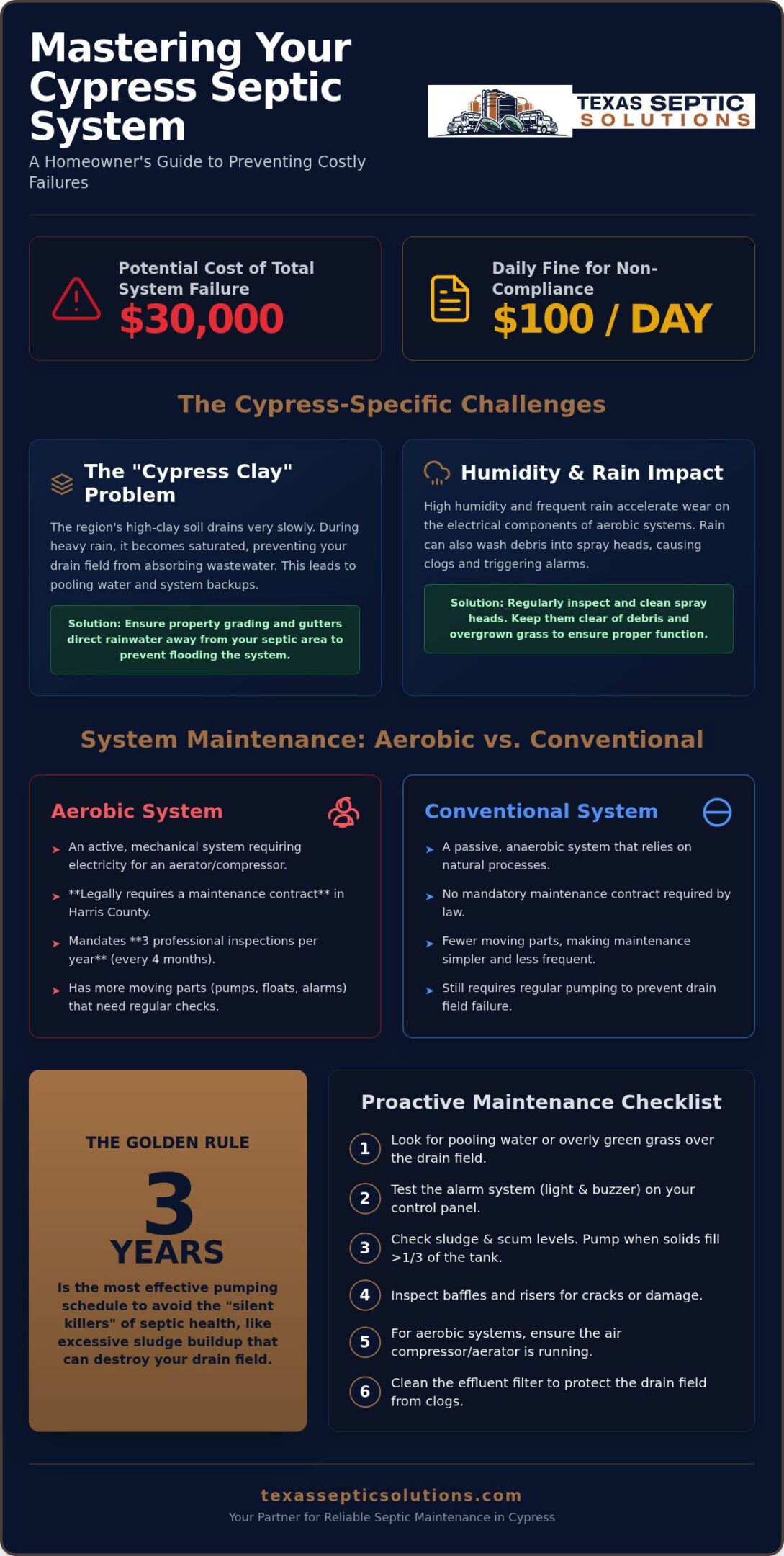
The soil in Cypress is notorious for its high clay content. Clay particles are tiny and tightly packed, which severely restricts water movement compared to the sandy soils found in other regions. This creates a natural bottleneck for your drain field. When we experience heavy Texas thunderstorms, the ground becomes saturated almost instantly. If your soil is already full of rainwater, it can’t absorb the effluent leaving your tank. This saturation often leads to pooling water or “spongy” spots in your yard. To help your system, make sure your property’s grading and gutters direct rain runoff away from the septic area. If you don’t manage surface water, you risk flooding the system from the outside in.
Environmental Impact on Aerobic Systems
Our local humidity and frequent rain patterns also affect the mechanical components of your system. Aerobic treatment units rely on spray heads and aerators that are constantly exposed to the elements. High humidity can accelerate the wear on electrical components, while heavy rain can wash debris into the spray zones. Regular Cypress TX septic tank maintenance includes checking these spray heads to ensure they aren’t clogged or buried under overgrown grass. Keeping these parts clean is the best way to avoid a middle-of-the-night alarm.
Regulatory Compliance in Harris County
Harris County enforces strict TCEQ standards to protect local groundwater and public health. If you own an aerobic system, you’re legally required to have a maintenance contract with a licensed provider. This contract mandates three professional inspections per year, typically spaced four months apart. Failing to keep this contract active isn’t just a risk to your plumbing; it’s a legal liability. Homeowners can face fines of up to $100 per day for non-compliance. Routine professional pumping is also a key part of meeting local standards. It removes the sludge that could otherwise bypass your tank’s baffles and ruin your expensive drain field. Staying on top of these rules keeps your system running and keeps the county inspectors away from your door.
The Comprehensive 10-Point Septic Maintenance Checklist
Maintaining a septic system doesn’t have to be a mystery. We’ve developed this 10-point checklist as a practical decision-making tool to help you stay ahead of trouble. By following these septic system care guidelines, you can spot minor issues before they turn into costly repairs. Consistency is the secret to a long-lasting system, and taking a proactive stance on Cypress TX septic tank maintenance will save you thousands of dollars over the life of your home.
Start with a walk-through of your property. Look for pooling water or unusually lush, green grass over the tank or drain field. These are classic signs of a leak or a system that’s struggling to process waste. Next, check your control panel. You should test the alarm system to ensure the light and buzzer actually work; you don’t want to find out the alarm is broken during a real backup. Inside the tank, professionals look for the “sludge and scum” levels. If the bottom sludge layer takes up more than one-third of the tank’s total volume, it’s time to schedule a pump-out. We also inspect the septic baffles and risers for cracks or signs of wear. Baffles keep solids from escaping into the disposal area, while risers must remain watertight to prevent rainwater from overfilling your system.
Mechanical and Electrical Components
Testing the air compressor or aerator is non-negotiable for aerobic systems. If the aerator fails, the beneficial bacteria die, and the treatment process stops. You also need to clean the effluent filter regularly. The effluent filter is the primary guard for your drain field, catching small particles that would otherwise clog your soil. Finally, verify that your submersible pump and float switches move freely. A stuck float is often the culprit behind a false alarm or a system that won’t drain properly. If you’re unsure about the state of your components, it’s a good idea to have a professional handle your Cypress TX septic tank maintenance to ensure everything is up to code.
Distribution and Disposal Area Tasks
For homes with spray systems, clear any grass or debris away from the spray heads to ensure an even distribution of treated water. If you have a drip irrigation system, check the lines for clogs or breaks. It’s also vital to keep the “purple pipe” area clear of deep-rooted vegetation like trees or large shrubs that can puncture lines. Always check your chlorine residual levels in the disinfectant chamber. Without chlorine, your system is discharging untreated wastewater, which is a health hazard. For a more detailed schedule on these tasks, you can refer to our septic system maintenance plan.
Aerobic vs. Conventional Systems: Maintenance Differences
While all septic systems serve the same basic purpose, the way they treat wastewater varies significantly. Your approach to Cypress TX septic tank maintenance depends heavily on whether you have a passive or active system. Conventional systems are passive; they rely on gravity and natural bacterial breakdown within the tank before effluent flows to a drain field. In contrast, most newer homes in the Cypress area utilize aerobic treatment units (ATUs). These are active systems that use electricity to pump air into the tank, creating an environment where oxygen-loving bacteria can break down waste much faster than in a traditional setup.
Because aerobic systems are more complex, they require a higher level of conscientious maintenance to stay functional. Conventional systems might only need pumping every three to five years, but aerobic systems often require pumping every two to three years due to their smaller tank sizes and higher solids production. Additionally, aerobic systems use chlorine to disinfect wastewater before it’s sprayed onto your lawn. This chemical requirement is completely absent in conventional systems, making the aerobic owner’s monthly checklist a bit more involved.
Conventional System Priorities
For homeowners with older, conventional systems, the drain field is your most valuable asset. Since these systems lack the mechanical “boost” of an aerator, they are more susceptible to hydraulic overloading. If you run too many loads of laundry in a single day, you risk flooding the tank and pushing solids into the drain field. Maintaining a healthy bacterial balance is also vital. Avoid using harsh drain cleaners or bleach, which can kill the natural enzymes that break down waste. Finally, protect the soil over your drain field from compaction by never parking vehicles or heavy equipment on top of it.
Aerobic System Requirements
Aerobic systems demand regular mechanical upkeep to prevent a total breakdown. You’ll need to replenish chlorine tablets and clean the air filter on your compressor every few months. In Harris County, the law requires you to maintain a valid contract with a licensed provider for three inspections per year. These inspections ensure your aerator, submersible pump, and spray heads are all operating within TCEQ standards. If a mechanical part like the aerator fails, it’s critical to seek a septic system repair immediately to prevent the system from becoming septic and producing foul odors.
Timing and Troubleshooting: When to Call a Cypress Professional
Understanding the timing of Cypress TX septic tank maintenance is the difference between a routine service and a midnight plumbing disaster. While the 10-point checklist helps you monitor the system, knowing when to step back and call a professional is vital. Many homeowners wait until they see sewage backing up into the bathtub before they call for help. By that point, you aren’t just paying for a pump-out; you’re likely paying for expensive repairs or even a total system replacement. Recognizing early warning signs allows you to act while the solution is still simple and affordable.
The “Silent Killers” of a septic system are often subtle. If you notice slow drains in the kitchen or hear a strange gurgling sound in the pipes when you flush the toilet, your tank is likely reaching its capacity. Another reliable indicator is the “Yard Test.” If the grass over your tank or drain field is noticeably greener and lusher than the rest of the yard, or if the soil feels spongy even when it hasn’t rained, your system is struggling to process effluent. Dealing with odors is another common challenge. A faint smell near the vent pipe might just be a venting issue, but a persistent, rotten-egg odor inside the house or across the yard usually indicates a serious mechanical failure or a full tank.
The Septic Tank Alarm: Friend or Foe?
If the red light on your control panel starts flashing or a loud buzzer sounds, don’t panic, but do take immediate action. This alarm typically signals either a high-water condition or a failure in the air compressor. Start by reducing your water usage immediately. Don’t run the dishwasher or the laundry until a technician arrives. For a step-by-step guide on what to do next, read our article on what to do when your septic tank alarm is going off. Most alarms indicate a problem that can be fixed quickly if caught early.
Calculating Pumping Frequency
While every three years is the “golden rule” for most Cypress homes, your specific frequency depends on household size and habits. A family of five with a standard 1,000-gallon tank will need service much sooner than a couple living in the same house. Using a garbage disposal also increases the accumulation of solids by as much as 50 percent, which means you’ll need to pump more often. Waiting for a backup is the most expensive strategy you can choose. Professional inspections during every pumping visit ensure your baffles and filters are intact, protecting your drain field from damage. If you’re unsure when your system was last serviced, it’s time to schedule a professional septic inspection to establish a baseline for your home.
Texas Septic Solutions: Your Partner for Reliable Maintenance in Cypress
Texas Septic Solutions stands as a reliable local authority for homeowners who value straightforward, professional care. We don’t just see a utility; we see the foundation of a functional home. Our approach to Cypress TX septic tank maintenance is built on the idea that proactive care is always better than reactive repairs. We’ve spent years learning the nuances of local property needs, allowing us to offer a one-stop service model that covers everything from routine inspections to complex system overhauls.
We know that septic issues don’t follow a nine-to-five schedule. That’s why we provide 24/7 emergency septic service to the Cypress community. If an alarm sounds or a backup occurs in the middle of the night, you won’t be left searching for answers. Our team responds quickly to alleviate the stress of unexpected failures. We focus on being a dependable partner you can trust, offering a “neighborly expert” vibe that makes technical repairs feel manageable and transparent.
Specialized pumping is at the heart of our service model. It isn’t just about emptying a tank; it’s about a comprehensive evaluation of your system’s current health. By removing accumulated sludge and inspecting baffles during every visit, we prevent the solids that cause expensive drain field failures. This level of care ensures your system remains compliant with Harris County regulations while extending its total lifespan and saving you from the high cost of a full replacement.
Comprehensive Care for Cypress Homes
Our capabilities range from new septic system installation to routine pumping and emergency repairs. We understand East Texas soil and the specific environmental codes that govern our area. This local expertise means we know exactly how to handle the heavy clay and high water tables unique to our region. Our maintenance customers sleep better at night because they know their system is being monitored by experts who have seen every possible scenario and remain unfazed by challenges.
Get Started with a Maintenance Evaluation
Taking control of your system’s health is simple. We recommend starting with a professional maintenance evaluation to identify any hidden issues before they become emergencies. As a local, family-oriented business, we make the scheduling process fast and efficient. You won’t have to deal with abstract corporate promises or hidden jargon; you’ll get clear answers and sturdy solutions. Schedule your Cypress septic maintenance today! and let us help you protect your home’s functionality for years to come.
Protect Your Property with Proactive Care
Managing a septic system in East Texas doesn’t have to be a source of constant worry. We’ve explored how the local clay soil impacts your drain field and why a consistent 10-point checklist is your best defense against system failure. By staying on top of your TCEQ-mandated inspections and understanding the unique needs of aerobic units, you can avoid the high costs of emergency replacements and local fines. Cypress TX septic tank maintenance is fundamentally about consistency and choosing the right partner for your home’s long-term health.
Our team of expert local technicians is ready to handle everything from routine pumping to complex repairs. We offer comprehensive solutions and 24/7 emergency septic service to ensure you’re never left dealing with a utility crisis alone. Don’t wait for a slow drain or a loud alarm to tell you there’s a problem. Protect your home with expert Cypress TX septic tank maintenance from Texas Septic Solutions. We’re here to keep your system running smoothly so you can focus on what matters most.
Frequently Asked Questions
How often should I pump my septic tank in Cypress, TX?
Most Cypress homes should have their tanks pumped every two to three years. While the general rule for conventional systems is every three to five years, the heavy clay soil and smaller tank sizes found in newer aerobic systems often require more frequent service. Household size and usage habits also play a role. If you use a garbage disposal, you’ll likely need to pump your tank more often to prevent solids from overflowing.
Is an aerobic maintenance contract required by law in Harris County?
Yes, Harris County requires all owners of aerobic septic systems to maintain a continuous contract with a licensed maintenance provider. This regulation aligns with TCEQ standards and mandates three professional inspections every year. These inspections ensure your system is treating wastewater properly before it’s sprayed on your lawn. Failing to maintain a valid contract can result in significant daily fines from the county environmental health department.
What kind of chlorine should I use in my aerobic septic system?
You must use calcium hypochlorite tablets specifically labeled for wastewater disinfection. Never use swimming pool chlorine tablets in your septic system. Pool chlorine is designed to dissolve much slower and can create a dangerous gas when it reacts with the organic matter in your tank. Routine Cypress TX septic tank maintenance includes checking your chlorine levels every two to four months to ensure the disinfection process remains effective.
Can I use a garbage disposal if I have a septic system in Cypress?
You can use a garbage disposal, but it’s generally discouraged because it significantly increases the load on your system. Disposals add a large volume of organic solids that the bacteria in your tank can’t break down quickly. This can increase the solid waste in your tank by as much as 50 percent. If you choose to use one, you should plan for more frequent pumping visits to avoid a system backup.
What are the first signs that my septic system is failing?
The earliest signs of failure include slow-moving drains, gurgling sounds in your pipes, and foul odors inside or outside your home. You might also notice patches of lush, dark green grass over the drain field or actual pooling water in the yard. These symptoms suggest that your tank is full or your soil is no longer absorbing effluent. Catching these signs early is the best way to avoid an expensive system replacement.
How much does septic tank pumping cost in the Cypress area?
The cost of pumping varies based on the size of your tank and the depth of the lids. While industry averages fluctuate, most homeowners find that the investment is a small fraction of the cost of a full system repair. Factors like whether the lids are buried or if the system requires specialized cleaning for heavy sludge also influence the final price. We recommend getting a professional quote to understand the specific needs of your property.
Will heavy rain in Cypress cause my septic tank to back up?
Heavy rain can cause backups by saturating the clay-heavy soil around your drain field. When the ground is full of rainwater, the effluent from your tank has nowhere to go, which can lead to water backing up into your home’s pipes. This is especially common during the intense thunderstorms we see in East Texas. It’s important to ensure your yard is graded to direct surface water away from your septic tank area.
What should I do if my septic tank alarm starts buzzing?
If your alarm sounds, you should immediately reduce your household water usage and silence the buzzer on your control panel. Stop running the dishwasher, laundry, and showers until the system is inspected. An alarm usually indicates a high water level in the tank or a failure in the air compressor. This is a critical moment for Cypress TX septic tank maintenance, as acting quickly can prevent a major sewage backup into your home.