
High Water Alarm on Aerobic System in Huffman: Emergency Troubleshooting Guide
Imagine it’s late in the evening and a piercing, relentless buzzing suddenly erupts from your backyard. You know that sound; it’s the high water alarm on your aerobic system. It’s enough to make any homeowner in Huffman panic, especially when you start worrying about potential sewage backups or a massive repair bill. We’re here to help you stay calm and take control of the situation immediately. This guide will show you exactly why your high water alarm on aerobic system Huffman is sounding and, more importantly, how to stop the noise while protecting your home.
We’ll walk through immediate troubleshooting steps to help you identify if you’re facing a simple float issue or a mechanical pump failure. You’ll also learn how to keep your system compliant with Harris County regulations so you can prevent future emergencies and keep your yard clean and safe for your family. By following these professional tips, you can determine if your situation is a quick fix or if it’s time to call in a licensed expert to handle the heavy lifting and restore your peace of mind.
Key Takeaways
- Stop the noise immediately by locating the mute button and starting a “water fast” to protect your home from potential backups.
- Identify the most common mechanical causes for a high water alarm on aerobic system Huffman installations, including pump failures and float switch issues.
- See how Huffman’s unique soil saturation and heavy rainfall patterns can contribute to system overflows during the rainy season.
- Apply the 12-hour rule and check your circuit breakers to distinguish between a simple reset and a professional repair emergency.
What to Do When Your Septic Alarm Sounds in Huffman
The sudden blare of a septic alarm is enough to disrupt anyone’s day, but your first priority is to stay calm. When you hear that buzzer, your system is telling you that something needs attention before it becomes a messy emergency. The most common reason for this in our community is a high water alarm on aerobic system Huffman homeowners often encounter after a heavy storm or during high-usage days. Your immediate response should be to acknowledge the alert without cutting power to the entire unit. Treating it as a warning rather than a disaster allows you to troubleshoot effectively.
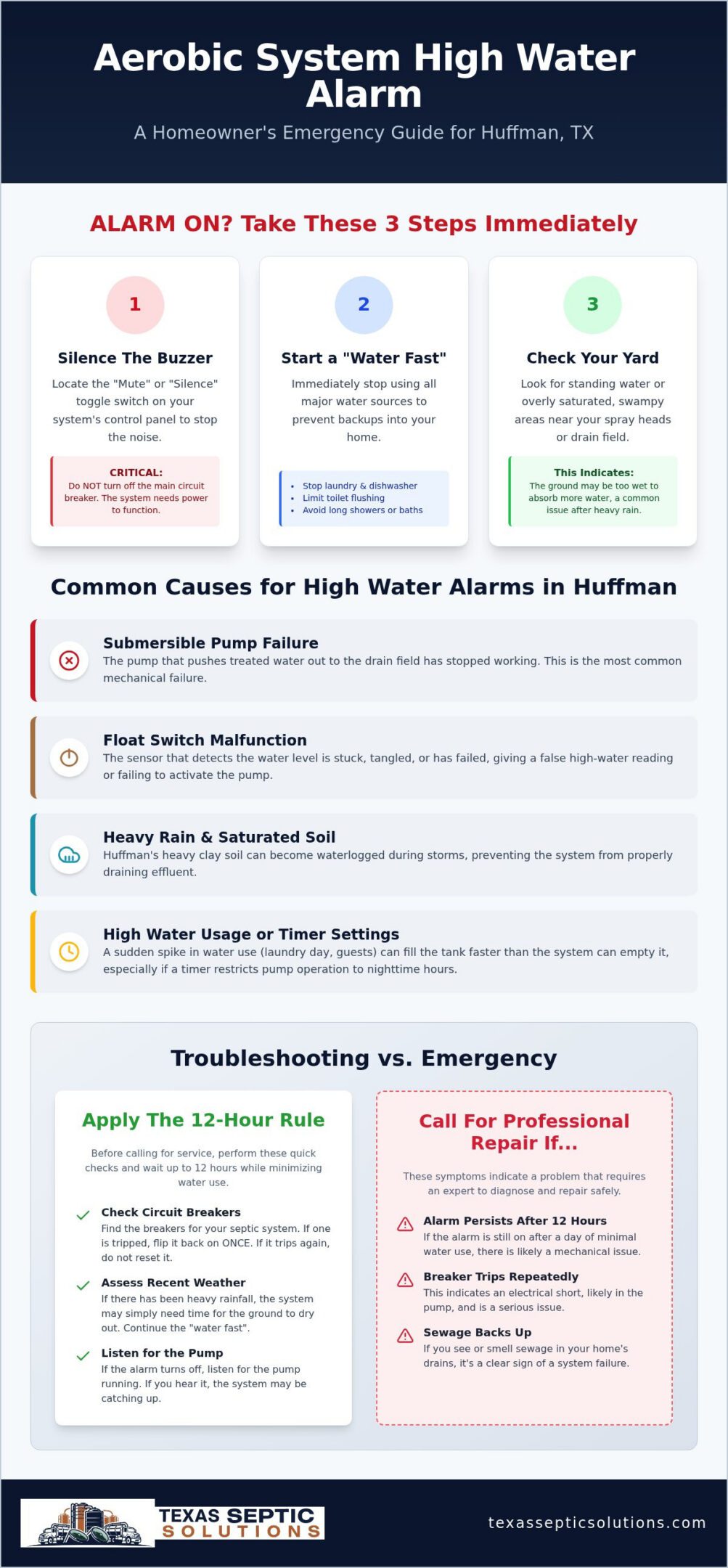
Head outside to your control panel and look for the indicator lights. You’ll likely see a red light glowing, which indicates the water level in your pump tank has risen past the safe operating limit. Before you do anything else, check for other indicators. A yellow light usually points to an aeration issue, while the red light is the specific signal for high water. Take a quick walk through your yard to check your spray heads or drain field. If you see standing water or swampy spots, the ground might be too saturated to accept more effluent. This is a frequent challenge in the heavy clay soils found around Huffman, especially after a typical East Texas downpour.
How to Silence the Alarm Without Turning Off the System
Locate the small toggle switch or push button on the bottom or side of your control panel labeled “Mute” or “Silence.” Flipping this stops the noise, but it won’t solve the underlying issue. It’s vital that you leave the main breaker on. Your aerobic treatment system relies on a constant supply of electricity to keep beneficial bacteria alive and processing waste. If you kill the power, you stop the treatment process entirely. This can lead to foul odors and a much more expensive cleanup later because the system isn’t just full; it’s also failing to treat the sewage.
Emergency Water Conservation Protocol
Once the alarm is silent, you must implement a strict “water fast.” Your pump tank has a small amount of reserve capacity, but this buffer disappears quickly if you continue normal activities. Every gallon you save buys you more time for the system to recover or for a technician to arrive. In Huffman, where sudden rain can overwhelm the soil, reducing your indoor water load is the best way to prevent a backup into your home. Follow these steps immediately:
- Stop all laundry and dishwasher cycles.
- Limit toilet flushes to essential use only.
- Avoid long showers or filling bathtubs.
- Postpone any activity that sends large volumes of water down the drain.
By cutting your water usage to the bare minimum, you give the pump a chance to catch up if the issue is simply a temporary overload rather than a mechanical failure.
Understanding the Red High Water Alarm on Your Aerobic System
The red light on your control panel is the most common visual cue for a high water alarm on aerobic system Huffman. It acts as a safety measure to prevent untreated waste from backing up into your drains or overflowing onto your lawn. This alarm triggers when the water level in the final pump tank reaches a specific height; usually just a few inches from the top. While it’s tempting to think the worst, understanding the mechanics can help you determine if you’re looking at a temporary surge or a serious mechanical breakdown. A high water alarm on aerobic system Huffman installations doesn’t always mean a total system failure, but it always requires your attention.
Sometimes, the alarm is simply a result of timing. Many aerobic systems in Huffman are equipped with timers that only allow the pump to spray at night. If your household produces an unusual amount of wastewater during the day, the tank may fill up before the timer triggers the pump. In these cases, the alarm sounds because the water is high, but the system is actually working fine. It’s just waiting for its scheduled run time. Following basic guidelines for caring for your septic system can help you avoid these usage-related surges and keep your system running smoothly.
The Role of the Float Switch
Your system relies on several floats to manage water levels. The high-level float switch is a mechanical sensor that activates the alarm at a specific depth. Think of it as the system’s whistleblower. It’s a simple plastic bulb that tilts as the water rises. Over time, these floats can become tangled on pump wires or weighed down by debris. When a float gets stuck in the “up” position, the alarm will stay on even if the water level is low. This is why a visual inspection is often the first step in troubleshooting.
Submersible Pump Failure Signs
The submersible pump is the heart of your aerobic system’s discharge process. Its job is to push treated water out through the spray heads. If the pump fails, the water has nowhere to go; this causes the level to rise until it hits the alarm float. You can often tell a pump is dead if the tank remains silent during scheduled spray times. In Huffman, electrical surges from summer storms or simple mechanical age are the leading causes of pump failure. If you suspect your pump has reached the end of its life, reaching out for expert septic repair is the quickest way to get your system back in balance. A professional can test the electrical draw of the pump to see if it’s truly burned out or just clogged.
Common Causes for High Water Alarms Specific to Huffman, TX
Huffman homeowners face specific environmental challenges that differ from other parts of Texas. When you encounter a high water alarm on aerobic system Huffman property, it’s often a direct result of our local climate and soil composition. Our area is known for heavy clay soils that don’t drain as quickly as sandy loam. During a typical East Texas storm, the ground becomes saturated fast. This creates a “backlog” where the spray heads can’t effectively disperse treated water because the earth simply won’t take any more.
According to the Texas A&M AgriLife Extension on Aerobic Treatment Units, these systems are designed to handle specific daily loads. However, they aren’t always prepared for external water entering the tanks. In older Huffman homes, rainwater can leak into the system through unsealed tank lids or cracked risers. This is called infiltration. If you see your alarm go off every time it rains, you likely have a leak that’s allowing hundreds of gallons of surface water to flood your system, triggering that high water alarm on aerobic system Huffman residents dread.
Huffman Weather and Your Septic System
When Huffman receives 2 or more inches of rain in a single afternoon, your system’s discharge capacity is tested. The soil around your spray heads acts like a full sponge. If the water has nowhere to go, it stays in the pump tank and hits the high-water float. We often recommend the “waiting game.” Give the system 12 to 24 hours after the rain stops to see if the levels drop naturally. Also, check your yard’s grading. If runoff from your roof or driveway is directed toward your septic lids, you’re essentially asking your system to process the neighborhood’s storm drainage.
Sprinkler and Discharge Problems
Local landscape issues are another frequent culprit. Huffman’s lush vegetation and active insect life can interfere with mechanical parts. Keeping these clear is a simple way to prevent a high water alarm on aerobic system Huffman homeowners might otherwise pay to repair.
- Overgrown Grass: Tall grass or weeds can block spray heads, creating backpressure that prevents the pump from emptying the tank.
- Fire Ants: These pests love electrical components and can clog spray nozzles or even short out the wiring in your control box.
- Crushed Lines: If you’ve had a propane delivery, a tree crew, or heavy equipment in the yard, a discharge line might be pinched or broken under the weight.
Taking a few minutes to clear debris or trim around your spray heads can often resolve an alarm without needing a major repair. If the alarm persists after these checks, the issue is likely internal.
Troubleshooting vs. Emergency: When to Call for Repair
Determining whether your situation is a minor glitch or a full-scale crisis is the most important part of managing a high water alarm on aerobic system Huffman households. Most systems have enough reserve capacity to handle a few hours of downtime, but that safety margin is thin. If you’ve silenced the buzzer and stopped your water usage as we discussed earlier, the system should ideally recover within a few hours. We use a simple 12-hour rule for our Huffman neighbors. If the alarm persists for more than 12 hours despite zero water going down the drains, you’re likely dealing with a mechanical failure that won’t fix itself.
Watch for signs of a true emergency that require immediate action. If you hear gurgling sounds coming from your toilets or see water backing up into your showers, the tank is already at its absolute limit. This is no longer a troubleshooting situation; it’s a professional emergency. For a detailed breakdown of these critical moments, read our guide on Septic Tank Alarm Going Off? Here Is Exactly What to Do Right Now.
The Homeowner’s 3-Point Inspection
Before you pick up the phone, perform a quick 3-point inspection. First, check your home’s main electrical panel and the septic control box for a tripped circuit breaker. A power surge during a Huffman thunderstorm can easily pop a breaker, cutting power to the pump. Second, walk your yard to ensure your spray heads aren’t physically damaged or buried under mulch. Third, look at your control panel’s water level indicator if it has one. If the light stays red even after the pump should have run, the problem is internal. These steps help you provide better information when you call for help.
When DIY Troubleshooting Ends
Safety is our biggest concern for our community. Never attempt to open the septic tank lids or risers to investigate the water levels yourself. Aerobic tanks contain high levels of methane and other dangerous gases, and the risk of a fall is real. Also, mixing water and electricity is a job best left to those with the right diagnostic tools and protective gear. Ignoring a high water alarm on aerobic system Huffman properties for more than 24 hours puts your entire drain field and home plumbing at risk of contamination. If your 3-point check doesn’t clear the light, it’s time to request emergency septic service to prevent a total system backup.
Professional Aerobic Septic Solutions and Emergency Service in Huffman
When the buzzer keeps sounding or the red light refuses to go out, you need more than just a quick reset. Resolving a high water alarm on aerobic system Huffman homeowners face often requires specialized diagnostic equipment to test electrical currents and component resistance. Our team arrives with the tools needed to pinpoint whether you have a simple float failure or a pump that has reached its mechanical limit. We don’t just silence the noise; we ensure the entire treatment cycle is restored to protect your property and the surrounding environment.
Routine pumping remains your best defense against unexpected alerts. Over time, solids accumulate in the trash tank and can eventually migrate to the pump chamber. This sludge buildup interferes with floats and puts extra strain on your discharge pump, leading to premature failure. By sticking to a regular pumping schedule, you prevent these solids from triggering a high water alarm on aerobic system Huffman systems. It’s a proactive step that saves you from the stress and cost of a midnight emergency.
24/7 Emergency Repair in Huffman
We understand that septic issues don’t wait for business hours. That’s why we provide rapid response times for urgent high water and backup situations across the community. Our technicians are experts in all major aerobic system brands used in East Texas, ensuring we have the right parts on hand to get your system running again. For a deeper look at how we handle these fixes and what to expect during a service call, see our Septic System Repair in Texas guide.
The Value of a Maintenance Plan
Long-term peace of mind comes from consistent care. A professional maintenance plan is more than just a convenience; it’s a legal requirement for aerobic systems in Harris County. These regular inspections allow us to catch failing pumps, worn bearings, or clogged spray heads before the alarm ever sounds. We handle the necessary reporting and ensure your system meets all local regulatory standards. You can learn more about how these plans protect your investment in our Septic System Maintenance Plan Guide. Staying ahead of repairs is the most cost-effective way to manage your home’s utility needs and avoid the headache of a system backup.
Protect Your Huffman Home and Restore Your Peace of Mind
Dealing with a high water alarm on aerobic system Huffman properties doesn’t have to be a disaster. By silencing the buzzer and immediately reducing your water usage, you buy yourself the time needed to determine if the issue is a temporary rain surge or a mechanical failure. Remember the 12-hour rule; if the light stays on after half a day of zero water use, it’s time to bring in a professional. Our local expertise helps us navigate Huffman’s unique soil challenges and weather patterns to get your system back in balance quickly and safely.
Don’t let a septic alert turn into a costly property backup. Our licensed and insured technicians are ready to provide the reliable support you need to keep your yard clean and your home functional. Need Emergency Septic Repair in Huffman? Call Texas Septic Solutions 24/7! We take pride in being your local septic experts, offering 24/7 emergency response to handle any high water crisis. You don’t have to face these utility challenges alone; we’re just a phone call away and ready to help.
Frequently Asked Questions
Can I still use my water if the aerobic septic alarm is sounding?
You should stop all non-essential water usage immediately. Your pump tank has reached its maximum capacity, and every additional gallon you send down the drain increases the risk of a backup into your home. Limit toilet flushes and postpone high-volume activities like laundry or showers until the alarm clears or a technician arrives.
How do I reset my septic alarm after the water level goes down?
Most systems reset automatically once the effluent level drops below the high-water float switch. If the light remains on after the pump has finished its cycle, you may need to press a button labeled “Reset” or “Acknowledge” on your control panel. If the alarm persists despite the tank being empty, the float itself may be stuck or damaged.
Why does my septic alarm go off every time it rains in Huffman?
This is usually caused by soil saturation or rainwater infiltration into your tanks. Huffman’s heavy clay soil doesn’t absorb water quickly, which can prevent your spray heads from discharging effluent. If your tank lids or risers aren’t perfectly sealed, a high water alarm on aerobic system Huffman installations can be triggered by surface water leaking into the system during a storm.
How long can I wait before calling a professional for a high water alarm?
We recommend calling a professional if the alarm doesn’t clear within 12 hours of stopping your water usage. While you have a small buffer of reserve space in the tank, waiting longer than 24 hours significantly increases the chance of sewage backing up into your showers or sinks. If you hear gurgling in your pipes, call for emergency service immediately.
Will a high water alarm fix itself if I stop using water?
The alarm will only resolve itself if the cause was a temporary surge in water usage, such as hosting a large party or running multiple laundry loads. In these cases, the pump just needs time to catch up. However, if the alarm is caused by a mechanical failure like a burned-out pump or a faulty float, it won’t fix itself regardless of how much water you save.
What is the difference between the red light and the yellow light on my panel?
A red light signals a high water level, while a yellow or amber light typically indicates an aerator or compressor failure. The red light is generally more urgent because it means your tank is physically full and at risk of overflowing. The yellow light means the treatment process has stopped, which will eventually cause odors and system damage if not addressed.
Is a buzzing septic alarm always an emergency?
It’s always a priority, but it’s not always an immediate disaster if you catch it early. Think of the buzzer as an early warning system that gives you a window of time to react before a backup occurs. It only becomes a true emergency if you ignore the sound and continue to use water normally, which will quickly overwhelm the remaining tank space.
How much does it typically cost to fix a high water alarm issue in Huffman?
The cost varies based on whether the problem is a simple electrical reset, a stuck float, or a total pump failure. Replacing a mechanical float switch is generally the most affordable fix, while replacing a submersible discharge pump is a more significant investment. A professional diagnostic test is the only way to get an accurate estimate for your specific system needs.