
Cypress Septic Inspection: 2026 Homeowner’s Guide
Imagine you’re just days away from closing on a beautiful Cypress property, only to have the entire deal stall because of an aging aerobic system. It’s a stressful situation that often leads to unexpected replacement costs reaching as high as $30,000. We understand that the pressure of tight closing deadlines is enough to deal with without the added confusion of Harris County’s complex environmental regulations. Getting a septic inspection for a home sale in Cypress isn’t just a box to check for the lender; it’s your primary defense against a massive financial liability.
This 2026 guide provides a clear roadmap to help you navigate the local requirements with confidence. You’ll learn how to handle the inspection process, what to do if repairs are needed, and how to ensure your paperwork meets the latest Harris County Engineer’s Office standards. We’re going to break down the technical details of soil challenges and permit transfers so you can head to the closing table without any utility-related delays.
Key Takeaways
- Understand why a standard home inspection falls short and why a specialized audit is required to verify the structural integrity of your septic tank.
- Discover the specific steps involved in getting a septic inspection for a home sale in Cypress, from the “open hole” evaluation to hydraulic load testing.
- Learn how Cypress’s “Black Gumbo” clay soil stresses older systems and how to remain compliant with Harris County’s strict environmental regulations.
- Gain a roadmap for negotiating repairs after a failed inspection, ensuring you have the data needed to define buyer and seller liabilities.
- Identify how to secure professional, fast-turnaround reports that satisfy lenders and title companies before your option period expires.
Why a Septic Inspection is Non-Negotiable for Cypress Real Estate
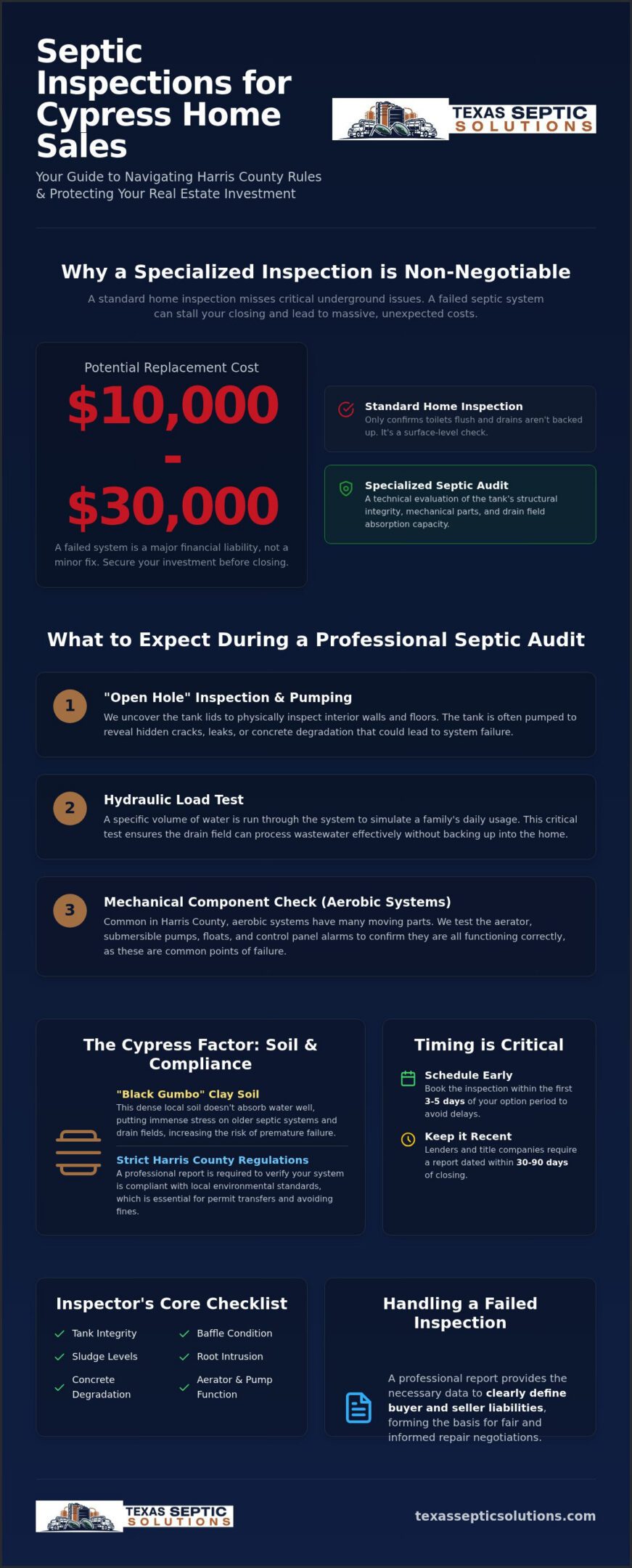
Getting a septic inspection for a home sale in Cypress is a specialized evaluation of the tank, drain field, and mechanical components that are required for a property transfer. It’s a technical audit. While a general home inspector focuses on the roof, foundation, and interior plumbing, they rarely have the tools or licensing to evaluate what’s happening underground. Most standard home inspections only confirm that the toilets flush and the drains aren’t backed up. They don’t account for the tank’s structural integrity or the absorption capacity of the soil.
To truly understand How Septic Systems Work, you have to look past the drains. A professional audit involves uncovering the tank lids and checking for cracks, leaks, or backflow issues that a surface-level glance would miss. In 2026, many mortgage products for Cypress acreage homes specifically mandate a professional septic clearance before funding the loan. Without this document, your closing could come to a grinding halt. For sellers, this report provides a clean bill of health that serves as vital protection against future claims of undisclosed defects.
Protecting the Buyer’s Investment and the Seller’s Liability
The financial stakes in the Cypress market are high. A failed septic system is not a minor fix; full replacements typically range between $10,000 and $30,000 depending on the system type. Buyers need peace of mind that the infrastructure can handle their family’s water usage load. Sellers are legally required to disclose known issues under Texas law. By providing a professional report from a team like Texas Septic Solutions, you document the system’s current condition and shield yourself from post-sale lawsuits regarding “hidden” failures.
Timing the Inspection for a Smooth Closing
Timing is everything when getting a septic inspection for a home sale in Cypress. You should aim to schedule the audit within the first 3 to 5 days of the option period. Harris County often sees a backlog of inspectors, and waiting until the final week of your contract is a recipe for stress. Most title companies and lenders in 2026 require the report to be recent, usually within 30 to 90 days of the closing date. Moving quickly ensures you have enough time to negotiate repairs or get estimates without pushing back your move-in day.
What to Expect During a Professional Septic Audit in Cypress
A real estate septic audit is far more invasive than a standard maintenance visit. When you’re getting a septic inspection for a home sale in Cypress, you aren’t just paying for a technician to look at the yard. You’re getting a full technical breakdown of the system’s current health and future life expectancy. This process is designed to protect both parties from the high costs of hidden failures that a surface-level glance would never reveal.
The process usually starts with what we call an “Open Hole” inspection. This requires uncovering the tank lids to physically inspect the interior walls and floor. In many cases, the tank must be pumped during the audit. This allows the inspector to see every inch of the structure for cracks, leaks, or signs of concrete degradation that occur over time. We also perform a hydraulic load test. By running a specific volume of water into the system, we simulate the daily usage of a full family. This ensures the drain field can actually process wastewater without backing up into the house during peak usage hours.
For homes with aerobic systems, which are common throughout Harris County, we meticulously check the mechanical components. We test the aerator, submersible pumps, floats, and the control panel alarms to ensure everything is firing correctly. According to the EPA’s guide for homebuyers, these mechanical parts are the most common points of failure in modern systems. Ensuring they are operational is a critical step before you sign a final contract. For a thorough evaluation that protects your closing, consider scheduling with Texas Septic Solutions as soon as you enter the option period.
Tank Integrity and Sludge Levels
We look for structural weaknesses like root intrusion or concrete degradation that can lead to groundwater contamination. The baffle condition is also checked to ensure solids stay in the tank where they belong instead of flowing into the drain field. Sludge levels refer to the accumulated layer of solid waste at the bottom of your tank; high levels indicate the system is overdue for service and is likely stressing the entire infrastructure. Identifying these levels early tells a buyer exactly how well the previous owner maintained the home’s utilities.
Testing the Distribution and Drain Field
Our team uses probe rods or specialized cameras to look for signs of “ponding” or soil saturation in the leach field. If we find “black slime” or thick biomat buildup, it’s a clear signal that the soil is no longer absorbing water effectively. This is a major red flag that often leads to system failure. If your audit reveals these issues, you may need to consult our Septic System Repair in Texas: The 2026 Homeowner’s Reference Guide to understand the potential costs and repair timelines involved in the negotiation process.
The Cypress Factor: Soil Challenges and Local Compliance
Cypress is famous among builders and excavators for its “Black Gumbo” soil. This heavy, expansive clay acts like a sponge, holding onto moisture for long periods and then shrinking during our hot Texas summers. For those planning property improvements or new builds, you can learn more about Born Integrated Construction to understand how expert concrete paving and slab work are designed to handle these soil conditions. This unique geological trait is also the primary reason why getting a septic inspection for a home sale in Cypress is so technical. Traditional gravity systems often struggle in this environment because the clay lacks the natural drainage found in sandier regions. When the soil becomes saturated during a wet winter, an older or poorly maintained system can quickly fail, leading to backups that threaten the entire real estate transaction.
Because of these soil limitations, Harris County maintains strict oversight that often exceeds the base Texas septic system regulations. Local authorities require specific design standards to ensure wastewater doesn’t pool on the surface or contaminate local groundwater. This regulatory environment has led to a massive shift toward aerobic systems in newer Cypress developments. These systems use oxygen to break down waste more efficiently and then distribute treated water through spray or drip irrigation, bypassing the “Black Gumbo” drainage problem entirely. During your audit, we verify that your system’s design actually matches the requirements for your specific lot size and soil profile.
Harris County Clay Soil and System Stress
In Cypress, “perc tests” (percolation tests) tell a very different story than they do in East Texas. Instead of water vanishing into the ground, it often sits. This lack of drainage puts immense pressure on your system’s components, especially after heavy rainfall or local flooding events. We often find that older systems were improperly sized for the soil type, a flaw that only becomes apparent during a professional real estate audit. If the drain field was built too small for the clay’s absorption rate, the system will eventually surface-discharge, which is a major compliance violation in Harris County.
Aerobic System Maintenance Contracts for New Owners
If you are buying a home with an aerobic system, you must understand the “Three Inspections Per Year” rule. Harris County requires every aerobic system to be under a continuous maintenance contract with a licensed provider. During the closing process, you must transfer the existing contract or start a new one to update the permit with the county. The fee for this transfer is usually a point of negotiation between the buyer and seller. For a deeper look at managing these requirements over the long term, check out our Septic System Maintenance Plan: The Comprehensive 2026 Homeowner Guide.
How to Handle Failed Inspections and Repair Negotiations
A failed report can feel like a disaster, but it’s really just a roadmap for the next phase of your negotiation. If your audit comes back with “deficiencies,” don’t panic. Your first step is to get a detailed repair estimate from a licensed contractor like Texas Septic Solutions. Having a line-item quote allows you to move away from guesswork and toward a concrete financial discussion. It’s much easier to negotiate when you have a professional’s assessment of the exact parts and labor required to bring the system back into compliance.
Once you have the numbers, you’ll need to determine responsibility based on your contract terms. In many Texas real estate agreements, sellers are responsible for ensuring utilities are in working order, but specific repairs might be negotiable. We often suggest negotiating repair credits at closing. This allows the buyer to choose their own contractor and ensures the work is done to their satisfaction after they take possession. Finally, make sure any major work is re-inspected and permitted by Harris County before the final walkthrough to avoid any future legal headaches. If you’ve hit a roadblock in your transaction, our team provides emergency septic repair estimates to keep your closing on track.
Common Red Flags Found During Cypress Home Sales
Not every failure is equal. Broken aerators, failed submersible pumps, or stuck floats are relatively easy fixes that shouldn’t kill a deal. These are mechanical components that wear out and can usually be replaced quickly. However, drain field saturation is a much larger issue. If the soil can no longer absorb water, you may be looking at a full septic system replacement, which is a significant investment. We also keep an eye out for illegal modifications, such as unpermitted additions to the tank or “straight-piping” gray water, which can lead to heavy fines from the county.
Seller Credits vs. Pre-Sale Repairs
Expert Real Estate Septic Inspections by Texas Septic Solutions
Texas Septic Solutions isn’t just a service provider. We act as a guardian for your real estate transaction. We understand that getting a septic inspection for a home sale in Cypress involves more than just checking a tank. It requires coordinating with realtors, title companies, and lenders who are all working against a ticking clock. Our team prioritizes fast turnaround times because we know your option period is short. We provide the technical data you need to make informed decisions without delaying the move-in date.
We offer a one-stop model that handles everything from the initial audit to necessary pumping and repairs. If a system failure is discovered mid-sale, you don’t have to scramble for a second contractor. We’re equipped to handle emergency repairs immediately, ensuring the system is functional and compliant before the final walkthrough. Our pricing is transparent, and our consultations provide both buyers and sellers with a clear understanding of the system’s condition.
Why Local Cypress Expertise Matters
Our team lives and works in this community. We’re deeply familiar with the specific challenges of neighborhoods like Bridgeland and Towne Lake, as well as the larger acreage plots found throughout rural Cypress. We have a proven track record with Harris County permit offices, which helps streamline the paperwork for permit transfers and compliance certificates. We take a “neighborly expert” approach. This means we don’t just hand over a technical report; we take the time to explain the system to the new buyer. When a family understands how their aerobic system works, they feel more confident in their investment.
Booking Your Inspection and Receiving the Report
Scheduling is straightforward. To get started, we simply need the property address, confirmed access to the tank lids, and any past maintenance records you have on hand. Our inspectors arrive on time and conduct a thorough audit of all components. Once the field work is done, you’ll receive a digital PDF report that is easy to read and includes high-resolution photos of the tank and components. Realtors love our reports because they are clear, professional, and ready for the lender’s review. Don’t let a utility issue stall your closing. Schedule your Cypress real estate septic inspection today and let our local authorities handle the details.
Secure Your Cypress Real Estate Closing with Confidence
You’ve worked hard to find the right property or the perfect buyer; don’t let an overlooked utility issue derail your progress. A standard home inspection simply isn’t enough to verify the health of an aerobic system in Harris County’s heavy clay soil. Getting a septic inspection for a home sale in Cypress provides the technical clarity needed to satisfy lenders and protect both parties from unexpected replacement costs. Whether you’re navigating repair negotiations or transferring a maintenance contract, having a local expert on your side makes all the difference.
Our team of Licensed TCEQ Professionals has served the Cypress and Harris County area for years. We offer 24/7 Emergency Service to handle urgent closing-related repairs or alarms so you never miss a deadline. We’re here to ensure your transition to a new home is as smooth and stress-free as possible. Let us handle the technical details while you focus on your move.
Book Your Real Estate Septic Inspection with Texas Septic Solutions
Frequently Asked Questions
Who typically pays for the septic inspection in a Cypress home sale?
The buyer usually pays for the inspection as part of their due diligence during the option period. However, this is a negotiable item in the sales contract. Some sellers choose to pay for a pre-listing inspection to provide a “clean bill of health” and avoid any last-minute surprises that could stall the closing.
Can I use a regular home inspector for the septic system check?
No, standard home inspectors are rarely licensed or equipped to perform a technical septic audit. They typically only check if the toilets flush and the drains work. You need a TCEQ-licensed professional to uncover the tank, inspect the structural walls, and evaluate the absorption capacity of the drain field to meet lender requirements.
How long does a septic inspection take to complete?
A thorough real estate inspection usually takes between two and three hours on-site. This time allows our technicians to uncover the tank lids, perform a hydraulic load test, and check all mechanical components. We understand the urgency of closing deadlines and focus on delivering a digital report shortly after the site visit is finished.
What happens if the septic system fails the inspection during the option period?
If a failure is documented, the buyer can negotiate for repairs, a price reduction, or a closing credit. Getting a septic inspection for a home sale in Cypress provides the necessary documentation to back up these requests. If the buyer and seller cannot reach an agreement on the repair costs, the buyer usually has the right to terminate the contract.
Do aerobic systems in Cypress require a different type of inspection?
Yes, aerobic systems require a more technical evaluation of mechanical parts like the aerator, submersible pumps, and spray heads. We also verify the status of the mandatory maintenance contract required by Harris County. These systems are more complex than conventional gravity systems and have specific compliance rules that must be checked during the sale.
Does the septic tank have to be pumped before the inspection?
The tank usually needs to be pumped during the inspection process so the technician can see the interior walls and floor. It is impossible to identify cracks, leaks, or root intrusion if the tank is full. Pumping also ensures the new owner starts with a clean system, which is a common requirement for many real estate transactions.
Can a failed septic system prevent me from getting a mortgage in Texas?
A failed inspection can definitely prevent a lender from funding your loan. Many mortgage companies in 2026 require a professional septic certification for properties not connected to a city sewer. Getting a septic inspection for a home sale in Cypress early in the process helps you identify and fix deal-killers before they reach the underwriter’s desk.
How often should I have my septic system inspected after I move in?
If you have an aerobic system, Harris County requires three inspections per year under a formal maintenance contract. For conventional systems, we recommend a professional inspection and pumping every one to three years depending on your household size. Regular checks help you catch minor mechanical issues before they turn into expensive drain field failures.