
Septic System Repair in Cleveland, TX: 2026 Homeowner’s Guide to Professional Service
That foul smell drifting across your yard isn’t something you should have to live with, and it almost certainly doesn’t mean you need a brand-new septic system. When Cleveland homeowners search for septic system repair in Cleveland, TX, the biggest fear is often the same: a contractor showing up, shaking their head, and quoting a full replacement before they’ve even diagnosed the real problem. That fear is understandable, and in many cases, it’s avoidable.
Septic trouble is stressful. Whether you’re dealing with slow drains, sewage backing up into the house, or a soggy, odorous patch forming over your drain field, you need honest answers fast, not a sales pitch. East Texas soil and Liberty County’s climate create specific conditions that affect how both conventional and aerobic systems perform, and the right repair approach depends on understanding those local factors, not just swapping out parts.
This guide is built for Cleveland and Liberty County property owners who want straight talk on what’s actually wrong, what it takes to fix it, and when repair genuinely makes more sense than replacement. You’ll get a clear breakdown of common failure points, what professional diagnosis looks like, and how to find a local pro who responds quickly and works with your system type.
Key Takeaways
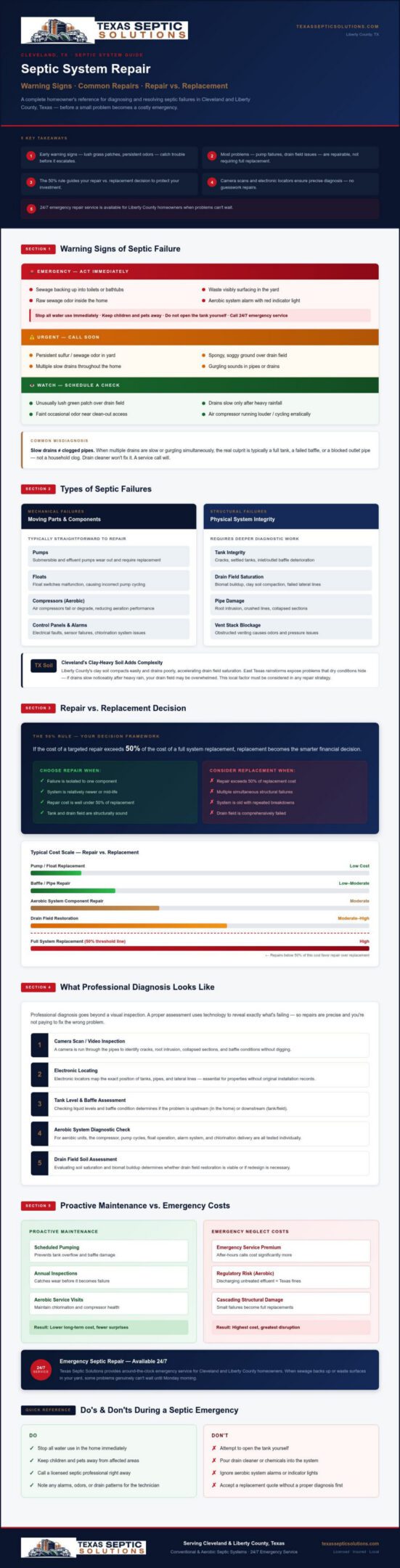
- Knowing the early warning signs — from suspiciously lush grass patches to persistent odors — can help Cleveland homeowners catch septic trouble before it escalates into a costly emergency.
- Most septic problems, including pump failures and drain field issues, are repairable, and understanding the difference between mechanical and structural failures is the first step toward an honest fix rather than an unnecessary replacement.
- When searching for septic system repair in Cleveland, TX, applying the 50% rule helps you decide whether a targeted repair or a full system replacement is the smarter financial move for your property.
- Professional diagnosis goes beyond a visual inspection — camera scans and electronic locators reveal exactly what’s failing, so repairs are precise and you’re not paying to fix the wrong problem.
- A proactive maintenance plan is the most reliable way to avoid emergency callouts, and Liberty County homeowners have access to 24/7 repair service when problems can’t wait.
Recognizing the Warning Signs of Septic Failure in Cleveland, TX
Your yard tells a story, and in Liberty County’s climate, it’s one worth reading carefully. A bright green patch of grass thriving in the middle of a dry Texas summer isn’t a lucky streak. It’s one of the clearest visual indicators that effluent is leaching into the soil above your drain field, essentially fertilizing the grass from below. That same patch may feel spongy underfoot, even days after the last rainfall. If you’re noticing this over your tank or lateral lines, it’s time to call for septic system repair in Cleveland, TX before the problem spreads.
Odor is another reliable signal, but not all smells carry the same urgency. A faint, occasional whiff near your clean-out access is often just a pressure fluctuation. A persistent sulfur or sewage smell drifting across your yard or seeping into your home through drains is something else entirely. That pattern typically points to a vent stack blockage or a tank that’s approaching capacity, conditions that won’t resolve on their own. Understanding how septic systems work makes it easier to connect these odor patterns to their actual source rather than masking them with store-bought drain treatments.
Slow drains and gurgling pipes are probably the most misdiagnosed signs in the book. Homeowners reach for a plunger or a bottle of drain cleaner when the real culprit is a tank that’s full, a baffle that’s failed, or a partially blocked outlet pipe. The sink isn’t the problem. The sink is just where you’re seeing the symptom.
For aerobic system owners in Cleveland, the control panel alarm deserves immediate attention. A red light or audible alarm on your aerobic unit typically signals a pump failure, a float malfunction, or a chlorination issue. Ignoring it doesn’t just risk a repair bill; it can mean discharging untreated effluent, which carries regulatory consequences in Texas.
When a Septic Issue Becomes a 24/7 Emergency
Sewage backing up into your toilets or bathtubs, or waste surfacing visibly in your yard, crosses the line from inconvenience into a genuine health emergency. Raw sewage contains pathogens that pose serious risks to your family and neighbors. Before the repair crew arrives, stop all water use in the home, keep children and pets away from any affected outdoor areas, and don’t attempt to open the tank yourself. Texas Septic Solutions offers 24/7 emergency service for exactly these situations, because some problems genuinely can’t wait until Monday morning.
Subtle Signs Homeowners Often Overlook
East Texas rainstorms have a way of exposing problems that dry conditions hide. If your drains slow down noticeably after heavy rainfall, it often means your drain field is saturated and struggling to absorb additional effluent. Separately, watch the vegetation over your drain field year-round. Unusually lush or nitrogen-rich plant growth, even without visible pooling, can indicate long-term seepage. And if your aerobic system’s air compressor is running louder than usual, cycling erratically, or producing a humming sound it didn’t make before, that’s worth a service call before it fails completely. Catching septic system repair in Cleveland, TX needs at this stage almost always costs less than addressing the failure that follows.
Common Septic Repairs: From Aerobic Pumps to Drain Field Restoration
Not every septic problem is the same, and treating them like they are is how homeowners end up paying for repairs they didn’t need. The first distinction worth understanding is the difference between mechanical failures and structural failures. Mechanical failures involve components that move, cycle, or process: pumps, floats, compressors, and control panels. These parts wear out, and replacing them is typically straightforward. Structural failures involve the physical integrity of the tank, pipes, or drain field itself. These take more diagnostic work and, depending on severity, more involved repair strategies.
Cleveland’s clay-heavy soil adds a layer of complexity that homeowners in other parts of Texas don’t always face. Clay compacts easily, drains slowly, and expands when saturated. Over time, that soil behavior puts lateral lines under stress and reduces the drain field’s ability to absorb effluent efficiently. It’s one reason Liberty County properties benefit from scheduled maintenance rather than a “fix it when it breaks” approach. As EPA guidelines on septic system maintenance make clear, routine pumping and inspections are the most effective tools for extending a system’s functional life, regardless of soil conditions.
Pumping deserves more credit than it gets. A tank that’s pumped on schedule doesn’t just stay cleaner; it protects the drain field from solids that should never reach it. When a tank overflows with sludge, that material migrates into the lateral lines and clogs the soil absorption zone. That’s a far more expensive problem than a pump-out. For most households in Cleveland, pumping every three to five years is a reasonable baseline, though actual frequency depends on household size and usage habits.
Aerobic System Mechanical Repairs
Aerobic treatment units are common throughout East Texas, and their mechanical components require specific attention. Air compressors push oxygen into the treatment chamber to support bacterial activity; when they fail or degrade, treatment quality drops and effluent quality suffers. Submersible pumps move treated water to the spray heads or drip lines, and a failed pump means the system stops distributing effluent properly. Float switches control water levels inside the tank compartments; a faulty float can trigger false alarms or, worse, allow a chamber to overflow without triggering any alert at all. Control panel malfunctions often trace back to these components rather than the panel itself, which is why diagnosing the root cause matters before replacing parts. Staying current on septic filter cleaning service is also critical for aerobic health; clogged filters restrict flow and force pumps to work harder than they should.
Drain Field and Pipe Troubleshooting
Blocked lateral lines are one of the most common reasons homeowners search for septic system repair in Cleveland, TX. Root intrusion from nearby trees, accumulated non-flushable materials, and grease buildup all restrict flow through distribution pipes. Hydro-jetting clears most of these blockages without excavation. When soil compaction or biomat buildup has reduced absorption, soil fracturing techniques can restore permeability to the drain field without a full replacement. For tanks buried deep or in awkward locations, septic tank riser installation makes future access far easier, reducing labor costs on every subsequent service call.
Tank integrity issues round out the picture. Cracked concrete, deteriorated baffles, and failed riser seals all allow groundwater infiltration or effluent leakage. These are repairable in most cases, and catching them early prevents the kind of structural compromise that does justify replacement. If you’re unsure what category your system’s problem falls into, a professional diagnosis is always the right starting point before committing to any repair path.
Deciding Between Septic System Repair and Full Replacement
The repair-versus-replace question is where homeowners most often get bad advice, or no advice at all. Most contractors will quote you a replacement before walking you through whether a targeted repair would actually solve the problem. That’s not how it should work. A clear decision framework matters here, and for Cleveland property owners, it starts with two factors: the age of your system and the honest cost comparison between fixing what’s failing and starting fresh.
Most conventional septic systems are designed to last between 20 and 30 years, with aerobic systems typically requiring more frequent component attention throughout that window. A system that’s 12 years old and experiencing a pump failure is a strong repair candidate. A system that’s 27 years old and showing multiple simultaneous failures is a different conversation entirely. Age alone doesn’t decide the outcome, but it’s the first number worth knowing before any other evaluation begins.
The 50% rule offers a practical starting point: if the estimated repair cost approaches or exceeds half the cost of a full system replacement, replacement typically delivers better long-term value. A repair that buys you two or three years before the next failure isn’t a savings; it’s a delay. That said, the rule works best when the repair estimate is accurate and comprehensive, which is exactly why professional diagnosis matters before any cost comparison is made. U.S. Environmental Protection Agency septic system guidance reinforces that proper assessment is the foundation of any sound maintenance or replacement decision.
Texas also introduces a regulatory dimension that can override the cost math entirely. When a failing system no longer meets current TCEQ standards, especially older systems that predate modern aerobic requirements in certain soil classifications, a permitted upgrade may be legally required rather than optional. If your system is flagged during a county inspection or real estate transaction, repair alone may not bring it into compliance.
Evaluating the Cost of Major Repairs
Comparing a localized repair against septic system replacement cost requires looking beyond the invoice total. A drain field restoration or tank baffle replacement on a system that’s otherwise structurally sound is a strong investment. The same repair on a tank showing wall fractures, deteriorating concrete, or chronic saturation in Liberty County’s clay-heavy soil is a short-term patch on a long-term problem. East Texas soil doesn’t forgive undersized or compromised drain fields; once absorption capacity is gone, it rarely recovers without significant intervention.
Signs Your System Is Beyond Simple Repair
Some conditions make replacement the only responsible path forward. These include:
- Total drain field failure: When biomat buildup has sealed soil pores across the entire absorption zone, restoration techniques may not be sufficient to recover full function.
- Structural tank collapse: Older steel tanks corrode, and aging concrete tanks can crack or cave under soil pressure. A compromised tank structure isn’t a component swap; it’s a foundation problem.
- System undersizing: If your household has grown significantly since the system was installed, the original design capacity may simply no longer match your daily usage, making any repair a temporary fix at best.
When these conditions appear during a professional evaluation for septic system repair in Cleveland, TX, replacement isn’t a sales tactic. It’s the honest answer. The goal is always to find the most cost-effective path to a system that performs reliably, and sometimes that path leads to a new installation rather than another repair cycle.
What to Expect During Your Cleveland Septic Repair Service
Knowing what actually happens during a service call removes a lot of the anxiety that comes with septic trouble. A professional repair visit isn’t a quick glance and a guess. It follows a deliberate sequence, and understanding that sequence helps you ask better questions, set realistic expectations, and verify that the work was done right before the crew leaves your property.
The Diagnostic and Troubleshooting Phase
The first priority is locating your system without tearing up your lawn to do it. Electronic locators and signal transmitters identify buried tank lids, access ports, and lateral line paths with precision, so excavation, when it’s needed, is targeted rather than exploratory. Liberty County’s clay-heavy soil can shift over time, and tanks that were installed decades ago don’t always sit exactly where the original permit drawing suggests.
Once access is established, camera inspection technology goes to work inside the pipes. A push-rod camera travels through outlet pipes and lateral lines, transmitting live footage that shows cracks, root intrusion, collapsed sections, and blockage locations in real time. This is what separates a genuine diagnosis from a visual guess. For aerobic systems, technicians test pump cycles and float switch function directly, checking that each component activates at the correct water level and that the control panel is reading accurate data from the field. A dye test confirms drain field leaks by introducing a non-toxic tracer into the system and observing where it surfaces in the soil above the absorption zone.
Liberty County also has permitting requirements that apply to major repairs, including drain field work and tank replacements. Pulling the correct permit before work begins isn’t a formality; it’s what ensures the repair is documented, inspected, and legally compliant with TCEQ standards. Skipping that step can create problems during a future property sale or county inspection. A qualified contractor handling septic system repair in Cleveland, TX will know which scope of work triggers a permit requirement and handle that process on your behalf. You can review the full scope of what professional repair involves at Texas Septic Solutions’ repair reference guide.
Execution and Site Cleanup
When excavation is required, the goal is to limit the footprint. Experienced crews mark utility lines, use hand tools around shallow components, and backfill and compact disturbed soil before leaving. Open tank work follows strict safety protocols: ventilation procedures, confined space awareness, and equipment positioning that keeps machinery on stable ground away from tank lids and lateral lines.
Before wrapping up, the system gets a full cycle test. Pumps run, float levels are verified, and aerobic spray heads are checked for even distribution. You shouldn’t be left wondering whether the repair held. After the visit, avoid heavy water use for the first 24 hours to allow any disturbed soil to settle and the system to stabilize under normal load.
If you’re ready to schedule a diagnostic or have questions about what a repair call involves for your specific system type, contact Texas Septic Solutions to talk through the process before anyone sets foot on your property.
Reliable 24/7 Septic Repair Services for Liberty County Homeowners
When your septic system fails, the last thing you need is to wait until business hours or navigate a phone tree that leads nowhere. Texas Septic Solutions operates around the clock because sewage backups and pump failures don’t follow a schedule. Whether it’s a Sunday night emergency or a problem that surfaces during a holiday weekend, the same professional response is available every hour of every day.
That availability matters most when you’re already stressed. A proactive septic system maintenance Texas plan is the most effective way to avoid reaching that point in the first place. Scheduled inspections, routine pumping, and filter checks catch the small issues before they compound into the kind of failures that demand an emergency callout. For Liberty County homeowners, that kind of structured maintenance isn’t just convenient; it’s the difference between a manageable service call and a full system crisis.
Serving Cleveland, Houston, and Surrounding Communities
Texas Septic Solutions serves Cleveland, Shepherd, Huffman, Cypress, Alvin, and the broader Houston metro area. That footprint isn’t just a list of zip codes. It reflects genuine familiarity with the soil profiles, drainage patterns, and TCEQ compliance requirements that vary across East Texas and the Gulf Coast region. Aerobic systems common in Liberty County require different service approaches than conventional gravity-fed systems more typical in other parts of the state, and the team works with both. Every interaction is built on the same principle: straight answers, honest recommendations, and work that holds up long after the crew leaves your property.
Get Started with a Professional Inspection
Scheduling is straightforward. For non-emergency situations, reaching out through Texas Septic Solutions connects you with a team that can walk through your system type, your symptoms, and what a diagnostic visit involves before anyone shows up at your door. For active emergencies involving sewage backup or visible surface discharge, the 24/7 line gets you to a technician without delay.
Before the crew arrives, a few simple steps help the visit go smoothly:
- Locate any permit documents or service records you have for your system
- Note when symptoms started and whether they’ve worsened after rainfall or heavy water use
- Keep children and pets away from any affected yard areas
- Avoid running water or flushing until the technician assesses the situation
Finding reliable septic system repair in Cleveland, TX shouldn’t mean choosing between fast and honest. Texas Septic Solutions delivers both. Whether you’re scheduling a routine inspection or dealing with a system that can’t wait, the team is ready to respond with the local knowledge and professional accountability that Liberty County homeowners deserve.
Take Control of Your Septic System Before It Controls You
Septic problems don’t get easier to ignore, and they rarely get cheaper to fix the longer they sit. What this guide makes clear is that most failures have a solution that doesn’t involve replacing your entire system. Catching warning signs early, understanding the difference between mechanical and structural failures, and getting an honest professional diagnosis are the three steps that consistently separate a manageable repair bill from a full system crisis.
For Cleveland and Liberty County homeowners, the advantage is having local experts who know East Texas soil, understand aerobic system requirements, and can respond when the situation genuinely can’t wait. Whether you’re scheduling a routine inspection or dealing with an active backup, professional septic system repair Cleveland TX shouldn’t mean choosing between speed and accountability.
Texas Septic Solutions brings 24/7 emergency availability, comprehensive diagnostic troubleshooting, and genuine Liberty County expertise to every service call. Don’t wait for a small problem to become an expensive one. Schedule your expert septic repair in Cleveland today and get your system back on solid ground.
Frequently Asked Questions About Septic System Repair in Cleveland, TX
How much does a typical septic system repair cost in Cleveland, TX?
Repair costs vary significantly depending on what’s actually failing. Replacing a pump or float switch on an aerobic unit sits at a different price point than restoring a partially failed drain field or repairing a cracked tank. Because Liberty County’s clay-heavy soil adds complexity to drain field work, costs here can differ from state averages. The most reliable approach is scheduling a professional diagnostic visit before committing to any repair estimate, so you’re pricing the actual problem rather than a guess.
Can I use my water while my septic system is being repaired?
In most cases, you should minimize or stop water use entirely until the technician advises otherwise. Running water during active repairs adds flow to a system that may already be compromised, which can complicate the work and risk pushing effluent into areas where it shouldn’t go. Your technician will tell you when it’s safe to resume normal use. For most targeted repairs, that restriction is temporary and lifts once the system passes a cycle test.
Is my septic tank alarm an emergency that needs immediate repair?
A triggered alarm on your aerobic control panel always deserves a same-day call, even if the system still appears to be functioning. Alarms typically signal a pump failure, float malfunction, or chlorination issue, and running an aerobic unit in a compromised state can mean discharging undertreated effluent, which carries real regulatory consequences in Texas. If the alarm is accompanied by sewage odors indoors or visible surface discharge in your yard, treat it as an emergency and stop water use immediately.
How long does it take to fix a failing drain field?
Timeline depends on the repair method and the extent of the damage. Hydro-jetting a blocked lateral line can be completed in a few hours. Soil fracturing to restore absorption capacity typically takes a full service day. If excavation is required to replace distribution pipes or address structural issues, the job may extend across multiple days, particularly if permitting is involved. A professional diagnosis is the only way to give you an honest timeline before work begins.
Does homeowner’s insurance cover septic system repairs in Texas?
Standard homeowner’s insurance policies in Texas generally exclude septic system repairs, treating them as maintenance items rather than covered losses. Some policies include limited coverage for sudden and accidental damage, but gradual failures, which describe most septic problems, are typically excluded. A few insurers offer optional riders or home warranty products that cover septic components. Review your specific policy terms and speak with your insurance agent before assuming any repair costs will be reimbursed.
What is the difference between aerobic and conventional septic repair?
Conventional septic systems rely on gravity and soil absorption, so repairs focus on tanks, baffles, and drain field components. Aerobic systems add mechanical layers including air compressors, submersible pumps, float switches, and spray distribution heads, all of which require their own diagnostic and repair approaches. Aerobic technicians in Texas must also meet specific licensing requirements set by TCEQ. When searching for septic system repair in Cleveland, TX, confirm that the contractor you hire is qualified to service the system type you actually have.
How often should I have my septic system inspected to prevent major repairs?
For most Liberty County households, an annual inspection is a reasonable baseline, with pumping scheduled every three to five years depending on household size and usage. Aerobic systems typically require more frequent service visits because their mechanical components need regular checks to stay within TCEQ compliance. Consistent inspections catch failing baffles, rising sludge levels, and early pump wear before those conditions escalate into the kind of failures that demand emergency callouts or drain field intervention.
What happens if I ignore a septic tank backup?
Ignoring a backup accelerates damage at every level of the system. Solids that should stay in the tank migrate into lateral lines and clog the soil absorption zone, turning a manageable repair into a potential drain field replacement. Inside the home, continued water use with a backed-up system risks sewage surfacing through floor drains, toilets, and tubs. Beyond the repair costs, raw sewage exposure creates genuine health risks for your household. A backup that goes unaddressed for days rarely costs less to fix than one addressed immediately.