
Septic Tank Water Level Too High? Causes, Risks, and Solutions for 2026
If you lift your septic tank lid and see water sitting right at the top, is your system actually failing, or is it just doing its job? It’s a stressful sight that immediately sparks fears of expensive repairs or, worse, sewage backing up into your clean home. You aren’t alone in that anxiety. Most homeowners feel a wave of panic when they realize their septic tank water level too high, but understanding the difference between a “normal” full tank and a dangerous overflow is the first step toward a solution.
We’ll help you navigate this mess by identifying whether you’re dealing with a simple pipe clog or a more serious drain field failure. You’ll discover the exact steps to diagnose the root cause, how to stop an immediate backup in its tracks, and why a quick pump-out might just be a temporary band-aid. We’ve seen every scenario in the Texas soil, and we’re here to provide the professional clarity you need to protect your property and restore your system’s health.
Key Takeaways
- Learn to distinguish between a normal operating level and a high-water emergency so you know exactly when to call for help.
- Identify the four main triggers for a septic tank water level too high, including household hydraulic overload and mechanical blockages.
- Understand how local Texas soil conditions, like Houston’s heavy clay, impact your drain field’s ability to process water after heavy rain.
- Implement immediate troubleshooting steps, such as a “water diet,” to lower pressure on your system and stop an active backup.
- Explore professional solutions that address the root cause of failure, moving beyond temporary pumping to long-term system health.
What is a High Water Level in a Septic Tank?
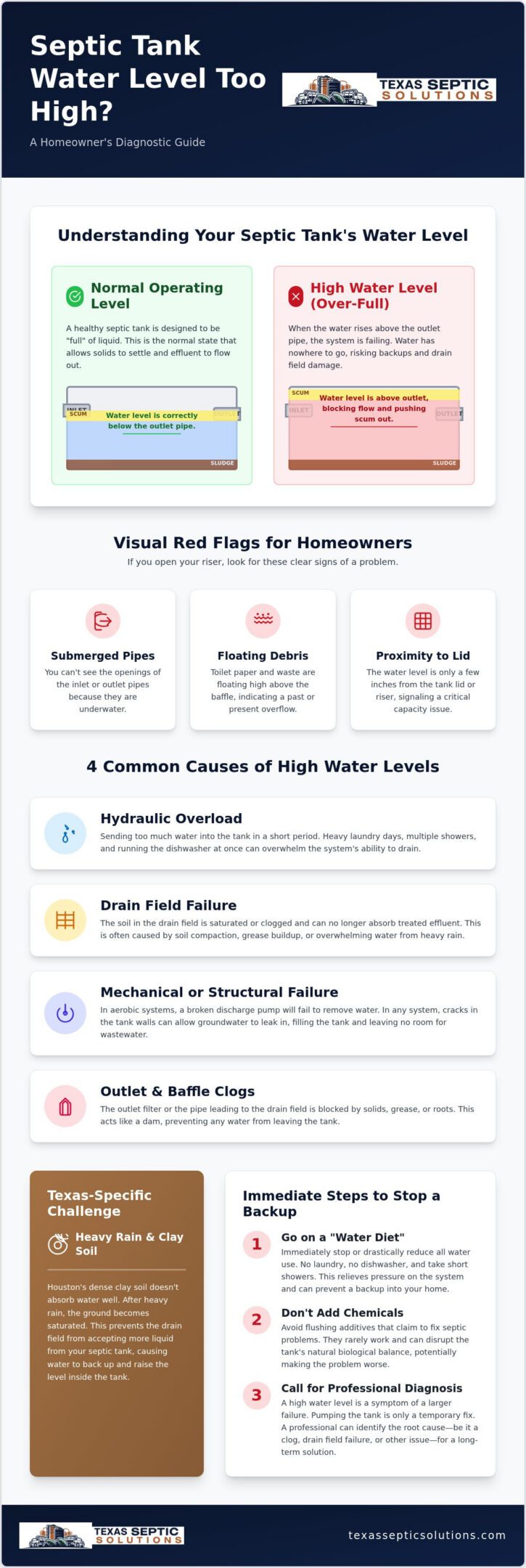
Understanding How a Septic Tank Works is the best way to stop worrying about your system’s daily operation. A common misconception among many homeowners is that a “full” tank means it’s time for an emergency pump-out. In reality, your tank is designed to stay full. A healthy system maintains a constant liquid level, known as the “normal operating level,” which sits just below the bottom of the outlet pipe. As new wastewater enters from your home, an equal amount of treated effluent flows out into the drain field. This balance keeps the system moving and prevents backups.
A septic tank water level too high occurs when that balance breaks. If the water rises above the outlet pipe or submerges the baffles, your system is officially “over-full.” This isn’t just a minor detail; it’s a clear signal that the water has nowhere to go. Whether it’s a blockage in the line or a saturated drain field, high water is a red flag for systemic failure that requires immediate attention to avoid a mess in your yard or home.
The scum layer, which consists of fats, oils, and grease, also plays a vital role in what you see when you look inside. This layer floats on the surface of the liquid. In a properly functioning system, this layer remains below the baffle line. When the water level rises, it carries this scum layer upward. If the grease reaches the outlet pipe, it can flow out and seal the soil in your leach field, which often leads to a total system collapse.
Normal vs. Abnormal Water Levels
Your septic tank is a living ecosystem that depends on specific volumes to function correctly. The operating level is the point where the effluent naturally spills into the outlet pipe to be filtered by the soil. It’s perfectly normal for your tank to be mostly full of liquid at all times. This allows solids to settle at the bottom and grease to float to the top. However, your tank is over-full when the water level rises above the top of the baffles and begins to submerge the inlet or outlet pipes.
Visual Red Flags for Homeowners
If you’ve opened your riser and are trying to diagnose a septic tank water level too high, look for these specific indicators:
- Submerged Pipes: Look for the inlet and outlet pipes. If you can’t see the openings of these pipes because they’re underwater, your system is struggling.
- Floating Debris: You might notice toilet paper or waste sitting high above the baffle line. This suggests the water rose significantly and then receded, leaving a “high water mark” of debris.
- Proximity to the Lid: If the water level is within just a few inches of the septic tank lid or riser, you’re facing a critical capacity issue.
These visual signs mean the soil or the pipes can’t keep up with your household’s water usage. We’ve seen this happen across Texas, where heavy rains can overwhelm even the best-maintained systems. Identifying these red flags early can save you from a much more expensive repair down the road.
Common Causes of High Septic Tank Water Levels
Finding your septic tank water level too high usually points to one of four main issues that disrupt the delicate balance of your system. Most homeowners first suspect a full tank that just needs pumping, but the reality is often more complex. Identifying the root cause is the only way to prevent the problem from returning next month. We typically see high water triggered by these four categories:
- Hydraulic Overload: Sending too much water into the system at once.
- Mechanical Failure: Broken discharge pumps or aerators in aerobic systems.
- Structural Damage: Groundwater leaking through cracks in the tank walls.
- Drain Field Failure: Soil that has become saturated or clogged and can no longer absorb effluent.
Hydraulic overload is a frequent culprit in busy households. This happens when you send more water into the tank than it was designed to handle in a short period. Running four loads of laundry while the dishwasher is going or having a house full of weekend guests can overwhelm the system’s capacity to process liquid. In aerobic systems, mechanical parts like discharge pumps can fail. If the pump doesn’t kick on, water stays in the tank and climbs toward the lid. Structural issues also play a role. Over time, concrete tanks can develop cracks that allow groundwater to seep in during rainy seasons. This “intrusion” fills the tank with outside water, leaving no room for your home’s waste. Understanding Common Causes of Septic System Malfunctions helps you see that high water is often a symptom of these external pressures rather than just a full container.
The Outlet Filter and Baffle Clogs
Your tank has built-in guards to keep solids from reaching the drain field. If you have an effluent filter, it can easily become choked with hair, grease, or “flushable” wipes that don’t actually break down. When this filter is blocked, water simply cannot leave the tank. This is one of the most common reasons for a septic tank water level too high. If you suspect a blockage, you might need a professional Septic System Repair to clear the lines and restore flow without damaging your pipes. It’s a much better solution than waiting for a backup to reach your bathtub.
Drain Field (Leach Field) Failure
The most serious cause of high water is a failing drain field. Over years of use, a layer of bacteria called “biomat” can grow too thick in the soil, creating a waterproof barrier. When this happens, the soil can no longer absorb the effluent. You might notice spongy, bright green grass or a foul odor in the yard. Because the yard can’t take any more liquid, the water stays trapped in the tank. If you’re noticing these signs, our team can provide Emergency Septic Service to diagnose the root cause before a total backup occurs. We specialize in finding the “why” behind the water level, ensuring your system gets the right fix the first time.
Texas-Specific Factors: Heavy Rain and Clay Soils
Living in the Greater Houston area means dealing with “Black Gumbo” clay, a soil type that presents unique challenges for property owners. This heavy, dense clay is notorious for its poor drainage and high expansiveness. When the Texas rainy season hits, this soil acts like a sponge that refuses to let go of moisture. If you find your septic tank water level too high after a storm, it’s often because the surrounding earth is so saturated that it can’t accept another drop of effluent. This environmental pressure is a leading cause of system stress in communities like Cypress and Cleveland.
Flash flooding also introduces the risk of buoyancy. A septic tank is essentially a large, hollow vessel. If the groundwater level rises rapidly while the tank is relatively empty, the hydrostatic pressure can actually force the tank upward. We’ve seen tanks “float” or pop out of the ground entirely during severe weather events. This can sever pipe connections and lead to catastrophic structural failure. For homeowners in Huffman and Shepherd, where aerobic systems are common, storms often bring power outages that disable aerators and discharge pumps, causing water levels to spike almost instantly.
Soil Saturation in the Greater Houston Area
In areas with heavy clay, a phenomenon known as the “bathtub effect” often occurs. Because the clay is so tightly packed, it creates a pocket around your septic system that traps water. Texas clay expands significantly when wet, which further restricts the flow of effluent out of your drain field. If the ground around your tank is soaking wet, your system has nowhere to discharge its waste. During these periods of extreme saturation, you must implement an immediate “water diet” to reduce the hydraulic load on your system. Continuing to run heavy appliances during a Houston downpour is a fast track to a sewage backup.
Groundwater Intrusion and Tank Integrity
Older concrete tanks are particularly vulnerable to groundwater intrusion. Over time, the seals at the seams or the points where pipes enter the tank can degrade. When the water table rises in East Texas, the external pressure forces groundwater into these small cracks. You might notice your septic tank water level too high even if you haven’t been using much water inside the house. This is a sign that your tank is leaking “in” rather than “out.”
It’s critical to remember that you should never pump your tank when the ground is still saturated. Removing the weight of the liquid inside while the external groundwater pressure is high significantly increases the risk of the tank shifting or floating. Our team at Texas Septic Solutions understands these local soil dynamics. We can help you determine the right time for maintenance to ensure your system stays grounded and functional, even after the heaviest Gulf Coast storms.
Immediate Troubleshooting Steps for Homeowners
Discovering that your septic tank water level too high is a stressful moment that requires a calm, systematic approach. Before you grab a shovel or try to pry open a lid, prioritize your safety. Raw sewage contains harmful pathogens, and septic tanks produce methane and hydrogen sulfide gases that are toxic and highly flammable. Never enter a septic tank or lean deep into a riser. If you see sewage backing up into your sinks or tubs, stop using water immediately and keep children and pets away from any areas with standing water in the yard.
The goal of troubleshooting is to determine if the issue is a simple electrical glitch or a major system failure. Most modern systems, especially aerobic ones, are equipped with sensors to warn you before a total backup occurs. If your system is currently struggling, our team at Texas Septic Solutions is ready to provide emergency septic service to protect your home and restore your peace of mind.
Initial Diagnostic Checklist
Your first move should be checking your control panel. If you hear a buzzer or see a red light, your system is telling you exactly what’s wrong. You can find detailed instructions on handling these warnings in our guide on what to do when your Septic Tank Alarm Going Off. Generally, a high-water alarm means the pump isn’t keeping up or has failed entirely. After checking the alarm, walk out to your drain field. Look for unusually lush patches of grass, spongy soil, or actual puddles of effluent. These signs indicate that the ground is no longer absorbing water, which forces the liquid to stay trapped in your tank.
Emergency Mitigation Actions
Once you confirm a septic tank water level too high, you must lower the hydraulic pressure on the system. Implement a strict “water diet” for everyone in the house. This means no laundry, no running the dishwasher, and keeping showers as short as possible. Every gallon you send down the drain right now increases the risk of a backup into your home. You should also look at your home’s exterior. Ensure your gutter downspouts are diverted at least ten feet away from the septic tank and drain field area. Adding more surface water to an already saturated system only makes the problem worse.
Avoid the temptation to open the tank lids yourself to “see what’s happening.” Beyond the gas risks mentioned earlier, opening a lid in a flooded yard can allow more mud and debris to fall into the tank, potentially clogging your pipes even further. If these basic steps don’t cause the water level to drop within a few hours, it’s time for professional intervention. You can contact us for a professional diagnostic to find the root cause before a minor high-water event turns into a total system replacement.
Professional Solutions and Prevention Strategies
When you see your septic tank water level too high, your first instinct is likely to call for a pump-out. While this provides immediate relief by emptying the vessel, it’s often just a temporary band-aid. If the underlying cause is a failed drain field or a broken pump, that tank will be right back to its over-full state within a few days. Professional solutions go beyond the surface to address the mechanical or structural failures at the root of the problem. Our team at Texas Septic Solutions handles these high-water emergencies in Cleveland and the surrounding areas by diagnosing the specific failure point before recommending a fix.
Modern repair options can often save a system that seems destined for the scrap heap. We use professional techniques like jetting lines to clear stubborn blockages caused by grease or roots. For aerobic systems, replacing a faulty discharge pump or aerator can restore the balance almost instantly. In some cases, we might recommend soil fracturing to open up new pathways in compacted clay, giving your effluent a place to go. These targeted repairs are much more effective than repeated pumping, which only drains your wallet without fixing the issue.
Pumping vs. Repair: Making the Right Choice
If your tank fills back up within 48 to 72 hours after a pump-out, the problem isn’t the tank; it’s the exit strategy. Pumping a system with a failing drain field is like trying to empty a bathtub with the faucet running and the drain plugged. You’ll get a few days of peace, but the water will inevitably rise again. When repairs become too frequent or the soil is permanently damaged by “biomat” buildup, a full system replacement may be the only viable path forward. Understanding the Septic System Replacement Cost early on helps you decide when to stop patching an old system and start investing in a long-term solution.
Long-Term Maintenance for Texas Systems
The best way to avoid the panic of a septic tank water level too high is through consistent, professional care. Texas soil is demanding, and your system needs to be ready for the next big rain. A proactive septic system maintenance plan is your best defense against unexpected failures. These plans typically include annual inspections, effluent filter cleanings, and checks on all electrical components. Managing your daily water usage also plays a huge role. Spreading out laundry loads and fixing leaky faucets reduces the hydraulic load, giving your drain field the time it needs to “breathe” and process waste effectively.
Don’t let a high water level turn into a household disaster. Our “neighborly expert” team is ready to help you navigate these challenges with straightforward advice and dependable service. Contact Texas Septic Solutions for a professional diagnostic and 24/7 emergency repair.
Restore Your Home’s Functionality and Peace of Mind
Dealing with a septic tank water level too high doesn’t have to be a disaster for your property. By identifying the signs of an over-full tank early and implementing a strict water diet, you can often prevent a minor overflow from becoming a major backup. Remember that while pumping offers a quick fix, true resolution comes from addressing mechanical failures or soil saturation issues common in our dense Texas clay. We’ve seen how these systems behave in our local environment, and we know that a proactive approach is always the most cost-effective path.
Our team is here to help you navigate these challenges with the reliability you expect from a neighborly expert. As licensed Texas septic experts, we provide 24/7 emergency response to keep your system running smoothly through every storm. We are locally owned and operated; we understand exactly how the Houston area’s environment affects your home’s utilities and long-term stability.
Don’t wait for a minor high-water warning to turn into a costly emergency. Schedule an Emergency Septic Inspection in Cleveland or Houston today and let us find a permanent solution for your system. You’ve worked hard for your home, and we’re here to help you protect it.
Frequently Asked Questions
Is it normal for my septic tank to be full of water?
Yes, it is perfectly normal for your septic tank to stay full of liquid up to the level of the outlet pipe. The system functions through displacement; as new wastewater enters from your home, an equal amount of treated effluent should flow out into the drain field. However, if the liquid rises high enough to submerge the pipes or touch the tank lid, your system is over-full and needs attention.
Can heavy rain cause my septic tank water level to rise?
Heavy rain is a frequent cause of rising levels, especially in the Houston area’s dense clay soil. Saturated ground prevents effluent from leaving the drain field, which forces it to back up into the tank. Additionally, older tanks often have cracks or degraded seals that allow groundwater to leak inside. If you notice your septic tank water level too high after a storm, the system is likely struggling with external pressure.
What should I do if my septic tank water is above the outlet pipe?
You should stop all non-essential water usage immediately to prevent a sewage backup into your home. Water sitting above the outlet pipe means the system is blocked or the drain field is completely saturated. While implementing a “water diet” buys you some time, you’ll need a professional diagnostic to determine if the culprit is a clogged effluent filter, a broken discharge pump, or a more serious soil failure.
Will pumping my septic tank fix a high water level issue?
Pumping provides immediate relief, but it’s rarely a permanent fix for a high water level. If the root cause is a saturated drain field or a mechanical failure, the tank will likely refill to that same high level within just a few days. We recommend a full inspection alongside any pumping service to ensure you aren’t just applying a temporary band-aid to a deeper structural or mechanical problem.
Why is my septic tank alarm going off after a storm?
Your alarm usually triggers because the water level has reached a critical “high-water” sensor. After a storm, this often happens because the drain field is too saturated to accept water or the discharge pump has lost power. In aerobic systems, a power surge or outage can disable the components that keep water moving. Check your breaker box first, then call for service if the alarm persists after power is restored.
How can I tell if my drain field is saturated or failed?
You can identify a saturated drain field by looking for standing water, unusually lush green patches, or spongy soil directly over the leach lines. Foul odors or sewage surfacing in the yard are also clear indicators of failure. When the soil can no longer absorb effluent, the liquid will back up until the septic tank water level too high becomes visible at the tank’s inlet or outlet pipes.
Can I use my water if the septic tank level is too high?
You should minimize water use as much as possible until the level drops. Every gallon sent down the drain while the tank is over-full increases the risk of raw sewage backing up into your showers and sinks. Avoid running the dishwasher or laundry machine, and keep showers extremely brief. If the level doesn’t recede naturally within a few hours, your system requires an emergency inspection to prevent property damage.
How much does it cost to fix a high water level in a septic system?
The cost varies significantly based on the root cause of the backup. A simple fix like cleaning a clogged effluent filter or replacing a float switch is relatively inexpensive compared to a full drain field restoration or system replacement. Because every situation is unique, we provide a professional diagnostic to identify the exact repair needed. This prevents you from paying for unnecessary services while ensuring the core issue is resolved correctly.