
Septic Tank Inspection for VA Loan: The 2026 Texas Homeowner’s Guide
Could a single buried tank in the backyard be the one thing standing between you and the keys to your new Texas home? You’ve navigated the military move and finally found the right property, but the uncertainty of a septic tank inspection for VA loan requirements often feels like a stressful hurdle. It’s completely normal to worry that a technicality might delay your closing date or result in high repair costs just as you’re trying to settle in.
We believe every veteran deserves a smooth path to homeownership without the fear of hidden utility issues. This guide will help you navigate the 2026 Texas septic standards with total confidence, ensuring your purchase stays on track for a successful closing. You’ll get a clear understanding of what the VA appraiser is looking for, a checklist to help you pass the inspection, and the peace of mind that comes from working with a reliable local authority. We’ll break down the specific TCEQ regulations and lender expectations so you can focus on your move instead of your plumbing.
Key Takeaways
- Learn how to meet the 2026 VA Minimum Property Requirements to ensure your home’s sewage system is classified as safe and sanitary.
- Understand the mandatory setback distances and how local East Texas soil conditions can impact your drainage assessment.
- Distinguish between a standard appraiser’s visual check and a professional septic tank inspection for VA loan compliance to avoid last-minute closing delays.
- Discover how to navigate the Notice of Value process if your system needs repairs or pumping to meet federal standards.
- Gain confidence by partnering with a local authority familiar with the specific requirements for both aerobic and conventional systems in Texas.
Understanding VA Loan Septic Requirements in 2026
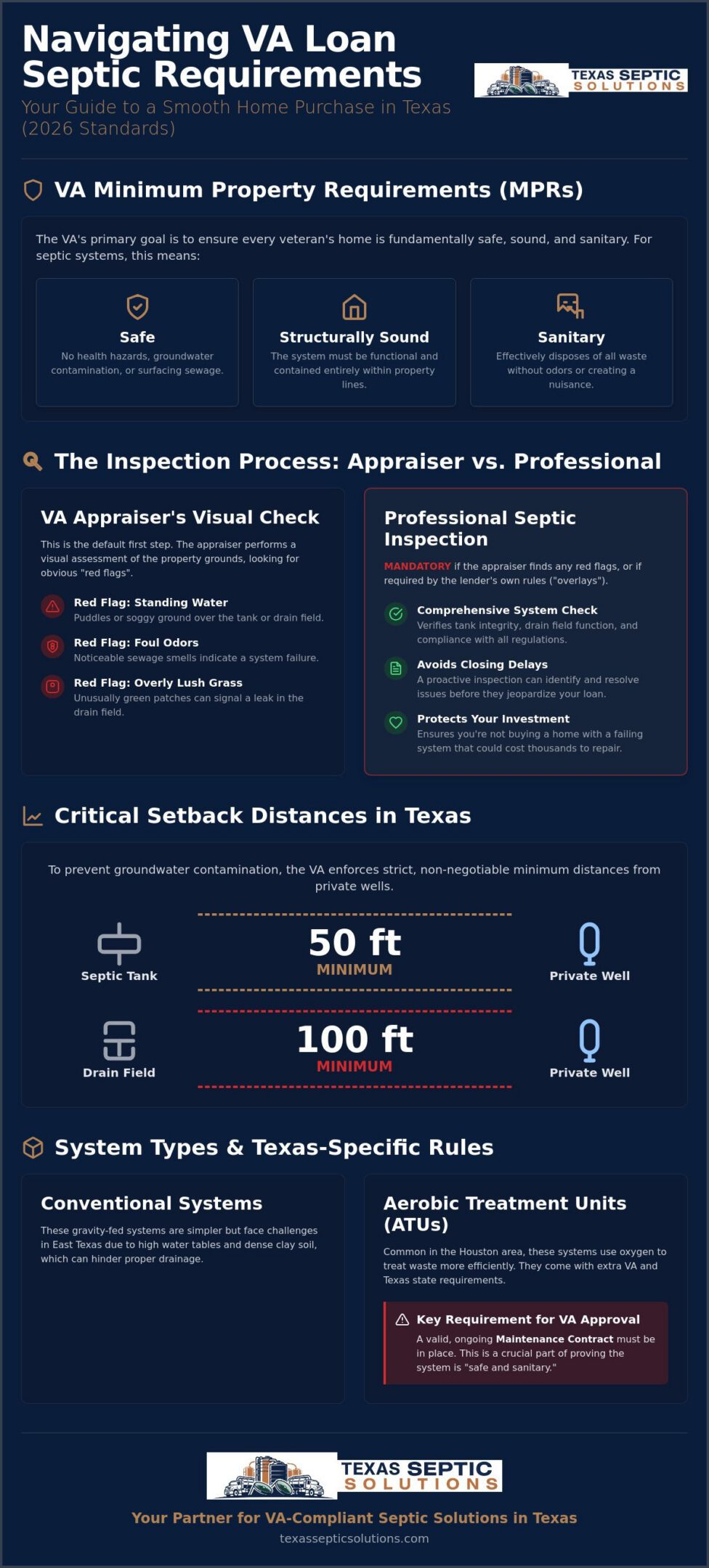
The Department of Veterans Affairs (VA) has a clear mission: ensuring that every veteran moves into a home that is safe, structurally sound, and sanitary. These standards are known as Minimum Property Requirements, or MPRs. When you buy a home with a private waste system, the VA focuses heavily on potential health hazards. They aren’t necessarily checking if the system is the most modern model on the market, but they’re verifying that it doesn’t pose a risk to your family or the surrounding community. Unlike a standard home inspection that looks at every nut and bolt, the VA assessment is about fundamental safety.
Minimum Property Requirements (MPRs) for Sewage
The VA first asks if the home can connect to a public sewer line. If a connection is “feasible and reasonable” based on cost and local reach, the VA may require it. However, for many Texas properties in areas like Cleveland or rural Houston, a private system is the only option. To meet MPRs, the system must be located entirely within the property lines and function without creating a nuisance. It’s helpful to understand how septic systems work to appreciate why the VA requires specific setbacks from wells and property boundaries. In Texas, existing systems must also comply with local health department standards. This often means having a record of proper installation and a history of maintenance on file with the county or the TCEQ.
Is a Professional Septic Inspection Mandatory?
A common point of confusion for buyers is whether a full septic tank inspection for VA loan approval is always required. By default, the VA appraiser performs a visual assessment of the grounds. They look for “red flags” like standing water, foul smells, or lush, dark green grass over the drain field. If the appraiser notes any of these issues, a professional inspection becomes mandatory to move the loan forward. Even if the appraiser gives a thumbs up, many lenders in 2026 have “overlays,” which are their own extra requirements. These lenders often mandate a professional septic tank inspection for VA loan files to protect their investment and ensure no hidden failures exist.
Under the 2026 VA guidelines, a safe and sanitary system is one that effectively disposes of all household waste without surfacing sewage, creating odors, or contaminating groundwater sources. If you’re buying a home with an aerobic system, remember that Texas law also requires a valid maintenance contract. This contract is a key part of the “safe and sanitary” verification process for the VA and your lender. Don’t wait for the appraiser to find a problem; being proactive with a professional check can save your closing date.
VA Septic Distance and Sanitation Standards for Texas Homes
The geography of East Texas presents unique challenges for homeowners, especially when balancing federal VA standards with local environmental conditions. From the sandy soils of Cleveland to the heavy clay around Houston, the way your system interacts with the land determines its compliance. The VA is particularly strict about sanitation near water sources. If a property sits near local waterways or uses a private well, the system must prove it isn’t a contamination risk. Understanding Texas septic regulations is the first step in ensuring your property meets both state law and VA safety benchmarks.
Setback Requirements for Wells and Property Lines
Distance is the VA’s primary tool for preventing groundwater contamination. For a septic tank inspection for VA loan approval, the appraiser or inspector will verify specific setbacks. The VA mandates a minimum of 50 feet between the septic tank and any private well. The drain field, or absorption area, requires an even larger buffer of at least 100 feet from a well. These distances are non-negotiable for new builds. If you’re eyeing an older home that is “grandfathered” under previous Texas rules, be careful. The VA often requires the system to meet current safety standards to protect the veteran, regardless of when it was installed. If the lot is small, these setbacks can become a major hurdle for loan approval.
Aerobic vs. Conventional Systems in East Texas
In areas like Houston and Cypress, high water tables and dense clay soil make traditional gravity-fed systems difficult to clear. This is why aerobic treatment units (ATUs) are so common here. These systems use oxygen to break down waste faster, but they come with extra scrutiny. While many guides focus only on tank distance, Texas-specific rules for aerobic spray heads are vital. Spray heads must be positioned to avoid property lines and water sources. The VA also requires a valid maintenance contract to be in place for these complex systems. You can learn more about keeping your system up to code in our guide on septic system maintenance Texas.
Sanitation standards go beyond just distance. A system will fail a septic tank inspection for VA loan purposes if there is any evidence of surface ponding, foul odors, or sluggish drains. In the humid East Texas climate, soil saturation can happen quickly after heavy rains. It’s smart to have a professional evaluate your system’s drainage before the VA appraiser arrives. This proactive step ensures that minor issues don’t turn into deal-breaking failures that stall your closing.
The VA Septic Inspection Process: Appraiser vs. Professional
The road to closing a VA loan involves two distinct layers of scrutiny for your septic system. Many buyers assume the VA appraiser handles everything, but there’s a significant difference between a surface-level observation and a technical evaluation. While the appraiser is there to protect the VA’s interest in the property’s overall value, a professional inspector protects your health and your wallet by looking at what’s happening underground. Understanding how these two roles interact will help you prepare for each step without the stress of unexpected surprises.
The process generally follows a four-step sequence. First, the appraiser conducts a visual walk-over to look for obvious failures. If they spot “red flags” like standing water or unusually lush patches of grass, they will flag the system for further review. This leads to the third step: a professional septic tank inspection for VA loan compliance. This technical check includes a flow test to ensure the drain field is absorbing water properly and a thorough component check. Finally, a sanitation certificate is submitted to the underwriter to clear the loan for closing.
What the VA Appraiser Looks For During the Walk-Through
An appraiser isn’t a septic technician, but they are trained to spot signs of failure that violate the VA’s standards for septic systems. They look for surface sewage, “spongy” ground that suggests soil saturation, or foul odors lingering in the air. They also verify that the system isn’t too close to the house or well, as proximity can lead to structural hazards or water contamination. If the system crosses property lines or is located on an adjacent lot without a legal easement, it will trigger an immediate rejection until the issue is resolved. These visual checks are the first line of defense in the VA’s “safe and sanitary” requirement.
Why Lenders Often Require an Independent Professional
Even if the appraiser finds no surface issues, your mortgage lender might still require an independent check. Lenders use these inspections to mitigate risk, especially in East Texas where heavy rains can quickly overwhelm an older system. In Texas, the “Health Authority” requirement means the system must be certified by a licensed professional or a county health official. This ensures the system meets local OSSF standards and isn’t a ticking time bomb for the new owner.
A professional check often involves pumping the tank to inspect its structural integrity and ensure the baffles are intact. Without this step, you’re essentially guessing about the condition of the tank’s interior. By performing a septic tank inspection for VA loan approval early in the process, you avoid the stress of a last-minute condition that could delay your move-in date. We recommend scheduling this as soon as your contract is signed to keep your timeline on track and ensure a smooth transition to your new home.
Handling Failed Inspections and Required Repairs
Finding out a potential home failed a septic tank inspection for VA loan approval is a major stressor. It’s a common hurdle, but it doesn’t have to be a deal-breaker for your Texas home purchase. When an appraiser identifies a sanitation issue, it appears as a condition on the Notice of Value (NOV). This document essentially pauses the loan process until a licensed professional certifies that the system meets federal safety standards. If repairs are required, you’ll likely face a 150 dollar VA reinspection fee once the work is finished to confirm the property is finally safe and sanitary.
Common Reasons for VA Septic Rejection
Most rejections in the Houston and Cleveland areas stem from specific environmental or mechanical issues. For aerobic systems, failed compressors or broken spray heads are the most frequent culprits. These components are vital for treating waste properly before it’s dispersed. Another issue is hydraulic overloading, which happens when the system’s tank size doesn’t match the home’s occupancy or bedroom count. In East Texas, we also see many failures due to inadequate drainage in the leach field. The heavy clay soil can become compacted over time, preventing the ground from absorbing liquid and leading to the “spongy” ground that appraisers flag immediately.
Who Pays for Repairs? Seller vs. Buyer Rules
The question of who covers the bill for a septic system repair has historically been a sticking point. In the past, sellers were almost always expected to pay. However, under the 2026 VA guidelines, veterans now have more flexibility and can choose to pay for repairs themselves to keep a deal alive. This is a significant shift that gives buyers more leverage in a competitive market. If the system is completely shot, you’ll need to evaluate the full septic system replacement cost before deciding whether to move forward or use the VA Escape Clause to walk away from the contract without losing your earnest money.
It’s important to note that the VA rarely allows escrow holdbacks for septic issues. The system must be fully operational and certified before the loan can fund. This is why working with a fast, reliable local authority is essential. If you’re facing a failed inspection, you should request a professional repair estimate immediately. Having a clear plan and a trusted partner ensures that minor mechanical fixes don’t turn into weeks of closing delays. We focus on getting the job done right the first time so you can get back to focusing on your move.
Reliable VA-Compliant Septic Services in Cleveland and Houston
When you’re in the final stretch of a home purchase, you don’t need a generic service provider; you need a partner who understands the local landscape. A septic tank inspection for VA loan approval is more than just a box to check. It’s a critical step that requires a deep understanding of East Texas soil conditions and the specific sanitation standards set by the VA. Whether you’re dealing with the heavy clay of Harris County or the sandy loam around Cleveland, our team provides the grounded, professional expertise needed to keep your closing on schedule.
We specialize in both aerobic and conventional systems, making us a one-stop solution for veterans and homeowners. If an appraiser flags a potential issue, our 24/7 emergency response ensures that repairs are handled immediately. We don’t just find problems; we offer the movement and resolution required to clear your loan conditions. Beyond the initial inspection, we’re built to be your long-term maintenance partner, offering comprehensive care that protects your new investment for years to come.
Why Local Expertise Matters for VA Closings
Every county in the Houston metro area has its own quirks. Liberty, Harris, and Montgomery counties each have specific health department requirements that can trip up an inexperienced inspector. We’re familiar with the local VA-approved protocols and the exact documentation underwriters need to see for a “clean” file. Providing the right paperwork the first time prevents the back-and-forth that often causes closing delays. We act as your “Reliable Local Authority,” ensuring every sanitation certificate meets the highest professional standards.
Scheduling Your Inspection and Pumping
To get a truly accurate picture of a system’s health, we recommend pumping the tank during the inspection process. This allows us to see the structural integrity of the tank walls and the condition of the baffles, which are often hidden by waste. Bundling your inspection, pumping, and any necessary repairs into a single service window is the most efficient way to satisfy lender requirements. This “all-encompassing” approach saves you time and ensures that every component is checked by the same team of experts.
Don’t let a technicality stand in the way of your new home. Our goal is to alleviate the stress of the VA process by providing straightforward, dependable service that gets you to the closing table with confidence. We value the long-term relationship with our neighbors and are ready to help you maintain a healthy, functional home from day one. Schedule your VA septic inspection with Texas Septic Solutions today to ensure your Texas home purchase stays on track.
Secure Your Texas Home Purchase with Confidence
Navigating the VA loan process is a journey of precision; ensuring your septic system meets 2026 standards shouldn’t be the part that slows you down. By understanding the distinction between a visual appraisal and a technical check, you’re already ahead of the curve. Meeting the VA’s “safe and sanitary” requirement often hinges on proper setbacks and a functional drain field, especially in the unique soil conditions of East Texas. Whether you’re dealing with an aerobic system in Houston or a conventional tank in Cleveland, being proactive with your septic tank inspection for VA loan approval is the best way to avoid stressful closing delays.
We’re proud to serve veterans across Cleveland, Houston, and Cypress with grounded, professional expertise and 24/7 emergency support for critical repairs. Our team is ready to provide the clear documentation your underwriter needs while ensuring your new home’s system is built to last. Schedule Your VA-Compliant Septic Inspection Today and take the next step toward your new front door with total peace of mind. You’ve served our country; now let us serve you by making your home purchase as smooth as possible.
Frequently Asked Questions
Is a septic inspection required for a VA loan in Texas?
A professional inspection isn’t automatically required for every loan, but it’s almost always triggered by the appraisal. The VA appraiser performs a visual “walk-over” to look for red flags like standing water or odors. If they spot these issues, or if your specific lender has an “overlay” requirement, a professional septic tank inspection for VA loan approval becomes mandatory to move to closing.
How much does a VA septic inspection cost in 2026?
In Texas, a standard septic inspection typically costs between $300 and $600. For those buying in the Houston area, the average cost is approximately $542, though this can vary based on the system’s complexity. Keep in mind that this fee generally covers the inspection itself; pumping the tank is usually an additional cost that most professionals recommend for a thorough check.
What are the VA distance requirements for septic tanks and wells?
The VA mandates a minimum setback of 50 feet between the septic tank and any private water well. The absorption area, or drain field, must maintain a larger buffer of at least 100 feet from the well. These distances are critical for protecting your drinking water from contamination and are a primary focus during the VA’s sanitation assessment.
Can I buy a house with a failing septic system using a VA loan?
You cannot fund a VA loan on a property with a failing septic system. The home must meet Minimum Property Requirements (MPRs), which state the system must be safe, functional, and sanitary. If the system has a broken pump or a clogged drain field, the seller or buyer must complete repairs and obtain a clear sanitation certificate before the loan can close.
Who is responsible for paying for the septic inspection on a VA loan?
Either the buyer or the seller can pay for the inspection under the 2026 VA guidelines. In the past, sellers were often expected to cover this cost, but veterans now have the flexibility to pay for a septic tank inspection for VA loan files themselves. This change helps veterans stay competitive in tight Texas real estate markets where sellers might be wary of extra fees.
Does the VA require a septic tank to be pumped before closing?
The VA doesn’t strictly require pumping in their handbook, but most licensed inspectors in Texas won’t sign a sanitation certificate without it. Pumping the tank is the only way to accurately inspect the structural integrity of the tank walls and the condition of the baffles. Most lenders will insist on this step to ensure the system isn’t hiding a major failure.
What happens if the VA appraiser finds a septic issue?
The appraiser will list the issue as a “repair condition” on the Notice of Value (NOV). This effectively pauses the loan process until the problem is resolved by a licensed professional. Once the repairs are finished, the VA typically charges a $150 reinspection fee to verify that the system now meets all health and safety standards.
How long does a VA septic sanitation certificate remain valid?
A septic sanitation certificate is usually valid for 90 days. If your closing is delayed beyond three months, the lender will likely require a fresh inspection to ensure the system is still operating properly. It’s best to schedule your inspection within 30 to 45 days of your expected closing date to avoid the need for a costly update.