
Septic System Maintenance for Rental Property: The Landlord’s 2026 Checklist
Your rental property’s septic system isn’t just a utility. It is a $20,000 asset that your tenants could accidentally destroy in a single weekend. We understand the anxiety of wondering what is being flushed down your drains or fearing a midnight call about a raw sewage backup. Consistent septic system maintenance for rental property is the only thing standing between a profitable investment and a massive repair bill that could wipe out a year of rental income.
You deserve a strategy that protects your property without requiring you to micromanage every flush. We have built this comprehensive 2026 guide to help you lower long-term costs and avoid the stress of emergency failures. We will walk through a clear maintenance schedule, provide smart lease addendum ideas to protect your liability, and explain the mandatory Texas inspection rules you must follow to keep your property compliant and your tenants safe.
Key Takeaways
- Identify why rental properties are at a higher risk for system overload and how to prevent tenant negligence from causing a total failure.
- Clarify the legal responsibilities of landlords versus tenants regarding routine pumping and emergency repairs to protect your liability.
- Understand how consistent septic system maintenance for rental property protects your ROI by extending the life of your leach field.
- Follow our 2026 checklist for quarterly visual inspections and annual professional filter cleaning to stay ahead of costly issues.
- Learn how 24/7 emergency support and local expertise can minimize downtime and keep your rental income secure.
Why Septic System Maintenance for Rental Property is Different
Managing a rental property with a septic system is a high-stakes balancing act. Unlike a primary residence where you control every drop of water used, a rental property is subject to the habits of people who may have never lived with a septic tank before. This often results in a “tragedy of the commons” in the plumbing. Since tenants don’t see the immediate financial impact of a system failure, they are less likely to be cautious. This makes septic system maintenance for rental property a critical defensive strategy rather than just a routine chore.
The financial risk in 2026 is higher than ever. A total system failure can lead to massive replacement costs and potential legal disputes over habitability. Because rental homes often experience higher occupancy than originally intended, the system stays under constant pressure. When a system is overloaded, it loses its ability to process waste effectively. You can learn more about the technical details of How a Septic System Works to better understand why high water volume is the enemy of a healthy drain field.
The ‘Tenant Factor’: Identifying High-Risk Behaviors
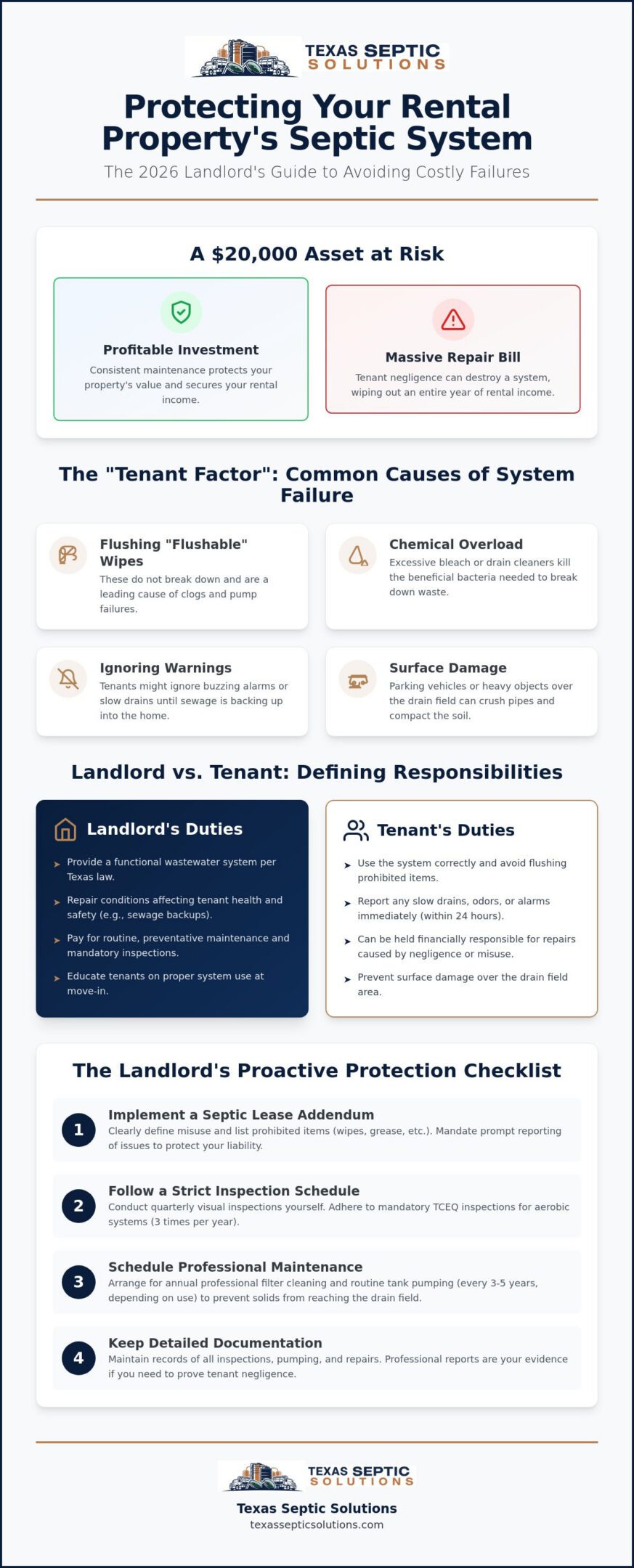
Tenants often treat a septic system like a city sewer line, but the two are not the same. High-risk behaviors can lead to a backup in a matter of days. Watch for these common issues during your inspections:
- Flushing “Flushable” Wipes: These do not break down and are the leading cause of pump failures and clogs.
- Chemical Overload: Excessive use of bleach or heavy-duty cleaners kills the beneficial bacteria that break down waste.
- Ignoring Warnings: Tenants might ignore a buzzing alarm or a slow drain until sewage is already backing up into the tubs.
- Surface Damage: Parking vehicles or trailers over the drain field can crush pipes and compact the soil, destroying the system’s ability to breathe.
Texas Soil and Weather: The Local Landlord’s Challenge
In areas like Cleveland, Cypress, and the greater Houston region, the environment works against your septic system. Much of East Texas is built on heavy clay soil. This soil holds onto water and drains slowly, which means your system has a lower tolerance for high-volume usage. When we experience heavy seasonal rainfall, the ground becomes saturated. A saturated drain field cannot accept more effluent, leading to immediate backups if the tenants are running multiple loads of laundry or taking long showers. This is why local expertise is vital; a system sized for a family in a sandy area will fail quickly in our local clay if you don’t prioritize septic system maintenance for rental property.
Landlord vs. Tenant: Defining Septic Responsibilities
Texas law is clear on one point. As a landlord, you must provide a functional wastewater system. Under Texas Property Code §92.052, you have a non-negotiable duty to repair conditions that materially affect the health or safety of an ordinary tenant, which explicitly includes sewage backups. However, while the law mandates you keep the system running, it doesn’t mean you have to pay for every disaster caused by a tenant’s poor choices. Establishing a clear division of labor is the foundation of effective septic system maintenance for rental property.
Routine costs, such as the mandatory three-times-per-year inspections for aerobic systems required by the TCEQ, are strictly the landlord’s responsibility. You should view these as a cost of doing business. Conversely, if a system failure is caused by tenant negligence, you have the right to seek reimbursement for the repair costs. The challenge lies in proving that negligence, which is why documentation is your best friend. We recommend providing new residents with a copy of the EPA Septic System Care Guidelines during the move-in process to set clear expectations from day one.
Drafting a Septic Addendum for Your Lease
A standard lease often lacks the specific language needed to protect a septic system. You need a dedicated septic addendum that clearly defines “misuse.” This document should include a strict list of prohibited items such as fats, oils, grease, and “flushable” wipes. It should also mandate that tenants report any alarms or slow drains within 24 hours. Without these written rules, it becomes difficult to hold a tenant financially liable for a complex septic system repair that could have been avoided with a simple service call.
The Cost of Negligence: When can you charge the tenant?
Proving a tenant caused a backup requires professional evidence. When our technicians perform a pump-out or repair, we provide detailed reports on what was found in the tank. If we pull a wad of feminine products or a child’s toy from a clogged line, that report serves as your evidence for a security deposit deduction. Keep in mind that Texas law allows tenants a “repair and deduct” remedy if you fail to act within a reasonable time, usually seven days. This deduction is capped at one month’s rent or $500, whichever is greater. To avoid these legal headaches, many owners find that setting up professional maintenance plans is the most cost-effective way to document system health and prevent disputes.
Calculating the ROI of a Septic System Maintenance Plan
Think of your septic system as a high-yield asset. If you neglect it, the depreciation is rapid and expensive. Many landlords view septic system maintenance for rental property as a recurring expense to be minimized, but the math tells a different story. Professional care acts as insurance against the most common cause of rental property loss: catastrophic utility failure. Beyond the hardware, professional maintenance is a powerful selling point. High-quality tenants look for well-managed properties where they won’t have to deal with sewage backups. Additionally, professional service fees are typically 100% tax-deductible as a rental expense, further lowering the true cost of your investment protection.
Maintenance Plans vs. Emergency Repair Costs
Emergency service calls are never just about the repair. You are paying for the “emergency premium” associated with 24/7 response times. These calls often happen on weekends or holidays when tenants are home and usage is at its peak. A single after-hours call can easily exceed the cost of a full year’s septic system maintenance plan. ROI in this context is the ratio of avoided emergency premiums and extended equipment life compared to the predictable cost of scheduled service. By choosing a plan, you replace volatile, high-cost repairs with a stable, manageable budget item.
Preventing Total System Failure
The financial stakes are high for Texas property owners. A total septic system replacement in 2026 can range from $6,000 to over $20,000 depending on whether you have a conventional or aerobic system. Most of these replacements are caused by drain field saturation, which often starts as a small, undetected leak or a clogged effluent filter. By following University Maintenance Tips for Septic Systems, you can ensure your filters are cleaned annually. This simple step prevents solids from escaping the tank and clogging the soil pores in your leach field. Once a leach field fails, the soil can no longer process wastewater, making a full replacement your only option. Regular septic system maintenance for rental property ensures that these small issues are caught before they turn into five-figure disasters.
The 2026 Landlord’s Septic Maintenance Checklist
Most landlords wait for a backup before they call a professional. By then, the damage is already done. Effective septic system maintenance for rental property requires a proactive approach that accounts for high occupancy and tenant behavior. You should perform a visual inspection of your drain field every quarter. Walk the area and look for standing water, unusually lush grass, or foul odors. These are early warning signs that the soil is struggling to process effluent before it reaches the surface.
Pumping frequency is another area where landlords often stumble. The generic “every three to five years” advice doesn’t apply to a rental home with a high head count. If you have four or five adults living in a house with a 1,000-gallon tank, you may need to pump every two years to prevent solids from overflowing into the drain field. Always base your pumping schedule on actual occupancy levels rather than just the tank size. Providing tenants with SepticSmart educational materials during every lease renewal keeps these rules fresh in their minds.
The Annual Technical Inspection
Once a year, you need a professional to look inside the tank. This inspection should include measuring the sludge and scum layers to determine if a pump-out is necessary. The technician will test the septic tank alarm and ensure the pump is cycling correctly. We also check the integrity of the inlet and outlet baffles. One of the most important steps is cleaning the effluent filter. A clogged filter can cause a backup into the house, but a missing or damaged filter allows solids to destroy your leach field. If you have an aerobic system, remember that Texas law mandates a service contract with inspections at least three times per year.
Seasonal and Tenant-Changeover Tasks
The transition between tenants is the perfect time for a deep dive into system health. During your move-out walk-through, test every toilet and drain simultaneously to check for slow drainage. In the Houston and Cypress areas, heavy seasonal rains can saturate the clay soil, so always inspect the leach field after major storms for “soggy spots.” This is also the time to replace any faded or missing education placards in the kitchen and bathrooms. If you want to take the guesswork out of these tasks, you can sign up for a scheduled maintenance plan to ensure your investment is protected year-round.
Secure Your Rental Income with Texas Septic Solutions
Owning a rental property should be a path to passive income, not a source of constant stress. When your property relies on a septic tank, that income is only as secure as the system buried in your backyard. We specialize in providing comprehensive septic system maintenance for rental property across Cleveland, Shepherd, and the surrounding areas. Our team understands the unique challenges of Texas soil and the specific regulatory requirements of local counties. We don’t just pump tanks; we act as your eyes and ears on the ground, ensuring that your investment is protected from tenant negligence and environmental wear.
Reliability is our hallmark. Whether you are managing a single-family home in Cypress or a multi-unit portfolio in Houston, we provide the professional documentation you need to enforce your lease agreements. Our detailed inspection reports serve as a record of system health, making it easy to identify when a backup was caused by normal wear and tear versus a violation of your septic addendum. This level of transparency builds trust with your tenants while providing you with the legal protection required in today’s rental market.
Our 24/7 Emergency Response Guarantee
Nothing ruins a weekend like a frantic call from a tenant about a sewage backup. We offer 24/7 Emergency Septic Service that takes the burden off your shoulders. We can handle tenant calls directly, providing a rapid response in Huffman, Cypress, and throughout the Houston metro area. Our technicians don’t just fix the immediate problem; they perform a professional diagnosis to determine the root cause. If we find that the failure was caused by prohibited items or system misuse, we provide the documented evidence you need to recover repair costs from the tenant’s security deposit. This proactive service keeps your tenants happy and your involvement to a minimum.
Customized Plans for Property Portfolios
Property managers and landlords with multiple holdings need a streamlined approach to utility management. We offer customized maintenance contracts designed to scale with your portfolio. These plans include multi-property discounts and standardized reporting that fits seamlessly into your existing record-keeping systems. We take over the scheduling, ensuring that every required inspection is performed on time and every filter is cleaned according to the manufacturer’s specifications. By centralizing your septic system maintenance for rental property with a single, reliable local authority, you reduce administrative overhead and ensure that no property is left vulnerable to a preventable failure.
Protect Your Investment and Your Peace of Mind
Managing a rental property is demanding enough without the constant threat of a utility failure. By implementing a clear lease addendum and sticking to a proactive inspection schedule, you move from reactive crisis management to long-term asset protection. We have seen how tenant negligence and high occupancy can strain even the best systems, but consistent septic system maintenance for rental property keeps your cash flow steady and your tenants satisfied.
You deserve a partner who understands the specific challenges of East Texas clay and local regulations. Whether you need a routine inspection in Cleveland or 24/7 Emergency Service for a tenant in Cypress or Houston, our team is ready to support your property goals. We provide the professional documentation and expertise required to keep your systems running and your records clear.
Protect your rental property with a professional maintenance plan from Texas Septic Solutions. Let us handle the technical details so you can focus on growing your portfolio with confidence.
Frequently Asked Questions
Who is responsible for septic pumping in a rental property?
Landlords are legally responsible for routine pumping to ensure the property remains habitable under Texas law. While you can’t waive your duty to provide functional wastewater disposal, you can include specific language in the lease regarding system misuse. Routine septic system maintenance for rental property is a necessary business expense that protects your long-term investment from premature failure.
How often should a septic tank be pumped for a rental home?
Pumping frequency should be determined by the number of occupants rather than a fixed number of years. A rental property with four or five residents may require a pump-out every two years to prevent solids from reaching the drain field. High turnover or increased water usage from multiple daily laundry loads can significantly shorten the time between professional service calls.
Can a landlord charge a tenant for septic repairs?
You can charge a tenant for repairs if the failure was caused by their documented negligence or a clear violation of the lease terms. If a technician finds prohibited items like grease, wipes, or feminine products in the tank, you have the evidence needed to deduct the repair cost from the security deposit. Normal wear and tear, however, remains the landlord’s financial responsibility.
What should be included in a septic lease addendum?
A strong septic addendum should list all prohibited items and mandate immediate reporting of any alarms or slow drains. It should also prohibit parking vehicles, trailers, or building structures over the drain field area. Clear language regarding the financial consequences of system misuse helps set expectations and encourages tenants to be more cautious with what they flush.
What are the signs of septic failure in a rental property?
Look for “soggy spots” or unusually green, lush grass over the leach field during your quarterly property walk-throughs. Inside the home, slow-draining sinks, gurgling pipes, or sewage odors are immediate red flags. If the property has an aerobic system, a glowing red light or an audible buzzer on the control panel indicates a mechanical failure that needs immediate attention.
Does a septic maintenance plan cover emergency repairs?
Most maintenance plans focus on prevention through scheduled inspections and filter cleanings rather than covering the cost of parts or labor for major repairs. However, being on a plan often provides you with priority scheduling and lower service call fees. This ensures that when a tenant has a midnight backup, you have a reliable team ready to respond quickly.
How do I prove a tenant caused a septic backup?
Proving negligence requires a detailed report from a licensed septic technician at the time of the service. When we perform a repair, we document exactly what caused the blockage or pump failure. Finding non-biodegradable items in the tank is the most common proof used in tenant disputes. Keeping a log of previous septic system maintenance for rental property also proves the system was in good working order before the tenant moved in.
Are aerobic septic systems better for rental properties?
Aerobic systems are not necessarily “better,” but they are often the only option for rental properties in areas with heavy clay soil like Cleveland or Cypress. While they require mandatory maintenance contracts and electricity to run the aerator, they process waste more thoroughly than conventional systems. This extra layer of treatment can be a significant benefit when dealing with the high water usage common in rental homes.