
Septic System Installation Cost in Houston: 2026 Homeowner Budget Guide
Did you know the heavy clay under your Houston lawn can change your project expenses before the first shovel even hits the ground? Understanding the septic system installation cost Houston homeowners face in 2026 starts with what’s beneath your feet. It’s natural to feel a bit of dread when you think about hidden engineering fees or complex Harris County permit requirements. You just want a reliable system that works without the stress of unexpected financial surprises.
We agree that the process feels unnecessarily complicated, especially when you’re trying to budget for a major home investment. That’s why we’ve put together this expert-led pricing breakdown to help you plan with confidence. This guide provides a clear look at the real-world costs for both aerobic and conventional systems, including the latest data on soil testing and site evaluations. We’ll also walk through current financing options and show you how to work with a local authority who handles the paperwork and inspections for you. By the end of this guide, you’ll have a roadmap for a successful installation that protects your property and your wallet.
Key Takeaways
- Understand how Houston’s heavy clay soil dictates your system choice and why the septic system installation cost Houston homeowners pay is influenced by local drainage requirements.
- Learn the critical differences between conventional gravity systems and the aerobic treatment units that have become the standard for modern Harris County properties.
- Identify the “hidden” expenses like site evaluations, professional engineering, and TCEQ permit fees so you can build a truly accurate 2026 project budget.
- Explore practical ways to fund your installation, including home improvement loans and HELOC options tailored for Texas property owners.
- Discover how a full-service partner manages the entire project from initial soil testing to the final inspection, saving you time and stress.
Understanding Houston Septic System Installation Costs in 2026
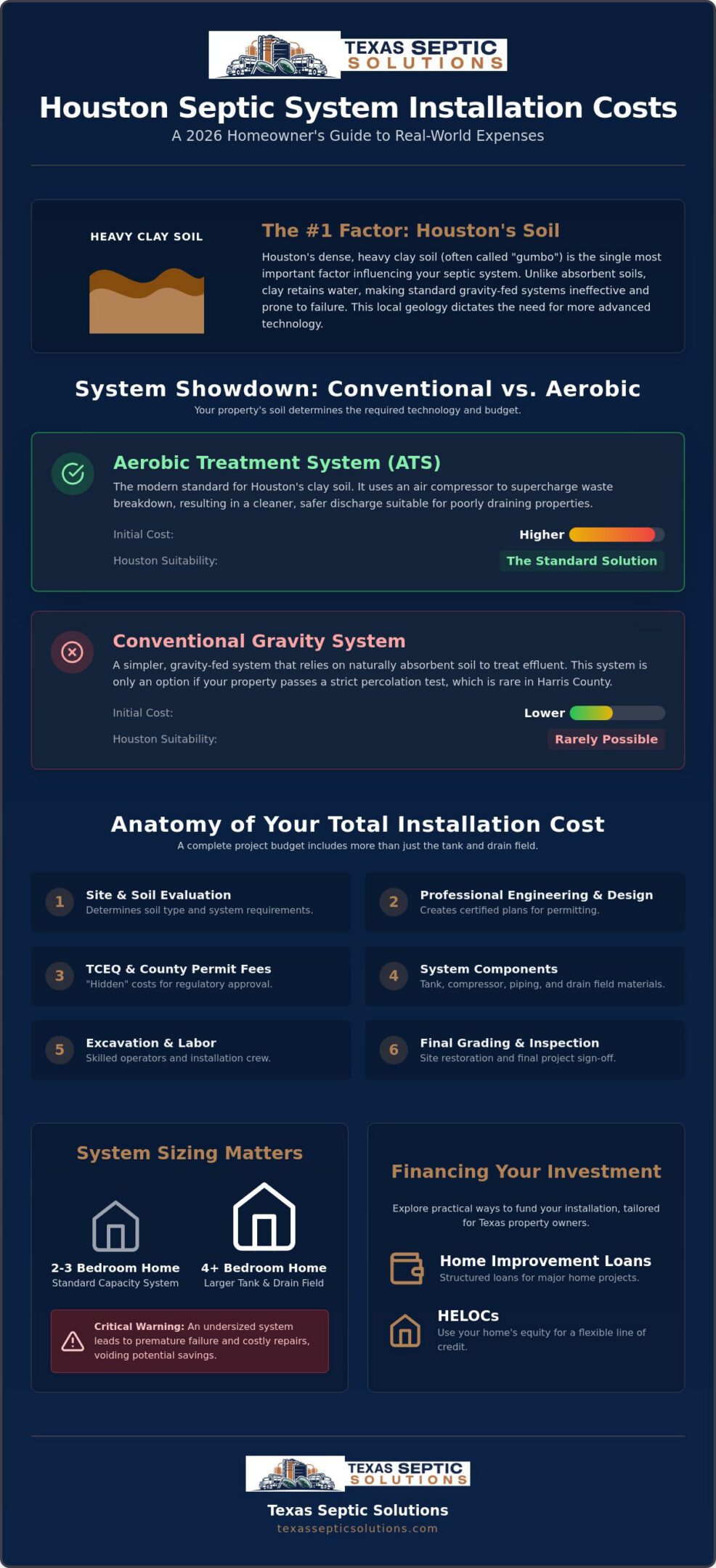
Houston’s landscape presents specific challenges that directly influence your project budget. The septic system installation cost Houston residents see often reflects the city’s unique environmental conditions rather than a generic national average. While broader data provides a starting point, it rarely accounts for the heavy clay and flat terrain common across Harris County. These local factors dictate the type of system you need and the complexity of the excavation required to ensure long-term functionality.
The True Cost of a New Septic System
Every project involves several moving parts. You aren’t just buying a tank; you’re investing in a comprehensive treatment plant for your home. This includes the primary tank, specialized piping, the drain field, and the expert labor required to set everything to grade. In 2026, supply chain shifts have continued to impact the pricing of concrete and plastic tanks, making early planning more critical than ever. The total installation cost encompasses everything from the initial site preparation and engineering to the final grading and seeding of your yard. Understanding what a septic system is and how it processes waste helps you see why each component is vital for environmental safety and property health.
Houston vs. National Septic Averages
Texas labor rates for skilled trades remain competitive, but the regulatory environment in Harris County adds layers of oversight that other regions might skip. Local TCEQ standards ensure that systems don’t fail during our frequent heavy rain events. This rigorous permitting and inspection process can push local totals above the national baseline. If you’re looking for information on swapping out an old unit specifically, check out our Septic System Replacement Cost in Texas: 2026 Homeowner Guide for more specific data on those types of projects.
Your home’s size directly influences the septic system installation cost Houston contractors quote. TCEQ regulations use bedroom counts to estimate daily water usage, which determines the required tank capacity. A four-bedroom home needs a larger footprint and more processing power than a two-bedroom cottage. Cutting corners on this capacity or choosing a “bargain” installer often backfires. We’ve seen many homeowners save a few thousand dollars upfront only to face massive repair bills within five years because the system was undersized or poorly designed for the local soil. A professional installation is a long-term investment in your property’s value and your family’s peace of mind.
Comparing Conventional vs. Aerobic Septic Costs in Harris County
Choosing between system types is the single biggest factor in your total project budget. The septic system installation cost Houston property owners face is largely determined by whether the land can support a standard gravity-fed setup or requires a more advanced aerobic unit. Houston’s geography is defined by dense, expansive clay. This “gumbo” soil acts like a sponge that refuses to let go of water, which is why traditional drainage methods often fail our local homeowners. Understanding how septic systems work on a basic level is helpful, but in Harris County, local geology always has the final word.
When is a Conventional System Possible?
A conventional system is the most cost-effective option because it uses gravity to move effluent. However, it’s only an option if your land passes a strict percolation test. This test measures the soil’s ability to absorb liquid. While you might find sandy loam that allows for gravity systems in specific pockets of East Houston, most modern developments are restricted. If the soil doesn’t drain quickly enough, a conventional system will eventually back up. This leads to a messy and expensive failure that can damage your property and the local environment. Because of these risks, many new Houston builds are mandated by local health departments to use aerobic technology from day one.
The Aerobic Investment: Pros and Cons
Aerobic Treatment Systems (ATS) have become the gold standard for Houston for a reason. They use an air compressor to circulate oxygen, which allows aerobic bacteria to break down waste much faster than the anaerobic bacteria in a standard tank. This higher level of treatment means the water can often be distributed via spray heads over the lawn. The trade-off for this efficiency is the initial investment. You’re paying for specialized hardware like submersible pumps, timers, and control panels. These components ensure the system meets TCEQ standards even on small lots where a traditional drain field wouldn’t fit.
To protect this investment, you’ll need a consistent septic system maintenance plan. Routine check-ups prevent small electrical issues from turning into full system replacements. While the septic system installation cost Houston residents pay for aerobic units is higher upfront, the ability to build on clay soil and maximize your usable yard space makes it a necessary choice for most. If you’re ready to see which technology fits your specific lot, reaching out to Texas Septic Solutions for a professional site assessment is the best way to get an accurate picture of your needs.
Factor in the ‘Hidden’ Costs of Septic Installation
Many homeowners are surprised to learn that the physical hardware is only part of the septic system installation cost Houston projects require. Beyond the tank and pipes, a significant portion of your budget goes toward the “invisible” work that happens before a single cubic yard of dirt is moved. These preparatory and administrative steps are non-negotiable in Harris County and surrounding areas. Skipping them isn’t an option, so understanding these fees upfront prevents sticker shock later in the process.
Site Evaluation and Engineering Design
You can’t just dig a hole and drop in a tank. Texas law requires a Registered Sanitarian or a Professional Engineer to evaluate your land and design a system that complies with Texas Commission on Environmental Quality (TCEQ) standards. While a basic percolation test was common in the past, modern Houston builds often require a more complex soil morphology test. This study looks at the different layers of clay and silt to determine exactly how your property will process wastewater. A professional design ensures your system is sized correctly for your home’s needs. Getting this right the first time can save you thousands in future septic system repair costs by preventing early drain field saturation.
Permits and Inspections
Navigating the local government red tape is often the most frustrating part of a new installation. In 2026, the permit fee for an On-Site Sewage Facility (OSSF) in Harris County and nearby jurisdictions typically ranges from $280 to $310. If the system doesn’t pass the initial state-mandated check, a re-inspection fee of around $150 might apply. These government fees are separate from your installer’s labor. We recommend choosing a partner who manages the entire paperwork process for you. This ensures that the design, site evaluation, and final inspection are synchronized. It also prevents the common 4 to 8 week administrative delays that can stall your home construction or move-in date.
Physical site constraints also play a major role in your final bill. Houston’s lush landscape often means tree removal or land clearing is necessary to make room for spray heads or drain fields. If your lot is particularly flat, you’ll likely need “select fill” dirt to create the proper slope for drainage. This fill dirt protects the tanks and ensures water flows away from your foundation. Finally, remember to budget for landscaping. Once the heavy machinery leaves, you’ll need to re-seed or sod the area to stabilize the soil and protect the integrity of your new septic system installation cost Houston investment.
Septic System Installation Financing and Budgeting Strategies
A new septic system is one of the most significant investments you’ll make in your property. While the septic system installation cost Houston homeowners face can be substantial, waiting for a total system failure is always more expensive. Financing allows you to address utility needs proactively rather than reacting to an emergency that could damage your home’s foundation or landscape. By spreading the cost over time, you can ensure the job is done right with high-quality components that last for decades.
Many Texas property owners use a Home Equity Line of Credit (HELOC) to fund these projects. Because a septic system is a permanent improvement, it often qualifies for favorable terms. As of July 2026, interest rates for home improvement loans in Texas typically range from 5.8% to 7.99% APR, depending on your credit profile and loan term. Specialized third-party lenders also offer home improvement loans that focus specifically on essential utilities. These options provide fixed monthly payments, making it easier to fit the septic system installation cost Houston into your monthly household budget.
Budgeting for Long-Term Ownership
Your financial planning shouldn’t stop once the tank is in the ground. It’s wise to allocate funds for your first year of maintenance, especially if you have an aerobic system that requires a mandatory service contract. A new, professionally installed system significantly boosts your property value and makes your home much easier to sell in the future. To ensure total transparency, a professional installation contract should clearly outline specific payment milestones linked to project progress, such as design approval, tank delivery, and the final county inspection signature.
Insurance and Warranty Considerations
Don’t assume your standard homeowner’s insurance policy will cover a new installation. Most policies view septic systems as maintenance items rather than covered perils unless a specific rider is in place. However, you can protect your investment through manufacturer warranties. Leading aerobic pump and tank manufacturers provide multi-year warranties on their hardware, but these are almost always contingent on professional installation. If a system isn’t put in by a licensed expert, you risk voiding the very protections meant to save you money on future part replacements. If you’re ready to explore your options, you can contact Texas Septic Solutions to discuss project scheduling and our straightforward approach to project management.
Why Texas Septic Solutions is Houston’s Trusted Installation Partner
We understand that a new utility project is a major commitment. Unlike national lead-generation websites that sell your information to anonymous contractors, we are a local business rooted in Houston, Cleveland, and the surrounding communities. We take personal pride in every system we install because we live and work in the same neighborhoods as our customers. Our team provides a grounded, professional approach that removes the uncertainty from the septic system installation cost Houston homeowners have to manage. We believe in straightforward communication and a “can-do” attitude that keeps your project moving forward without unnecessary delays.
Our “one-stop” service model means we handle every detail from the initial soil morphology test to the final application of grass seed. You won’t have to juggle multiple contractors or worry about hidden markups often found with middlemen. We manage the entire project lifecycle, ensuring that the design matches the reality of your specific lot. This comprehensive care includes 24/7 support long after the heavy machinery has left your property. Whether you need a routine pump-out in three years or have an emergency question on a holiday weekend, our team is ready to respond with the reliability you expect from a local expert.
Local Expertise in Houston Soils
The specific challenges of Cypress and Huffman clay require more than just a general understanding of excavation. These expansive soils can shift and settle, putting stress on tanks and pipes if they aren’t installed with precision. We apply professional standards that exceed the minimum state requirements to ensure your system remains stable for decades. Because we have established relationships with Harris County and surrounding county inspectors, we know exactly what they look for during the final approval process. This local authority allows us to secure permits faster and avoid the administrative hurdles that often stall other installers who aren’t familiar with our local red tape.
Start Your Project Today
Getting an accurate estimate is the first step toward a functional home. We provide detailed, on-site evaluations that account for your property’s unique topography and soil conditions. In the current 2026 market, we prioritize efficient scheduling to help you meet your construction or move-in deadlines. We provide transparent pricing models that give you a clear view of your investment before work begins. This ensures the septic system installation cost Houston residents pay is fair, accurate, and all-encompassing. If you’re ready to move forward with a partner who values accountability and long-term relationships, Get your professional septic installation quote from Texas Septic Solutions. We’ll handle the paperwork so you can focus on your home.
Secure Your Property with a Professional Houston Installation
Planning for a new utility system doesn’t have to be overwhelming when you understand the local variables. By accounting for Harris County’s clay soil and navigating the permit process early, you can manage the septic system installation cost Houston projects require without the stress of hidden fees. A well-designed aerobic or conventional system is more than just a tank; it’s a long-term investment in your home’s functionality and resale value that requires expert planning from the start.
Our team has served the Houston, Cleveland, and Cypress communities for decades as licensed and insured Texas installers. We take pride in handling the complex engineering and paperwork so you don’t have to. With 24/7 emergency support available, we stay by your side long after the initial grass seed is planted. Schedule Your Houston Septic Installation Consultation today to get a clear, expert-led roadmap for your property. We look forward to helping you build a reliable system that lasts for years to come.
Frequently Asked Questions
How much does a new septic system cost in Houston for 2026?
Your specific project price depends on soil composition, the number of bedrooms in your home, and the technology required to meet TCEQ standards. While national averages exist, the septic system installation cost Houston homeowners pay is unique because of our local “gumbo” clay soil. Factors like site accessibility and the need for specialized fill dirt also play a role in the final quote. We provide detailed estimates after a site evaluation to ensure your budget reflects the actual needs of your property.
Can I install my own septic system in Harris County to save money?
No, Texas law requires that on-site sewage facilities be designed and installed by licensed professionals. Because most Houston properties require aerobic treatment units due to soil conditions, the regulations are even stricter. These systems involve complex electrical components and spray distribution networks that must be verified by county inspectors. Attempting a DIY installation can lead to heavy fines, legal issues, and system failures that cost more to fix than a professional installation.
How long does the septic installation process typically take?
The entire process usually takes between four and eight weeks from the initial soil test to the final inspection. Most of this time is spent in the administrative phase, as Harris County and the TCEQ must review engineering designs and issue permits before work begins. Once the permits are in hand, the physical excavation and tank placement often take less than a week. We manage the scheduling to ensure the transition from digging to final grading is as smooth as possible.
What is the difference between a conventional and an aerobic septic system?
Conventional systems rely on gravity and natural soil filtration to treat waste, which requires sandy soil that drains well. Aerobic systems use an electric air pump to circulate oxygen, allowing bacteria to break down waste more efficiently inside the tank. This advanced treatment is necessary for Houston’s clay soil because it doesn’t allow water to percolate quickly. Aerobic units often use spray heads to distribute treated water over the lawn, making them ideal for smaller or less absorbent lots.
Does my homeowner’s insurance cover the cost of a septic tank replacement?
Standard insurance policies generally don’t cover septic replacements caused by age, wear and tear, or lack of maintenance. Coverage is typically reserved for sudden, accidental damage from a covered peril, such as a fire or a fallen tree. It’s best to review your specific policy or speak with your agent about an “equipment breakdown” rider. Investing in a professional installation and a consistent maintenance plan is the most reliable way to protect your system from unexpected failure.
Are there financing options available for septic system installation in Texas?
Yes, several financial institutions offer specialized home improvement loans and Home Equity Lines of Credit (HELOC) for utility upgrades. As of July 2026, interest rates for these types of loans in Texas often range from 5.8% to 7.99% APR depending on creditworthiness. Many homeowners find that financing allows them to install a higher-quality aerobic system that adds more value to their property. We can discuss how to structure your project milestones to align with your chosen financing method.
How often will my new aerobic system need to be pumped or serviced?
Most systems need to be pumped every three to five years to remove accumulated solids. However, aerobic systems have additional legal requirements in Texas, including a mandatory maintenance contract. This contract typically includes three professional inspections per year to check the aerator, pumps, and spray heads. Regular service prevents small mechanical issues from turning into major repairs and ensures your system continues to meet environmental safety standards.
What permits do I need to install a septic tank in the Houston area?
You must obtain an On-Site Sewage Facility (OSSF) permit from Harris County or your specific local jurisdiction. In 2026, these permit fees typically range from $280 to $310 for residential properties. The application process requires a professional site evaluation and a technical design from a licensed engineer or sanitarian. We handle the submission of all required paperwork and coordinate with the county for the final inspection to ensure your system is fully compliant with state law.