
Septic Tank Smell in House Causes: A 2026 Troubleshooting Guide
You’ve finally invited the neighbors over for dinner, but as soon as they walk through the door, a faint, sulfurous odor drifts from the hallway. It’s more than just a nuisance; it’s an embarrassing situation that triggers immediate anxiety about sewage backups or expensive emergency repairs. You aren’t alone in this frustration. Many homeowners in the Greater Houston area struggle to differentiate between a simple dry P-trap and a full-scale system crisis. Understanding the common septic tank smell in house causes is the first step toward reclaiming your home’s comfort and ensuring your family’s safety from harmful sewer gases.
We’ve designed this 2026 troubleshooting guide to help you identify exactly where that stench is coming from before it turns into a costly disaster. You’ll learn how to pinpoint the source of odors, determine when it’s safe to handle a fix yourself, and recognize the critical signs that you need a professional emergency pump-out. Whether you’re dealing with a blocked vent pipe or a failing aerobic system, we’ll provide the clear, actionable steps you need to stop the smell and protect your property’s long-term health.
Key Takeaways
- Identify whether the “rotten egg” odor is a minor plumbing glitch or a serious system emergency.
- Pinpoint the most common septic tank smell in house causes, ranging from dry P-traps to cracked vent seals.
- Use a simple two-step triage process to locate the source of the gas before calling for service.
- Understand how Texas heat affects gas production and when routine pumping becomes your best line of defense.
- Learn the specific warning signs that indicate you need an emergency pump-out to prevent a total backup.
Understanding the “Rotten Egg” Smell in Your Texas Home
The smell of sewage in a family home is more than a nuisance; it’s a source of deep anxiety. It makes you worry about the safety of your water, the integrity of your yard, and the potential for a massive repair bill. Most homeowners describe this scent as a “rotten egg” odor. This specific smell is caused by Hydrogen Sulfide (H2S), which is a natural byproduct of the anaerobic digestion that occurs inside your system. To troubleshoot effectively, it helps to understand what a septic tank is and how it processes waste through bacterial breakdown. While a faint whiff might just be a sign of a dry drain, a constant, heavy stench often points to deeper septic tank smell in house causes that require professional attention.
Is Septic Gas Dangerous to Your Health?
Septic gases aren’t just unpleasant to breathe; they can be hazardous in high concentrations. Methane and Hydrogen Sulfide are the two primary concerns for property owners. While methane is odorless and highly flammable, H2S provides that unmistakable warning scent. If you or your family members experience persistent headaches, dizziness, or nausea, you may be dealing with sewer gas exposure. If the smell becomes overpowering, open your windows immediately to provide cross-ventilation. This is a critical safety step while you investigate the source or wait for a professional to arrive at your property.
The Role of the Texas Climate
The Texas environment plays a massive role in how these odors develop and enter your living space. In the Greater Houston area, extreme summer heat accelerates the evaporation of water in your plumbing’s P-traps. When these traps go dry, there is no liquid barrier to stop gases from rising directly into your bathrooms or laundry rooms. This is why “dry spells” in Huffman or Cypress often trigger sudden indoor smells. Many residential septic tank smell in house causes are actually tied to these local weather patterns rather than a broken pipe.
Heavy East Texas rains also create unique challenges for local systems. When the ground becomes saturated, it can increase the pressure within your tank and drain field. This pressure can force gases back through the house lines or prevent proper venting through the roof pipes. If you live in areas like Cleveland or Shepherd, you might notice these smells more frequently after a tropical storm or a week of heavy downpours. Understanding these environmental triggers helps you determine if you’re facing a localized plumbing issue or a system-wide failure that requires an emergency pump-out.
Internal Plumbing Culprits: Why the Smell is Trapped Inside
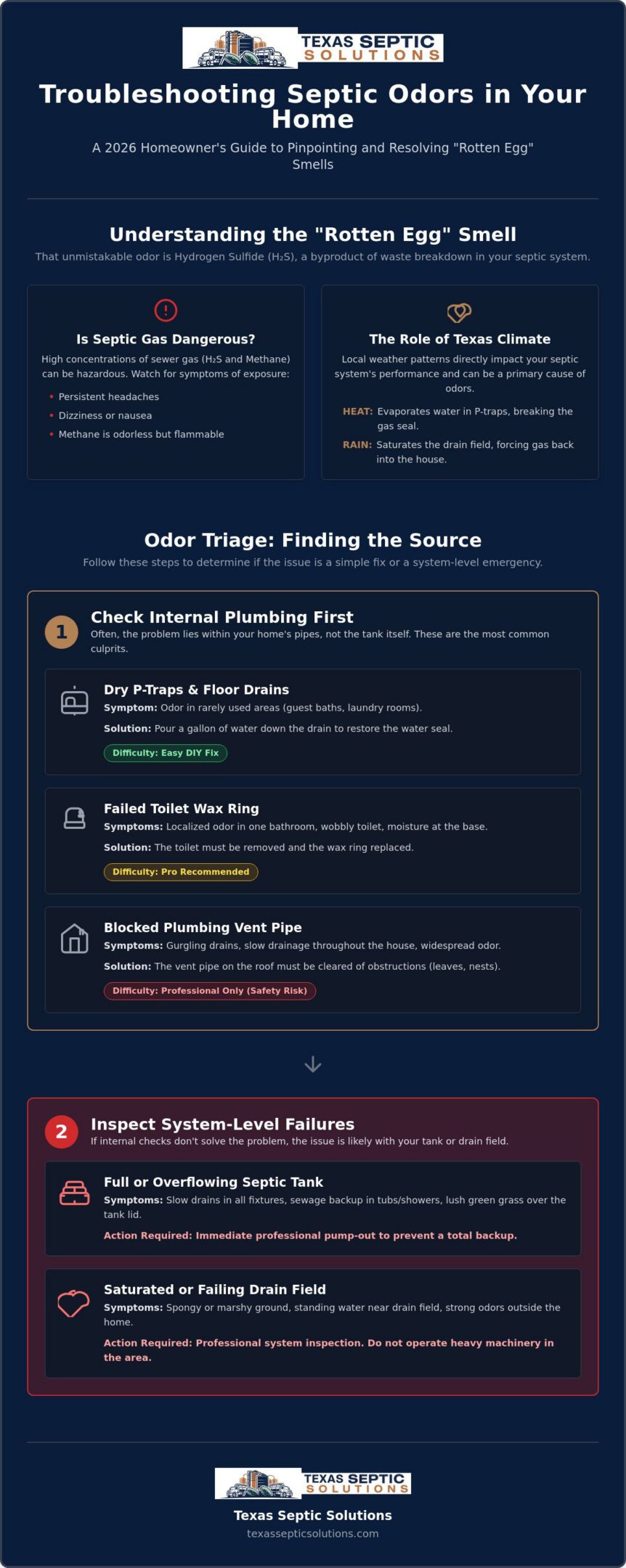
When you encounter a foul odor, you’re likely smelling sewer gas. This is a complex mixture of vapors, including hydrogen sulfide and methane, created as organic waste breaks down. Your home relies on a “plumbing barrier” to keep these gases where they belong. This barrier consists of P-traps, roof vents, and wax seals. If you’re currently investigating septic tank smell in house causes, it’s helpful to remember that the tank itself might be in great shape. Often, the issue lies within your home’s internal pipes. We recommend starting your search in guest bathrooms, laundry rooms, or mechanical closets where drains are used less frequently.
Dry P-Traps and Floor Drains
Every sink, shower, and floor drain in your home features a P-trap. This U-shaped pipe holds a small amount of water that acts as a physical seal against rising gases. In the intense Texas heat, water in unused drains can evaporate in just a few weeks. When that water vanishes, the airtight seal is broken. Finding the root of septic tank smell in house causes often starts with a simple walkthrough. If you have a guest suite or a basement floor drain that hasn’t seen water lately, pour a gallon of water down the drain to reset the seal. This simple DIY fix resolves a large percentage of indoor odor complaints.
Failed Toilet Wax Rings
Toilets are sealed to the floor flange using a thick wax ring. This ring creates an airtight and watertight connection between the porcelain fixture and the waste line. Over time, these rings can dry out, crack, or shift if the toilet becomes loose. If you notice a localized “rotten egg” smell in one specific bathroom, check the toilet for a slight wobble. You might also see a small amount of moisture or staining around the base. While this feels like a major system failure, it’s often a straightforward septic system repair that focuses on the fixture rather than the entire underground network.
Blocked or Improperly Terminated Vent Pipes
Your plumbing system needs to breathe to function correctly. Roof vents allow air to enter the pipes, which equalizes pressure and lets waste flow smoothly. In our region, we frequently see “wasp condos,” bird nests, or clusters of leaves blocking these vent openings. When air can’t move through the vent, the resulting vacuum can actually pull the water right out of your P-traps as you flush. Different common types of septic systems rely on these vents to maintain the delicate balance of pressure and gas flow. If you’re comfortable with a ladder, a quick visual check of your roof vents can often reveal the culprit. Understanding these internal septic tank smell in house causes can save you from the stress of an unnecessary emergency service call.
If these quick checks don’t clear the air, it’s a strong sign that the problem is located further down the line. You can always reach out to a local expert to perform a professional inspection of your home’s venting and drainage health.
System-Level Failures: When the Tank or Drain Field is the Source
If you have already inspected your P-traps and wax rings without success, the problem likely exists outside your home’s walls. Systemic odors that seem to haunt every room at once are rarely caused by a single sink or toilet. Instead, these smells often signal that your septic system is struggling to process waste. When the underground components fail, gases have nowhere to go but back through your drainage lines. You might also notice a septic tank alarm going off, which is a clear indicator that the liquid levels in your tank have exceeded safe limits. Differentiating between a minor plumbing glitch and a system-level crisis is essential for preventing a full sewage backup.
The Full Tank or Sludge Overload
A septic tank is designed to separate solids from liquids, but it has a finite capacity. Over time, heavy solids settle at the bottom to form a sludge layer. If this layer becomes too thick, it reduces the available space for wastewater and gases to settle. This displacement forces sewer gases upward and back into your home. Scheduling regular septic tank pumping is the most effective way to neutralize these odors. By removing the accumulated sludge, you restore the proper “air gap” at the top of the tank, allowing gases to exit through the intended vent stacks rather than your kitchen sink.
Drain Field Saturation and Clogs
Your drain field is responsible for filtering liquid waste back into the soil. However, if the soil becomes saturated or a “biomat” (a slimy layer of bacteria) grows too thick, the liquid cannot escape. This creates a bottleneck. In areas with heavy clay soil like Shepherd or Cleveland, a saturated field can cause air to “burp” back through your pipes when you run the dishwasher or laundry. If you see spongy, bright green grass over your drain field or hear gurgling sounds in your pipes, these are major septic tank smell in house causes that require a professional site evaluation.
Aerobic System Air Compressor Failure
Many modern Texas homes utilize aerobic treatment units. Unlike traditional systems, these rely on an air compressor to pump oxygen into the tank, which supports aerobic bacteria. These “good” bacteria are highly efficient and produce very little odor. If the compressor fails, the system quickly turns anaerobic. This shift allows smelly, sulfur-producing bacteria to take over the treatment process. If you notice a sudden “rotten egg” stench and your aerobic system’s air pump has stopped humming, you need to restore the oxygen supply immediately to stop the gas production and protect your local environment.
Triage and Troubleshooting: Finding the Source of the Odor
Don’t panic when you first notice a foul scent. While your mind might jump to images of flooded yards and massive repair bills, many septic tank smell in house causes are surprisingly simple to fix. To find the source without wasting time, you need a logical order of operations. Think of yourself as a detective looking for clues before the situation escalates into a plumbing emergency. By following a consistent triage process, you’ll determine if you can solve the problem with a gallon of water or if you need to pick up the phone for professional help.
Follow these five steps to isolate the issue:
- Step 1: Determine if the smell is localized to one room or systemic throughout the whole house.
- Step 2: Run water in every sink and shower for two minutes; flush every toilet at least once.
- Step 3: Walk your property. Inspect the area around the septic tank and the drain field for standing water or unusually lush, spongy grass.
- Step 4: Locate your septic control panel. Check for any active red warning lights or audible buzzers.
- Step 5: If the smell persists after you’ve refreshed all P-traps, it’s time to call an expert.
The “One Room” Test
Isolating the odor is the most effective way to identify the culprit. Close the door to the suspect bathroom or laundry room for an hour. When you return, perform a quick “sniff test.” If the odor is trapped in that single room, you’re likely dealing with an internal plumbing breach like a dry trap or a failed wax ring. Pay attention to where the scent is strongest. If it’s hovering near the floor, the toilet or a floor drain is the likely source. If it feels like it’s drifting down from the ceiling, you probably have a cracked or blocked vent pipe in the wall or attic. Localized smells are often DIY-friendly and don’t require a full system rescue.
When to Call for Emergency Septic Service
Some situations move beyond simple troubleshooting and require immediate intervention. We consider these the “Red Flags” of septic failure. If you notice multiple gurgling drains, sewage backing up into your lowest tubs, or a septic tank alarm going off, you’re facing a systemic crisis. Waiting even a few hours can lead to a full house backup and expensive remediation costs. We provide 24/7 emergency septic service for homeowners in Cleveland, Houston, and the surrounding areas to ensure your family stays safe from sewer gases. If your triage steps point to a full tank or a failed pump, you can contact our team for immediate assistance to restore your home’s air quality and functionality.
Professional Solutions: Restoring Air Quality and System Health
If your triage efforts didn’t clear the air, it’s time to bring in specialized diagnostic equipment. While a general plumber might check your indoor pipes, a septic specialist looks at the entire underground ecosystem. We use advanced tools to find hidden leaks, structural breaches, or deep blockages that are often the real septic tank smell in house causes. Resolving these issues quickly doesn’t just stop the stench; it prevents toxic gases from lingering in your living spaces and protects your property value. Our goal is to move you from a state of emergency to one of calm reliability.
Professional Pumping and Cleaning
A professional pump-out is the most direct way to eliminate odors at their source. During this process, we remove the thick layers of sludge and scum that generate hydrogen sulfide gas. We also take the time to clean the effluent filter, which is a step many homeowners overlook. A clogged filter restricts the flow of liquids and gases; this creates a pressure buildup that often pushes smells back into your home. Don’t rely on “DIY additives” or hardware store chemical treatments to fix the problem. These products don’t remove the physical buildup of solids and can sometimes disrupt the natural bacterial balance your system needs to function.
Repairing the “Invisible” Issues
Sometimes the smell comes from structural failures you can’t see from the surface. Cracked baffles or failing risers can allow gases to escape the tank and migrate toward your home’s foundation or crawlspace. If your drain field has developed “back-pressure” due to soil compaction or biomat growth, the gases have no choice but to travel back through the house lines. A professional inspection identifies exactly why the smell started in the first place. We look for these structural weaknesses and provide a permanent septic system repair rather than just masking the odor with temporary fixes.
Investing in a septic system maintenance plan is the most cost-effective way to keep your home fresh and your family safe. Regular inspections catch small leaks and sludge buildup before they turn into embarrassing odors or expensive failures. Our team is built to handle everything from routine upkeep to high-pressure emergency rescues in the Greater Houston area. By staying proactive, you ensure your system remains a silent, odorless part of your home’s infrastructure. If you’re tired of guessing about septic tank smell in house causes, let us provide the definitive solution and the peace of mind you deserve.
Protecting Your Home’s Air Quality and System Longevity
You shouldn’t have to live with the stress of foul odors or the fear of a looming sewage backup. Whether the culprit is a simple dry P-trap or a more complex aerobic compressor failure, taking immediate action prevents a minor nuisance from becoming a major property disaster. Remember to isolate the smell to a single room first; if the odor is systemic, check your septic alarm and yard for signs of saturation. By understanding the various septic tank smell in house causes, you can act with confidence and know exactly when it’s time to call in the experts.
As a locally owned and operated Texas business, we’re committed to keeping our neighbors’ homes safe and functional. We provide expert pumping services for Houston, Cleveland, and Cypress, alongside a 24/7 rapid response for emergency repairs. Don’t wait for a small leak to turn into an expensive cleanup. Get 24/7 Emergency Septic Help in Texas Now and restore your peace of mind today. Your home deserves a fresh start, and we’re here to make sure it gets one.
Frequently Asked Questions
Is it normal for a septic tank to smell inside the house?
No, it’s never normal to have a sewage odor inside your living space. A healthy system keeps all gases contained within the tank or safely vented through the roof. If you detect a scent, it means your plumbing barrier has been compromised. This is one of the most common septic tank smell in house causes we encounter. You should investigate the source immediately to prevent health risks or a full backup.
Why does my house smell like septic after it rains?
Heavy East Texas rains saturate the soil around your drain field, which stops the natural release of gases into the ground. When the field can’t breathe, the pressure builds up and forces air back through your home’s drainage lines. You might hear gurgling in the toilets or sinks during a storm. This “burping” effect is a clear sign that your system is struggling with drainage capacity during wet weather.
Can a full septic tank cause a smell in the house?
Yes, an overfilled tank is a major culprit. When the sludge layer occupies too much space, it eliminates the necessary air gap at the top of the tank. Without this gap, sewer gases are displaced and pushed back into your home’s plumbing. Regular pumping is the only way to restore this volume and stop the displacement of gas. It’s the most reliable way to prevent systemic odors from developing.
How do I get rid of the sewer smell in my bathroom?
Your first step should be running water in every fixture for about two minutes to refill any dry P-traps. If that doesn’t work, check the base of your toilet for a loose connection or a failed wax ring. These small gaps allow gases to seep into the room. If the odor is coming from the sink overflow or a floor drain, a thorough cleaning with a non-corrosive solution may help.
Will pouring bleach down the drain stop septic smells?
You should avoid using bleach to combat odors. While it might mask the scent temporarily, bleach kills the “good” bacteria that digest solids in your tank. Without these bacteria, your system will fill with sludge much faster, eventually leading to even worse smells and potential failure. Stick to water to reset traps and call a professional if the odor persists despite your DIY efforts.
What should I do if my septic alarm is going off and it smells?
Treat this as a high-priority emergency. An active alarm paired with a foul odor usually indicates that the liquid level in your tank is dangerously high. This could be due to a failed pump, a secondary float issue, or a total blockage in the outlet pipe. You should immediately minimize water usage and contact a 24/7 service provider to prevent sewage from backing up into your home.
How often should I pump my septic tank to avoid odors?
Most Texas households should schedule a pump-out every 3 to 5 years to maintain a healthy system. However, this depends on your tank size and the number of people in your home. Aerobic systems require more frequent inspections, usually three times per year as mandated by state law. Staying on a consistent schedule is the best way to avoid the most common septic tank smell in house causes.
Can a dry P-trap cause a septic smell in the laundry room?
Absolutely. Laundry room floor drains or washer standpipes are notorious for drying out because they aren’t used as frequently as kitchen sinks. In our humid climate, the water seal in the trap can evaporate, leaving an open path for gases to enter your home. Pouring a gallon of water down these drains once a month is a simple way to keep the barrier intact and the air clean.