
Septic System Care After Pumping: The 2026 Homeowner Checklist
Most homeowners think their septic worries are over the moment the pumper truck pulls out of the driveway, but the first thirty days after a pump-out actually determine the next five years of your system’s health. You have just invested in a professional service, and it is natural to want that peace of mind to last. It is common to feel a bit of “post-pump anxiety” when you see the tank water level looking high again just a few days later, or when you are bombarded with conflicting advice about expensive additives. We understand that you want to avoid the stress of a system failure and the high costs that come with unexpected repairs.
This guide will show you exactly how to handle septic system care after pumping to protect your investment and ensure your home stays functional. We will walk through the 2026 homeowner checklist, clarify the latest TCEQ regulatory updates for aerobic and anaerobic systems, and give you a clear schedule to keep your system healthy for the long haul. You will learn how to manage your water usage and maintenance habits to turn a simple pump-out into a total system reset.
Key Takeaways
- Understand why your tank appears “full” shortly after service and why this is actually a sign of a properly functioning system.
- Master the “Three Ps” rule and learn why your kitchen disposal might be the biggest threat to your newly cleaned tank.
- Protect your drain field, the most expensive part of your system, by managing surface water and gutter runoff effectively.
- Learn the critical steps for septic system care after pumping specifically for Texas aerobic units to stay compliant with 2026 standards.
- Build a “Septic Diary” to track service history and transition from reactive repairs to a proactive maintenance strategy.
Understanding Your System’s “New Normal” After Pumping
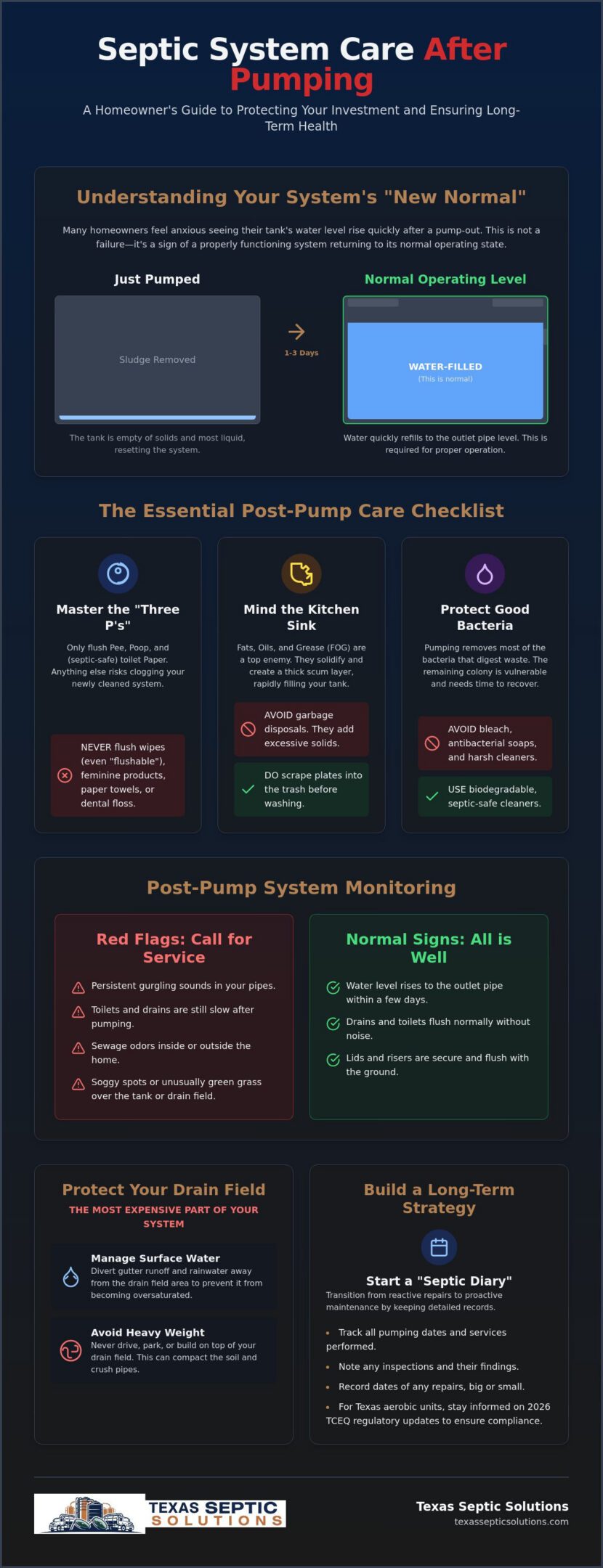
Once the pumper truck pulls out of your driveway, your septic system enters a critical reset period. Many homeowners assume the tank stays empty for weeks, but the reality of septic system care after pumping is that the tank begins filling the moment you go back inside and wash your hands. Within the first 48 hours, you will see a significant rise in water levels. This is not a sign of failure; it is the system returning to its functional state. Your primary job during this window is to perform a quick visual inspection of the service area. Check that the technician secured the lids and risers tightly. A loose lid is a major safety hazard and can allow surface water to flood your tank during the next East Texas rainstorm.
While the physical tank fills quickly, the biological side of the system takes longer to recover. A healthy Septic tank relies on a complex ecosystem of anaerobic bacteria to break down solids. Pumping removes the accumulated sludge, but it also removes the bulk of this bacterial colony. In the days following a pump-out, avoid using heavy amounts of bleach or harsh drain cleaners. These chemicals can kill off the few remaining “good” bacteria, stalling the digestion process before it even gets a chance to restart. Think of this phase as a recovery period where the system is getting back on its feet.
The most common phone call we receive after a service visit involves the “Full Tank Myth.” Homeowners often peek into their tank a few days after a pump-out and feel a sense of dread when they see water near the top. They worry the pumper didn’t do the job or that the system is already backed up again. In almost every case, what they are seeing is the normal operating level. Your tank is designed to hold a specific volume of liquid at all times to allow for proper separation of solids and liquids.
Why Water Levels Rise Quickly
Every gallon of water that goes down your drains stays in the tank until it reaches the exit point. If you run a few loads of laundry and have the family take showers, you can easily add 200 to 300 gallons of water to the system in a single afternoon. An operating level is the height of the outlet pipe where effluent exits to the drain field. Once the water reaches this height, any new water entering the tank pushes an equal amount of filtered liquid out to the soil. This balance is exactly how the system is supposed to work.
Post-Pump Red Flags to Watch For
While a full tank is normal, certain symptoms indicate that pumping didn’t solve the underlying issue. If you still hear gurgling in your pipes or notice that toilets are flushing slowly, you might be dealing with a blockage in the main line or a saturated drain field. Persistent sewage odors inside the home or soggy spots appearing over the tank area are also signs that something is wrong. If these issues persist despite a recent pump-out, you may need to call for emergency septic repair to identify mechanical failures or pipe collapses that a simple cleaning cannot fix.
The Essential Post-Pump Daily Care Checklist
Pumping your tank is like hitting the reset button on your home’s wastewater management. To keep that clean slate, you need a disciplined approach to what goes down your drains. Effective septic system care after pumping starts with the “Three Ps” rule: only pee, poop, and toilet paper should ever be flushed. Anything else, from feminine hygiene products to “flushable” wipes, creates a layer of trash that never breaks down. This material takes up valuable space in your newly emptied tank and can eventually clog the inlet or outlet baffles, leading to messy backups.
You should also be mindful of the chemicals you use. A professional pump-out removes the majority of the beneficial bacteria that digest solids. Using heavy amounts of bleach or antibacterial soaps during the first few weeks can kill off the remaining colony, preventing the tank from restarting its natural treatment process. Instead, choose septic-safe cleaners that are biodegradable and phosphate-free. This allows the biological ecosystem to rebuild itself without interference from harsh toxins.
Kitchen and Sink Habits
Fats, oils, and grease (FOG) are the top enemies of a clean tank. When FOG goes down the kitchen sink, it cools and solidifies into a thick scum layer that floats at the top of your tank. This layer can quickly fill up the space meant for liquid effluent. We recommend scraping all plates into the trash and using paper towels to wipe out greasy pans before washing them. Additionally, try to avoid using your garbage disposal entirely. These units send finely ground food scraps into the tank, which are much harder for bacteria to digest than human waste. This organic load can cause your tank to fill up much faster than the typical 3 to 5 year pumping cycle.
Bathroom and Laundry Rules
One of the most common causes of system failure is “hydraulic overload.” This happens when too much water enters the system at once, pushing solids out into the drain field before they have time to settle. To prevent this, spread out your laundry loads throughout the week instead of doing five loads on a Saturday. You can find more detailed advice on water efficiency in the EPA’s guide on How to Care for Your Septic System. Also, keep an eye out for leaky toilets. A single leaking flapper can send hundreds of gallons of water into your tank every day, effectively “drowning” the system. If you want to stay ahead of these silent issues, investing in a proactive septic system maintenance plan is the best way to ensure your hardware is always in top shape.
Protecting Your Drain Field: The Post-Pump Priority
Many homeowners think the tank is the star of the show, but the drain field is actually the most expensive part of your system to replace. If your tank is the heart, the drain field is the lungs, filtering effluent through the soil before it returns to the groundwater. Effective septic system care after pumping must prioritize this area. A tank pump-out removes solids, but it cannot fix a drain field that has been crushed by heavy weight or drowned by poor drainage. Protecting this area is the best way to avoid a five-figure replacement bill down the road.
Maintaining the soil’s ability to breathe and absorb liquid is vital for long-term functionality. You can find helpful general tips on Caring for Your Septic System to help visualize how these components interact. In our region, local factors like soil type and rainfall patterns play a massive role in how you should manage your yard. If you notice “spongy” grass or pooling water even when it hasn’t rained, your drain field might be struggling to process liquid despite the tank being empty.
Surface Management in East Texas
East Texas is famous for its sudden, heavy downpours. In areas like Cleveland and Cypress, the high clay content in the soil makes drainage a significant challenge. When the ground is already saturated from a Houston storm, your drain field cannot accept any more liquid. Ensure your gutters and downspouts point far away from the septic area. Never park vehicles, trailers, or heavy equipment over the lines. This weight compacts the clay soil, crushing pipes and sealing off the tiny air pockets needed for effective wastewater treatment.
Safe Vegetation for Septic Areas
The best cover for a drain field is a simple, healthy lawn. Grass roots are shallow and help remove excess moisture without interfering with the underground pipes. Avoid planting trees like willows or oaks nearby. These species have aggressive, water-seeking roots that can travel dozens of feet to find the nutrient-rich water inside your septic lines. If roots invade your pipes, they create blockages that lead to backups, regardless of how recently you pumped the tank. Keep a clear zone of at least ten to fifteen feet between large trees and your system’s footprint to maintain a healthy barrier.
Specialized Care for Texas Aerobic and Anaerobic Systems
Aerobic Treatment Units (ATUs) are the standard for many new homes in the Houston and Cleveland areas because they handle our heavy clay soil better than traditional systems. However, septic system care after pumping for an aerobic unit involves more than just watching the water level. These systems are mechanical, meaning they rely on a constant supply of electricity and oxygen to function. After a pump-out, ensure your air compressor is humming quietly and vibrating slightly. If the compressor isn’t working, the “good” aerobic bacteria will die off within hours, leading to foul odors and untreated effluent being sprayed onto your lawn.
Don’t forget the disinfection side of your ATU. Most aerobic systems use chlorine tablets or liquid bleach to kill pathogens before the water is discharged through the spray heads. A pump-out is the perfect time to check your chlorinator and refill it. Without chlorine, you are essentially spraying raw sewage into your yard, which is a significant health risk for your family and pets. Effective septic system care after pumping requires keeping this disinfection system fully operational at all times.
Aerobic System Maintenance Tips
Keep a close eye on your spray heads after the pumper leaves and after every time you mow your grass. It is easy for a lawnmower to clip a head or for dirt to clog the nozzles during the pumping process. If you notice that your septic tank alarm is going off, don’t ignore it. This often indicates a high-water situation or a failure in the aeration process. Most ATUs have a “trash tank” that catches solids before they enter the “aerobic chamber.” Ensure your pumper cleaned both sections to give the mechanical components the best chance to operate efficiently.
The Bacteria Debate
Many homeowners feel pressured to buy “bacteria in a box” or expensive additives immediately following a service visit. In most cases, these are unnecessary. A healthy human diet naturally provides the exact strains of bacteria your system needs to restart. In fact, some chemical additives can actually be harmful, causing solids to stay suspended in the water rather than settling at the bottom. This allows gunk to flow into your aerobic chamber or spray lines, causing expensive clogs. If you want to boost your system’s biological health, focus on reducing your use of harsh cleaners and antibacterials instead of buying supplements.
Building a Long-Term Maintenance Strategy in East Texas
Pumping your tank is a major milestone, but it is not the finish line for your home’s wastewater health. True septic system care after pumping involves shifting from a reactive mindset to a proactive strategy. Most homeowners only think about their septic system when a drain slows down or a smell appears, but by then, the damage is often done. Establishing a consistent routine ensures you never have to deal with the stress and high costs of a total system failure.
Start a “Septic Diary” today to track your system’s history. This does not need to be complicated; a simple folder or digital note will work. After every service, record the date, the name of the technician, and the volume of waste removed. Ask your pumper about the condition of the inlet and outlet baffles and the thickness of the scum layer. These notes become invaluable when you are trying to troubleshoot a future issue or when you eventually decide to sell your home. Providing a documented history of care adds significant value and trust for potential buyers.
Investing in a formal septic system maintenance plan is consistently more affordable than a single emergency weekend call out. These plans move the responsibility of remembering service dates from your shoulders to a professional partner. Regular checkups allow experts to catch small mechanical issues, like a failing float switch or a cracked lid, before they escalate into a full blown backup. In the humid, rain heavy environment of East Texas, this level of oversight is the best insurance policy for your property.
Determining Your Pumping Schedule
Your ideal pumping frequency depends on the size of your tank and the number of people living in your home. While many sources suggest a flat five year rule, real world usage in Texas often requires a tighter timeline. A family of four in a 1,000-gallon tank typically needs pumping every 2.5 to 3 years. If you use a garbage disposal frequently or have a water softener that regenerates often, you may need to pump even sooner. These devices increase the solids and hydraulic load on the tank, causing the sludge layer to build up much faster than normal.
The Peace of Mind Partnership
Working with a local septic system maintenance Texas expert provides a layer of protection that a standard pumper might miss. A dedicated maintenance provider looks beyond just emptying the tank; they evaluate the structural integrity of the concrete, the health of the drain field, and the performance of any mechanical pumps. This comprehensive approach is what keeps your home functional through every season. If you are ready to stop worrying about your utility health, contact Texas Septic Solutions for a professional system health check today. We are here to ensure your system stays healthy, compliant, and efficient for years to come.
Securing Your Home’s Long-Term Functionality
You’ve taken the essential first step by pumping your tank, but the real work of septic system care after pumping begins with your daily habits. By protecting your drain field from heavy weight and managing your water usage to avoid hydraulic overload, you ensure that your system’s most expensive components stay healthy for years. Whether you are managing an aerobic unit or a traditional system, staying disciplined with what goes down your drains is the best way to prevent the stress of a sudden backup.
Our expert technicians are deeply familiar with East Texas soil conditions and the unique challenges our climate presents. We offer comprehensive maintenance plans designed to catch small issues before they turn into costly replacements. If you ever face an unexpected failure, we provide 24/7 emergency response for Houston and the surrounding areas to get your home back in order quickly. Schedule your next routine maintenance check with Texas Septic Solutions to keep your system running smoothly. You’ve invested in your home’s infrastructure; now let’s work together to protect it.
Frequently Asked Questions
Why is my septic tank full of water only a week after pumping?
Your septic tank is designed to operate at a specific “normal” level, which is determined by the height of the outlet pipe. Once the tank fills to this pipe, effluent begins flowing into the drain field for treatment. It’s completely normal for a tank to look full within a few days because your daily showers, laundry, and sink use quickly replenish the liquid volume to that operating height.
Do I need to add bacteria or yeast to my septic tank after it is pumped?
You don’t need to add commercial bacteria or yeast to your system after a service visit. The natural waste from your household provides all the microorganisms necessary to restart the biological breakdown process. In fact, some additives can keep solids suspended in the water instead of letting them settle. This can lead to clogs in your drain field or aerobic spray heads, causing more harm than good.
Can I use my washing machine immediately after the septic tank is pumped?
Yes, you can use your washing machine as soon as the pumper leaves your property. However, it’s best to avoid doing several loads in a single day right after a reset. Large volumes of water entering an empty tank can stir up the new sludge layer or put unnecessary pressure on the system. Spreading out your laundry is a key part of septic system care after pumping to prevent hydraulic overload.
How long should I wait to shower after a septic pumping?
There is no required wait time to shower after your tank has been pumped. Your system is ready to receive wastewater immediately. Just keep in mind that the tank will fill back up to its operating level over the next few days. As long as the technician has finished the service and secured the lids, you can return to your normal routine without any delay or worry.
What are the signs that my septic pumper missed something?
If you notice slow drains, gurgling pipes, or persistent odors immediately after a service, the pumper might have missed a blockage or failed to clean both compartments of the tank. A thorough pumping should remove all liquid and sludge. If you peek inside and see thick layers of solid waste still present, the job was not completed properly. This leaves your system at risk for a backup.
Is it normal to smell sewage outside the house right after pumping?
It’s normal to notice a faint sewage smell outside for a few hours after the tank has been opened and pumped. The process releases gases that have been trapped underground. However, if the smell persists for more than twenty-four hours or if you notice it inside your home, it could indicate a loose lid or a broken vent pipe. These issues need professional attention to ensure your safety.
How often should I have my septic filters cleaned after a pump-out?
You should generally have your effluent filters cleaned every six to twelve months. This task is independent of your pumping schedule. These filters prevent small solids from entering and clogging your drain field. While septic system care after pumping focuses on the tank’s volume, keeping the filters clear is a separate maintenance task that ensures the liquid can exit the system smoothly and safely without causing a backup.
What should I do if my septic alarm goes off a few days after pumping?
If your alarm sounds shortly after a pump-out, check your breaker box first to ensure the pump has power. An alarm usually indicates a high water level, which might mean the pump isn’t moving effluent to the drain field or spray heads. This could be a float switch issue or a mechanical pump failure. You should limit your water use immediately and call for a professional inspection to prevent an overflow.