
Signs Your Septic Tank is Full: The 2026 Texas Homeowner’s Checklist
Did you know that a healthy septic tank is actually designed to stay nearly full of liquid at all times? The real danger isn’t the water level itself; it’s the accumulation of solid sludge that eventually chokes your pipes. If you’ve started noticing slow drains or a persistent, swampy odor in your yard, you’re likely worried about a total system failure during the next big Texas rainstorm. These frustrations are common in our region, where heavy clay soil often complicates drainage and puts extra pressure on your equipment.
We understand how stressful these utility issues can be for your family. This guide will help you identify the most common signs your septic tank is full and explain how to distinguish between normal operation and a looming backup. We’ll provide a clear 2026 checklist tailored specifically for East Texas homeowners. By the end of this article, you’ll know exactly whether you need a routine pump or a professional repair. Our goal is to give you the confidence to make the right call before a small warning becomes a major headache for your property.
Key Takeaways
- Understand why your tank is designed to stay filled with liquid and how to recognize when solid waste has actually reached its capacity.
- Identify the critical signs your septic tank is full, including persistent gurgling sounds and drains that no longer respond to a plunger.
- Learn how East Texas clay soil and heavy rainfall can impact your system’s performance and mimic the symptoms of a backup.
- Use our troubleshooting steps to decide if your property requires a routine pumping appointment or an urgent professional repair.
- Gain peace of mind by learning how a structured maintenance plan protects your home from unexpected failures and costly environmental issues.
Understanding Your System: Is Your Septic Tank Actually ‘Full’?
Many East Texas homeowners feel a surge of panic when they pull the lid off their tank and see water standing near the top. It’s a common misconception that a septic tank should be mostly empty. In reality, a healthy septic tank is designed to stay filled with liquid at all times to operate correctly. This is a displacement system. Every time you flush a toilet or run the dishwasher, a fresh gallon of wastewater enters the tank, and an equal gallon of treated effluent exits through the outlet pipe toward your drain field.
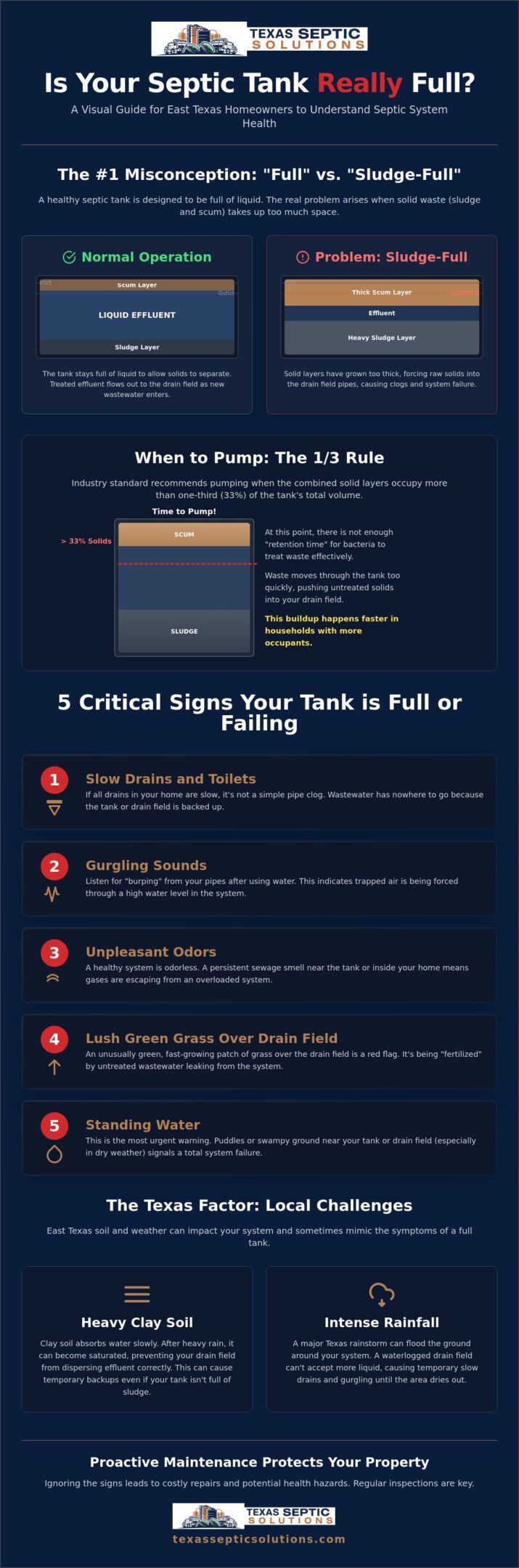
The real issue isn’t the water level; it’s the volume of solid waste. We categorize this as being “sludge-full.” Inside your tank, three distinct layers form. The top layer, or “scum,” consists of fats, oils, and greases that float. The middle layer is relatively clear effluent. The bottom layer is the “sludge,” which is the heavier solid waste that bacteria haven’t broken down yet. Monitoring the thickness of these solid layers is the most accurate way to identify the signs your septic tank is full before a messy emergency occurs.
If you ignore these layers and allow them to grow too thick, the “clear” zone in the middle disappears. This forces raw solids out of the tank and into your delicate drain field pipes. Once those pipes clog with sludge, you’re no longer looking at a simple maintenance visit. You’re facing a significant septic system repair or even a total system replacement.
Normal Operation vs. System Failure
In a properly functioning system, an effluent filter and an outlet baffle act as guards. They ensure that only the liquid from the middle layer escapes into the soil. A tank that is “full” of liquid is perfectly normal. However, a system failure happens when the liquid level rises above the outlet pipe. This indicates a blockage downstream, often caused by saturated Texas clay or a clogged filter. You aren’t just looking for water; you’re looking for where that water is sitting in relation to your inlet and outlet pipes.
When ‘Full’ Becomes a Problem
We follow the industry standard 25-33% rule. When the combined thickness of the scum and sludge layers occupies more than one-third of the tank’s total volume, it’s time to pump. At this stage, there isn’t enough “retention time” for anaerobic bacteria to do their job. The waste moves through the tank too quickly to be treated. This buildup happens faster depending on your home occupancy. A family of five will reach a “sludge-full” state much quicker than a couple, making regular inspections vital for larger households in our community.
5 Critical Signs Your Septic Tank is Full or Failing
When your system reaches its capacity for solids, it doesn’t just stop working silently. It starts sending clear distress signals throughout your home and yard. Recognizing the signs your septic tank is full early can be the difference between a simple maintenance pump and an expensive property cleanup. Look for these five red flags:
- Slow Drains and Toilets: If every sink in the house is draining slowly, or the toilet requires multiple flushes, the problem isn’t a simple clog. It means the wastewater has nowhere to go because the tank is backed up.
- Gurgling Sounds: Listen for a “burping” or gurgling noise coming from your pipes after you run the washing machine or take a shower. This sound indicates that air bubbles are struggling to move past a high water level in the tank.
- Unpleasant Odors: A healthy system shouldn’t smell. If you notice a persistent scent of raw sewage near the tank or inside your home, the gases are likely escaping because the system is overloaded.
- Lush Green Grass: While a beautiful lawn is usually a plus, a patch of grass over the drain field that is significantly greener and faster-growing than the rest of the yard is a warning. It suggests your lawn is “drinking” untreated wastewater that is leaking out.
- Standing Water: This is the most urgent warning. Finding puddles or muddy patches around your septic tank or drain field during dry weather means the system has reached a total breaking point.
If you notice these common signs of a failing septic system, it’s time to act. Ignoring these symptoms often leads to sewage backing up into your bathtubs and sinks, which is a health hazard and a major stressor for any family.
Identifying the ‘Septic Smell’
Differentiating between a minor plumbing issue and a septic failure is key. A dry P-trap in a guest bathroom can cause a faint smell, but a true septic odor is unmistakable. It often smells like sulfur or rotten eggs. In East Texas, these odors frequently worsen during humid evenings when the heavy air traps gases closer to the ground. If the smell persists inside the home even after running water through all your drains, your tank is likely struggling to vent properly due to high sludge levels.
The Drain Field Warning Signs
Your drain field is the final stage of wastewater treatment. When a tank is “sludge-full,” it starts pushing solid waste into the absorption area. This creates “spongy” ground that feels like walking on a wet mattress. Even during a dry Houston summer, this area should remain firm. If you find that your septic tank alarm is going off while you see these yard issues, you should stop all water usage immediately. You can always reach out to a local professional to diagnose whether the issue is a simple pump failure or a full tank blockage.
The Texas Factor: Soil, Rain, and Your Septic System
Living in East Texas means dealing with environmental factors that don’t exist in other parts of the country. For homeowners in areas like Houston and Cypress, the weather and the ground itself play a massive role in how your system performs. Heavy rainfall can often trick you into thinking you have a major failure. When the skies open up, the ground becomes saturated, leaving nowhere for your tank’s effluent to go. This temporary backup mimics many of the common signs your septic tank is full, even if you just had it pumped recently.
The biggest challenge for our neighbors is the infamous ‘Gumbo Soil.’ This thick East Texas clay has incredibly low permeability. Unlike sandy soil that allows water to pass through quickly, clay holds onto moisture and expands. This slows down the absorption of effluent from your drain field. If your system wasn’t designed specifically for this soil type, you’ll likely experience slow drains every time the water table rises. Understanding this local variable is essential for diagnosing whether you need a pump-out or if your drain field is simply overwhelmed by the environment.
Managing Your System During Rain Events
When a heavy Texas thunderstorm hits, your septic system is already under pressure from the outside in. We recommend limiting your indoor water usage during these events. Avoid running the dishwasher or doing multiple loads of laundry until the rain stops and the ground has had a chance to dry. You should also inspect the grading around your tank. If surface runoff is pooling over your system, it can flood the tank through the lids. Proper landscaping that diverts water away from the septic area is one of the best ways to prevent a weather-related backup.
Soil Compaction and Local Drainage
As we move through 2026, we’re seeing shifts in local water tables that impact property owners in Huffman and Shepherd. Increased development and changing weather patterns mean soil compaction is becoming a more frequent issue. If your system was installed decades ago, it might not be equipped to handle the current drainage needs of your land. Local expertise is required to tell the difference between a system that needs a routine pump and one that is struggling with soil saturation. We often find that a professional diagnostic is the only way to be sure you aren’t spending money on a pump-out when the real issue is your property’s drainage capacity.
Troubleshooting Checklist: Pumping vs. Repair
When you start noticing the signs your septic tank is full, your first instinct might be to call for an emergency pump-out. While pumping is often the solution, a systematic approach can help you determine if the issue is a simple maintenance task or a mechanical failure. Use this four-step checklist to evaluate your system’s health before the situation escalates into a total backup.
- Step 1: Check for Localized Clogs. Determine if the drainage issue is happening at every fixture or just one. If only the kitchen sink is slow, you likely have a pipe clog. If every toilet and drain in the home is struggling, the blockage is downstream in the tank or the main line.
- Step 2: Inspect the Main Cleanout. Locate the white PVC pipe between your house and the tank. Carefully remove the cap. If you see standing water inside this pipe, it confirms the blockage is either in the line leading to the tank or the tank itself is “sludge-full” and cannot accept more waste.
- Step 3: Evaluate the Drain Field. Walk your yard and look for surfacing effluent. If the ground is muddy or smells like sewage, your tank has likely pushed solids into the absorption area. This prevents the liquid from filtering into the soil.
- Step 4: Review Your Service History. Compare your last pumping date against septic system maintenance Texas standards. For a typical household, the TCEQ and EPA recommend pumping every 3 to 5 years. If you’re past this window, a pump-out is your most likely solution.
Is it a Backup or a Mechanical Failure?
Sometimes, the signs your septic tank is full are actually symptoms of a failed component. In aerobic systems, a broken aerator or a failed submersible pump will cause water levels to rise even if the sludge levels are low. Check your septic control panel for any red lights or alarms. You can also check your septic breaker in the main electrical panel. If it has tripped, try resetting it once. If it trips again immediately, stop using water and call a professional. Never attempt to handle internal wiring yourself, as the combination of water and electricity is extremely dangerous.
The Cost of Waiting: Pumping vs. Replacement
Delaying a routine pump-out is a gamble that rarely pays off. A standard maintenance visit is a small fraction of the total septic system replacement cost, which can reach $20,000 or more for complex aerobic setups in 2026. When solids escape the tank and enter the drain field, they create a biological film that permanently seals the soil. This leads to system “death,” where the only solution is a complete and costly rebuild. Taking immediate action when you notice the first warning signs saves your property and your budget. If you are unsure of your system’s current status, you should schedule a professional diagnostic inspection to avoid unnecessary damage.
Professional Solutions: Keeping Your Texas Septic System Healthy
Identifying the signs your septic tank is full is the first step toward protecting your property, but professional intervention is what ensures long-term functionality. We believe that proactive care is always more affordable than reactive repairs. By the time sewage is surfacing in your yard, the system is already in a state of crisis. Implementing a structured septic system maintenance plan allows us to monitor your sludge levels and mechanical components before they reach a breaking point.
A standard pumping appointment with our team is a thorough process. We don’t just pump out the waste and leave. Our technicians perform a multi-point inspection to ensure your baffles are intact, your effluent filter is clean, and your tank walls are structurally sound. This comprehensive approach prevents environmental contamination and extends the life of your drain field. We take pride in serving our neighbors in Cleveland, Houston, Cypress, Huffman, and Shepherd with dependable, straightforward service that keeps your home running smoothly.
We also understand that emergencies don’t follow a schedule. If you’ve missed the early warning signs your septic tank is full and are now facing a total backup, our 24/7 emergency response team is ready to help. We prioritize critical failures to minimize property damage and restore your utility services as quickly as possible.
The Texas Septic Solutions Difference
Our team brings deep local expertise in East Texas environmental regulations and TCEQ standards. We know that a system in Cypress faces different challenges than one in a drier climate. We emphasize professional diagnostics because we want to solve the root cause of your issue, not just treat the symptom. You can expect transparent communication and a “neighborly expert” vibe from every member of our crew. We treat your property with the same care we’d give our own homes.
Next Steps for Your Home
Don’t wait for a Texas rainstorm to test the limits of your system. Scheduling a routine inspection today can save you from a major headache tomorrow. Joining our maintenance program provides peace of mind, as we handle the scheduling and reminders for your TCEQ-required inspections and routine pump-outs. Whether you need a quick diagnostic check or an urgent pump-out, we are built to handle both the mundane tasks and the high-pressure failures.
Contact Texas Septic Solutions for 24/7 Emergency Service or Routine Pumping to ensure your system remains healthy and compliant throughout 2026.
Take Control of Your Home’s Functionality
Managing a septic system in East Texas doesn’t have to be a source of constant worry. By recognizing the early signs your septic tank is full, you can address minor maintenance needs before they turn into expensive property damage. Remember that while your tank is designed to hold liquid, the buildup of sludge is what ultimately threatens your drain field and home plumbing. Whether you’re dealing with the challenges of local clay soil or recovering from a heavy Houston rainstorm, having a reliable partner makes all the difference.
We are proud to serve the Cleveland, Houston, and Cypress communities with expert diagnostics and a commitment to preventing system failures. Our team is ready to help you transition from stressful troubleshooting to a predictable maintenance schedule that protects your investment for years to come. We offer 24/7 emergency service for critical backups and routine care for long-term health.
Schedule Your Septic Pumping or Emergency Repair with Texas Septic Solutions. We are here to keep your property safe and your system running smoothly.
Frequently Asked Questions
How often should I have my septic tank pumped in Texas?
You should have your septic tank pumped every 3 to 5 years according to guidelines from the TCEQ and EPA. Larger families or homes equipped with garbage disposals often require service every 2 to 3 years to manage the faster accumulation of solids. Regular maintenance prevents the sludge layer from growing deep enough to clog your outlet pipe or damage the drain field.
Can I tell if my septic tank is full without opening it?
Yes, you can identify signs your septic tank is full by monitoring how your home handles wastewater. Common indicators include slow-draining sinks, multiple toilets that struggle to flush, and persistent sewage odors in the yard. If your drains remain sluggish after you’ve cleared localized clogs, the tank has likely reached its capacity for solid waste and needs a professional pump-out.
Why does my septic system smell worse when it rains?
Heavy rain saturates the soil and changes the atmospheric pressure, which can trap septic gases near the ground instead of letting them vent properly. In East Texas, our thick clay soil holds moisture longer, which sometimes forces odors back through the house drains or around the tank lids. While a faint smell during a storm is common, a strong, persistent odor usually means the tank is overloaded.
What happens if I never pump my septic tank?
Ignoring your pumping schedule eventually leads to a total and costly system failure. As the sludge layer thickens, it leaves less room for liquid treatment, eventually forcing raw solids into the delicate pipes of your drain field. This creates a permanent clog in the soil that can’t be fixed with pumping, often requiring a complete system replacement that costs significantly more than routine maintenance.
Will a full septic tank cause my toilets to gurgle?
Gurgling sounds are one of the most reliable signs your septic tank is full or facing a serious blockage. This “burping” noise happens when air bubbles are forced back through the plumbing because wastewater is struggling to enter an already crowded tank. If you hear this sound after running the shower or washing machine, it’s a clear signal that your system’s capacity is being tested.
Is standing water over the septic tank always an emergency?
Standing water is a major red flag that requires a professional diagnostic as soon as possible. While it might occasionally be caused by poor yard drainage after a Houston downpour, it frequently indicates that the tank is overflowing or the drain field has stopped absorbing effluent. You should minimize all water usage immediately to prevent sewage from backing up into your home while waiting for an inspection.
Can a full septic tank cause a backup into my shower?
Yes, sewage backups usually manifest first in the lowest points of your home, such as walk-in showers or basement floor drains. Because these drains sit at a lower elevation, they are the first to overflow when the septic tank is too full to accept new wastewater. If you see water rising in your shower while running a sink, you are facing a critical system failure that needs emergency service.
How long does a professional septic pumping take?
A typical residential pumping appointment lasts between 45 and 90 minutes. This window allows our technicians to locate the tank, remove the lids, and thoroughly pump out the accumulated sludge and scum layers. The process also includes a visual inspection of the tank’s structural integrity and baffles. If your lids are buried deep underground or the tank is exceptionally large, the service may take a bit longer to complete correctly.