
Septic Line Clog Removal in Houston: Professional Solutions for 2026
Imagine waking up on a humid Houston morning only to find raw sewage creeping back into your bathtub. It’s a homeowner’s worst nightmare, and for many in Harris County, it’s a reality caused by our notorious expansive clay soil shifting underfoot. When your drains stop moving, the panic sets in. You’re likely staring at a slow sink and wondering if you’re facing a simple blockage or a catastrophic leach field failure that will cost a fortune. It’s a stressful, messy situation that requires an immediate, expert answer. This guide provides the clarity you need for septic line clog removal Houston homeowners can rely on, specifically tailored to our unique environmental conditions.
We understand that you want your home back to normal without any hidden surprises or recurring issues. In the following sections, we’ll show you how to accurately identify the source of a backup and explain the most effective 2026 clearing methods, from professional snaking to high-pressure hydro jetting. You’ll also learn proactive maintenance strategies to prevent future emergencies and keep your system running smoothly despite the challenges of the Texas Gulf Coast.
Key Takeaways
- Learn to spot the difference between a minor pipe blockage and a full system failure by identifying signs like simultaneous slow drains and gurgling toilets.
- Discover why high pressure hydro jetting is the most effective method for septic line clog removal Houston residents can use to clear stubborn sludge and grease.
- Understand how Houston’s unique expansive clay soil and local weather cycles cause pipes to sag or shift, leading to chronic blockages.
- Find out how simple maintenance steps, such as cleaning your effluent filter and scheduling regular pumping, can prevent expensive emergency repairs.
- Get insights into 24/7 emergency solutions that provide fast relief when raw sewage begins backing up into your home.
Understanding Septic Line Clogs in the Houston Area
When your home’s plumbing slows to a crawl, the culprit is often found in the hidden network of pipes buried beneath your lawn. A septic line clog is a physical blockage in the pipe connecting your home to the tank or the tank to the drain field. In our region, these issues are frequently complicated by environmental factors that a standard plumber might overlook. A septic main line clog is the primary obstruction preventing effluent flow into the treatment tank. Understanding the mechanics of this blockage is the first step toward effective septic line clog removal Houston homeowners need to restore their property’s functionality.
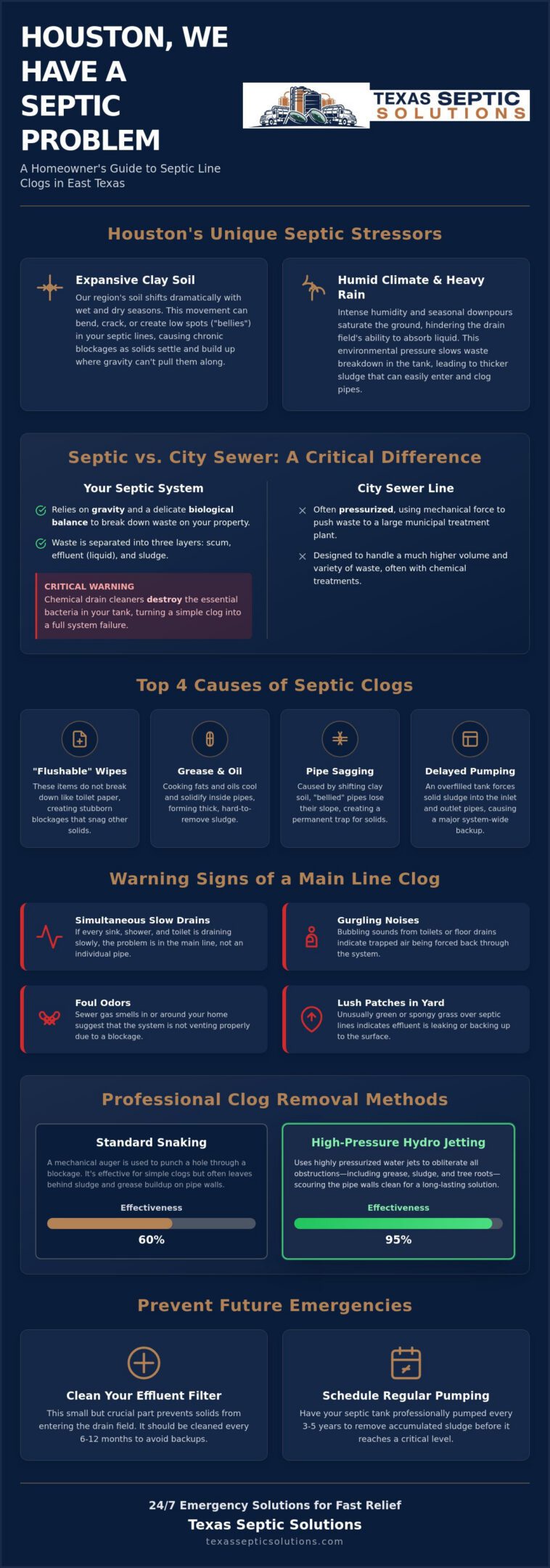
Houston’s humid subtropical climate plays a surprising role in how your system handles waste. While warm temperatures can support the bacteria inside your tank, our intense humidity and heavy seasonal rainfall can saturate the soil surrounding your system. This environmental pressure can slow down the natural breakdown of organic matter, leading to thicker sludge layers that eventually migrate into the main lines. When these lines become obstructed, the entire biological balance of your property is at risk.
Septic Line vs. City Sewer: Why the Difference Matters
If you have lived in a city-serviced home before moving to a septic-based property in East Texas, you might assume all clogs are the same. They aren’t. City sewer lines are often pressurized and lead to a municipal treatment plant. In contrast, septic systems rely on gravity and a delicate biological balance. You can learn more about how septic tanks work to understand how waste is separated into layers of scum, liquid, and sludge.
A critical component in this process is the inlet baffle. This pipe fitting directs waste downward into the tank, preventing it from clogging the entry point. If the baffle is damaged or blocked, waste will back up into the house immediately. We often see homeowners try to fix this with harsh chemical cleaners. Don’t do it. These chemicals kill the beneficial bacteria required for waste digestion, turning a simple pipe blockage into a total system failure that requires professional intervention.
Common Causes of Blockages in East Texas Homes
Most clogs we encounter in the Houston area result from a combination of household habits and local geology. “Flushable” wipes and excessive cooking grease are the most frequent offenders. These items don’t break down; instead, they snag on pipe joints and create a dam that catches everything else. This problem is compounded if you have delayed your regular septic tank pumping. When the tank is too full, sludge has nowhere to go but back into the inlet line or out into the drain field.
Finally, we cannot ignore the impact of Houston’s expansive clay soil. In areas like Cypress and Huffman, the ground shifts significantly between dry and wet seasons. This movement can cause septic lines to “belly” or sag. Once a pipe loses its proper slope, solids settle in the low spot, creating a recurring clog that no amount of chemicals can clear. In these cases, professional septic line clog removal Houston experts provide is the only way to identify if the issue is a simple blockage or a structural pipe failure.
Signs You Need Professional Septic Line Clog Removal
Identifying a backup early can save you thousands in remediation costs and property damage. In our region, the signs of a failing line are often subtle before they become catastrophic. If you’re noticing sluggish performance across your home, it’s time to consider professional septic line clog removal Houston services before the situation escalates. Waiting until sewage is on your floor is a mistake that’s easily avoided by watching for these key indicators:
- Simultaneous slow drains: If every sink and tub in the house is draining slowly, the problem isn’t a single pipe; it’s the main line.
- Gurgling noises: Listen for bubbling sounds coming from your toilets or floor drains when the dishwasher or laundry is running.
- Foul odors: Unpleasant sewage smells near the tank or in specific areas of your yard often point to a vent or line blockage.
- Lush green patches: Grass that is suddenly greener or spongier over the path of your septic line usually indicates a leak or a backup forcing effluent to the surface.
The ‘Multiple Drain’ Rule for Houston Homeowners
A single clogged kitchen sink is usually a plumbing issue that a local handyman can handle. However, when two or more drains fail at once, you’re dealing with a system-wide septic issue. We always recommend checking the lowest drain in your home first, which is typically a basement floor drain or a guest shower. Because septic systems rely on gravity, the lowest point will always show signs of a backup first. You can also check your external cleanout pipe; if you see standing water inside it, the clog is definitely between the house and the tank. Adhering to EPA septic system maintenance guidelines can help prevent these scenarios, but Houston’s shifting soil can sometimes cause issues despite your best efforts.
Emergency Indicators: When to Call Texas Septic Solutions
Some situations demand immediate attention to protect your family’s health. If raw sewage is backing up into your showers or if you see effluent pooling on top of your lawn, you have a critical failure. Unlike standard plumbing companies that only look at the pipes, we investigate the whole system. This includes checking for a septic tank alarm going off, which often signals that the pump or high-water float is struggling due to a downstream blockage. These red flags are often the precursor to a more extensive septic system repair. Don’t wait for the problem to resolve itself. If your yard or drains are showing these symptoms, it’s best to have a local expert from Texas Septic Solutions perform an inspection before the next heavy rain makes the situation worse. Getting expert septic line clog removal Houston homeowners trust is the fastest way to restore your peace of mind.
Professional Methods for Septic Line Clog Removal
Once we’ve identified the indicators of a backup, the next step is choosing the right tool for the job. Not all clogs are created equal. A simple toilet blockage might respond to a plunger, but when the main line between your home and the tank is obstructed, you need a solution that addresses the root cause. For effective septic line clog removal Houston technicians utilize two primary methods: mechanical snaking and high-pressure hydro jetting. Choosing the wrong one can lead to recurring issues or even damage your underground infrastructure.
Mechanical snaking, or “rooting,” involves a flexible steel cable with a cutting head. While this is a standard tool for many plumbers, it has limitations in a septic environment. A snake is designed to punch a hole through a solid obstruction, like a mass of wipes or a large root. However, it often leaves behind the grease and sludge that line the pipe walls. In the humid Houston climate, this residue acts like a magnet, catching new debris and causing the clog to return within weeks. Following EPA guidelines on septic system care involves ensuring your pipes are fully cleared to prevent long-term damage to the drainfield.
Hydro Jetting: The Houston Standard for Septic Lines
Hydro jetting has become the preferred choice for modern septic maintenance. Unlike a snake that only clears a narrow path, hydro jetting removes 100% of the debris within the pipe. Hydro jetting uses 4,000 PSI to scrub pipe walls clean without damaging septic baffles. This is especially beneficial for aerobic systems, which often use smaller diameter lines that can easily become restricted by biofilm and fine solids. It’s a comprehensive cleaning that restores the pipe to its original capacity.
We take extra care with older properties. If your home still uses clay or Orangeburg pipes, we adjust the pressure to ensure the structural integrity of the line remains intact. This high-pressure wash doesn’t just clear the current blockage; it scours away the buildup that leads to future failures. It’s the most reliable way to ensure your system can handle the heavy flow of a busy household.
Video Camera Inspections: Seeing the Problem
We never recommend “flying blind” when it comes to your underground utilities. Before we begin any high-pressure cleaning, we perform a video camera inspection. This allows us to see exactly what we’re dealing with. In Houston’s shifting soils, a “clog” is sometimes actually a pipe offset or a complete collapse caused by ground movement. Blasting a collapsed pipe with water would only make the situation worse.
A camera inspection helps us locate the exact distance of the blockage from the house cleanout. This precision prevents unnecessary digging and allows us to provide you with visual proof of your system’s health. By seeing the interior of the pipe, we can determine if you need a simple cleaning or if a section of the line requires a more permanent repair. This level of transparency is why we consider it a mandatory part of professional septic line clog removal Houston homeowners can trust.
Managing Houston’s Shifting Clay Soil
The Houston area sits atop the Beaumont and Lissie clay formations. These are known as “expansive” soils. They act like a sponge, swelling significantly during our heavy rain cycles and shrinking during summer droughts. This movement is powerful enough to pull pipe joints apart or cause them to shear. If the ground wasn’t prepared with proper sand or gravel bedding during the initial septic system installation, the pipes lack the flexibility to survive these shifts.
When the soil settles unevenly, it creates “bellies” or sags in the line. Because septic systems rely on a precise gravity slope, even a small dip allows solids to settle rather than flow into the tank. Over time, these solids accumulate into a hard mass. This is why some homes experience recurring clogs every few months despite careful water use. Proper backfilling and stabilization are the only ways to prevent the earth from reclaiming your plumbing.
Tree Roots and Pipe Integrity in Harris County
Our local landscape is dominated by magnificent Live Oaks and Loblolly Pines. While they provide essential shade, their root systems are aggressive seekers of water. During a typical Houston dry spell, tree roots will travel long distances to find moisture. They can detect the condensation on the outside of a septic pipe or the tiny amount of effluent escaping a loose joint. Once a root hair enters the pipe, it grows rapidly, fueled by the nutrient-rich waste flowing inside.
Once a root enters a pipe, it creates a “root ball” that acts as a natural filter, catching grease and paper. This doesn’t just cause a clog; it can eventually shatter the pipe. While chemical root killers are a temporary fix, long-term solutions often involve installing root barriers or upgrading to thicker Schedule 40 PVC pipes that are more resistant to penetration. Navigating these repairs also means following local rules. In Harris County, major line replacements often require a permit from the Harris County Public Health Environmental Services Division. These permits typically cost between $250 and $300 and ensure the work meets 2026 safety standards. If your yard is showing signs of environmental stress, contact us today for the septic line clog removal Houston experts recommend to keep your system stable.
Preventing Future Clogs with Texas Septic Solutions
Prevention is always less stressful than a midnight emergency. While we’ve discussed how soil shifts and root intrusion cause blockages, the most common reason for septic line clog removal Houston residents face is simply a lack of routine care. A professional septic system maintenance plan acts as an insurance policy for your home. It’s significantly cheaper to pay for a scheduled inspection than it is to remediate a sewage backup inside your living room. By staying proactive, you ensure that small issues are caught before they turn into expensive structural repairs.
The Role of Regular Pumping and Inspections
High sludge levels in your tank are the leading cause of downstream clogs. When the tank is full, solids don’t have time to settle properly. Instead, they flow directly into the outlet pipe and eventually clog the drain field. We recommend that Cypress and Shepherd families with conventional systems pump every three to five years. If you have a household of four or more people, you should move that schedule up to every two to three years to handle the increased load. For aerobic systems, Texas law requires a maintenance contract with inspections at least three times per year, which helps catch clogs before they cause a backup.
Every time we pump your tank, we inspect the inlet and outlet baffles. These components are your system’s last line of defense. We also prioritize effluent filter cleaning. This is the “forgotten” step in septic health. This filter sits in the outlet baffle and catches fine hair, lint, and micro-solids. If this filter isn’t cleaned regularly, it will eventually choke off the flow. This causes a backup that looks exactly like a pipe clog but is actually a maintenance failure that could have been avoided with a simple cleaning.
Your 2026 Septic Health Checklist
Protecting your system starts with what you put down the drain. Stick to septic-safe toilet paper and avoid “flushable” wipes at all costs. These wipes are the primary cause of septic line clog removal Houston calls in modern neighborhoods. You should also avoid pouring grease or heavy oils down the sink. These materials solidify in the cooler underground pipes, creating a “fatberg” that is difficult to clear without hydro jetting. Using antibacterial cleaners sparingly is also vital, as they can kill the bacteria needed to break down waste.
Consider installing risers over your tank lids. Risers bring the access point to the surface, making it much easier for us to perform quick inspections or clear a line without digging up your lawn. This saves time and labor costs during every service visit. If you’re already seeing water rise in your drains or hearing gurgling in your pipes, don’t wait for the problem to fix itself. Contact Texas Septic Solutions for 24/7 Emergency Clog Removal and let our local experts get your property back to normal today.
Secure Your Home Against Future Septic Emergencies
Dealing with a backup is stressful, but understanding the local factors at play helps you take control. We’ve seen how Houston’s expansive clay and aggressive tree roots can compromise your system, making specialized septic line clog removal Houston services a necessity for many property owners. By choosing advanced solutions like hydro-jetting and committing to a consistent maintenance schedule, you protect your property from the high costs of structural failure. It’s about more than just clearing a pipe; it’s about ensuring your home remains a safe, functional environment for your family.
As locally owned and operated septic specialists, we’re built to handle the unique demands of Harris and San Jacinto Counties. We provide a 24/7 rapid response for those moments when you can’t afford to wait, utilizing expert hydro-jetting technology to restore your system’s integrity. Don’t let a minor blockage turn into a major disaster. Schedule Your 24/7 Emergency Septic Service in Houston Now and get the reliable support you deserve. We’re here to keep your drains clear and your system healthy for years to come.
Frequently Asked Questions
How much does septic line clog removal cost in Houston?
Costs for septic line clog removal Houston services vary based on the depth of the blockage, the distance from the cleanout, and whether specialized equipment like hydro jetters or video cameras are needed. Most professionals provide a flat-rate quote after an initial inspection to ensure you aren’t surprised by the final bill. Factors like emergency after-hours surcharges and the potential need for a tank pump-out also impact the total investment.
Can I use chemical drain cleaners in my septic system?
You should avoid using standard chemical drain cleaners in any septic system. These products rely on caustic ingredients that kill the beneficial bacteria responsible for breaking down waste in your tank. Once these bacteria are gone, your system stops treating effluent. This leads to much more expensive repairs than a simple mechanical clog removal and can eventually ruin your drain field.
Is a gurgling toilet a sign of a clogged line or a full septic tank?
A gurgling toilet can indicate either a clogged line or a full tank, as both issues prevent air from moving freely through the pipes. If the gurgling happens when you run water elsewhere in the house, like the washing machine, it’s a strong sign that air is being forced back through the toilet trap. This occurs because the main line is obstructed or the tank baffles are submerged.
How long does it take to clear a main septic line blockage?
Most professional technicians can clear a standard main line blockage in one to three hours. The timeframe depends on whether the technician needs to perform a video camera inspection first or if the tank needs to be pumped to access the inlet baffle. Complex clogs involving heavy root intrusion or solidified grease may take longer to scour completely clean using high-pressure water.
Will homeowners insurance cover septic line clog removal in Texas?
Standard homeowners insurance in Texas typically doesn’t cover septic line clog removal or routine maintenance failures. Coverage usually only applies if the damage was caused by a sudden, accidental event, such as a pipe bursting under specific conditions. It’s best to check your individual policy for “Sewer or Drain Backup” riders that provide extra protection for these messy and expensive scenarios.
What is the difference between hydro jetting and snaking for septic lines?
Mechanical snaking uses a metal cable to pierce a hole through a blockage, while hydro jetting uses high-pressure water to scrub the entire interior of the pipe. For septic systems, hydro jetting is often superior because it removes the sludge and grease that snaking leaves behind. This thorough cleaning prevents new debris from catching on old residue and causing a recurring clog weeks later.
How often should I have my septic lines professionally inspected in Houston?
We recommend having your septic lines and tank inspected at least every three to five years for conventional systems. If you have an aerobic system, Texas law requires a maintenance contract with inspections every four months. Given Houston’s shifting clay soil, frequent visual checks of your cleanouts can help you spot pipe sags or offsets before they lead to a total backup.
Can tree roots be removed from a septic line without replacing the pipe?
Tree roots can be removed using high-pressure hydro jetting or mechanical cutters, but this is usually a temporary fix. Unless you address the entry point by repairing the pipe joint or installing a root barrier, the roots will eventually grow back into the nutrient-rich environment. For a permanent solution, we often recommend replacing the compromised section of pipe with thick, root-resistant PVC.