
Septic Inspection for FHA Loan in Texas: 2026 Homeowner’s Guide
Your Texas dream home is finally under contract, but an FHA loan can stall at the finish line if the septic system doesn’t meet strict federal guidelines. It’s stressful to think that a simple distance requirement or an older tank could jeopardize your entire mortgage. To avoid these delays, you need a professional septic inspection for FHA loan Texas standards that satisfies both the appraiser and the lender. You’ve worked hard for this closing, and the last thing you need is a surprise repair bill or a loan denial because of a technicality in the HUD handbook.
We’re here to help you clear those hurdles and ensure your paperwork is in order. This guide explains exactly what you need for a successful inspection in 2026, covering the specific HUD distance rules for wells and tanks as well as the mandatory maintenance schedules for Texas aerobic systems. We’ll break down what an inspector looks for during the walk-through so you can address potential issues before they become deal-breakers. You’ll finish this article with a clear roadmap to pass your inspection and close on your home with confidence.
Key Takeaways
- Understand why a professional septic inspection for FHA loan Texas standards is mandatory to satisfy HUD guidelines and prevent closing delays.
- Learn the specific Minimum Property Requirements (MPR) regarding distances between wells and septic components to ensure your home qualifies for the loan.
- Discover the two-step inspection process that includes a surface evaluation and a thorough check of the tank’s structural integrity.
- Identify current 2026 cost estimates for inspections in the Houston and Cleveland areas and see how timing impacts your closing date.
- See why documented maintenance for aerobic systems is your best defense against unexpected repairs found during the FHA appraisal.
Understanding FHA Septic Inspection Requirements in Texas
An FHA septic inspection is a mandatory, specialized evaluation designed to confirm that an onsite sewage facility is safe and fully functional. This process isn’t a standard part of a general home inspection. While a typical home inspector checks the roof and foundation, they rarely have the equipment or licensing to assess a buried septic tank. The primary goal is to ensure the system doesn’t pose a health hazard or threaten the property’s long-term value. For buyers and sellers, getting a professional septic inspection for FHA loan Texas approval is the only way to satisfy the lender that the home meets federal Minimum Property Requirements (MPR).
Why FHA Loans Mandate These Inspections
Lenders view a failing septic system as a massive financial liability. If a system fails shortly after closing, the homeowner faces repair costs that can easily exceed $10,000. These sudden expenses put the mortgage at risk of default. FHA loans are designed for accessibility, often with lower down payments, so the lender needs to know the house is a sound investment. These inspections also protect the community at large. A malfunctioning system can contaminate local groundwater or create surface hazards in residential neighborhoods. By enforcing these rules, the FHA ensures that every home they insure provides a safe, sanitary environment for its occupants.
State Law vs. Federal Lending Guidelines in 2026
Texas property owners are often surprised to find that “legal” doesn’t always mean “compliant” in the eyes of a lender. The Texas Commission on Environmental Quality (TCEQ) regulates septic systems at the state level, but HUD federal guidelines are the ultimate authority for FHA-insured loans. Even if a system was grandfathered in under older state rules, it must still meet modern HUD safety standards to pass. This often creates confusion during the sale of older rural properties.
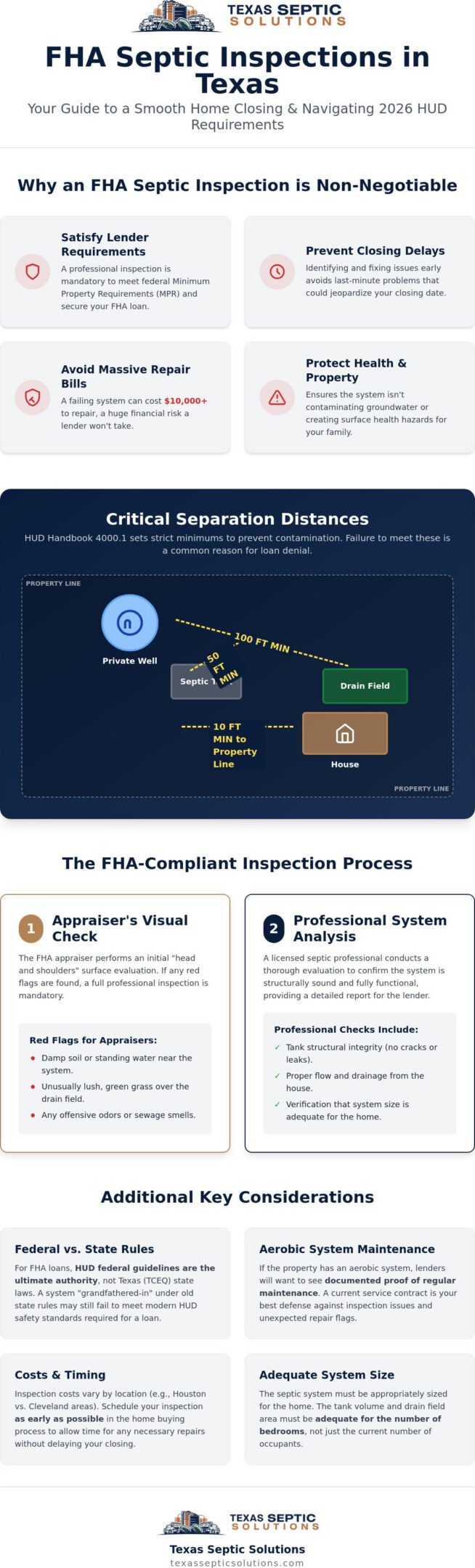
The process usually starts with the FHA appraiser. If the appraiser notices damp soil, unusually lush green grass over the drain field, or any offensive odors, they will flag the property immediately. This flag triggers the requirement for a comprehensive septic inspection for FHA loan Texas report from a licensed professional. You cannot simply rely on the fact that the toilets flush today. The system must be proven structurally sound and properly separated from water sources to meet the 2026 lending criteria. This rigorous standard protects your investment and ensures the home remains a viable asset for years to come.
HUD Handbook 4000.1: The Minimum Property Requirements (MPR)
If you’re buying or selling a home with an FHA loan, the HUD Handbook 4000.1 is essentially your rulebook. It outlines the “Minimum Property Requirements” (MPR) that every home must meet to be eligible for federal insurance. These aren’t just suggestions; they’re firm standards that ensure a property is safe, secure, and structurally sound. When it comes to a septic inspection for FHA loan Texas compliance, the handbook focuses heavily on health and safety hazards. A system that’s leaking, backing up, or poorly maintained will fail these requirements immediately. Additionally, the system must be “adequate” for the home. This means the tank and drain field size must correspond to the number of bedrooms in the house to ensure the system can handle the expected daily waste volume.
Critical Separation Distances for FHA Compliance
One of the most common reasons a property fails an FHA assessment is the distance between the septic system and the water source. HUD is strict about preventing cross-contamination. Under the current 2026 guidelines, a private well must be at least 50 feet away from the septic tank and a minimum of 100 feet away from the septic drain field. In some cases, local health authorities might allow a reduction to 75 feet for the drain field, but the 100-foot rule is the standard starting point. You must also maintain a 10-foot buffer between any part of the septic system and the property lines. While the Texas Commission on Environmental Quality (TCEQ) sets the baseline for these rules, FHA lenders often default to the stricter federal standard if a conflict exists. If your property doesn’t meet these distances, you may face a loan denial unless a specific waiver is granted by the local health authority.
When a Professional Inspection Becomes Mandatory
Every FHA appraisal includes a visual “head and shoulders” check of the septic area, but a deeper dive from a licensed professional isn’t always automatic. The appraiser will trigger a full septic inspection for FHA loan Texas requirement if the system is older than 10 to 15 years or if they spot red flags like surface water or odors. If you have an aerobic system, having documented septic system maintenance plans on file is a huge advantage. These records prove the system has been cared for and often satisfy the appraiser’s concerns before they become a hurdle. If you’re worried about your system’s current status, reaching out to a reliable local expert for a pre-inspection can save your closing from last-minute surprises.
What Happens During an FHA-Compliant Septic Inspection?
When you schedule a septic inspection for FHA loan Texas requirements, the process is far more rigorous than a standard maintenance check. You’ll see our team move through a specific sequence of evaluations designed to prove the system can handle daily life without failing. We don’t just look at the surface; we investigate the hidden components that keep your home sanitary. This thoroughness protects you from walking into a property with a five-figure repair bill hidden underground.
- Step 1: Surface Assessment. We begin by locating the tank and walking the entire drain field. We’re looking for odors, damp spots, or sunken areas that suggest a leak.
- Step 2: Pumping and Structural Check. FHA guidelines often require the tank to be pumped. This allows us to inspect the interior walls for cracks, corrosion, or signs of collapse that are invisible when the tank is full.
- Step 3: Baffle and Flow Inspection. We check the inlet and outlet baffles to ensure they’re intact. These prevent solids from entering your drain field and causing a total system failure.
- Step 4: Hydraulic Load Testing. We introduce a significant amount of water into the system to see how the drain field responds. This confirms the soil is still absorbing liquid at a functional rate.
The Visual and Functional Evaluation
During the walkover, we pay close attention to the vegetation. While a lush green lawn looks nice, an isolated patch of bright green grass over a drain field is a classic sign of a “bleeding” system. In areas like Cleveland and Huffman, our heavy East Texas clay soil can make drainage difficult. We also verify that tank lids, or risers, are secure and watertight. If the home has an aerobic system, we test the aerator and ensure the chlorinator is functioning correctly. These mechanical parts must be in top shape to pass the lender’s scrutiny.
Common Red Flags That Lead to FHA Loan Rejection
A professional septic inspection for FHA loan Texas standards often uncovers issues that a general appraiser might miss. Some of the most common deal-breakers include:
- Surfacing Effluent: Any standing water or “black water” in the yard is an automatic fail.
- Structural Damage: Cracks in a concrete tank or a missing baffle will stop a loan in its tracks.
- Expired Maintenance Contracts: This is a major hurdle in Texas. For aerobic systems, lenders require proof of a current, valid maintenance contract with a licensed provider. Without this paperwork, the loan won’t close.
- Undersized Tanks: If a previous owner added a bedroom without upgrading the septic system, the tank may no longer meet HUD capacity requirements.
We’ve seen these issues many times. Most can be resolved with a targeted repair or a fresh maintenance agreement, but catching them early is the key to keeping your closing date on track.
Costs, Timing, and Preparing Your System for Sale
Timing is everything in a real estate transaction. When you’re working toward a 30-day close, a septic inspection for FHA loan Texas requirements needs to happen early in the option period. Most on-site evaluations take about two to three hours to complete, depending on the system’s complexity and accessibility. However, you should allow another 24 to 48 hours for the final professional report to be generated and delivered to your lender. Planning for this window prevents the inspection from becoming a bottleneck that pushes back your closing date.
The question of who pays for the inspection often comes down to the negotiations within the Texas One to Four Family Residential Contract. While the buyer typically pays for their own due diligence inspections, FHA loans often require the tank to be pumped so the technician can see the interior. In many local deals around Houston and Cleveland, sellers agree to cover the pumping costs while the buyer covers the inspection fee. It’s a fair trade that ensures the inspector has the clear view they need to satisfy HUD’s strict standards.
Sellers can speed up the process by following a simple preparation checklist:
- Clear away brush, tall grass, or debris from the tank lids and the drain field area.
- Locate your original OSSF permit or a map of the system components.
- Ensure the power is turned on if the home is vacant, as aerobic systems require electricity to test the aerators.
- Secure any pets away from the septic components to give the inspector full access.
How Sellers Can Avoid Costly Closing Delays
If you’re selling an older home, don’t wait for the appraiser to find a problem. Many proactive sellers choose to have their system pumped and evaluated before the house even hits the market. This gives you time to address any necessary septic system repair needs on your own schedule rather than under the high pressure of a pending contract. Having your maintenance records organized and ready for the inspector proves that the system hasn’t been neglected, which builds immediate trust with the buyer’s lender.
Estimating Replacement Costs if the System Fails
In the unfortunate event that a system is found to be unrepairable, you’ll need to understand the septic system replacement cost for your specific soil type and bedroom count. While a total failure is rare for well-maintained systems, FHA lenders sometimes allow for an “escrow holdback.” This allows the sale to close while funds are set aside to complete the replacement shortly after. Most of the time, however, we find that minor issues like broken baffles or clogged filters are the culprits. These are fast, affordable fixes that keep the deal moving. If you need a fast, reliable evaluation to keep your sale on track, contact Texas Septic Solutions today for expert assistance.
Expert FHA Septic Inspections with Texas Septic Solutions
Texas Septic Solutions stands as the reliable local authority for property owners throughout Cleveland, Houston, and the surrounding counties. We understand that a septic inspection for FHA loan Texas approval is more than just a box to check on a closing list. It’s a critical step in protecting your investment and ensuring your family’s health. Our team approaches every job as a “neighborly expert,” combining years of field experience with a deep understanding of federal lending standards. We don’t just find problems; we provide the solutions needed to keep your home sale moving forward.
Choosing a provider that understands the full lifecycle of a system is a major advantage. Beyond inspections, we specialize in septic system maintenance Texas lenders look for when reviewing loan applications. Because we offer 24/7 service, we’re always ready to respond when a real estate deadline is looming and you need an expert on-site immediately. Our “can-do” attitude means we’re built to handle both routine maintenance and the high-pressure demands of a pending home sale.
Comprehensive Reports for Lenders and Appraisers
The documentation we provide is designed specifically to satisfy HUD’s rigorous requirements. Our reports are professional, clear, and easy for appraisers to interpret, which reduces the chance of follow-up questions that could delay your funding. We bring local expertise to every evaluation, accounting for the unique soil conditions found in Cypress, Huffman, and Shepherd. Whether you’re dealing with the expansive clays or the sandy loams of East Texas, we know how these environments affect system performance. Our team handles the technical paperwork and data entry, allowing you to focus on the other details of your move.
Fast Turnaround for Urgent Real Estate Closings
We know that every day counts when you’re under contract. Our commitment to rapid scheduling means we can often get a technician to your property within a tight window to keep your closing date on track. If our inspector finds a full tank that prevents a complete evaluation, we can provide emergency pumping on the spot to save you from rescheduling. We take pride in being the “closing savers” for Texas homeowners and real estate agents alike. When the pressure is on, you can count on us to deliver a thorough septic inspection for FHA loan Texas report that gets the job done.
Schedule your FHA septic inspection today with Texas Septic Solutions and let us help you cross the finish line with confidence.
Secure Your Closing with a Professional Inspection
Meeting HUD’s strict distance rules and keeping your maintenance records organized are the most effective ways to avoid closing delays. A professional evaluation protects your investment and ensures that your property meets federal standards for safety and value. By addressing potential issues early, you can keep your real estate transaction on schedule and satisfy your lender’s requirements. A successful septic inspection for FHA loan Texas approval is about more than just a working tank; it’s about proven compliance and peace of mind for both you and your lender.
Our team of licensed and insured septic professionals brings deep expertise in local Texas HUD requirements to every job. We offer 24/7 Emergency Service for those urgent closings where every hour counts. We’re here to provide the clear, professional reports your appraiser needs to move your loan forward. Whether you’re in Cleveland, Houston, or the surrounding counties, we have the local knowledge to handle your system’s specific needs and soil conditions.
Don’t let a technicality stand between you and your new home. Book Your FHA Septic Inspection in Cleveland & Houston Now to ensure a smooth, stress-free path to the finish line. We look forward to helping you secure your property’s future and making your move as easy as possible.
Frequently Asked Questions
Does FHA require a septic inspection in Texas for 2026?
Yes, an inspection is required if the FHA appraiser identifies potential issues or if the system is located in an area where local authorities mandate it. While Texas state law doesn’t require inspections for every real estate transfer, the FHA’s HUD Handbook 4000.1 requires all onsite systems to be functional and safe. If the system is older or shows signs of surface moisture, a professional septic inspection for FHA loan Texas compliance will be triggered to protect the lender’s investment.
How far must a septic tank be from a well for an FHA loan?
FHA guidelines require a minimum separation of 50 feet between a private well and the septic tank. The distance between the well and the septic drain field must be at least 100 feet. In some specific cases, a local health authority may allow the drain field distance to be reduced to 75 feet, but the 100-foot rule is the standard benchmark for most Texas properties. These distances prevent cross-contamination and ensure the safety of the home’s drinking water.
Who is responsible for paying for the septic inspection during a home sale?
The responsibility for payment is a negotiable item in the Texas real estate contract. Typically, the buyer pays for the inspection as part of their closing costs, while the seller often pays for the tank to be pumped. Pumping is necessary so the inspector can examine the interior of the tank for cracks or structural failures. It’s a common practice in the Houston area for both parties to share these costs to keep the deal moving forward.
Can an FHA loan be approved if the septic tank needs pumping?
Approval is possible, but the pumping must be documented by a licensed professional before the loan closes. FHA inspectors generally cannot complete a full evaluation if the tank is full, as they need to see the liquid levels and the condition of the baffles. If your system is overdue for service, scheduling a pump-out alongside your inspection is the fastest way to satisfy the lender’s requirements without causing a delay.
What happens if the septic system fails the FHA inspection?
The loan will be placed on hold until the system is repaired or replaced to meet HUD’s Minimum Property Requirements. You’ll need to obtain a permit for the repairs and have a licensed technician complete the work. Once the repairs are finished, a follow-up inspection is required to clear the condition. In rare cases, a lender might allow an escrow holdback for repairs, but most FHA deals require the system to be fully functional before the final signatures.
Is a dye test required for an FHA septic inspection in Texas?
A dye test isn’t specifically named as a requirement in the HUD handbook, but a functional test of the drain field is mandatory. Many inspectors use dye tests or hydraulic load tests to check for surfacing sewage or slow absorption. This part of the septic inspection for FHA loan Texas process confirms that the soil is still processing effluent correctly. If the dye appears on the surface of the yard, it indicates a failed drain field that must be addressed.
How long is a septic inspection report valid for an FHA loan?
Most lenders consider a septic inspection report valid for 120 days, which aligns with the standard life of an FHA appraisal. If your closing process takes longer than four months, you might need to have a technician provide an update or a fresh evaluation. It’s always best to coordinate the timing of your inspection with your expected closing date to ensure the paperwork remains current throughout the underwriting process.
Do aerobic systems have different FHA requirements in Texas?
Yes, aerobic systems must have a valid and active maintenance contract in place to pass an FHA evaluation. Texas law requires these systems to be inspected every four months by a licensed provider. An FHA lender will check to see that the system has been regularly serviced and that a professional is currently under contract to maintain the aerators and chlorinators. Without proof of this ongoing maintenance, the system will likely fail the lender’s safety standards.