
Septic Backup in Shower? Here is Exactly What to Do Right Now (2026 Guide)
You’re standing in your bathroom when you notice dark, foul-smelling water bubbling up through the drain. It’s a high-stress moment that triggers immediate fears about health hazards and expensive water damage. When you’re in the middle of a crisis, knowing exactly septic backup in shower what to do is the only way to protect your property and your family. This isn’t just a messy inconvenience; it’s a “canary in the coal mine” signal that your septic system is under extreme pressure and requires immediate attention.
We understand how overwhelming it feels to see sewage entering your living space. Our goal is to replace that panic with a clear, professional plan of action. In this guide, you’ll learn the immediate emergency steps to take to stop the backup before it ruins your flooring. We’ll also help you identify the root cause, whether it’s a simple pipe blockage or a full tank failure, so you can make informed decisions and find a dependable local expert for emergency pumping. By following these steps, you can minimize repair costs and get your home back to normal quickly.
Key Takeaways
- Stop all water use immediately to prevent more sewage from entering your home and causing further damage.
- Identify if the issue is a local clog or a system-wide failure by checking the lowest drains in your house.
- Learn exactly septic backup in shower what to do to manage the crisis safely without risking exposure to harmful gases.
- Understand how East Texas clay soil and heavy rainfall in areas like Cypress can trigger sudden septic overflows.
- Establish a professional maintenance and pumping schedule to protect your property and avoid high emergency repair costs.
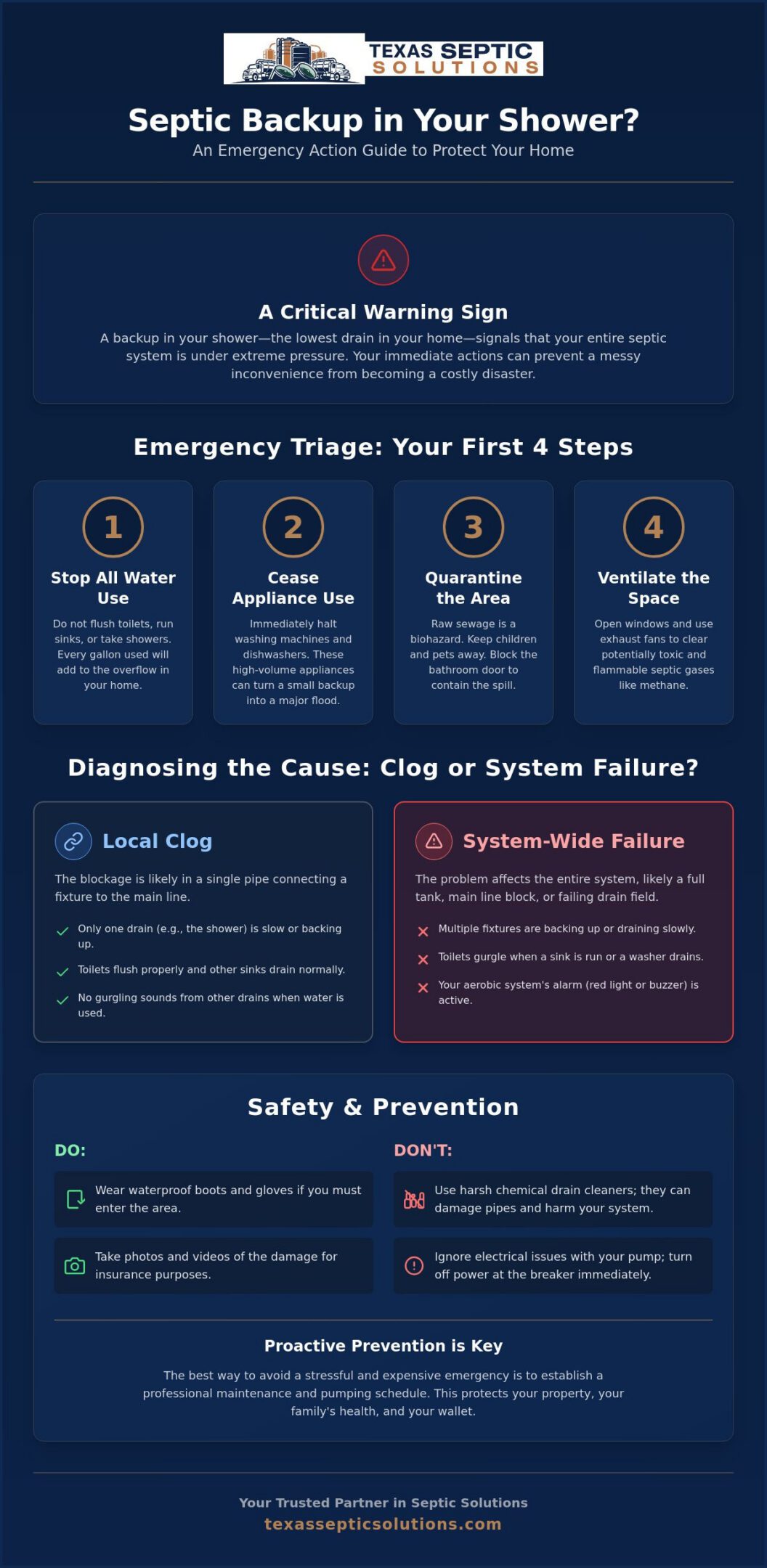
Emergency Triage: 4 Steps to Take When Your Shower Backs Up
Finding dark water or raw sewage bubbling up through your shower drain is a high-stress emergency. Because the shower is typically the lowest drain in your home, it acts as a warning sign for your entire system. When you are staring at an overflow, knowing exactly septic backup in shower what to do can mean the difference between a quick cleanup and thousands of dollars in property damage. Your first priority is to stop the flow and secure the area.
- Stop all water consumption immediately. Every gallon of water you send down any drain in the house will likely end up on your bathroom floor. This means no hand washing, no showers in other bathrooms, and absolutely no toilet flushing.
- Cease appliance use. High-volume appliances like dishwashers and washing machines are the biggest threats during a backup. They discharge large amounts of water quickly, which can cause a minor drain issue to become a major flood in minutes.
- Quarantine the bathroom. Raw sewage is a biohazard containing bacteria, viruses, and parasites. Keep children and pets away from the affected area. If possible, lock the bathroom door or use tape to signal that the room is off-limits.
- Ventilate the space. Septic gases, including methane and hydrogen sulfide, can be toxic and flammable. Open all bathroom windows and turn on the exhaust fan to clear the air. If the smell is spreading, open windows in adjacent rooms to create a cross-breeze.
Immediate Safety and Sanitization
Safety must come before cleanup. If you need to enter the bathroom to block a door or retrieve items, you should wear rubber gloves and waterproof boots. If your system uses an aerobic pump and you hear it struggling or see electrical sparking, turn off the power at the breaker box immediately. Never use chemical drain cleaners to resolve the issue. These harsh liquids rarely clear a septic blockage and can destroy the natural bacteria that help you understand how a septic system works. These chemicals can also damage your pipes and create a hazardous environment for the technician who arrives to help.
Protecting Your Home from Water Damage
Once you have stopped the water flow, you must contain the mess. Use old towels or rags to create a berm at the bathroom door. This prevents sewage from reaching porous surfaces like hallway carpets or hardwood flooring. If the backup is significant, you may need a professional water restoration service to handle the sanitization after the septic issue is resolved. Before you begin any cleaning, take clear photos and videos of the damage. This documentation is vital for insurance claims and helps your septic expert understand the severity of the event. Knowing septic backup in shower what to do in these first few minutes is the best way to protect your home’s value and your family’s health.
Is It a Clog or a Full Tank? How to Tell the Difference
Determining the root cause of a drainage issue is the first step in knowing septic backup in shower what to do. You don’t want to pay for an emergency pump-out if you only have a simple hair clog, but you also can’t afford to ignore a failing tank. Because shower drains are usually the lowest entry point for wastewater in your home, they act as the system’s overflow valve. When the septic tank is full or the drain field is saturated, gravity sends that sewage back through the easiest path, which is almost always your shower floor.
Start your diagnosis with a “whole-house check.” Go to your kitchen sink and run the water for a minute, then check if your toilets are gurgling or if water is rising in the shower. If multiple fixtures are acting up at the same time, you aren’t dealing with a localized plumbing issue. You are facing a system-wide failure. However, if only the shower is slow and your toilets flush perfectly, the blockage is likely limited to that specific drain line. For a deeper look at proper maintenance and troubleshooting, you can consult the EPA’s septic system care guide.
If you have an aerobic system, don’t ignore your septic control panel. A red light or an audible buzzer is a definitive signal that your tank has reached a high-water level or the pump has stopped functioning. When you are trying to figure out septic backup in shower what to do, checking that alarm panel is your fastest diagnostic tool. It tells you immediately that the problem is mechanical or capacity-related rather than a simple pipe obstruction.
Signs of a Main Line Blockage
A main line blockage occurs when the pipe connecting your house to the septic tank becomes obstructed. You’ll notice wastewater backing up only when you use specific fixtures. A classic sign is seeing the water level in your shower rise every time you flush the toilet. This happens because the air and water pushed by the flush are blocked and forced back through the easiest exit. Common culprits in East Texas include tree root intrusion or the buildup of “flushable” wipes, which don’t actually break down in a septic environment.
Signs Your Septic Tank is Full or Failing
If the backup is accompanied by changes in your yard, the tank itself is likely the culprit. Look for lush, unusually green grass or soggy, spongy patches directly over the drain field or tank area. This indicates that effluent is rising to the surface rather than soaking into the soil. A persistent “rotten egg” smell in the yard or near the bathroom is another red flag that the system is failing to treat waste properly. If you see these indicators, review our detailed guide on signs your septic tank is full to confirm your suspicions. If you’re still unsure, the team at Texas Septic Solutions can provide a professional diagnostic to save you from unnecessary stress.
Why Texas Soil Conditions Lead to Shower Backups
In regions like Cleveland and Cypress, the ground beneath your home plays a massive role in how well your septic system functions. Many homeowners are surprised to learn that the “Texas Gumbo” clay soil is a primary culprit behind drainage failures. Unlike sandy soils that allow water to pass through quickly, heavy clay has incredibly poor absorption rates. When your tank tries to push wastewater into a drain field made of dense clay, the liquid often has nowhere to go. This lack of “perc” or percolation causes the system to hit a bottleneck, which is exactly why you might see a septic backup in shower what to do scenario during periods of heavy use.
East Texas is also famous for its intense rainfall. When a storm saturates the ground, your drain field loses its ability to accept any more effluent. During these events, the water table rises, and groundwater can actually leak into your septic tank through small cracks or unsealed lids. This process, known as inflow and infiltration, fills your tank with rain instead of household waste. If you’re wondering about septic backup in shower what to do during a rainy week, the first step is recognizing that your system is hydraulically overloaded by the environment, not just your plumbing.
For more information on managing your system during environmental stress, you can refer to the EPA guide to septic system care. Understanding your local soil type helps you realize that your system has a finite capacity that changes with the weather.
The Impact of Houston Humidity and Rain
In the coastal regions around Houston, high water tables create a constant challenge for conventional septic systems. Flash flooding can trigger an immediate septic emergency by putting the entire drain field underwater. This is why many local properties rely on aerobic systems, which use oxygen to break down waste faster and often utilize spray heads to distribute treated water above the saturated soil line. These systems are designed to handle the high humidity and heavy rain cycles common in our community.
Soil Compaction and Drain Field Health
The health of your drain field depends on the soil remaining porous. Driving vehicles or parking heavy equipment over your yard can compact the wet Texas soil, crushing the pipes and “glazing” the clay. This glazing creates a waterproof seal that prevents wastewater from filtering through the earth. Because Texas clay lacks natural drainage, systems must be engineered with larger drain fields or aerobic treatment units to meet state regulatory standards. Protecting your yard from compaction is just as important as watching what you flush.
Safe Troubleshooting vs. Professional Emergency Repair
When you are dealing with sewage in your home, the urge to fix it yourself is strong. However, understanding septic backup in shower what to do requires a clear-eyed look at your own technical limits. While a plunger might clear a minor hair clog, heavy-duty DIY snaking often does more harm than good. If you force a metal snake through older PVC or cast iron pipes, you risk cracking the line or pushing a solid obstruction deeper into the main sewer pipe. This can turn a simple localized repair into a massive excavation project.
Safety is the most critical factor during a backup. You must never, under any circumstances, enter a septic tank or lean deep into the opening. Septic systems produce lethal gases, including methane and hydrogen sulfide, which can cause immediate unconsciousness or death. If you see sewage actively flowing into your bathroom and your initial efforts to stop water use haven’t helped, it is time to call for emergency septic service. A professional technician has the protective gear and gas detection equipment necessary to handle these hazards safely.
What You Can Safely Check
Before the experts arrive, you can perform a few visual checks. First, locate your septic tank lid. If you see liquid seeping out from under the cover or the lid appears to be “floating,” your tank is officially over capacity. Next, check your home’s main breaker box. Occasionally, a power surge can trip the circuit for your septic pump, causing the tank to fill up because the effluent isn’t being moved to the drain field. Finally, look at your septic tank alarm. If the red light is glowing, the system is telling you that the water level is dangerously high and requires an immediate pump-out.
The Professional Solution
A professional septic technician brings specialized tools that the average homeowner doesn’t possess. If your outlet baffle is clogged with solid waste or “sludge,” a standard pump-out is the only way to restore flow. We also use high-resolution waterproof cameras to inspect the interior of your pipes. This allows us to find exact locations of tree root intrusions or collapsed sections without digging up your entire yard. For stubborn grease clogs or scale buildup, we utilize hydro-jetting. This process uses high-pressure water streams to scrub the inside of your pipes clean, something a mechanical snake simply cannot achieve.
The diagnostic process usually starts at the tank. Our team will check the levels and the condition of the filters before moving toward the house. If you are currently facing a drainage crisis in the Houston area, contact Texas Septic Solutions for a rapid response and a dependable long-term fix. Knowing septic backup in shower what to do starts with calling the right experts to protect your home functionality.
Preventing Future Backups with a Maintenance Plan
Once you have resolved the immediate crisis and understand septic backup in shower what to do, your focus should shift toward long-term prevention. A backup is rarely a random event; it’s usually the result of years of neglected maintenance or heavy system strain. By establishing a proactive care routine, you can avoid the health hazards and high costs associated with sewage overflows. Taking control of your system’s health today ensures your home remains functional and safe for years to come.
Effective prevention relies on a few core habits that every Texas homeowner should adopt:
- Stick to a professional pumping schedule. A household of four with a 1,000-gallon tank typically needs pumping every 2 to 3 years. This prevents solids from reaching the outlet and clogging your system.
- Install and clean effluent filters. These filters act as a secondary defense. They catch fine solids before they can escape the tank and ruin your drain field pipes.
- Monitor what goes down your drains. Never pour cooking grease, harsh chemicals, or “flushable” wipes into your plumbing. These items don’t break down and will quickly lead to a system bottleneck.
- Invest in a professional plan. Signing up for a septic system maintenance plan ensures that your pumps, alarms, and tank levels are checked twice a year by a licensed expert.
The Value of Routine Pumping
Routine pumping removes the heavy sludge that settles at the bottom of your tank before it reaches the main inlet or outlet pipes. If this sludge isn’t removed, it eventually flows into your drain field, which can cost upwards of $15,000 to replace. You also need to manage the “scum layer,” which is the floating collection of fats, oils, and grease that sits on top of the liquid effluent; it must be professionally managed to prevent these solids from escaping into the soil. Regular service keeps these layers at manageable levels and protects your property value.
Proactive Care for Houston Homeowners
Living in East Texas means your system faces unique environmental pressures, especially during hurricane and storm seasons. We recommend scheduling a full inspection before the heavy Texas spring rain begins. This ensures your tank has maximum capacity before the soil becomes saturated and the water table rises. Educating your family on septic-safe habits, like spreading out laundry loads throughout the week, also reduces the hydraulic load on your system. Knowing septic backup in shower what to do is vital for emergencies, but consistent maintenance is the only way to ensure you don’t face this crisis again.
Don’t wait for another emergency to take action. If you’re currently facing a backup or it has been more than three years since your last pump-out, our team is ready to help. Contact Texas Septic Solutions for 24/7 Emergency Service or to schedule your next maintenance visit today.
Take Control of Your Home’s Health Today
A sewage backup doesn’t have to result in permanent damage to your property. By stopping all water use immediately and identifying whether you have a simple clog or a system-wide failure, you’ve already taken the most important steps toward a resolution. Remember that the unique clay soil conditions in Cleveland and Cypress put extra pressure on your drainage field, making professional oversight essential for long-term functionality. Knowing septic backup in shower what to do is the first step toward reclaiming your bathroom and your peace of mind.
If you’re currently facing an overflow or simply want to prevent the next one, don’t wait for the situation to worsen. Our team provides expert 24/7 emergency response and specializes in the specific challenges of Texas clay soil solutions. We are proud to serve neighbors in Cleveland, Houston, Cypress, and Shepherd with reliable repairs and pumping services. Get 24/7 Emergency Septic Help in the Houston Area and let us handle the hard work for you. You’ve got this, and we’re here to help you keep your home running smoothly.
Frequently Asked Questions
Is it safe to use the shower if the septic is backing up?
No, it is absolutely not safe to use the shower when sewage is backing up. The water entering your shower is a biohazard containing harmful bacteria, viruses, and parasites that pose a serious health risk. Additionally, running any water in your home will only add to the volume of the backup, increasing the likelihood of sewage spreading to your bathroom floors and causing permanent water damage.
Can I use Drano or other chemicals to clear a septic backup?
You should never use harsh chemicals like Drano or liquid plumbers in a septic system. These caustic substances are designed for municipal sewer lines and can kill the beneficial bacteria that live in your tank. Without these bacteria, your system cannot break down waste properly, which often leads to more frequent backups and expensive repairs. These chemicals also won’t help if the issue is a full tank or a saturated drain field.
How much does it cost to fix a septic backup in the shower?
The cost to resolve a backup depends on the severity of the issue and your location. In Texas, a standard pumping for a 1,000-gallon tank usually ranges between $250 and $400, while a 1,500-gallon tank can cost up to $550. If you require emergency service outside of business hours, expect an additional surcharge of $100 to $300. Major repairs like line replacements or drain field work will incur higher costs.
What causes sewage to come up through the shower but not the toilet?
Sewage appears in the shower first because it is almost always the lowest drain point in your home. When the main sewer line or the septic tank becomes full, wastewater follows the path of least resistance. Because the shower drain is closer to the floor than the rim of the toilet, gravity pushes the backup through the shower first. If you don’t act quickly, the toilets will eventually overflow as well.
How do I know if my septic tank needs to be pumped immediately?
Your tank needs immediate pumping if you notice standing water in your yard, persistent foul odors, or multiple slow drains. When you are determining septic backup in shower what to do, check the area around your tank for spongy soil or unusually green grass. These are definitive signs that the tank is over capacity and can no longer process effluent, requiring a professional pump-out to restore functionality.
Can tree roots cause a shower backup in a septic system?
Yes, tree roots are a leading cause of septic backups because they grow toward the moisture and nutrients in your pipes. Once a root penetrates a sewer line, it creates a “trap” that catches solid waste and toilet paper. Over time, this creates a solid mass that blocks all flow to the tank. Only a professional camera inspection can confirm if roots are the reason for your shower backup.
What should I do if my septic tank alarm is also going off?
If your septic alarm is sounding, you must stop all water usage and call a technician right away. The alarm is a safety feature indicating that the water level in your tank has reached a critical high point. This usually means your pump has failed or there is a major blockage. Silencing the alarm doesn’t fix the problem; it only stops the noise while the risk of a flood continues.
How do I clean up sewage in my shower safely?
To clean up safely, you must wear protective gear including rubber gloves, a face mask, and waterproof boots. Remove the liquid waste with a wet-dry vacuum and then scrub all surfaces with a solution of one part bleach to ten parts water. Knowing septic backup in shower what to do includes recognizing when the mess is too large to handle alone. If sewage has touched drywall or cabinetry, call a professional restoration team.