
Septic Tank Pumping Frequency Houston: The 2026 Homeowner Guide
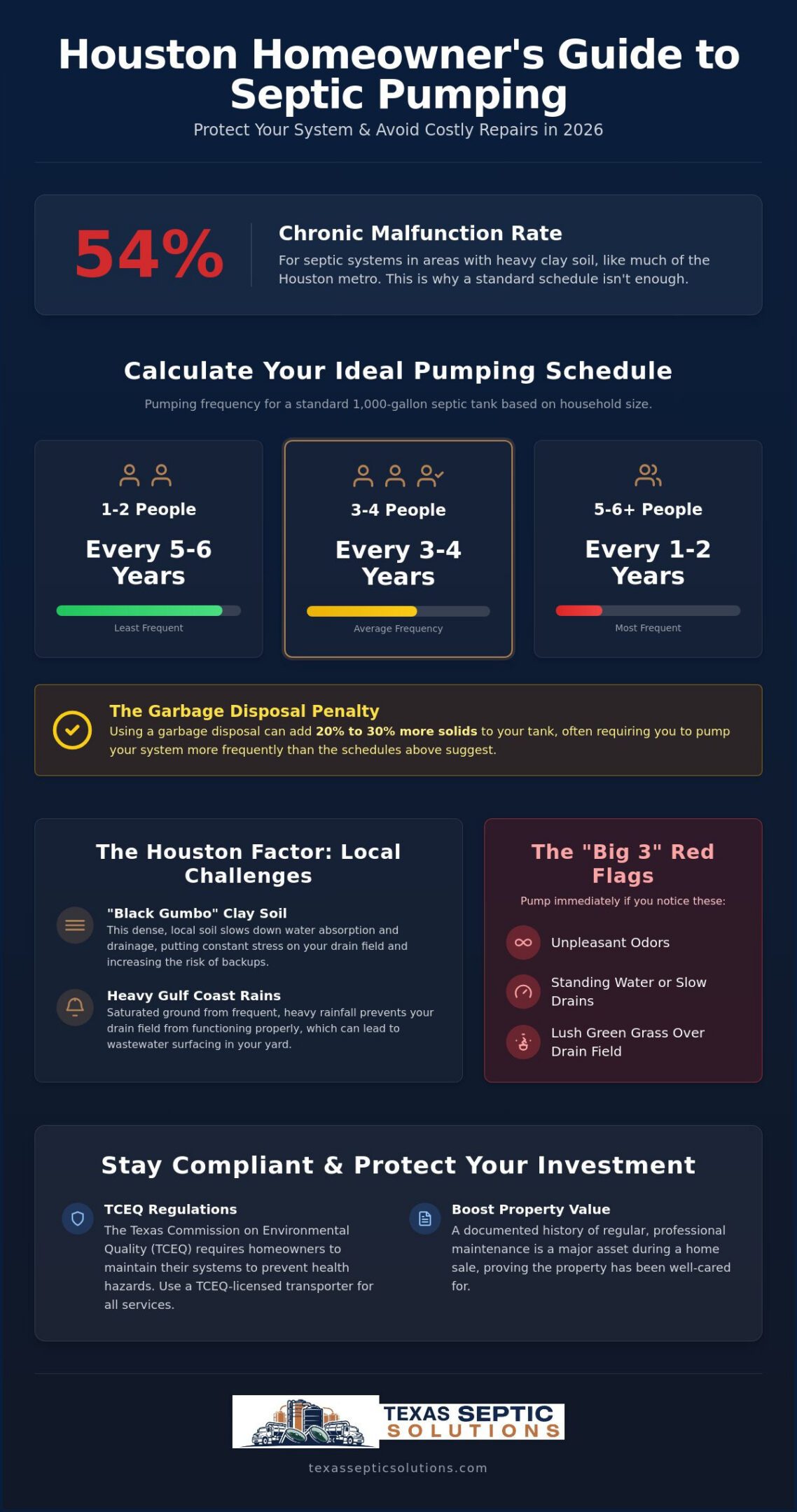
Did you know that septic systems in areas with heavy clay soil, like much of the Houston metro, face a chronic malfunction rate as high as 54%? It’s a stressful reality for many of our neighbors, especially when heavy Gulf Coast rains turn your yard into a swamp and bring those dreaded odors to the surface. You shouldn’t have to cross your fingers every time you host a family gathering, hoping the plumbing holds up under the pressure of a full house.
We understand that the “Black Gumbo” soil under your feet makes maintenance more complicated than the national averages suggest. This guide reveals the exact septic tank pumping frequency Houston homeowners need to follow to protect their drain fields and avoid the sting of emergency repair bills. We’ll look at how your household size, your specific system type, and local Texas soil conditions dictate your unique pumping schedule for 2026. From aerobic requirements to conventional tank care, you’ll get the clarity you need to keep your home functional and your long-term costs low.
Key Takeaways
- Most Houston residential systems require professional pumping every 3 to 5 years to remove accumulated solids and prevent system failure.
- Your household size and tank capacity are the biggest factors in your schedule, as homes with four or more people often require more frequent care.
- Houston’s unique “Black Gumbo” clay soil and heavy rainfall can significantly impact your septic tank pumping frequency Houston by slowing down drainage and stressing the system.
- Watch for the “Big 3” red flags, including unpleasant odors, standing water, or unusually lush green patches of grass over your drain field.
- Combining regular pump-outs with a comprehensive maintenance plan ensures your system stays reliable during heavy use and prevents expensive emergency repairs.
Understanding Septic Tank Pumping Frequency in Houston
Maintaining a healthy home in Southeast Texas requires more than just mowing the lawn and checking the AC. For homeowners outside the city sewer reach, your septic tank is the most critical piece of infrastructure you own. Pumping is the process of vacuuming out the accumulated solids, known as sludge, and the floating fats and oils, called scum. If these layers grow too thick, they leave no room for wastewater to settle. This forces raw waste directly into your yard or back into your house.
Determining the right septic tank pumping frequency Houston residents should follow depends on several local factors. While the general baseline for most residential systems is every 3 to 5 years, Houston’s environment often pushes systems toward the more frequent end of that scale. Waiting for a backup to occur is the most expensive way to manage your utility. By the time you smell odors or see slow drains, the damage to your pipes and soil may already be done.
Why Pumping is Non-Negotiable
Your system relies on a delicate biological process where “good” bacteria break down organic waste. However, bacteria cannot digest everything. Sand, grit, and non-biodegradable materials eventually fill the tank. When you neglect regular pumping, these solids escape the tank and flow into the drain field. This leads to permanent soil clogging, which is often irreversible. Bacteria cannot digest everything. Think of it this way; a routine pump-out is a manageable maintenance task, while a total drain field replacement is a major construction project that can cost as much as a new car.
The 2026 Texas Regulatory Landscape
The Texas Commission on Environmental Quality (TCEQ) sets the standards for all On-Site Sewage Facilities (OSSF) across the state. In Harris County and the surrounding metro area, these regulations are strictly enforced to protect our local groundwater. Understanding the septic tank pumping frequency Houston authorities expect is the first step in staying compliant. Under 30 Texas Administrative Code Chapter 285, homeowners are responsible for ensuring their systems operate without creating a nuisance or a public health hazard.
It’s vital to use a TCEQ-licensed transporter for every service. These professionals ensure that waste is disposed of at authorized facilities, protecting you from legal liability. Beyond compliance, a well-documented history of regular maintenance significantly boosts your property value. During a home sale, East Texas real estate disclosures require clear information on the septic system’s condition. A system with a consistent septic system maintenance plan proves to buyers that the home has been cared for by experts who understand local needs.
Calculating Your Ideal Pumping Schedule
Determining the right septic tank pumping frequency Houston homeowners should maintain isn’t a guessing game. It’s a calculation based on how your home functions daily. While the U.S. Environmental Protection Agency (EPA) suggests a broad three to five year window, local variables in Southeast Texas often tighten that timeline. A tank is a finite space. If you have four or more people living under one roof, that space fills significantly faster than a retired couple’s home.
There is also the “Garbage Disposal Penalty” to consider. Many homeowners in areas like Cypress and Huffman enjoy the convenience of a kitchen disposal, but these units are tough on septic systems. Using a disposal can add 20% to 30% more solids to your tank. Bacteria simply cannot break down food scraps as efficiently as human waste. This extra sludge layer builds up quickly, often turning a five-year pumping schedule into a three-year necessity to prevent overflow.
Household Size and Usage Factors
Your pumping schedule is a direct reflection of your “load.” High-efficiency washers and low-flow toilets help, but the sheer number of people in the house remains the primary driver. Frequent houseguests or running a home-based business with shared restroom facilities also increases the volume of solids. Here is a general guide for a standard 1,000-gallon tank:
- 1-2 People: Pump every 5 to 6 years.
- 3-4 People: Pump every 3 to 4 years.
- 5-6 People: Pump every 1 to 2 years.
If you aren’t sure when your system was last serviced, starting a septic system maintenance plan is the best way to establish a baseline and avoid the stress of an unexpected failure.
Aerobic vs. Conventional Systems
Many newer Houston developments utilize aerobic treatment systems. These are essentially mini-wastewater plants in your backyard. Texas law requires these systems to have a maintenance contract with three inspections per year. However, it’s a common mistake to think these inspections replace pump-outs. An inspector checks the mechanical parts, like the aerator and the pump, but they don’t always empty the tank. Even with regular inspections, you still need to remove accumulated solids every two to three years. Aerobic systems have smaller trash tanks that can reach capacity faster than older, larger conventional concrete tanks. Keeping track of your septic tank pumping frequency Houston needs ensures these sophisticated systems don’t become overwhelmed by sludge.
The Houston Factor: Soil, Rain, and Your Septic System
Houston is built on “Black Gumbo,” a heavy, expansive clay that presents a unique set of challenges for any on-site sewage facility. Unlike sandy soils that allow water to percolate quickly, this clay holds onto moisture. When the ground is saturated, your drain field cannot accept more effluent. This environmental reality is why the septic tank pumping frequency Houston residents experience is often more demanding than in other parts of the state. If the soil can’t process the liquid, the tank fills up faster, and the risk of a backup into your home skyrockets.
Heavy East Texas rainfall only complicates the issue. A single afternoon downpour can dump enough water to saturate the entire drainage area, effectively shutting down your system’s ability to breathe. High humidity also plays a quiet but significant role. Constant moisture in the air can stress the mechanical components of aerobic systems, such as aerators and control panels. For homeowners in low-lying areas like Shepherd or Huffman, these factors combine to create a high-pressure environment for your plumbing. Without regular intervention, the system simply cannot keep up with the local climate.
Managing Septic Systems During Houston Floods
During a major weather event, your priority should be protecting the structural integrity of your system. A common mistake is trying to pump the tank while the ground is still underwater. This is dangerous. High groundwater levels exert massive upward pressure. If you empty the tank, it loses the weight needed to stay anchored. We’ve seen tanks literally float out of the lawn, shearing off pipes and requiring a total system replacement. Following the EPA guidelines on septic tank maintenance during these periods is vital. Wait until the soil has dried significantly before scheduling a service.
Soil Compaction and Drainage Issues
The expansion and contraction of clay soil during Houston’s intense heat cycles can stress tank seals and pipe joints. This movement makes the area around your tank vulnerable. You should never drive vehicles or place heavy landscaping over your drain field. Compacting the “Black Gumbo” clay makes it even less permeable, which can lead to permanent system failure. Evaluating drainage in the Houston-Cleveland-Cypress corridor requires local expertise because every lot has different runoff patterns. Maintaining your septic tank pumping frequency Houston schedule ensures that even when the soil is at its toughest, your tank has the capacity to handle the load.
Warning Signs: When to Pump Before an Emergency
Spotting trouble before it turns into a midnight plumbing catastrophe is a vital skill for any homeowner. While keeping a strict septic tank pumping frequency Houston schedule is your best defense, your system often gives subtle hints that it’s reaching capacity. Being proactive saves you from the stress of a flooded bathroom during a holiday weekend or a backyard that smells like a swamp. We’ve seen too many families deal with preventable failures because they didn’t know what to look for.
We’ve identified the “Big 3” red flags that every neighbor should watch for: persistent odors, slow backups, and standing water. If you notice a sewage smell lingering around your tank or drain field, it’s usually a sign that gases are being pushed out of the system because there’s no room left for liquid. Similarly, if your drains are gurgling or the water in your lowest shower is slow to disappear, your tank is likely overfilled. This “Gurgle Test” is your system’s way of telling you that air pockets in your pipes are being displaced by rising waste levels.
Visual and Olfactory Cues
A healthy system shouldn’t be seen or smelled. While it’s normal to catch a faint whiff near a vent pipe occasionally, a “failure” smell is heavy and persistent. You should also keep an eye on your lawn. The “lush grass” phenomenon is a classic warning sign. If you see a patch of grass over your tank or drain field that looks noticeably greener and faster-growing than the rest of the yard, it means your system is leaking nutrient-rich effluent into the upper soil. Spongy ground or puddles that don’t dry up even when it hasn’t rained are immediate indicators that the soil can no longer absorb wastewater.
Interpreting Septic Alarms
Modern aerobic systems include a control panel with an alarm. This device is your first line of defense, but it can be startling when it starts buzzing. If you find your septic tank alarm going off, don’t panic. Silence the buzzer, but do not ignore the light. A red light usually indicates a high-water emergency, which means your pump isn’t moving liquid out of the tank fast enough. It could be a simple float switch issue or a total pump failure. Ignoring this alarm will lead to a backup within hours. Maintaining your septic tank pumping frequency Houston prevents the sludge buildup that often causes these mechanical components to fail prematurely.
Don’t wait for the alarm to tell you there’s a problem. If you see these signs, schedule emergency septic service today to protect your home and your peace of mind.
Professional Septic Maintenance with Texas Septic Solutions
Managing your home’s wastewater shouldn’t feel like a guessing game. While understanding the ideal septic tank pumping frequency Houston property owners need is a great start, having a reliable partner makes all the difference. At Texas Septic Solutions, we view routine pumping as the foundation of a comprehensive septic system maintenance plan. It’s about more than just emptying a tank; it’s about ensuring every component of your infrastructure is ready for the next heavy rain or family gathering.
Every time we perform a pump-out, our team conducts a “Full-System Check.” We look for early signs of wear that could lead to a failure later. This proactive approach is why so many families in Southeast Texas trust us to keep their homes running smoothly. We also maintain detailed records of every service. When the time comes to sell your property, having a documented history of professional care is a major selling point for local buyers who understand the value of a well-kept system.
Our Houston Pumping Process
A true professional pump-out involves more than just “skimming” the liquid off the top. We use high-powered equipment to remove the thick sludge and scum layers that have settled over the years. During this process, we inspect the baffles to ensure they aren’t damaged and clean any effluent filters to prevent clogs. We also test the pumps in aerobic systems to confirm they’re operating at peak efficiency. Every gallon we collect is disposed of in strict accordance with Texas environmental laws, so you never have to worry about compliance or local liability.
Emergency Readiness and Rapid Response
We know that septic issues don’t follow a 9-to-5 schedule. That’s why we offer 24/7 availability for families facing urgent backups or alarm failures. Whether you need a standard pump-out or a complex septic system repair, our team is ready to respond. We proudly serve neighbors across Cleveland, Houston, Cypress, Huffman, and Shepherd with a “can-do” attitude and the right tools for the job.
Don’t wait for your yard to become a swamp or for your drains to stop working. Take control of your home’s health by sticking to a proven septic tank pumping frequency Houston schedule. Schedule your professional septic pumping with Texas Septic Solutions today and experience the peace of mind that comes with expert care.
Secure Your Home’s Future with Expert Care
Managing your septic system doesn’t have to be a source of stress. By aligning your pumping schedule with your household’s actual usage and respecting the limits of our local soil, you can avoid the most common causes of system failure. Regular service is a smart investment in your property’s value and your family’s daily comfort. It ensures that your pipes stay clear and your yard remains a safe place for gatherings.
Establishing a reliable septic tank pumping frequency Houston homeowners can trust ensures that your system remains resilient, even during the heaviest Gulf Coast downpours. Our team of TCEQ-licensed professionals is here to provide the 24/7 emergency service and comprehensive septic system maintenance Texas expertise you deserve. We take pride in being a dependable partner for our neighbors across the region.
Don’t wait for a red light on your alarm or an unpleasant odor in the yard to take action. Schedule Your Houston Septic Pumping Service Now to keep your system in peak condition for years to come. We’re ready to help you protect your home with straightforward, professional care.
Frequently Asked Questions
How often do I need to pump my septic tank in Houston if I live alone?
A single occupant living in a home with a standard 1,000-gallon tank can typically go 5 to 7 years between pump-outs. While you produce less waste, sludge still accumulates over time and can eventually harden if left too long. We recommend a quick inspection every few years to ensure your baffles and filters remain clear, especially if you live in a low-lying area prone to slow drainage.
Can heavy rain in Houston make my septic tank fill up faster?
Heavy rain doesn’t fill your tank with sewage, but it can saturate your drain field and stop the treatment process. When the ground is soaked, wastewater has nowhere to go, which keeps the water level in your tank high. This often leads to temporary backups during our tropical storms. Maintaining a consistent septic tank pumping frequency Houston homeowners can rely on ensures your tank has maximum capacity when these weather events occur.
Is it okay to use septic tank additives instead of pumping?
No, additives are never a substitute for professional pumping. While some products claim to “digest” waste, they cannot break down inorganic solids like sand, grit, or plastic fibers that settle at the bottom. Over-reliance on chemicals can actually harm the natural bacteria your system needs to function. The only way to protect your drain field is to physically remove the accumulated sludge through a thorough vacuum process.
What is the average cost to pump a septic tank in the Houston area?
The cost for pumping depends on the size of your tank, how deep the lids are buried, and whether you are scheduling a routine visit or an emergency call. While we don’t provide flat rates without seeing the system, most neighbors find that proactive maintenance is much cheaper than a field replacement. Investing in regular care prevents the massive expenses associated with soil clogging and pipe damage.
How do I know if I have an aerobic or a conventional septic system?
You can identify an aerobic system by looking for a control panel with a red light and listening for the hum of an air compressor near the tank. These systems also typically use purple spray heads to distribute treated water across your lawn. Conventional systems are much simpler, usually consisting of two concrete lids buried in the yard and relying entirely on gravity to move waste to an underground drain field.
Can I pump my own septic tank in Texas to save money?
No, you cannot legally pump your own tank in Texas. State law requires all septic waste to be handled by a TCEQ-licensed transporter who can document proper disposal at an authorized facility. Attempting to do it yourself is extremely dangerous due to the risk of inhaling toxic methane and hydrogen sulfide gases. It also carries heavy fines if waste is disposed of improperly on your property.
What happens if I never pump my septic tank?
Neglecting your tank leads to total system failure and a destroyed drain field. Eventually, the sludge layer grows thick enough to flow out of the tank and into your drainage pipes, where it clogs the soil pores permanently. This results in raw sewage backing up into your tubs and sinks. At that point, a simple pump-out won’t help, and you’ll likely face a bill for a complete system replacement.
Does a garbage disposal really affect how often I need to pump?
Yes, a garbage disposal adds a significant amount of solid waste to your system that bacteria struggle to break down. Using one can increase your septic tank pumping frequency Houston needs by as much as 30% because food scraps turn into sludge much faster than liquid waste. If you use your disposal daily, we suggest moving your pumping schedule up from every five years to every three years to be safe.