
Professional Lift Station Pumping Service in Houston: 2026 Expert Guide
A routine pump-out today is often the only thing standing between your property and a total mechanical failure that costs thousands to fix. It’s incredibly stressful to hear that lift station alarm going off, especially when you’re already juggling Houston’s strict municipal codes and the constant threat of a sewage backup. You need a system that just works, but navigating the 2026 City of Houston permit requirements can feel like a full-time job. We understand that you’d rather focus on your daily operations than worry about wastewater regulations.
Finding a reliable lift station pumping service Houston property owners trust is the first step toward total peace of mind. This expert guide reveals how professional maintenance prevents costly system failures and ensures you stay fully compliant with the latest health department mandates. We’ll explore the 2026 permit application process, explain how our local “gumbo” clay soil impacts your system, and show you how to spot the difference between a routine clean-out and an urgent pump repair. Let’s get your system back to peak performance and keep it that way for the long haul.
Key Takeaways
- Understand why Houston’s flat topography makes your lift station the critical link between your property and the municipal wastewater lines.
- Discover how a professional lift station pumping service Houston property owners trust uses high-capacity vacuum trucks to clear sludge and restore system functionality.
- Learn to distinguish between a mechanical pump failure and a simple obstruction caused by grease or non-flushables to avoid unnecessary replacement costs.
- Identify the critical warning signs, such as high-water alarms and slow drainage, that indicate your system needs immediate professional attention.
- Stay ahead of 2026 Houston municipal regulations by partnering with a reliable local expert for proactive maintenance and honest system diagnostics.
Understanding Lift Station Pumping in Houston’s Unique Landscape
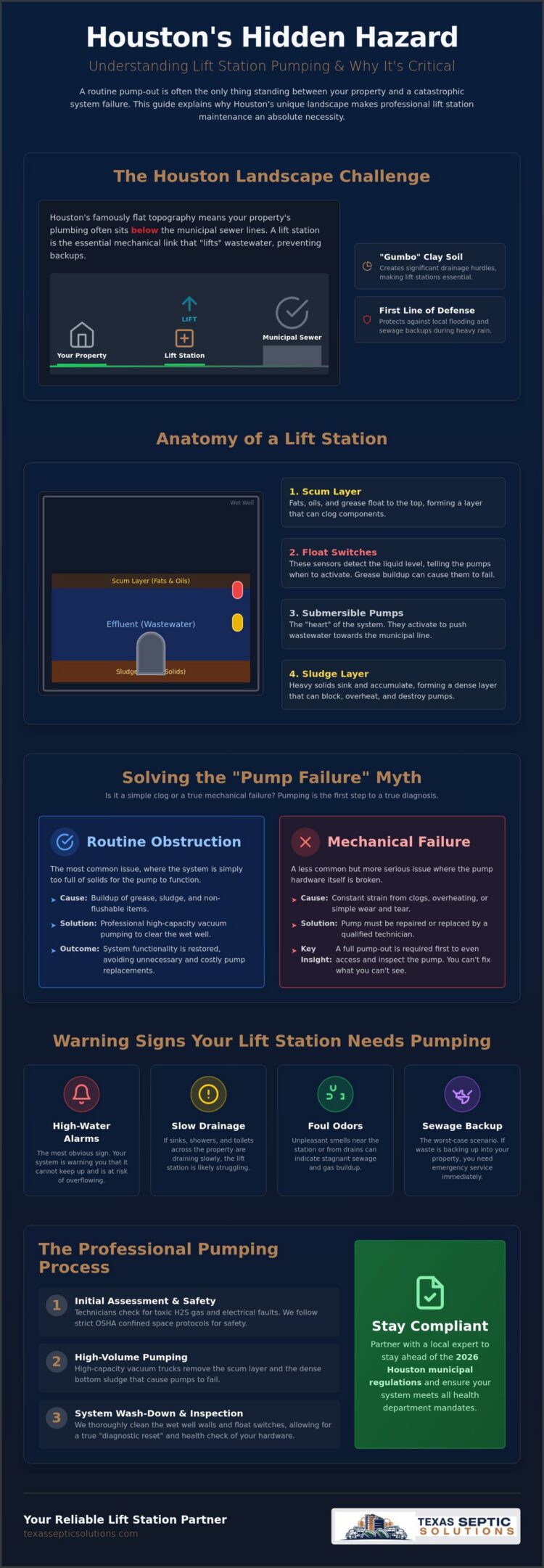
Houston’s landscape presents a unique challenge for wastewater management. Unlike hilly regions where gravity naturally pulls waste downhill, our city is famously flat. This topography means that your property’s plumbing often sits lower than the municipal sewer lines. A lift station acts as the critical link in this chain, mechanically “lifting” effluent so it can flow into the city’s infrastructure. For a comprehensive Pumping Station Overview, it’s helpful to think of these systems as the heartbeat of your property’s utility management. Without this mechanical assist, waste would simply stagnate or overflow.
It’s vital to distinguish between a sanitary lift station and a stormwater system. While stormwater systems handle rain runoff, a sanitary lift station manages everything that goes down your drains and toilets. These systems are under constant pressure to move waste away from your home or business. If the system fails, waste has nowhere to go but back into your building. This is why securing a professional lift station pumping service Houston residents can depend on is a necessity rather than an option. Regular clean-outs ensure that the path to the city main remains clear and functional.
The Role of the Wet Well and Submersible Pumps
The wet well is the heart of the operation. It’s a deep underground chamber designed to collect effluent from your entire property. As the liquid level rises, submersible pumps activate to push the waste toward the municipal line. Gravity remains a constant factor here, causing heavier solids, fats, and oils to sink to the floor of the well. This accumulation eventually forms a dense layer of sludge that threatens your hardware. When we perform a “diagnostic reset” through pumping, we’re clearing that floor. This allows our technicians to see the actual condition of the pump housing and ensure the float switches aren’t being weighed down by debris. You can’t fix what you can’t see, and a clean tank is the only way to get a true health check.
Why Houston Properties Rely on Lift Stations
Houston’s geological makeup, often described as “gumbo” clay, creates significant drainage hurdles. In communities like Cypress and Huffman, the flat terrain and high water table mean that traditional gravity-fed systems aren’t always feasible. Lift stations provide the necessary mechanical force to overcome these environmental limits. They’re your first line of defense against local flooding and sewage backups, particularly during the intense rain events common in Southeast Texas. For commercial property managers, a well-maintained lift station isn’t just a utility; it’s a safeguard for your business’s reputation and operational uptime. Reliability in these systems isn’t just about convenience; it’s about protecting your investment from the ground up.
The Professional Lift Station Pumping Process
When you call for a lift station pumping service Houston, you aren’t just paying for waste removal. You’re investing in a technical procedure that restores your system’s baseline. Our team arrives with high-capacity vacuum trucks designed to handle the heavy sludge and settled solids that standard pumps can’t move. This process is systematic, moving from critical safety checks to deep cleaning and ending with a thorough inspection of your hardware. It’s the most effective way to ensure your property remains compliant and functional.
Step 1: Initial Assessment and Site Safety
Safety is our first priority on every job site. Before we even open the station, our technicians use specialized meters to check for Hydrogen Sulfide (H2S) gas accumulation. This gas is toxic and corrosive, making it a major hazard in wastewater environments. We also examine the control panel to see if there are active alarms or electrical faults. This initial check helps us understand if we’re dealing with a routine pump-out or a mechanical emergency. If a technician must enter the tank, we strictly follow OSHA-mandated confined space entry protocols to ensure the job is done safely and professionally.
Step 2: High-Volume Pumping and Sludge Removal
Once the site is secure, we begin the heavy lifting. We use high-volume vacuum pressure to remove the “scum layer” of fats and oils floating on top, followed by the dense solids at the bottom. These heavy materials are exactly what cause pumps to overheat and fail over time. During the process, we perform a thorough “wash down” of the wet well walls and float switches. Removing grease buildup from these components is essential for proper lift station operation and maintenance. After the well is empty, we transport the waste to a licensed Texas facility for compliant disposal. If you’re concerned about your system’s current levels, you can schedule a maintenance check with our team today.
Step 3: Post-Pump Component Inspection
A clean tank provides the only clear view of your system’s health. In many cases, a septic system repair starts with this “diagnostic reset.” With the wet well empty, we can physically inspect the float switches, guide rails, and check valves. We look for worn impellers, failing seals, or signs of corrosion that aren’t visible when the tank is full of effluent. Catching these issues now prevents a total system shutdown during the next heavy Houston downpour. This proactive approach turns a routine lift station pumping service Houston call into a long-term reliability strategy for your property.
Pumping vs. Repair: Solving the “Pump Failure” Myth
When a wet well fills up, property owners often jump to the worst-case scenario. They assume the expensive submersible motor has finally given up. It’s a common misconception that a full tank always equals a dead pump. In reality, many systems are simply overwhelmed by accumulated solids or debris that prevent the mechanical components from doing their job. Choosing a lift station pumping service Houston trusts allows you to clear the tank and see what’s actually happening. This “diagnostic reset” is often the difference between a routine maintenance visit and a massive capital expense for a new pump.
Grease, oils, and non-flushable items are the primary culprits behind most system struggles. These materials can mimic the symptoms of a failed motor by clogging the intake or weighing down the float switches. We approach every service call as a “neighborly expert,” which means we check for these simple fixes before suggesting a full replacement. Our goal is to restore your functionality as efficiently as possible. Cleaning the tank is a fraction of the cost of a total mechanical overhaul, and it frequently solves the problem entirely.
When the Septic Tank Alarm is a False Positive
If you hear a loud buzzing or see a flashing light, don’t panic immediately. Check our guide on what to do when your septic tank alarm going off for immediate troubleshooting steps. Often, “grease balls” or floating debris can pin a float switch in the “on” or “alarm” position even if the pump is working fine. When we pump out the station, we clear these obstructions and scrub the switches. This simple cleaning often restores the system to perfect working order without the need for any new parts or expensive repairs.
Identifying Real Mechanical Failures
While pumping solves many issues, some problems are truly mechanical. You might notice a humming sound coming from the tank, or you may find that the system keeps tripping the electrical breakers. These are signs of actual motor failure or an electrical short. If the pump is running but the water level isn’t dropping, the internal impeller might be damaged or the check valve could be stuck. In these cases, we have to pull the pump for a bench test once the tank is empty. Texas Septic Solutions handles both the pumping and the mechanical repair, so you won’t have to call two different companies to get your property back on track.
Signs Your Houston Lift Station Needs Immediate Pumping
Recognizing the early warning signs of a struggling system can save you from a major headache and expensive property damage. While some issues are subtle, others are impossible to ignore. If you notice any of these red flags, it’s time to call for a lift station pumping service Houston specialist to prevent a total system failure. Being proactive is the best way to avoid the stress of an emergency backup during a typical Houston storm.
High water alarms are the most obvious cry for help. These alarms trigger when the effluent level in the wet well rises past the safety threshold. It means your pumps aren’t moving waste fast enough, or they’ve stopped entirely. You might also notice slow drainage in the lowest toilets or floor drains on your property. Because these are the closest points to the lift station, they’re often the first to show signs of a struggle. Unusual odors, specifically a rotten egg or sulfur smell, are another indicator. This suggests that waste is sitting stagnant for too long or that the vent pipe is obstructed by grease buildup. When solids accumulate to the point of blocking airflow, these gases have nowhere to go but back up your drain lines.
The “Start/Stop” Cycle Warning
If you hear your pumps turning on and off every few minutes, your system is “cycling” too frequently. This excessive start and stop pattern is usually caused by a volume issue or a failing float switch that can’t accurately gauge the water level. Constant cycling generates immense heat, which is the number one killer of submersible motors. If you let this continue, you’ll likely face a much higher septic system replacement cost than if you had simply scheduled a pump-out. For residential properties, a quarterly check is usually sufficient, but high-traffic commercial hubs may need more frequent monitoring to prevent mechanical burnout and ensure the pumps have adequate rest time between runs.
Regulatory Compliance for Houston Businesses
For business owners in areas like Shepherd and Alvin, maintenance isn’t just about functionality; it’s about the law. The Texas Commission on Environmental Quality (TCEQ) has strict requirements for commercial wastewater management. You’re required to maintain detailed records of every pump-out and inspection to stay compliant with local health codes. Failing to produce these records during an audit can lead to heavy fines or operational shutdowns. Implementing a structured septic system maintenance plan is the best way to ensure your records are always up to date and your property stays in good standing with the city. This proactive approach keeps your business running smoothly and avoids the stress of surprise inspections. If your alarm is currently sounding, don’t wait for a backup to occur. Reach out to our team for an immediate diagnostic visit and pumping service.
Why Texas Septic Solutions is Houston’s Reliable Lift Station Partner
Choosing the right partner for your wastewater needs makes all the difference when a system failure threatens your property. We’ve spent years serving the Greater Houston community, building a reputation as a “neighborly expert” that property owners can count on. Our approach to lift station pumping service Houston involves more than just a vacuum truck and a hose. We bring a high degree of accountability to every job, ensuring that we don’t just treat the symptoms, but solve the underlying issues. We’ve seen every possible scenario in local neighborhoods from Cypress to Cleveland, and we remain unfazed by the toughest challenges.
We pride ourselves on an all-encompassing service model. This means you don’t have to juggle multiple contractors to keep your system running. We pump, we repair, and we maintain. This one-stop approach provides a seamless experience for homeowners and commercial property managers alike. When you work with us, you’re getting a seasoned authority that values long-term relationships as much as immediate problem-solving. We understand the stress of utility issues, and our goal is to restore your peace of mind with straightforward, honest diagnostics.
24/7 Emergency Lift Station Support
Wastewater emergencies don’t stick to a nine-to-five schedule. A high-water alarm at midnight or a backup during a holiday weekend requires immediate action to prevent property damage. That’s why we provide 24/7 emergency support for critical system failures. Our rapid response process is designed to get a technician to your site quickly, whether you’re in the heart of Houston or the surrounding areas. As a reliable local authority, we’re built for high-pressure situations. We arrive ready to assess the safety of the site and begin the pumping process immediately to stabilize your system and protect your property from further harm.
Comprehensive Care Beyond Pumping
While we’re always ready for emergencies, we believe the best service is the one that prevents a crisis from happening in the first place. Our commitment to your property’s longevity includes offering septic system maintenance Texas owners trust to keep their utilities in peak condition. Regular inspections and scheduled clean-outs are the most effective ways to avoid the high costs of unexpected mechanical failure. A long-term partnership with us means we stay ahead of wear and tear, identifying failing seals or worn impellers before they cause a shutdown. If you’re ready for a reliable partner who cares about your system’s health as much as you do, it’s time to take action. Contact Texas Septic Solutions for Houston Lift Station Pumping today and let us handle the heavy lifting.
Secure Your Property’s Functionality with Proactive Care
Maintaining a lift station in Houston’s flat geography isn’t just about avoiding a mess; it’s about protecting your mechanical investment. You’ve learned how routine pumping acts as a diagnostic reset, clearing away the dense sludge and grease that hide underlying issues. By recognizing warning signs like high water alarms or frequent cycling, you can address minor obstructions before they turn into five-figure pump replacements. Staying ahead of 2026 municipal regulations ensures your property remains compliant and functional year-round.
When you need a lift station pumping service Houston experts trust, Texas Septic Solutions is ready to help. Our licensed and insured technicians serve Houston, Cleveland, Cypress, and Shepherd with a commitment to honest diagnostics and reliable results. Whether you’re facing a midnight alarm or planning your annual compliance check, our 24/7 emergency response ensures you’re never left stranded. Take the first step toward a worry-free system by reaching out to a local partner who knows these systems inside and out.
Schedule Your Lift Station Pumping in Houston Today. We’re here to keep your system running smoothly so you can focus on what matters most.
Frequently Asked Questions
How often should a lift station be pumped in Houston?
Commercial properties in Houston often require pumping every quarter to stay compliant with municipal codes and health department regulations. Residential systems typically need service every one to three years, depending on the volume of waste they handle. Because our local terrain is so flat, your system works harder to move waste. Regular cleanouts prevent the heavy sludge buildup that eventually burns out your submersible motors.
Is a lift station the same as a septic tank?
No, these systems serve very different functions on your property. A septic tank uses biological processes to break down waste, while a lift station is a mechanical “elevator” that pumps waste from a low point to a higher municipal sewer line. Lift stations rely on electrical panels, float switches, and submersible pumps to function. They require more active mechanical maintenance than a standard gravity-fed septic tank.
Why is my lift station alarm going off if the pumps are still running?
This usually happens when the “high water” float switch is stuck in the up position or if the pumps are running but not moving liquid. Clogs in the intake or a damaged impeller can cause the pump to spin without actually lifting any effluent. Grease buildup on the float switches is another common culprit. A professional inspection ensures that your alarm system is providing an accurate warning rather than a false positive.
Can I pump out my own lift station?
You should never attempt to pump out your own lift station. These systems require high-capacity vacuum trucks and professional disposal at a licensed Texas facility to stay compliant with TCEQ standards. Entering a wet well is extremely dangerous due to the accumulation of toxic gases like Hydrogen Sulfide. It’s best to leave this task to licensed technicians who have the proper safety gear and equipment.
What happens if a lift station pump fails during a Houston storm?
A pump failure during heavy rain leads to immediate sewage backups in your lowest toilets and floor drains. Since the system can’t “lift” the extra volume of waste and potential runoff, the wet well overflows quickly. This is why we prioritize 24/7 emergency response for these high-pressure scenarios. Rapid intervention is the only way to stabilize the system and protect your property from significant water damage.
How much does lift station pumping cost in the Houston area?
The cost of service depends on the size of your wet well and the volume of sludge that needs to be removed. We provide honest, upfront diagnostics to ensure you only pay for the specific maintenance your system requires. Routine pumping is always more cost-effective than an emergency mechanical repair. Investing in regular maintenance helps you avoid the much higher expenses associated with total pump replacements.
What should I do if I smell sewage near my lift station?
Sewage odors often indicate that solids have accumulated to the point of stagnation or that the vent pipe is obstructed. You should contact a lift station pumping service Houston professional to perform a cleanout and restore proper airflow. Clearing the tank removes the source of the odor and allows our team to inspect the hardware. Addressing these smells early can prevent a full system backup later on.
Does Texas Septic Solutions offer 24/7 emergency pumping?
Yes, we provide 24/7 emergency support for lift station failures throughout the Greater Houston area. We understand that backups don’t wait for business hours, especially during the intense rain events common in Southeast Texas. Our team stays ready to respond to urgent calls in Cypress, Cleveland, and Shepherd. We arrive with the tools needed to pump your tank and diagnose mechanical issues on the spot.