
How to Protect Your Septic System During a Flood: A Texas Homeowner’s Guide
Imagine standing on your porch as the Texas rain pours down, watching the water rise across your yard and wondering if your septic tank is about to become a floating disaster or a source of sewage backup in your home. It’s a high-stakes situation that many of our neighbors face during hurricane season or sudden flash floods. You’re likely feeling the weight of potential repair costs or the health risks of a system failure, and you shouldn’t have to guess whether pumping your tank right now will help or actually cause more damage.
We’ve seen how these storms impact local properties, and we know that the right information can save you thousands of dollars. This guide explains how to protect septic system during flood events by focusing on three critical phases: preparation, management, and recovery. You’ll learn the essential steps to safeguard your system before, during, and after a storm to prevent structural damage and keep your family safe. We’ll provide a clear checklist for storm prep, explain when it’s safe to use your water again, and help you understand exactly when it’s time to call for professional support.
Key Takeaways
- Seal your system before the storm by ensuring all manhole covers and lids are watertight to keep excess runoff from entering your tank.
- Discover how to protect septic system during flood events by drastically cutting indoor water usage to prevent messy sewage backups.
- Never pump a flooded tank, as the empty space can cause the tank to float and break your underground pipes.
- Wait for floodwaters to recede below the drain field level before you start using water again or call for a professional inspection.
- Establish a maintenance plan now to catch vulnerabilities before hurricane season and ensure you have 24/7 support when you need it most.
Preparing Your Septic System Before the Flood Hits
When a tropical storm or hurricane is brewing in the Gulf, most Southeast Texas homeowners focus on boarding up windows or stocking up on water. However, understanding how to protect septic system during flood conditions is just as vital for keeping your home habitable. Proactive maintenance before the rain starts can be the difference between a minor inconvenience and a total system failure. In our region, preparation isn’t just about the house; it’s about the infrastructure buried in your yard.
Start by marking your tank and drain field with tall, sturdy stakes. Once the floodwaters arrive, the ground becomes invisible, and you don’t want a rescue boat or a heavy vehicle driving over your system. This weight can crush pipes and collapse tanks in saturated soil. You should also verify that your tank is at its normal operating level. While it might seem intuitive to pump it out before a storm, an empty tank acts like a boat in the saturated “Black Gumbo” clay of the Houston area. The upward pressure of the water can actually pop an empty tank right out of the ground. Knowing how septic systems work helps you realize that the weight of the liquid inside actually keeps the structure anchored where it belongs.
Sealing and Securing System Openings
Inspect your risers and manhole covers for any signs of damage. Even small cracks in plastic or concrete can allow silt and floodwater to pour into your system, quickly overwhelming its capacity. Use a waterproof sealant or heavy-duty plastic sheeting to cover vented caps if you expect the area to be submerged. Most importantly, check the “cleanout” cap near your house. If this cap is loose or missing, floodwater from your yard can flow directly into your plumbing, causing an immediate backup inside your home before the storm even peaks.
Landscaping for Better Surface Drainage
Proper drainage management is your first line of defense. Managing your landscape is a key part of how to protect septic system during flood scenarios, as it controls the volume of water your soil has to handle. Clear all debris from drainage swales and ensure your gutters are free of leaves. In areas like Cleveland and Houston, our heavy clay soils don’t absorb water quickly, so surface runoff often pools in low spots. Ensure your downspouts discharge water at least 10 feet away from the drain field to prevent the soil from becoming unnecessarily saturated. A well-graded yard that directs water away from the tank lids can significantly reduce the risk of system failure during a major Texas downpour.
Critical Actions to Take During Active Flooding
When the rain is coming down in sheets and your yard looks like a lake, your septic system is under immense pressure. The single most important rule for how to protect septic system during flood events is to stop sending water down your drains. In a typical Texas home built on a slab, you don’t have a basement to worry about, but you do have floor drains and low-lying fixtures that can become exit points for sewage if the system overflows. Every gallon of water you flush or drain during the storm pushes the system closer to a total backup. Because the soil is already saturated, there is simply nowhere for the wastewater to go.
Keep a close eye on your plumbing for early signs of distress. If you notice toilets draining slowly, or if you hear gurgling sounds coming from your pipes, your system is likely at capacity. Research on septic system flood protection confirms that saturated drain fields cannot accept new wastewater, and forcing more into the tank will only result in a backup into your home. If you are already seeing water rise near your cleanout, it is time to treat the situation as an emergency to protect your family’s health.
The “Emergency Only” Water Protocol
During active flooding, you must implement an “emergency only” water protocol. This means no laundry, no running the dishwasher, and keeping showers to an absolute minimum. If your yard is underwater, even a single flush can be the tipping point. If you hear your septic tank alarm going off, treat it as an immediate command to stop all water flow. In extreme cases, consider using portable toilets or dry solutions until the water recedes and the ground can begin to drain again.
Managing Aerobic Systems and Electrical Components
Many homeowners in the Houston and Cleveland areas rely on Aerobic Treatment Units (ATUs), which utilize electrical components like air compressors and pumps. If floodwaters approach these components, you must act quickly. Turn off the power at the circuit breaker to prevent a short circuit or total motor failure. Never attempt to service or touch these electrical components while standing in water; the risk of electrocution is far more dangerous than a temporary system shutdown. Once the power is restored, the alarm may sound as the system resets. This is normal, but you should continue to monitor the situation closely. If the system fails to restart or the alarm persists, you may need emergency septic service to prevent long-term damage to the expensive aerobic motors.
Post-Flood Recovery: Ensuring Your System is Safe
Once the rain stops and the clouds part, it’s tempting to return to your normal routine. However, for your septic system, the most dangerous phase may be just beginning. Resuming full water usage too quickly is a common mistake that leads to avoidable system failures. Part of knowing how to protect septic system during flood events is understanding the “waiting game.” You must wait until the floodwaters have completely receded below the level of your drain field before you resume normal activity. In the Houston and Cleveland areas, our “Black Gumbo” clay is notorious for holding moisture long after the surface looks dry. If the soil is still saturated, any water you send down the drain will have nowhere to go, likely resulting in a backup into your home.
Before you turn on the faucets, perform a careful visual inspection of your property. Look for signs of soil erosion or “sinkholes” appearing over the tank or drain field. These depressions often indicate that saturated soil has collapsed into gaps created by shifting components or damaged pipes. If you notice that your tank has tilted or moved even slightly, you’re likely looking at a mandatory septic system repair. Saturated ground can exert enough pressure to collapse tank walls or disconnect underground lines. Following professional guidance for septic systems is the best way to ensure you don’t miss these hidden structural issues that could lead to a total system collapse later.
Professional Inspection Checklist
If your system was fully submerged, a professional inspection is the only way to verify it’s safe to use. A technician will check for several critical issues:
- Silt and Sediment: Floodwaters carry fine grit that can enter your tank and eventually settle in your leach field, causing permanent clogging.
- Baffle and Filter Integrity: High-pressure water movement can damage internal baffles or effluent filters that are essential for keeping solids out of your drain field.
- Electrical Safety: For aerobic systems, a pro must verify that the aerator and pump haven’t suffered electrical shorts before you restore power.
Testing Your Drinking Well Water
Many Texas homeowners who rely on septic systems also use private water wells. After a flood, the risk of cross-contamination is incredibly high. Flooded septic tanks can leak bacteria and pathogens directly into the groundwater that feeds your well. Use bottled water for drinking, cooking, and even brushing your teeth until a certified lab confirms your well is bacteria-free. We recommend coordinating with your local Texas health department to find a testing facility. Don’t take chances with your family’s health; a clear lab report is the only way to know your water is safe again.
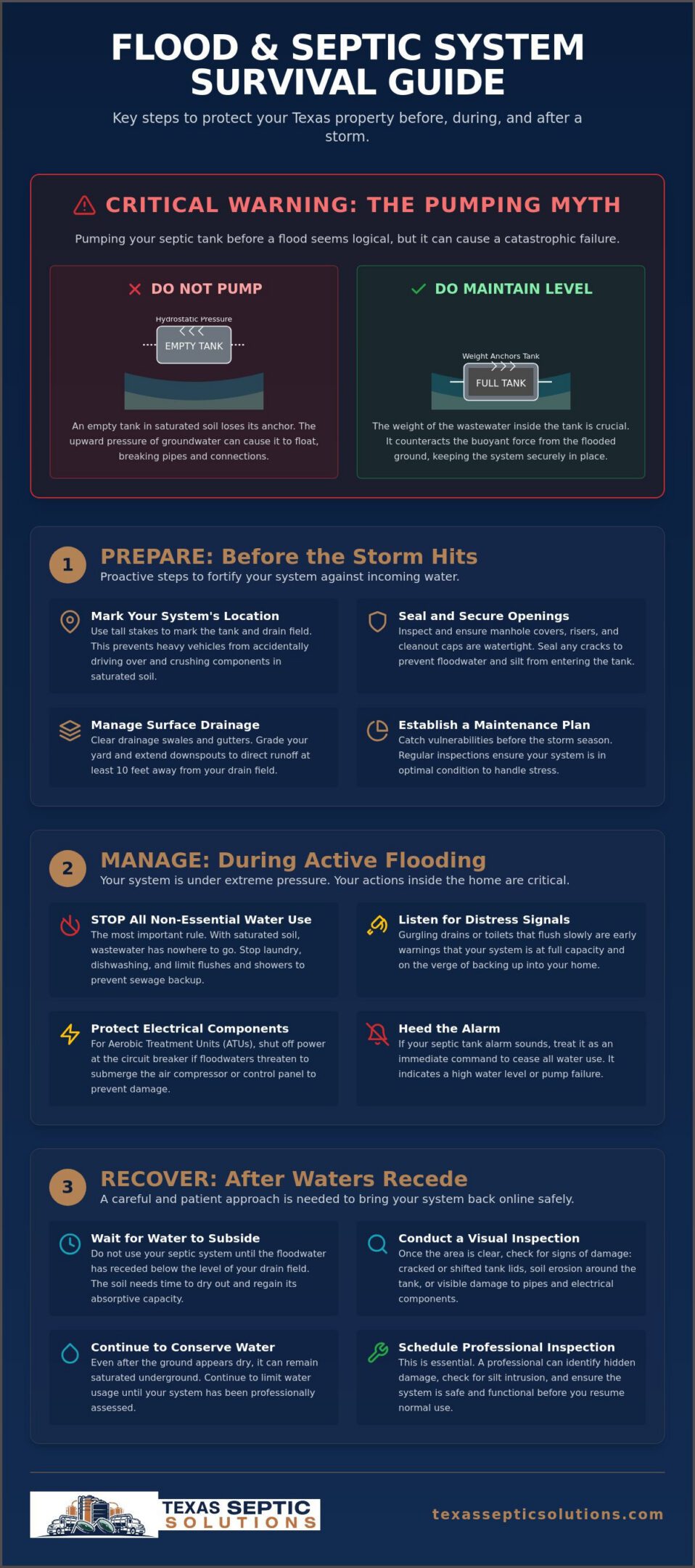
The Pumping Myth: Why You Must NEVER Pump a Flooded Tank
When floodwaters rise and toilets stop flushing, many homeowners have the same instinct: call for an emergency pump-out to “make room” for wastewater. This is a dangerous misconception. In reality, pumping your tank while the ground is still saturated is the fastest way to destroy your entire system. Learning how to protect septic system during flood events means understanding that your tank needs weight to stay in the ground. If you remove the liquid inside, you are removing the only thing keeping the tank anchored against the massive upward force of the water-logged soil.
This phenomenon is driven by hydrostatic pressure. A septic tank is essentially a large, hollow vessel. When the surrounding earth is filled with water, it acts like a pool, and your tank acts like a boat. If the tank is full of wastewater, its internal weight counters the pressure from the outside. If you pump it dry, the tank becomes buoyant. We have seen concrete and plastic tanks alike “float” right out of the ground, snapping inlet and outlet pipes like toothpicks and cracking the tank shell. Fixing a floated tank usually requires a complete system replacement, which is a catastrophic and avoidable expense.
Structural Risks of Premature Pumping
The risk isn’t just about the tank floating. In the heavy “Black Gumbo” clay common across Houston and Cleveland, the external pressure from saturated soil is immense. If a tank is emptied, the walls lose their internal support. This can lead to a “tank collapse,” where the sides of the tank cave in under the weight of the wet earth. Professionals who provide septic system maintenance Texas homeowners rely on will always advise waiting for the soil to stabilize. Your system is designed to handle internal pressure; it is not a structural bunker built to withstand empty-chamber external loads during a flood.
When Pumping is Finally Safe
You should only schedule your routine septic tank pumping once the floodwaters have fully receded and the ground is no longer “mushy.” You can perform a simple “hand-test” by taking a handful of soil from near the tank area and squeezing it. If water drips out or the soil feels like soft mud, it’s still too early. Once the ground is firm, pumping becomes a priority. This is because floodwaters often wash silt, sand, and debris into the tank. If this sediment isn’t removed, it will eventually migrate into your drain field and cause a permanent, expensive clog. If you are worried about the state of your tank after a storm, reach out to Texas Septic Solutions for a professional site evaluation before you pump.
Professional Safeguards with Texas Septic Solutions
Managing a septic system in the wake of a Texas storm is a heavy responsibility. While the steps outlined in this guide provide a solid foundation for how to protect septic system during flood events, some situations require a professional’s touch. Our team at Texas Septic Solutions understands the unique challenges of local terrain, from the dense clay in Cleveland to the low-lying areas of Houston. We don’t just fix problems; we partner with you to ensure your home remains safe and functional, no matter what the weather brings. Expert diagnostics can catch small vulnerabilities, like a hairline crack in a riser or a failing seal, before they turn into a total system collapse during a hurricane.
One of the best ways to stay ahead of the storm is by enrolling in a septic system maintenance plan. These regular checkups allow us to verify the structural integrity of your tank and the health of your drain field when the weather is clear. By identifying and addressing wear and tear early, you’re building a layer of resilience that protects your property and your wallet. We believe in being proactive so that when the clouds gather, you can focus on your family’s safety instead of worrying about your plumbing.
24/7 Emergency Support When You Need It Most
Flash floods don’t follow a schedule, and neither do we. We provide 24/7 emergency septic service for homeowners facing active backups or high-water alarms during heavy rain events. If your system begins to fail, our technicians offer rapid response to stabilize the situation. We can provide immediate advice on how to minimize damage while waiting for floodwaters to recede. Once it is safe to work, we handle the professional cleanup and disinfection required for any septic overflows, ensuring your home environment is restored to a healthy state quickly and efficiently.
Building a Flood-Resilient Septic Strategy
Recovery is the perfect time to look toward the future. If your current system struggled during the last flood, it might be time to upgrade to high-performance components. We can install watertight lids and advanced risers that keep silt and runoff out of your tank. For older systems that are consistently prone to failure, we can help you evaluate a septic system replacement cost. Modern installations are designed with better materials and more robust electrical safeguards than those built decades ago. Investing in a resilient system today means you’ll be ready for the next “hundred-year” storm with confidence and peace of mind.
Securing Your Property for the Next Texas Storm
Managing a septic system in our flood-prone region doesn’t have to be a source of constant anxiety. By focusing on proactive sealing before the rain starts and strictly limiting water usage during the peak of the storm, you can prevent the most common causes of system failure. Remember that the “pumping myth” is one of the most dangerous misconceptions out there; keeping your tank full provides the weight necessary to prevent it from floating or collapsing in saturated soil. Learning how to protect septic system during flood events is a vital skill for every homeowner in Cleveland and Houston.
If you are currently facing a backup or need a professional to verify your system’s integrity after the water recedes, we are here to help. Our team provides comprehensive maintenance and repair services tailored to the unique challenges of East Texas. You can contact Texas Septic Solutions for 24/7 emergency service or a post-flood inspection to ensure your system is structurally sound and ready for the future. We take pride in being your local experts, and we’re committed to keeping your home functional through every season. Stay safe and know that professional support is always just a phone call away.
Frequently Asked Questions
Can I use my toilet if my septic field is underwater?
You should avoid using your toilet or any indoor plumbing if your drain field is submerged. When the ground is underwater, the soil is fully saturated and cannot absorb any more wastewater. Flushing the toilet in this condition will force sewage back up through your pipes, likely resulting in a messy backup into your home’s lowest drains.
Should I turn off my aerobic septic system during a flood?
You must turn off the power to your aerobic system if the air compressor or pump is at risk of being submerged. Submerged electrical components can short circuit or suffer permanent motor damage. Shutting off the breaker is a key step in how to protect septic system during flood events. Don’t restore power until the water recedes and the components are dry.
How long should I wait to pump my septic tank after a flood?
You need to wait until the floodwaters have completely receded and the soil is no longer saturated before scheduling a pump-out. This process can take several days or even weeks depending on the clay content of your soil. Pumping too early can cause the tank to float or collapse due to the external pressure of the water-logged earth.
What are the signs that my septic tank has been damaged by a flood?
Common signs of damage include slow-draining toilets, gurgling sounds in your plumbing, or the appearance of sinkholes over the tank area. You should also look for soil erosion or any evidence that the tank has shifted or tilted. If you notice these issues, the system likely has structural damage or clogged pipes that require a professional inspection.
Is it safe to drink well water after my septic system has flooded?
It is not safe to drink your well water until it has been professionally tested and certified as bacteria-free. Floods often wash septic waste into the groundwater, which can contaminate private wells. Stick to bottled water for drinking, cooking, and brushing your teeth until you receive a clear report from a lab or your local health department.
Why is my septic alarm going off after a heavy rain?
Your septic alarm usually sounds because the water level in the tank has risen above the high-water float. This often happens after heavy rain if surface water leaks into the tank or if the drain field is too saturated to accept wastewater. It can also indicate a failing pump or a tripped circuit breaker that needs immediate professional attention.
Can floodwater cause my septic tank to float out of the ground?
Floodwater can absolutely cause a septic tank to float if the tank is empty or if the soil is extremely saturated. This happens because of hydrostatic pressure, where the water in the soil pushes upward against the buoyant tank. Understanding how to protect septic system during flood involves keeping your tank at its normal operating level to provide the weight needed to stay anchored.
What should I do if sewage backs up into my house during a flood?
If sewage backs up into your home, stop all water usage immediately and keep everyone away from the affected area. Clean and disinfect the space using a solution of one-half cup of chlorine bleach per gallon of water to kill harmful pathogens. Once the flood recedes, contact a licensed professional to inspect the system for damage before you resume normal use.