
How to Get a Septic Permit in Liberty County TX: The 2026 Homeowner’s Guide
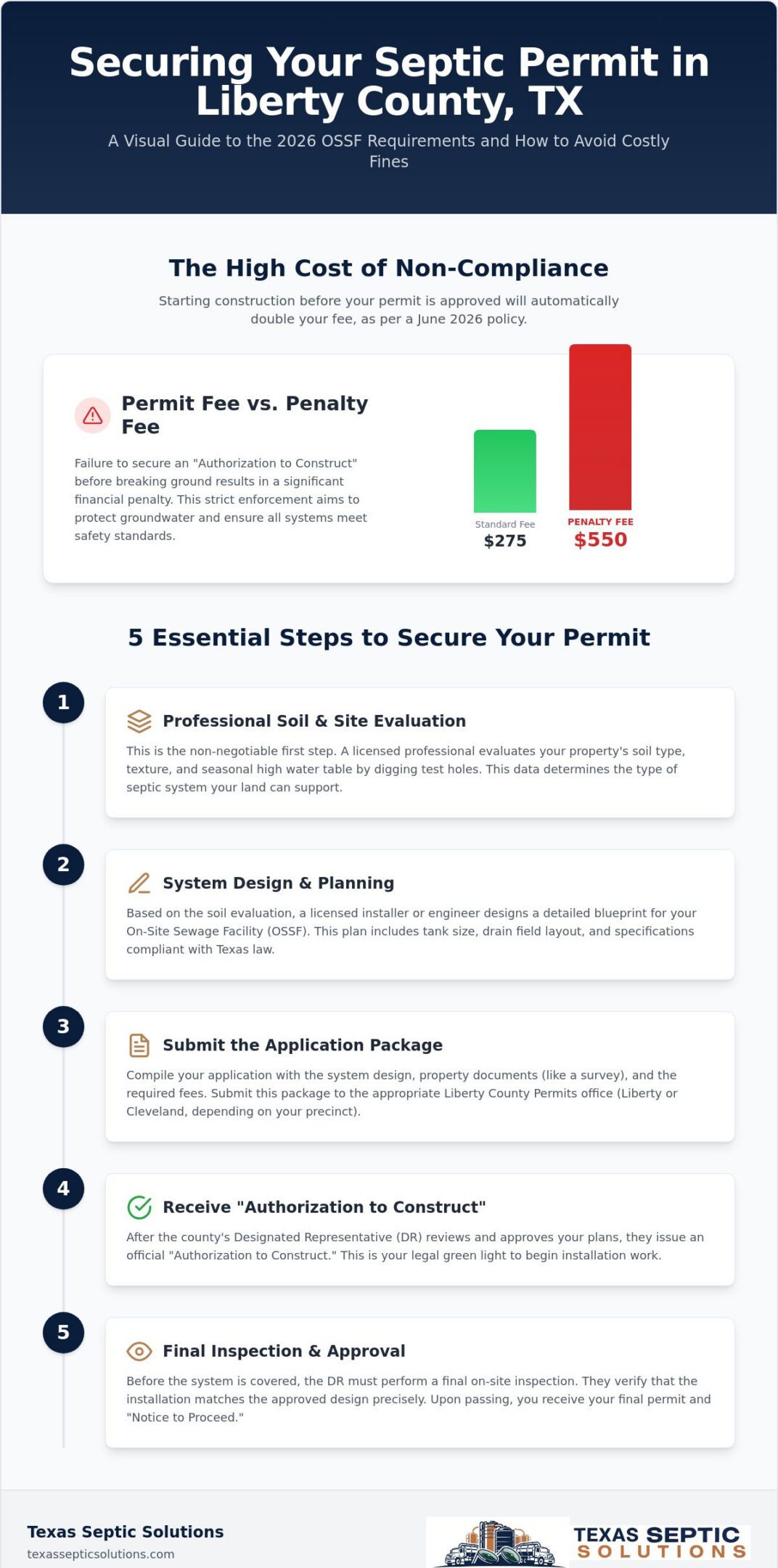
Starting your home build without a permit in Liberty County could cost you exactly double what you planned to pay. As of June 2026, local officials are strictly enforcing permit requirements, meaning a simple oversight could turn into a $550 penalty before you even break ground. If you’re wondering how to get a septic permit in Liberty County TX without the stress, you’re in the right place. We know that deciphering government forms and soil reports feels overwhelming, especially when you’re worried about a failed inspection or unexpected soil issues.
The good news is that you don’t have to tackle the bureaucracy alone. This guide is designed to take the guesswork out of the application process, ensuring your system meets every 2026 standard. We’ve simplified the steps to help you avoid legal fines and project delays. We’ll walk you through the $275 residential fee structure, the essential site evaluation documents, and the specific requirements for the Liberty and Cleveland permit offices so you can get your project moving forward without any legal setbacks.
Key Takeaways
- Understand why a professional soil site evaluation is the non-negotiable first step for any legal septic installation in the county.
- Follow our breakdown on how to get a septic permit in Liberty County TX to ensure your application package is complete and accurate the first time.
- Check your property against 2026 lot size and setback regulations to avoid common compliance pitfalls that stall new builds.
- Learn how to avoid the “double-fee” penalty by timing your permit approval correctly with your construction schedule.
- Discover how professional design and installation support can simplify the inspection process and protect your home’s long-term utility.
Understanding the Liberty County OSSF Permit Requirements
Liberty County is a beautiful place to build, but our local soil doesn’t always make it easy. To protect our groundwater and your property value, the county requires a permit for all On-site sewage facilities (OSSF). In simple terms, an OSSF is any system that treats and disposes of wastewater on your own land rather than sending it to a city sewer plant. Under Texas law, any system producing less than 5,000 gallons of waste daily must have a valid permit from a local authorized agent.
In our area, that agent is the Liberty County Permits and Inspections Department. They operate out of two main offices: one on Travis Street in Liberty and another on County Road 3549 in Cleveland. Understanding how to get a septic permit in Liberty County TX starts with knowing which office handles your specific precinct. These officials ensure that every system installed can handle the heavy clay and high water tables common in Southeast Texas. Whether you’re building a new home or looking into a septic system replacement cost for an aging tank, you must clear the permitting hurdle first.
When is a Septic Permit Required?
You can’t just dig a hole and drop in a tank. A permit is mandatory for any new residential construction in the unincorporated parts of Liberty County. If you’re planning significant repairs, such as replacing a drain field or adding a new tank, you’ll also need to update your paperwork. Many buyers also request a permit verification during property transfers. If the county has no record of a system, you might be required to bring it up to 2026 standards before the sale can proceed. Knowing exactly how to get a septic permit in Liberty County TX is the best way to prevent your construction from grinding to a halt. Remember that the Liberty County Commissioners Court approved a policy in June 2026 that doubles the permit fee if you start work before your application is approved.
The Role of the Designated Representative (DR)
The Designated Representative, or DR, is the county official who has the final say on your project. They review your site evaluation, approve your design, and perform the final inspection before your system is covered with dirt. In Liberty County, the DR works closely with your licensed installer and soil evaluator to ensure the design matches the land. Texas law is very strict here; you cannot self-certify a septic design. Every system must be designed by a licensed professional to ensure it won’t fail and contaminate your neighbor’s well or the local environment. This oversight protects you from expensive repairs down the road and ensures your property stays functional for years to come.
5 Essential Steps to Secure Your Septic Permit
Securing a permit doesn’t have to be a bureaucratic nightmare if you follow the right sequence. The process is designed to verify that your land can safely process waste without harming the local environment. If you’re wondering how to get a septic permit in Liberty County TX, you’ll need to move through these five specific stages to stay compliant with Texas’s OSSF regulations.
- Step 1: Professional Soil Site Evaluation. This is the most critical step. A licensed evaluator must visit your property to dig “test holes” and determine the soil’s ability to absorb water.
- Step 2: System Design and Planning. Based on the soil report, a licensed installer or professional engineer creates a blueprint of your system, including the tank size and the layout of the drain field.
- Step 3: Submitting the Application. You’ll take your completed design, property documents, and fees to the county office for review.
- Step 4: Authorization to Construct. Once the county approves your plans, they issue a formal “Authorization to Construct.” This is your green light to begin the physical installation.
- Step 5: Final Inspection. Before the system is buried, the county’s Designated Representative must inspect the open trenches and tank to ensure everything matches the approved design. After approval, you’ll receive a “Notice to Proceed.”
Conducting the Soil Morphology Test
Liberty County’s soil varies significantly, ranging from sandy loams in some northern areas to heavy, “tight” clays in the southern reaches. During a soil morphology test, a site evaluator looks at the color, texture, and structure of the soil layers. They’re also checking for the seasonal high water table, which is a common challenge in our region. These factors are vital because soil texture determines whether you need a conventional gravity-fed system or a more advanced aerobic treatment unit. If you’re unsure about the requirements for your specific lot, our team can help with new septic system installation planning to ensure your design is approved the first time.
Submitting Your Application Package
Once your design is ready, you must submit a complete package to the Liberty County Permit & Inspection Department. You can visit the Liberty office at 311 Travis Street or the Cleveland office at 1616 County Road 3549. Your package must include a site plan, detailed design specs, a copy of your property deed, and your tax ID number. For 2026, the residential permit fee is $275, plus a $10 state TCEQ fee. Most homeowners can expect a review period of about one to two weeks, provided the paperwork is complete. Missing even one notarized affidavit can result in an immediate rejection, so double-check every page before heading to the office.
Liberty County Regulations: Lot Size and Setbacks
Your property’s size and layout are the biggest factors in determining how to get a septic permit in Liberty County TX. The county doesn’t just look at whether you have enough space for a tank; they look at how that space interacts with your neighbors and the local environment. If your lot was platted after June 1, 1986, you must meet specific acreage minimums to qualify for an On-Site Sewage Facility (OSSF) permit. These rules prevent the soil from becoming oversaturated with wastewater, which can lead to system failure and health hazards.
Acreage Requirements for OSSF
Liberty County follows a clear “1-acre rule” for most new developments. If your property relies on a private water well, you must have at least 1.0 acre of land to install a septic system. This buffer ensures your drain field is far enough away from your drinking water source. However, if your lot is served by a public water supply, the minimum requirement drops to 0.5 acres. These standards apply to any subdivision created after the 1986 cutoff.
If you own a non-conforming “grandfathered” lot that is smaller than these requirements, you might still be able to secure a permit, but the process is more complex. In these cases, the county often requires an aerobic system with spray or drip dispersal because these systems treat waste more effectively in tight spaces. High-density areas near the Harris County line often face stricter runoff rules, so it’s vital to check your specific plat map before buying equipment. We often help homeowners navigate these tight lot requirements during the design phase to ensure their plans don’t get rejected by the Permits and Inspections Department.
Mandatory Setback Distances
Once you’ve confirmed your lot size, you have to map out your setbacks. A setback is the minimum horizontal distance required to prevent contamination between your septic system and other property features. These distances are non-negotiable and will be verified during your final inspection. In Liberty County, your drain field must be at least 5 feet from your property lines and between 5 to 10 feet from your home’s foundation.
The most critical setback involves your water source. You must maintain a 50 to 100 foot buffer from any private water well, depending on the well’s construction and the type of septic system you’re installing. If your property is near a creek, pond, or the Trinity River, additional setbacks apply to protect the watershed. If your lot is located within a floodplain, you’ll also need approval from the Floodplain Administrator. This usually requires an Elevation Certificate to prove that your system’s electrical components and tank lids are high enough to stay dry during a heavy rain event. Missing these measurements by even a few inches can lead to a failed inspection and a $150 re-inspection fee.
Avoiding Common Delays in the Permitting Process
Nobody wants their project to stall because of a minor paperwork error. When homeowners research how to get a septic permit in Liberty County TX, they often underestimate the technical review stage. The #1 cause for delay is an incomplete or inaccurate site plan. If your drawing doesn’t show every existing and proposed structure, including driveways, sheds, or even future pool locations, the county will reject it. You must also manage your “Authorization to Construct” timeline carefully. This authorization isn’t permanent; if your project sits idle for too long, the permit can expire. Learning how to get a septic permit in Liberty County TX is just the first step; keeping the project on schedule requires constant communication with the permit office.
A failed septic system repair can also lead to unexpected delays. If an inspector finds that a simple fix isn’t enough to bring an old system up to 2026 standards, they may demand a total system overhaul. This means you’ll need a new site evaluation and a fresh permit application before any more work can proceed. To avoid these traps, ensure your contractor is in good standing with the TCEQ before signing any contracts. It’s always better to address these issues during the planning phase rather than after the trenches are dug.
Preparing for the Final Inspection
Timing is everything when it’s time for the final walkthrough. You must leave the entire system “open” or uncovered for the county inspector. If you bury the tank or the lines before the inspector arrives, they’ll require you to dig it all back up to verify the work. Common red flags include using unapproved materials or failing to maintain the required setback distances from property lines. If your system fails this stage, you’ll be hit with a $150 re-inspection fee for every return visit the county has to make. It’s much cheaper to get it right the first time by double-checking your measurements.
Contractor Accountability
Your installer is your partner in this process. Always verify their OSSF license through the Texas Commission on Environmental Quality (TCEQ) database to ensure they’re authorized to work in Liberty County. For aerobic systems, the county also requires a signed two-year maintenance contract and a notarized Affidavit to the Public before a permit is finalized. We handle all of this county coordination for our clients, from the initial design to the final handshake with the inspector. If you’re ready to break ground without the stress, reach out to us for a professional new septic system installation estimate today.
Professional Support for Your Liberty County Project
Navigating the bureaucracy is only half the battle. Once you understand how to get a septic permit in Liberty County TX, you need a team that can execute the plan without cutting corners. We pride ourselves on being a reliable local authority for our neighbors in Liberty, Cleveland, and the surrounding areas. We don’t just drop a tank and leave; we stay involved through every stage of the build. If an unexpected issue arises during the construction phase, our 24/7 service ensures your project doesn’t sit idle over a weekend while you wait for answers. We’re built for both the mundane tasks of paperwork and the high-pressure demands of a complex installation.
Full-Service Permit Management
We provide full-service permit management to take the stress off your shoulders. Our team handles the initial soil evaluation, coordinates the design submission, and manages the final inspector walkthrough. You won’t have to spend your mornings waiting in line at the Travis Street office or trying to track down a Designated Representative on the phone. By acting as your primary point of contact for the county, we ensure that every document meets the strict 2026 compliance standards. This proactive approach minimizes the risk of re-inspection fees and keeps your project moving toward completion. Our commitment to environmental safety means we never take shortcuts that could compromise your land or the local water supply.
Next Steps After Approval
After the county issues your “Notice to Proceed,” the physical installation begins. A successful permit is a great start, but the longevity of your system depends on what happens after the dirt is leveled. Transitioning from a fresh installation to a long-term septic system maintenance Texas plan is the smartest move a homeowner can make. Our maintenance programs are designed to catch small issues before they become expensive failures, giving you peace of mind year after year. We know that a well-maintained system is the key to a stress-free home.
Part of that long-term care includes establishing a routine pumping schedule. Even the best-designed aerobic or conventional systems need attention every few years to remove solids and protect the drain field. By partnering with a local expert who knows the specific soil quirks of Liberty County, you’re investing in the future of your property. We value the long-term relationships we build with our customers and remain committed to your home’s functionality long after the permit is signed. Contact us today for a professional consultation on your Liberty County property and let’s get your project started the right way.
Secure Your Property’s Future with Professional Permitting
Building a home is a major investment, and your septic system is its most critical utility. By now, you know that a successful project relies on a professional soil evaluation and strict adherence to lot size and setback regulations. Getting your paperwork in order is the first step toward long-term home functionality, and knowing exactly how to get a septic permit in Liberty County TX ensures you avoid the costly double-fee penalties that stall so many local builds. Whether you’re navigating high water tables in Cleveland or tight lot lines in Liberty, following the county’s 2026 guidelines keeps your project on track and legal.
Our team is here to take the stress out of the process with our TCEQ Licensed Installers and 24/7 emergency support. We understand the local soil conditions and the specific requirements of the permit office, allowing you to focus on your new home while we handle the technical details. Let Texas Septic Solutions Handle Your Liberty County Permit and Installation Today. We’re ready to help you build a system that lasts for decades to come.
Frequently Asked Questions
How much does a septic permit cost in Liberty County for 2026?
A residential septic permit currently costs $275.00, plus a mandatory $10.00 state TCEQ fee. If you are installing a commercial system, the permit fee is $450.00. It is vital to have your permit in hand before any construction begins, as the county doubles these fees if work starts without official approval.
How long does it take to get a septic permit approved in Liberty County?
You can typically expect an approval timeline of one to two weeks after you submit a complete application. This period allows the county’s Designated Representative to review your soil report and system design. Providing an accurate site plan from the start is the most effective way to speed up the process of how to get a septic permit in Liberty County TX.
Can I install my own septic system in Liberty County if I have a permit?
Texas law generally requires a licensed OSSF installer to handle the physical installation of a septic system. While some narrow exemptions exist for homeowners performing their own work on their primary residence, the technical requirements and inspection standards are very high. Most property owners hire a professional to ensure the system meets local environmental standards and passes the final walkthrough.
What is the difference between an Authorization to Construct and a Notice to Proceed?
The Authorization to Construct is the initial green light that allows your contractor to start digging and placing equipment. In contrast, the Notice to Proceed is the final document issued after the county inspector has verified the open-hole installation. You cannot legally use the system or cover it with soil until that final Notice to Proceed is in your hands.
Do I need a new permit to replace my septic tank lid or riser?
Minor maintenance tasks like replacing a damaged lid or adding a riser usually don’t require a full construction permit. However, if you are performing a significant septic system repair, a $25.00 repair permit is required. If you’re unsure whether your project counts as a minor fix or a major repair, a quick call to the Liberty or Cleveland permit office can save you from a potential fine.
What happens if my property is located in a Liberty County floodplain?
Properties in flood-prone areas must receive additional clearance from the Floodplain Administrator. You will be required to submit an Elevation Certificate to prove that the system’s electrical components and tank openings are protected from rising water. If your lot sits in a designated floodway, you might also need a No-Rise Certificate to demonstrate that the installation won’t obstruct water movement during a storm.
Is a maintenance contract required for all septic systems in Liberty County?
A maintenance contract is mandatory for all aerobic treatment units but is generally not required for conventional gravity systems. For aerobic systems, you must provide a signed two-year maintenance agreement as part of your application for how to get a septic permit in Liberty County TX. This contract ensures that a professional regularly checks the aerator and chlorine levels to keep the system functioning safely.
Who do I contact to check the status of my septic application?
You can contact the Liberty County Permit & Inspection Department at their main office on Travis Street in Liberty or their sub-office in Cleveland. It is helpful to have your property tax ID or the physical address ready when you call so the staff can locate your file. They can provide updates on whether your technical review is complete or if the inspector has flagged any issues with your site plan.