
Septic Tank Backing Up Into House: Emergency Steps & Long-Term Fixes
Imagine walking into your bathroom only to find dark, foul-smelling water bubbling up through the shower drain while the toilet refuses to flush. It’s a homeowner’s worst nightmare, and seeing a septic tank backing up into house drains means you’re facing a race against time to protect your property from expensive water damage. You’re likely feeling a mix of panic and frustration, especially when you can’t use your own sinks or showers without making the mess worse.
We understand how overwhelming it feels to wonder if you’re looking at a simple pipe blockage or a total system failure. This guide will show you exactly how to stop the immediate overflow and help you diagnose the root cause before the situation escalates further. We’ll walk through the critical emergency steps to take right now, how to identify signs of a failing drain field, and what long-term solutions will keep your home dry and functional for years to come.
Key Takeaways
- Stop all water usage immediately to prevent further overflow and protect your home from hazardous sewage exposure.
- Learn how to distinguish between a simple isolated clog and a total system failure by identifying specific gurgling sounds in your pipes.
- Understand how heavy East Texas rainfall and local clay soils contribute to a septic tank backing up into house drains.
- Explore professional solutions like emergency pumping and hydro-jetting that clear stubborn blockages and restore household functionality.
- Establish a proactive maintenance schedule to prevent future emergencies and extend the lifespan of your septic system.
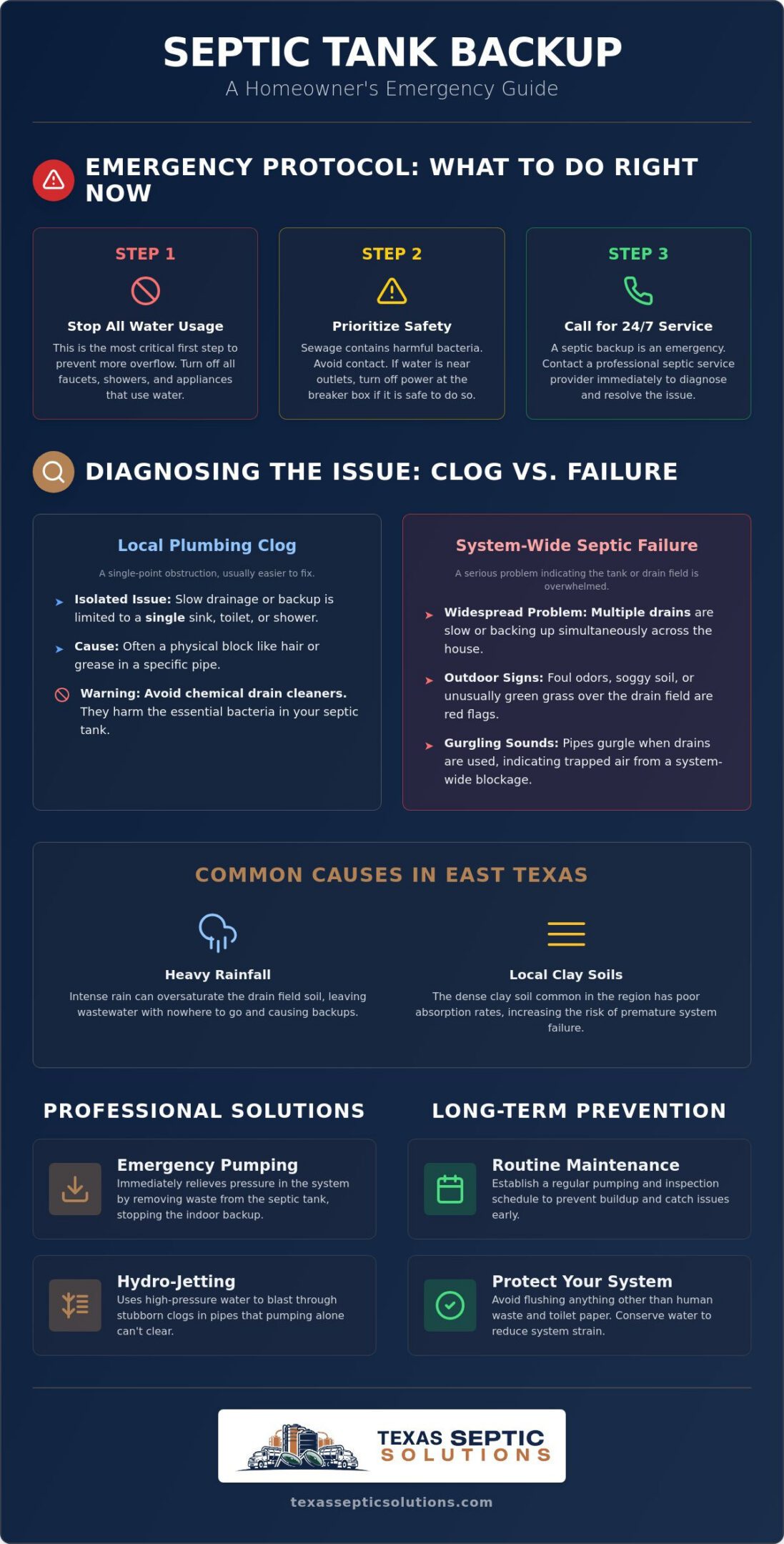
Emergency Protocol: What to Do When a Septic Tank Backs Up
Finding your septic tank backing up into house drains is a crisis that requires immediate action. The first ten minutes of a backup are the most critical for minimizing interior damage and health risks. To understand the gravity of the situation, it helps to know How a Septic Tank Works; essentially, when the tank or drain field reaches capacity, the waste has nowhere to go but back through your plumbing. If you see sewage in your sinks or tubs, follow this protocol immediately.
Step 1: Stop the Inflow Immediately
The most common mistake homeowners make is trying to “flush away” the problem. This only adds more volume to an already overwhelmed system, forcing more waste into your living space. Stop using all water immediately. This includes toilets, showers, and sinks. You must also account for “silent” water users. Water softeners, ice makers, and high-efficiency washing machines often run on automatic cycles. If you aren’t sure how to disable these individual appliances, locate your main water shut-off valve and turn it off. This ensures no new water enters the system while you wait for professional help.
Safety Hazards and Electrical Precautions
Raw sewage isn’t just a mess; it’s a significant health hazard. It contains bacteria, viruses, and parasites that can cause serious illness. Beyond the biological risks, you must be aware of sewer gases like methane and hydrogen sulfide. These gases can be toxic or even flammable in high concentrations. If the backup has reached electrical outlets, baseboard heaters, or your HVAC system, don’t enter the area. Turn off the power at the breaker box if it’s safe to do so. In cases where water is standing around electrical components, you should call an electrician before a septic technician even arrives on-site.
If you must enter the affected area, wear proper personal protective equipment (PPE). This includes rubber boots, waterproof gloves, and eye protection. Once the immediate danger is managed, locate your septic tank cleanout. This is usually the white PVC pipe sticking out of the ground between your house and the tank. Carefully unscrew the cap. If you see standing water inside the pipe, the problem is likely a full tank or a failed drain field rather than a simple pipe clog. Document everything with photos and videos for your insurance company before starting any cleanup. Finally, contact a 24/7 emergency septic service provider in the Houston or Cleveland area to begin the restoration process.
Diagnosing the Issue: Slow Drains vs. Full Septic Failure
The “gurgling” sound in your pipes is often the first warning your home gives you. It happens when air is trapped in the lines, struggling to move past a blockage. Distinguishing between a simple localized clog and a septic tank backing up into house drains is the difference between a five-minute fix and a major home emergency. Before you panic, take a moment to evaluate how many fixtures are affected and check your yard for physical clues.
Signs of a Local Plumbing Clog
If the backup or slow drainage is limited to a single sink, toilet, or shower, you’re likely dealing with a local plumbing clog. This usually means a physical obstruction, like hair or grease, is stuck in the trap or the branch line leading to that specific fixture. You can often resolve these with a standard plunger. However, be careful not to use excessive force, as this can damage older pipes. Avoid the temptation to reach for chemical drain cleaners. According to EPA Guidelines for Septic Care, these harsh chemicals are poison for the beneficial bacteria living in your tank. Without those bacteria, your system cannot break down solids, leading to much bigger problems down the road.
Signs of a System-Wide Septic Failure
A system-wide failure is much more serious. You’ll know it’s happening when multiple drains across the house act up at the same time. Because sewage follows the path of least resistance, it will usually appear first in the lowest drains of the home, such as a basement floor drain or a ground-floor shower stall. You might also notice foul odors emanating from your yard or near the tank itself. Take a walk outside and look at your drain field. If you see patches of grass that are suspiciously lush and green compared to the rest of the lawn, it’s a sign that the soil is oversaturated with effluent. Pooling water or soggy soil in the yard during dry weather is a definitive red flag that your system has reached its limit.
Identifying these symptoms early allows you to act before the situation becomes unsanitary. If you’ve noticed slow drains or that telltale gurgling sound, scheduling professional septic system maintenance now can help you identify the root cause before a full backup occurs. Catching a full tank or a minor pipe obstruction early is the best way to keep your home functional and avoid the high costs of emergency restoration.
Why Septic Systems Fail in East Texas: Local Causes
East Texas presents a unique set of challenges for wastewater management. While many homeowners assume a backup is always due to a full tank, the local environment often plays a bigger role. In areas like Houston and Cleveland, the combination of specific soil types and intense weather patterns creates a perfect storm for a septic tank backing up into house drains. Understanding these local factors is the first step toward preventing a repeat emergency.
Soil Saturation and the ‘Hydraulic Overload’
The soil in East Texas, particularly the “Houston Black” clay, is notorious for its poor drainage. This clay is expansive; it swells when wet and shrinks when dry. During a heavy Texas thunderstorm, the soil becomes saturated quickly, leaving no room for the liquid effluent from your septic system to percolate downward. This leads to what we call a “hydraulic overload.” Even if your tank was pumped recently, the water in the drain field has nowhere to go, causing it to push back toward your home. Managing surface runoff is essential for system health. Ensure your gutters and downspouts direct water at least ten feet away from the septic area to prevent unnecessary soil saturation.
Mechanical Blockages and Component Failure
Beyond the soil, mechanical components inside the tank can fail over time. Your system relies on inlet and outlet baffles to direct the flow of wastewater and keep solids where they belong. If a baffle breaks or corrodes, solids can escape into the lateral lines, causing a permanent clog in the drain field. Another common culprit is the effluent filter. This small but vital component prevents fine solids from entering the drain field. If it isn’t cleaned during regular checkups, it will eventually clog, resulting in slow drains and eventual backups. Following a University Guide to Septic Maintenance can help you understand how these components work together to protect your home.
East Texas is also home to aggressive root systems from pines and oaks. These roots seek out the moisture inside your pipes, often cracking lateral lines and creating massive obstructions that a plunger cannot fix. Finally, we must address the “flushable wipes” myth. These products do not break down like toilet paper. They snag on roots or rough pipe edges, creating blockages that lead to a septic tank backing up into house plumbing. By being mindful of what goes down your drains and monitoring your yard for signs of saturation, you can avoid many of the common pitfalls that affect our local community.
Professional Solutions: Repairing a Backed-Up System
Once you’ve managed the immediate mess, you need a resolution that prevents the next overflow. Professional intervention identifies whether you’re facing a simple maintenance lapse or a structural failure. A septic tank backing up into house drains is often a symptom of a deeper issue that requires specialized equipment to diagnose and resolve. Our goal is to restore your home’s functionality quickly while ensuring the solution lasts for years, not just days.
When Pumping is the Solution
Professional pumping is almost always the first step in an emergency. By removing the accumulated liquid and solids, we restore immediate capacity to your system, which stops the backup from worsening. However, pumping is also a vital diagnostic tool. Once the tank is empty, a technician can inspect the integrity of the walls and the condition of the baffles. We look at the thickness of the sludge and scum layers to determine if the system was simply overdue for service. It’s important to remember that if your drain field is saturated or “dead,” pumping the tank is only a temporary fix. If the soil can’t absorb water, the tank will fill back up to a critical level within a few days of normal household use.
Advanced Repair Techniques
If the tank itself is in good shape, the problem likely lies in the lines or the soil. Hydro-jetting is a highly effective professional solution for stubborn blockages. This process uses high-pressure water to blast through grease, scale, and minor root intrusions that standard plumbing snakes can’t touch. For systems struggling with the heavy clay soils common in East Texas, we may look at techniques like Terralifting. This involves fracturing the soil with pressurized air to create new pathways for liquid to flow, which can sometimes save a failing drain field without a full replacement.
In cases where pipes have collapsed or distribution boxes have shifted due to soil movement, physical replacement is necessary. You can find a detailed breakdown of these processes in our septic system repair guide. For property owners dealing with chronically poor soil conditions, upgrading to an aerobic system might be the most reliable long-term path. These systems use oxygen to break down waste more efficiently before it ever reaches the soil. If you’re currently dealing with a septic tank backing up into house drains, don’t wait for the damage to get worse. Reach out to our team for a professional septic system repair assessment to get your household back on track.
Preventing Future Backups: A Long-Term Maintenance Plan
Preventing a repeat of a septic tank backing up into house drains starts with a shift in how you view your utility system. It isn’t a “set it and forget it” appliance; it’s a living biological environment that requires consistent oversight. By moving from a reactive mindset to a proactive one, you can extend the life of your system by decades and avoid the high-pressure stress of emergency repairs. A little attention today prevents a massive headache tomorrow.
Developing Good Septic Habits
The first line of defense is the “Septic Diet.” Your system is designed to process only human waste and toilet paper. Avoid flushing “flushable” wipes, feminine hygiene products, or paper towels. In the kitchen, never pour grease, oils, or coffee grounds down the sink. These substances solidify in the pipes and create impenetrable blockages that lead to a septic tank backing up into house plumbing. You should also manage your hydraulic load. Instead of doing five loads of laundry on a Saturday, spread them throughout the week. This prevents a sudden surge of water from washing solids out of the tank and into the drain field. Finally, keep the area over your drain field clear. Never park vehicles, build sheds, or install pools over the lines. The weight can crush pipes and compact the soil, destroying your system’s ability to breathe.
The Value of Proactive Maintenance
Consistency is the key to longevity. The EPA recommends pumping most residential tanks every 3 to 5 years. However, a family of four with a 1,000-gallon tank may need service every 2 to 3 years to remain safe. During these visits, a professional technician can clean your effluent filter and check for early warning signs of wear in the baffles. If you ever hear your septic tank alarm going off, treat it as a priority. It is your system’s way of telling you that levels are too high before an actual backup occurs.
Investing in a septic system maintenance plan provides the best return on investment for your property. When you consider that the septic system replacement cost in 2026 can range from $15,000 to over $30,000, the small annual expense of inspections and pumping becomes a wise financial decision. Proper care ensures your home remains a safe, clean environment for your family while protecting your property value for the long haul.
Restore Your Peace of Mind and Protect Your Home
A septic tank backing up into house drains is a stressful event that demands immediate, professional action. We’ve explored the essential protocol for managing the first ten minutes of an overflow and the importance of diagnosing whether you’re facing a simple clog or a full system failure. Remember that the heavy clay soils and intense rainfall in East Texas require a specific maintenance approach to keep your drain field functional. By prioritizing regular inspections and establishing healthy household habits, you can stop emergencies before they start.
If you’re dealing with an active overflow, you need a partner who understands the urgency of the situation. Facing a backup right now? Call Texas Septic Solutions for 24/7 Emergency Service! We offer 24/7 rapid response for homeowners in Cleveland and Houston, providing comprehensive emergency pumping and repair services. As licensed and insured Texas septic experts, we’re built to handle the high-pressure demands of unexpected failures. You’ve worked hard for your home; let us help you keep it safe and functional for years to come.
Frequently Asked Questions
Can I use my toilets if my septic tank is backing up?
No, you should stop using your toilets immediately. Every time you flush, you add more volume to a system that has already reached its capacity. This extra water and waste have nowhere to go but back into your home through the lowest drains, such as showers or floor drains. It’s best to stop all water usage, including sinks and showers, until a professional restores the flow.
How much does it cost to fix a septic backup in Texas?
The cost to resolve a backup varies significantly based on the root cause of the failure. A simple emergency pump-out is generally less expensive than repairing a collapsed pipe or replacing a saturated drain field. Because every property has different soil conditions and system types, a technician must perform an on-site inspection to identify the specific mechanical or environmental issue before providing an accurate estimate for repairs.
Will my septic tank fix itself if I stop using water for a few days?
Stopping water usage is unlikely to be a permanent fix for your system. While it may allow levels to recede slightly if the soil is temporarily saturated from rain, it won’t resolve underlying issues like a full tank, a broken baffle, or a clogged effluent filter. The backup will almost certainly return as soon as you resume normal household activities. You need a professional to identify and fix the actual problem.
How do I know if the backup is in the house pipes or the septic tank?
If only one sink or toilet is slow, you likely have a local plumbing clog in your house pipes. However, if multiple drains are affected or sewage is appearing in your ground-floor shower, you are likely facing a septic tank backing up into house lines. Checking your outdoor cleanout pipe for standing water is the most reliable way to confirm if the issue is in the main tank or the lateral lines.
Can heavy rain cause my septic tank to back up into the house?
Yes, heavy rain is a frequent cause of septic failures in East Texas. When the ground becomes oversaturated, the liquid effluent from your tank cannot percolate into the soil. This creates a hydraulic surge that pushes wastewater back toward your home’s plumbing. In these cases, even a recently pumped tank can overflow because the drain field is underwater and cannot accept any more liquid from the house.
Is it safe to stay in a house with a septic backup?
Staying in a home with an active backup can be hazardous due to the presence of harmful bacteria, viruses, and toxic gases like methane. If the backup is contained in one small area and you can avoid contact, you may stay while ensuring the space is well-ventilated. However, if sewage has reached living areas or come into contact with electrical components, it’s safer to leave until professional cleanup is complete.
How often should I pump my septic tank to prevent backups in Houston?
Most households should have their tanks pumped every 3 to 5 years to remain safe. However, a family of four with a standard 1,000-gallon tank may require service every 2 to 3 years to prevent a septic tank backing up into house drains. Regular pumping removes the solid sludge that would otherwise escape into your drain field, protecting your system from premature failure and the high cost of total replacement.
What are the first signs of a septic tank backup?
The first signs usually include slow-draining sinks, gurgling sounds in your pipes, and foul odors inside or outside the home. You might also notice patches of unusually green, lush grass over your drain field or soggy spots in the yard even during dry weather. Catching these early warnings allows you to schedule a professional inspection and maintenance visit before the situation turns into a full-scale indoor emergency.