
How Long Does a Septic System Last in Texas? 2026 Homeowner Guide
Your septic system’s true lifespan is written in the heavy Texas clay and your maintenance logs, not just on a manufacturer’s warranty. It is a common worry for homeowners across the Lone Star State, especially when you consider that a full replacement can be a massive financial burden. You likely want to know exactly how long does a septic system last in Texas before you are faced with an unexpected excavation in your backyard. We understand the stress that comes with managing on-site sewage facilities, particularly when dealing with the unique drainage challenges of our local environment.
This 2026 guide will help you determine a realistic timeline for your specific setup, whether you have a traditional gravity system or a modern aerobic unit. You will discover why some systems fail after 15 years while others stay strong for 40. We are going to break down how local soil conditions impact your equipment and provide the clear, actionable steps you can take today to protect your investment. By the end of this article, you will have a professional perspective on how to keep your system running smoothly for decades to come.
Key Takeaways
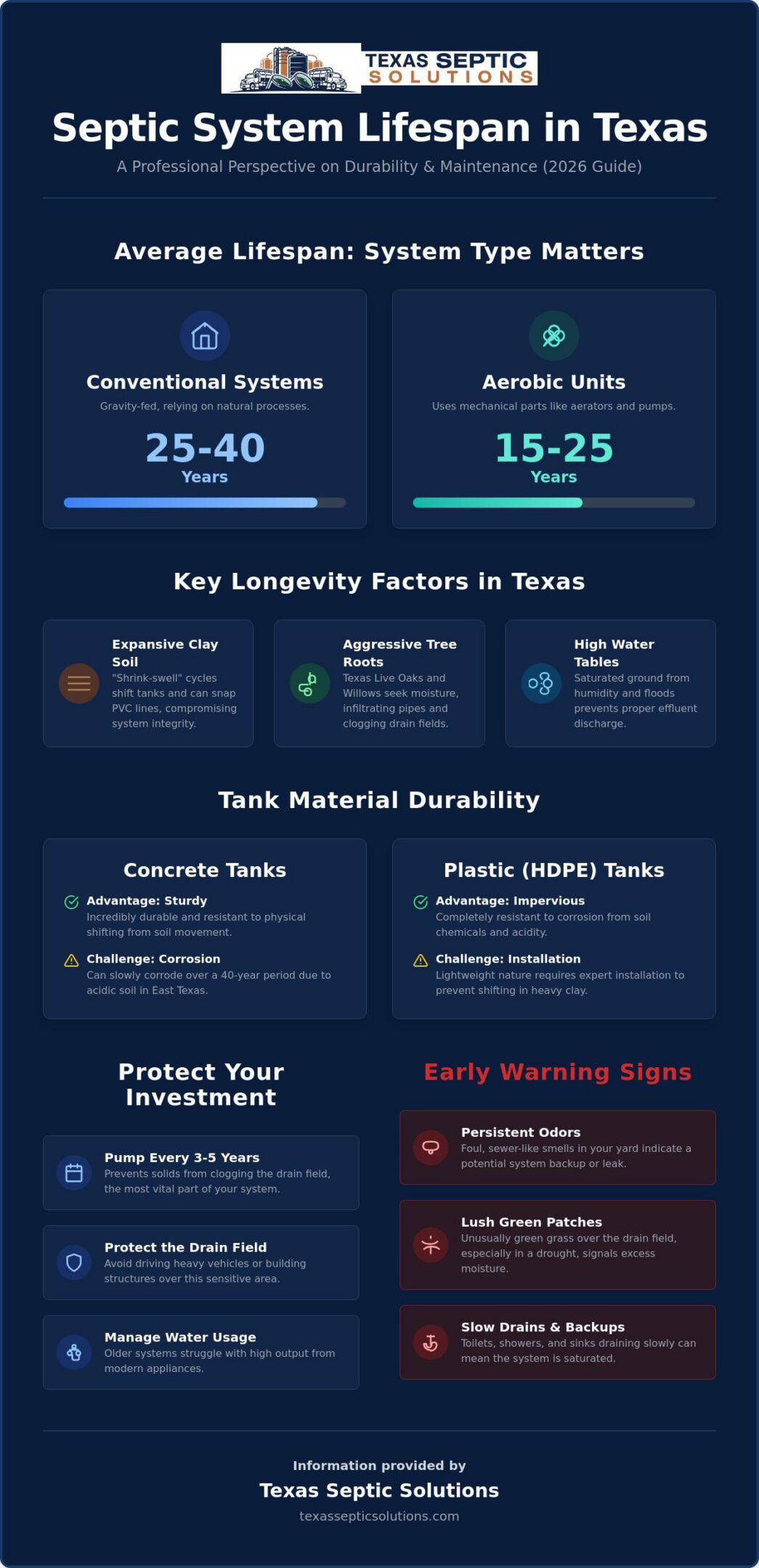
- Conventional septic systems often last 25 to 40 years, while aerobic units typically have a shorter mechanical lifespan of 15 to 25 years due to their complex moving parts.
- Texas clay soil and high humidity levels create a “shrink-swell” effect that can physically shift tanks and saturate drain fields, shortening your system’s life if not managed.
- Determining how long does a septic system last in Texas depends largely on your maintenance habits, including professional pumping every 3 to 5 years to protect the drain field.
- Identifying early warning signs like lush green grass during a drought or persistent yard odors can help you catch issues before they require a total system replacement.
Average Lifespan of a Septic System in Texas
When we discuss how long does a septic system last in Texas, we are essentially measuring the time until the drain field or septic tank loses its structural integrity. It is a calculation of durability versus environmental stress. For homeowners with a conventional gravity-fed setup, you can generally expect 25 to 40 years of reliable service. However, the aerobic systems frequently installed in East Texas and around Houston operate differently. Because they rely on mechanical aerators and pumps to treat waste, their typical lifespan ranges from 15 to 25 years. Local environmental factors in the Houston and Cleveland areas, such as high water tables and intense humidity, often accelerate this wear significantly.
The 20-Year Milestone: What to Expect
Most systems in our region begin to show signs of “fatigue” once they cross the two-decade mark. This doesn’t always mean you’re headed for a full replacement. Often, it’s the point where you must decide between a major component repair or a total system overhaul. You might find that a distribution box has shifted or a pump has reached the end of its cycle. Historical installation standards play a big role here. Systems put in during the early 2000s might not meet the modern TCEQ requirements we follow today. As these older systems age, they often struggle to keep up with the water demands of modern appliances, leading to faster degradation of the soil’s absorption capacity.
Material Matters: Concrete vs. Plastic Tanks
The material your tank is made of dictates its survival in our local environment. Traditional concrete tanks have been the standard across the state for decades. They’re incredibly sturdy, but the soil acidity found in parts of East Texas can slowly corrode the concrete over a 40-year period. In contrast, modern high-density polyethylene (HDPE) tanks are becoming a popular choice in Houston suburbs. These plastic tanks are lightweight and completely impervious to soil chemicals. However, they require expert installation to ensure they don’t shift in heavy clay. When determining how long does a septic system last in Texas, remember that the ground itself is your system’s biggest challenger. Whether it’s concrete or plastic, the goal is to keep the structure sound so it continues to protect your property and the local groundwater.
Texas-Specific Factors That Impact System Longevity
When asking how long does a septic system last in Texas, you have to look deeper than the age of the tank. Our state’s unique environment is aggressive. While a system in a more temperate climate might coast through decades of use, a Texas system battles extreme soil shifts and intense weather cycles. These local variables often dictate whether your equipment reaches its full potential or fails prematurely. Understanding these pressures helps you stay ahead of costly breakdowns.
Expansive clay soils are perhaps the biggest challenge for local homeowners. Many parts of Texas sit on “Blackland Prairie” or heavy clay that undergoes a constant shrink-swell cycle. When it rains, the clay expands with massive force; during a drought, it shrinks and leaves deep fissures. This movement can physically shift a concrete tank or snap the PVC lines connecting your home to the treatment area. Furthermore, Texas clay requires larger drain fields to achieve the same lifespan as sandy areas because the soil’s absorption rate is so much lower. If you suspect your lines have shifted due to soil movement, a professional septic system repair expert can assess the structural integrity of your pipes.
Vegetation also plays a role in equipment failure. Texas Live Oaks and Willow trees are primary “septic killers.” Their root systems are incredibly efficient at seeking out moisture. They can infiltrate even the smallest cracks in a pipe, eventually clogging the entire drain field. Additionally, flash flooding in areas like Shepherd or Cypress can stress system capacity. When the ground is underwater, the system cannot discharge effluent, leading to a backup that can damage the internal components of your tank.
The Challenge of Texas Clay Soils
Clay prevents proper drainage because its particles are so tightly packed. This lack of pore space means that once the soil is saturated, it stays saturated for a long time. Soil compaction makes this worse. Driving heavy equipment or parking vehicles over your yard crushes those small pathways in the soil. This compaction essentially seals off the drain field, forcing your system to work harder and shortening its overall life.
Heat, Humidity, and Bacterial Health
The “Houston Humidity” factor impacts the high water tables that can saturate a drain field from below, preventing waste from being treated. High Texas temperatures also affect the anaerobic digestion process inside your tank. While warmth helps bacteria thrive, extreme heat can sometimes lead to excessive sludge buildup if the tank isn’t ventilated properly. Following the EPA’s septic system guidance is vital for maintaining the delicate bacterial balance needed for a long-lasting system. Heavy seasonal rains can “drown” these beneficial bacteria, stalling the treatment process and allowing solids to escape into your drain field where they cause permanent damage.
Aerobic vs. Conventional Systems: Which Lasts Longer?
Choosing between these two technologies is usually decided by your soil test rather than personal preference. Conventional systems are generally the longevity champions because they have no moving parts and rely entirely on gravity to move waste. In contrast, Aerobic Treatment Units (ATUs) act like a mini-municipal waste plant in your backyard. They treat waste much more thoroughly, which is why Texas regulations often mandate them for properties with heavy clay or small acreage. The trade-off is straightforward. You save land with an aerobic system but commit to a higher level of mechanical upkeep over the years.
When homeowners ask how long does a septic system last in Texas, they’re often surprised that the answer shifts based on the technology buried in their yard. A conventional system might sit quietly for 40 years if the soil remains permeable and the tank stays sealed. An aerobic system is much more “active.” It uses electricity to power an aerator that forces oxygen into the effluent, speeding up the breakdown of solids. While the tanks themselves are quite durable, the internal components have a finite mechanical life that requires your consistent attention.
The Mechanical Lifespan of Aerobic Systems
In a Texas ATU, you’re essentially managing a small engine. Air compressors and water pumps typically have a service life of 5 to 10 years depending on the brand and the local power grid’s stability. Spray heads are often the first thing to fail. They get clogged by lawn debris, calcified by hard water, or even damaged by a stray lawnmower. Staying on top of a septic system maintenance plan is the best way to keep these components running past the 15-year mark. Regular inspections catch a struggling pump before it burns out completely, preventing a total system backup.
Conventional Drain Field Durability
For a conventional system, the tank itself rarely fails first. The “death” of the system usually happens in the drain field, also known as the leach field. Over several decades, a layer of slimy bacteria called biomat forms at the bottom of your gravel trenches. While some biomat is necessary for filtering waste, too much of it eventually seals the soil like a coat of paint. Once the soil can no longer absorb liquid, the system has reached its end. This is the primary factor in how long does a septic system last in Texas when gravity is doing all the work. You’ll see the signs when the ground stays soggy even during a dry spell.
How to Extend Your Septic Lifespan in Texas
You can’t change the heavy clay soil on your property, but you have total control over what enters your tank. Taking proactive steps is the most effective way to influence how long does a septic system last in Texas. Most premature failures aren’t caused by the equipment itself, but by “hydraulic overload” where the system is forced to process more liquid than the soil can absorb. During our humid Texas summers, your drain field is already fighting high moisture levels. Adding excessive water from leaking toilets or back-to-back laundry days can push it past the breaking point.
The Importance of Routine Pumping
Professional pumping is the single most important task for any homeowner. Over time, heavy solids settle at the bottom of your tank as sludge. If this layer gets too deep, those solids get pushed into the drain field, clogging the soil pores permanently. Signing up for a septic system maintenance plan is the cheapest insurance policy you can buy for your home. When we perform a pumping service in Cleveland or Huffman, we don’t just empty the tank. We inspect the baffles and check for structural cracks that could lead to groundwater contamination. If it’s been more than three years since your last visit, you should schedule a professional pumping service to protect your investment.
Landscaping for Longevity
The plants growing over your system play a functional role in its health. Shallow-rooted grasses like Bermuda or St. Augustine are ideal because they stabilize the soil and absorb excess moisture without interfering with your lines. You should follow the “safe distance” rule for larger vegetation. Keep trees at least as far away as their expected height at maturity to prevent roots from seeking out your pipes. Managing runoff is also vital. Ensure your gutters and driveway drains are diverted away from the absorption area. If rainwater pools over your drain field, the soil can’t do its job of treating the effluent from your house.
Protecting the internal bacterial colony is also a daily responsibility. Avoid the “Big Three” septic killers to keep your system healthy. By sticking to these habits, you ensure that how long does a septic system last in Texas stays on the higher end of the 40-year spectrum. Stick to these rules:
- Grease and Oils: These float at the top and can clog the inlet pipes or the effluent filter.
- Flushable Wipes: Despite the name, they don’t break down and are a primary cause of pump failures in aerobic systems.
- Harsh Chemicals: Excessive bleach or drain cleaners kill the beneficial bacteria that digest waste.
Signs Your Texas Septic System is Reaching Its End
Your septic system rarely fails without giving you several warnings first. While we have discussed how long does a septic system last in Texas based on material and soil, the actual “expiration date” is often signaled by the environment around your tank. Catching these signs early can be the difference between a targeted repair and a total property overhaul. If you notice persistent sewage odors in your yard or near the tank area, your system is likely struggling to process waste effectively. These smells aren’t just a nuisance; they often indicate that gases are escaping through cracks in the tank or that the drain field is no longer filtering effluent properly.
One of the most reliable indicators in our region is unusually lush, green patches of grass directly over the drain field. This is especially telling during a typical Texas drought. If the rest of your lawn is dormant and brown, but the grass over your septic lines looks like a professional golf course, it means the soil is receiving excessive nutrients and moisture that it can’t absorb. This is a clear sign of a failing absorption area. You might also notice standing water or muddy soil around the septic tank when it hasn’t rained for days. This “surfacing” of effluent means the ground has reached its maximum capacity.
- Slow Drains: If every sink and shower in the house is sluggish, the issue is likely in the main line or the tank, not an individual pipe.
- Gurgling Pipes: Bubbling sounds from your toilets or drains often mean air is trapped in the system due to a backup.
- Backups: Raw sewage backing up into lower-level drains is the final, most urgent stage of failure.
Troubleshooting vs. Replacement
Not every symptom requires a full excavation. A professional septic system repair can often resolve issues with broken baffles, clogged filters, or failed pumps. However, there is a “point of no return” for a saturated drain field. Once the soil structure is physically compromised by biomat or compaction, the drainage area cannot be “cleaned” and must be relocated. If your septic tank alarm is going off, treat it as an emergency. It usually means the water level in the tank has reached a critical high point, and you have very little time before a backup occurs.
Planning for Replacement
If your system is over 30 years old and showing these signs, it’s time to get a realistic assessment of its remaining life. Navigating a septic system replacement in East Texas involves new soil evaluations and updated permitting to meet current TCEQ standards. This is particularly important if you are planning to sell your property. Most lenders require a professional inspection before a home sale, and an old, failing system can stall a transaction. Determining how long does a septic system last in Texas for your specific property allows you to plan for these costs rather than being surprised by them during a high-stress emergency.
Protect Your Investment for Decades to Come
Understanding how long does a septic system last in Texas is the first step toward avoiding a sudden, massive replacement bill. As we have discussed, your system’s survival depends on more than just the calendar. It is about how you manage the heavy clay soil, the local humidity, and your routine maintenance schedule. By sticking to a strict pumping cycle and watching for early warning signs like lush grass or slow drains, you can push your equipment toward that 40-year milestone.
You don’t have to manage these utility challenges alone. Our family-owned team is deeply committed to the community, providing expert installation and repair for East Texas property owners. Whether you need a routine check or find yourself in a bind, we are here to help with 24/7 emergency service. Worried about your aging system? Schedule a professional septic inspection with Texas Septic Solutions today! We are ready to help you keep your home functional and your property value secure for years to come.
Frequently Asked Questions
Is 30 years old too old for a septic system in Texas?
A 30-year-old system isn’t necessarily “too old,” but it’s likely approaching the end of its reliable service life. While concrete tanks can remain structurally sound for 40 years or more, the drain field often begins to fail after 25 years due to soil saturation or biomat buildup. If your system has reached this milestone, you should have a professional inspection to check for thinning tank walls or sluggish drainage in the yard.
Do aerobic septic systems last longer than conventional ones?
No, aerobic systems generally have a shorter lifespan than conventional gravity systems. Because aerobic units rely on mechanical parts like air compressors and water pumps, they typically last between 15 and 25 years. Conventional systems are simpler and can often last 30 to 40 years. When determining how long does a septic system last in Texas, remember that aerobic systems require more frequent part replacements to stay functional.
How often should I pump my septic tank in Houston to make it last?
You should pump your tank every 3 to 5 years to ensure maximum longevity. In the Houston area, the combination of high humidity and heavy clay soil puts extra stress on your drain field. Sticking to a 3-year pumping schedule prevents sludge from escaping the tank and clogging the soil. This simple habit is the most effective way to protect the absorption area from permanent, costly damage.
Can Texas heat damage my septic system pipes?
The heat itself doesn’t melt the pipes, but it causes the Texas clay to shrink and shift, which can snap PVC lines. During a hot, dry summer, the ground pulls away from the tank and pipes, creating physical tension on the joints. This soil movement can lead to leaks or blockages. Keeping the soil moisture levels consistent around your tank area can help minimize this destructive “shrink-swell” cycle.
What is the most common cause of septic failure in Texas?
Hydraulic overload is the primary cause of failure for Texas homeowners. This happens when the system is forced to process more water than our dense clay soil can absorb. When the ground stays saturated, the beneficial bacteria die off and solids are pushed into the drain field. Once those soil pores are sealed by waste solids, the system can no longer treat effluent, leading to a total failure.
Does a septic system last longer if I use additives?
Most industry experts agree that additives are unnecessary and can actually shorten your system’s life. The natural bacteria found in human waste are perfectly capable of breaking down solids on their own. Some chemical additives can break up the sludge layer too much, allowing small particles to float into the drain field and clog the soil. It’s better to focus on regular pumping than relying on store-bought treatments.
Can a flooded drain field after a Texas hurricane be saved?
Yes, most flooded drain fields can be saved if you stop using the system immediately. You must wait for the floodwaters to recede and the water table to drop before flushing toilets or running water. Pumping your tank while the ground is still underwater is dangerous because the high hydrostatic pressure can actually cause the tank to “pop” out of the ground, leading to a complete system loss.
How much does it cost to extend the life of an aging septic system?
Extending the life of an older system is much more affordable than a full replacement. Investing in routine maintenance and minor repairs, such as replacing a worn-out effluent filter or a struggling aerator, can add years to the equipment’s life. The final answer to how long does a septic system last in Texas often comes down to how quickly you address these small mechanical issues before they turn into a total collapse.