
How to Make Your Houston Septic System Safer for Children
A curious child and an unsecured septic lid are a dangerous combination. To learn how to ensure your septic system is child-safe in Houston, keep tank lids and riser caps firmly secured, keep children away from septic work areas, and never open or enter a tank yourself. Hazardous gases and unstable ground can make an open tank life-threatening. Keep vehicles, heavy equipment, and open flames away from the septic field, too.
It’s natural to focus on the visible parts of your yard, but keeping children safe also means paying attention to what lies below ground. A damaged or poorly maintained septic system can create hazards for children, your household, and your property.
This guide explains how to secure septic areas, store hazardous items safely, plan inspections, and maintain your system. You’ll find practical steps for safer outdoor play and dependable septic care at home.
Key Takeaways
- Mark the septic system’s footprint and keep play, planting, and vehicle traffic clear of sensitive areas.
- Store cleaning products and sharp objects where children can’t reach them, and make household safety routines consistent.
- Use professional inspections to spot developing problems before they affect your family or property.
- Reduce strain on the system with careful water use and proper disposal habits.
- Keep maintenance records so you can track service and recognize changes in system performance.
1. Septic tank and drainfield protection
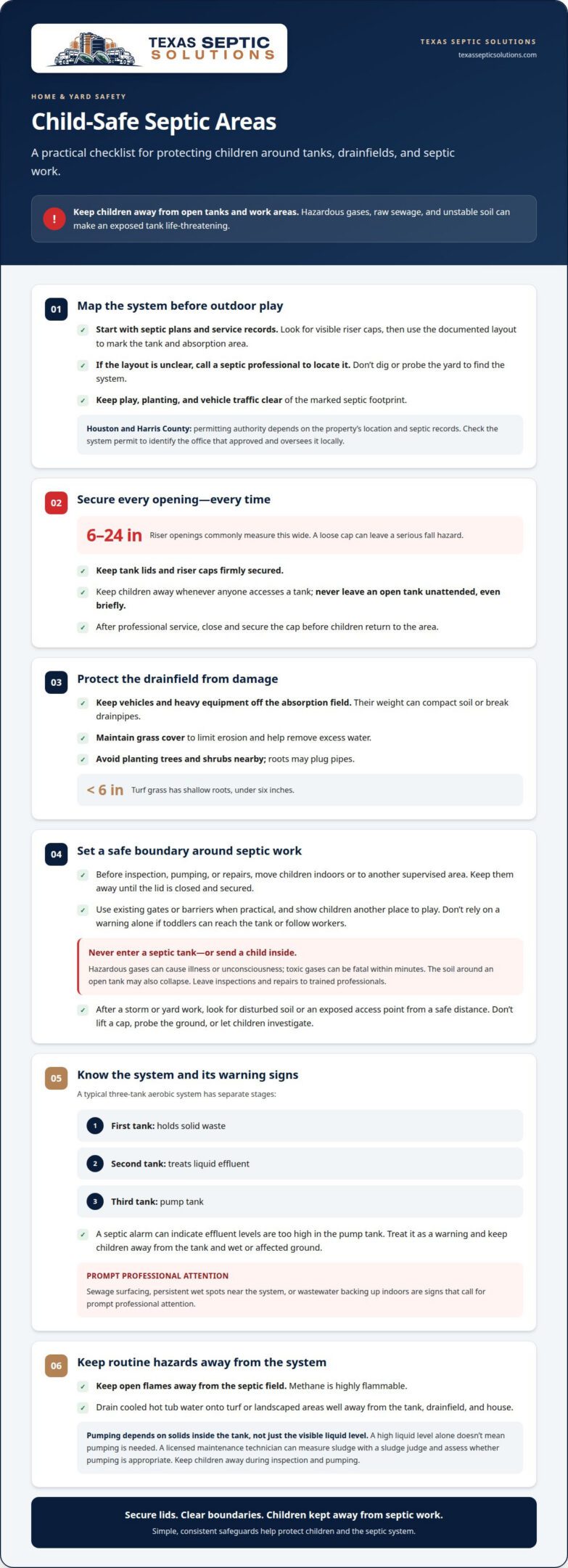
In Houston and Harris County, the permitting authority depends on the property’s location and septic records. Check the system permit to identify the office that approved it and oversees it locally. Don’t assume every address follows the same process.
To find and mark a tank and drainfield, start with the property’s septic plans and service records. Look for visible riser caps, then use the documented layout to mark the tank and absorption area. If the records don’t show the layout, have a septic professional locate it rather than digging or probing the yard.
Riser openings commonly measure 6 to 24 inches across, so a loose cap can leave a serious fall hazard. Keep every cap secured in place, and keep children away while anyone accesses a tank. Never leave an open tank unattended, even briefly.
Protect the drainfield from damage that could make the ground unsafe or cause system problems. Keep vehicles and heavy equipment off the absorption field because their weight can compact soil or break drainpipes. Maintain grass cover to limit erosion and help remove excess water. Avoid planting trees and shrubs nearby because roots may plug pipes. Turf grass has shallow roots, under six inches.
A typical three-tank aerobic septic system has separate stages. The first tank holds solid waste, the second treats liquid effluent, and the third is the pump tank. Knowing the layout helps you keep play areas clear of access points and recognize when an alarm signals a problem. Don’t open a tank to identify its compartments.
Never enter a septic tank, even for a quick look. Hazardous gases can cause illness or unconsciousness, and toxic gases can be fatal within minutes. Keep children and others away from an open tank because the surrounding soil may also collapse. Close and secure the cap after professional service.
A septic alarm can indicate that effluent levels are too high in the pump tank. Treat an alarm as a warning, and keep children away from the tank and any wet or affected ground. Sewage surfacing, persistent wet spots near the system, or wastewater backing up indoors also call for prompt professional attention.
Pumping needs depend on the solids inside the tank, not just the liquid level visible after opening a lid. A high liquid level alone doesn’t mean pumping is needed. A licensed maintenance technician can measure sludge with a sludge judge and assess whether pumping is appropriate. Keep children away during inspection and pumping.
Keep open flames away from the septic field because methane is highly flammable. Drain cooled hot tub water onto turf or landscaped areas well away from the tank, drainfield, and house. These choices help protect the system while keeping children away from access points and potentially affected ground.
Regulations depend on the property’s location and septic records. Check the system permit to identify the office that approved it and oversees it locally.
2. Avoiding entry into septic tanks
The most dangerous septic hazards for children are open tanks, toxic gases, raw sewage, and unstable soil. Exposure to sewage or fumes can cause illness or unconsciousness, while the ground around an open tank may collapse. Keep children away from any exposed opening or work area.
Set a clear boundary whenever a tank is open for inspection, pumping, or repairs. Move children indoors or to another supervised area before work begins, and keep them there until the lid is closed and secured. Leaving an open tank unattended, even briefly to retrieve a tool, is unsafe.
Children may be drawn to a lid, opening, or activity in the yard. Explain that septic equipment is off-limits and keep play away from access points. If a child approaches an open tank, direct them away without stepping onto unstable ground yourself. Have an adult maintain a safe boundary while qualified workers handle the task.
Never climb into a septic tank or send a child to retrieve an object. Harmful gases can build up inside, and raw sewage presents a health hazard. Even a brief entry to inspect a blockage or retrieve a dropped item can expose someone to serious danger. Leave inspections and repairs to trained professionals.
Before scheduled work, tell children which part of the yard is closed and show them another place to play. When practical, use existing gates or barriers to separate children from the work area. Don’t rely on a warning alone if toddlers can reach the tank or follow workers into the yard.
At home, lower toilet lids after use and consider a toilet lock if a curious toddler can reach the bathroom. This limits access to the bowl and helps establish a consistent safety routine. Keep bathroom doors closed when an adult can’t supervise, especially during busy household tasks.
After a storm or yard work, look for disturbed soil or an exposed septic access point from a safe distance. Don’t lift a cap, probe the ground, or let children investigate a hole. Keep people away and arrange professional attention for a damaged lid or suspected tank problem.
Clear rules help prevent risky curiosity: no climbing on septic lids, playing near open access points, or entering work zones. Repeat the rules before maintenance visits and whenever outdoor play moves near the system. A secure lid and a supervised, closed-off work area are essential safeguards.
3. Keeping hazardous items out of reach
Reduce everyday risks by giving cleaning supplies and sharp objects a fixed storage place children can’t reach. Put them away immediately after bathroom, laundry, or kitchen tasks instead of leaving them by a sink or on a low shelf. A closed, secured cabinet keeps curious children from reaching items during play.
Choose storage based on what a child can reach, not what’s convenient for an adult. Keep sprays, detergents, and other cleaning products in their original containers, away from low cupboards and open shelving. After cleaning a bathroom, return each bottle to its secured place before a child enters the room.
Use the same routine for sharp items. Put scissors, blades, and other cutting tools in a secured drawer or cabinet after use. Don’t leave them on a counter while handling laundry or cleaning. A toddler may pull an item within reach, so clear the work surface before stepping away.
Include toilet access in your bathroom safety plan. Keep the lid down after each use, and use a toilet lock if a young child can open it. This simple step limits unsupervised access to the bowl. Store bathroom cleaners separately from toys, bath items, and anything a child may handle.
Give children a clear rule for septic-related work: supplies and tools are for adults, not play. Before cleaning or household maintenance, move products and sharp tools out of a child’s path. If a task is interrupted, secure the items before leaving the room, even if you expect to return quickly.
Disposal habits matter, too. Keep cleaning products out of children’s hands, and don’t use a toilet to get rid of household items. Septic systems should receive only body waste and toilet paper. Explain the rule plainly, since a child may copy an adult who discards something in the toilet.
For a practical check, walk through the kitchen, bathroom, laundry area, and any storage space children can enter. Look for an open cleaner, a sharp tool on a counter, or a toilet without a lock where one is needed. Correct each hazard on the spot, then repeat the check after chores.
Consistency is more useful than a one-time cleanup. Make putting supplies away the final step of every cleaning task, and ask other adults in the home to follow the same routine. An unsecured bottle or blade is a preventable hazard. A system that keeps items out of reach also helps avoid an emergency at home.
4. Periodic professional inspections
Arrange professional septic system inspections regularly to help identify problems before they affect household use. Systems with moving parts may need more frequent inspections. At a minimum, have a professional inspect the system at least once every five years. The system’s design and operating condition help determine the right interval.
An inspection lets a professional assess accessible components and look for signs of developing failure. This may include the tank, visible pipes, pump equipment, alarm, and drainfield conditions. Share any changes you’ve noticed, such as an alarm, slow drains, or wet ground, so the inspection can focus on relevant concerns.
Moving parts deserve particular attention because they can affect how wastewater moves through the system. For an aerobic system, tell the inspector if an alarm has sounded or equipment appears to have stopped working. Systems with moving parts may need more frequent inspections rather than relying only on an annual schedule.
Prepare for the appointment by locating system records and noting recent changes around the yard. Keep inspection dates, observed conditions, pumping, repairs, and follow-up recommendations in your records. If a child’s play area is near a tank or drainfield, point it out so the professional can explain any access or maintenance concerns.
Keep children away from active inspection work. Before the visit, move toys out of the work area and explain which parts of the yard are off-limits. If a technician needs to open an access point, keep children indoors or supervised elsewhere until the work is complete and the lid is secured.
Ask for a clear explanation of any condition that needs attention. For example, distinguish a maintenance recommendation from an observed failure, and record the part involved and the next step. Written notes help you track whether the concern was addressed and give the next inspector useful context.
Inspection findings can also guide pumping decisions. A high liquid level seen after opening a septic tank lid does not, by itself, mean pumping is needed. A licensed maintenance technician can measure sludge with a sludge judge to determine when pumping is appropriate. Never open the tank or try to measure sludge yourself.
After the inspection, keep the report with your system records and follow the recommended maintenance schedule. If the inspector identifies a damaged component or a condition that could affect safe use, arrange the appropriate repair and keep children away from the affected area until the work is complete. Regular records make future inspections more useful.
5. Protecting health and property through maintenance
Daily water use affects how efficiently a septic system handles household wastewater. Repair leaking faucets and running toilets promptly because constant flow adds water the system must process. Run dishwashers and clothes washers with full loads instead of several smaller cycles. For Houston homeowners learning how to ensure their septic system is child-safe, reducing avoidable water flow is a practical part of protecting the household system.
Spread laundry through the week rather than sending several loads down the drain at once. The recommended limit is two wash loads per day. Efficient clothes washers use 50% less water than standard models, which can help reduce household water flow. Water-saving faucets and showerheads can reduce water use by up to 50%.
Toilets are another everyday source of wastewater. The research recommends toilets rated at 1.6 gallons per flush or lower as a water-conservation measure. Fix a running toilet as soon as you notice it, because repeated flushing can add unnecessary water to the system. Flush only body waste and toilet paper, not wipes, hygiene products, or household trash.
Keep grease out of the sink and food scraps out of the toilet. Grease can collect in plumbing, while unsuitable items add material the septic system isn’t designed to handle. Use a household trash container for discarded items, and remind children that only toilet paper and body waste belong in the toilet.
Make pumping decisions based on the amount of solids in the tank. A septic tank should be pumped when sludge depth reaches one third or more of the liquid depth. A licensed maintenance technician can measure sludge with a sludge judge; a high liquid level alone doesn’t show that pumping is needed. Keep children away from tank access during service.
Good records make maintenance easier to manage. Keep inspection reports, pumping dates, permits, repair details, and other service notes together. Record the date and work completed, then note any recommended follow-up. If an alarm sounds, wastewater backs up, or sewage appears in the yard, contact a septic professional promptly.
These routines help protect household health and property by addressing water overload and early signs of trouble. A maintenance professional can assess system condition, identify service needs, and explain practical next steps. Another part of how to ensure your septic system is child-safe in Houston is keeping routine care on track. For help with maintenance, schedule septic system maintenance.
Texas Septic Solutions
Texas Septic Solutions helps homeowners address septic concerns through maintenance, repairs, pumping, and new system installation. Turn to the team when an inspection identifies a problem, a system needs routine care, or damage calls for repair. Professional attention can help you understand the condition of the system and the work needed to keep it operating safely.
For child safety, keep children away from septic work areas and leave tank access, inspections, and repairs to professionals. Share system records and any changes you’ve noticed, such as an alarm or wastewater backup. This information helps guide the next step.
Contact Texas Septic Solutions to discuss your septic system concerns.
Make child safety part of your home’s routine
A safer septic setup is an ongoing part of caring for your home, not a one-time project. As children grow and outdoor play changes, revisit household boundaries and include septic safety in conversations with caregivers. For Houston families, addressing system concerns early is a practical way to keep the septic system child-safe and avoid disruptions to family routines.
Texas Septic Solutions provides septic system maintenance, repairs, and new system installation when your property needs professional attention. Share what you’ve noticed and any relevant system records so the next steps can focus on your situation.
Contact Texas Septic Solutions to discuss your septic system. A thoughtful plan can help you move forward with greater confidence in your home’s safety.
Frequently Asked Questions
What Should You Do?
Start by keeping children away from septic access points and the drainfield, then address any visible hazard. If a lid is loose or damaged, keep people clear and arrange professional repair. For routine prevention, store hazardous household items securely and keep septic service records together. In Cleveland, Houston, Cypress, Huffman, and Shepherd, include the system area in outdoor safety checks, especially after yard work or severe weather.
How can you childproof septic tank lids and access risers?
Keep each lid properly fitted and secured, and replace a cracked or unstable cover rather than relying on a makeshift fix. Don’t place objects over a lid as a substitute for securing it; they can move or create a trip hazard. Keep children away whenever an access point is being inspected or serviced, and make sure the cover is secured before outdoor play resumes.
How can parents keep children away from septic drain fields and wet areas?
Set a clear play boundary that keeps children away from the drainfield, tank access points, and unexplained wet patches. After heavy rain, direct play to a dry part of the yard: saturated drainfield soil can contribute to backups. Don’t let children run through or dig in wet areas near the system. Maintain outdoor supervision, especially while the yard is being worked on.
What safety standards apply to septic tank covers in Texas?
For a safe installation, the cover should fit its access opening, remain secured, and show no damage that could expose the tank. Requirements for a particular property relate to its septic permit and the authority responsible for that system. In Houston or Harris County, use the system’s permit records to identify the applicable local authority. A septic professional can assess the cover’s condition and fit.
What should you do if a septic tank lid is damaged or missing?
Keep children, pets, and others away from the opening immediately. Don’t approach the edge, try to enter the tank, or cover the opening with a loose board or other temporary object. Mark the area from a safe distance only if you can do so without approaching unstable ground, then arrange professional repair. Keep the area closed off until the cover is secured.
How much does it cost in Houston to replace or secure a septic tank lid?
The cost depends on the condition of the lid, the access riser, and the work needed to secure or replace the cover. A damaged opening may require more than a replacement cover, while an intact lid that needs adjustment involves different work. Texas Septic Solutions provides pricing after a quote request. This applies to Houston-area properties, including Cleveland, Cypress, Huffman, and Shepherd.
What should parents do if a child falls into a septic tank or contacts sewage?
Call emergency services immediately and tell responders the child may have contacted sewage or hazardous tank gases. Don’t enter the tank or climb into an opening to attempt a rescue; fumes and unstable surroundings can endanger another person. Keep others away from the opening. If sewage contacts the child, follow emergency responders’ instructions and arrange prompt medical attention.