
How to abandon a septic tank in Huffman and submit the required records
A septic tank can often be abandoned without removing it from the ground. For Huffman property owners, the process involves taking the system out of use, pumping the tanks, and collapsing them so they can’t hold water. If you’re wondering what the process for septic tank abandonment in Huffman involves, the applicable local requirements also determine which records and photos to submit.
It’s reasonable to want a clear record of the work, not just a filled-in area of yard. This guide explains why a septic system may need to be abandoned, how tanks are commonly filled or collapsed, and which distribution or field materials may be removed. It also outlines the records process, helping you understand what the process for septic tank abandonment in Huffman involves from the first step through documentation.
Key Takeaways
- Understand the situations that can make an old septic system a concern and why it should be taken out of use properly.
- Learn how disconnection and tank condition help determine the approach to abandonment.
- Compare common tank-fill methods, including clean fill, sand, gravel, and flowable fill when a tank cannot be collapsed.
- See when distribution or absorption-field materials may be removed and how they should be handled.
- Prepare for the records process by learning what work details and photos may be needed to document abandonment.
Why is it necessary to abandon a septic system?
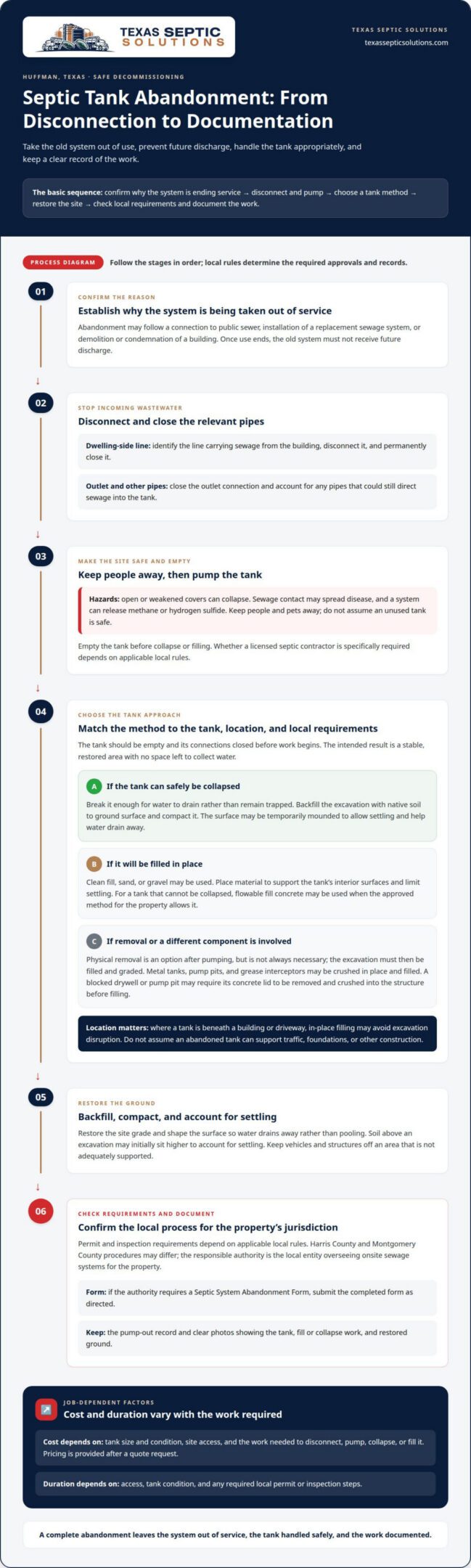
System abandonment is needed when a septic system stops serving a property, such as after a sewer connection or replacement system. Follow these steps to prevent sewage from entering the old system and to document the work.
- Confirm why the system is being taken out of service. A property may need abandonment after connection to a public sewer, installation of a replacement sewage system, or demolition or condemnation of a building. Once use ends, the old tank and related components must be properly abandoned so they cannot receive future discharge.
- Disconnect the pipes before handling the tank. Identify the line carrying sewage from the dwelling and the outlet leading to the disposal system. Disconnect and permanently close the dwelling-side line so wastewater cannot flow into the abandoned tank. Close the outlet connection as well, and account for pipes that could still direct sewage into the tank.
- Prevent exposure to tank hazards. Keep people and pets away from open or weakened tank covers during system abandonment. An improperly abandoned tank can collapse; sewage contact may spread disease, and a system can release methane or hydrogen sulfide. Never treat an open tank as safe simply because the house no longer uses it.
- Pump the tank before collapse or filling. The tank should be emptied before abandonment, but whether a licensed septic contractor is specifically required depends on local rules. Don’t transfer requirements from another state or county to Huffman. After pumping, the tank can be handled using an appropriate method, such as collapse and backfill, rather than left able to collect water.
- Determine the local permit and inspection steps. Whether Huffman septic tank abandonment requires a permit or inspection depends on the applicable local requirements. Harris County and Montgomery County procedures may differ, so the parcel’s jurisdiction matters. The responsible authority is the local entity overseeing onsite sewage systems for that property.
- Keep records of the completed work. If the applicable authority requires a Septic System Abandonment Form, submit the completed form as directed. Keep the pump-out record and clear photos showing the tank, fill or collapse work, and restored ground. These records can help document that the system was taken out of service and its components handled.
- Plan for cost and timing based on the job. Abandonment cost depends on the tank’s size and condition, site access, and the work needed to disconnect, pump, collapse, or fill it; pricing is provided after a quote request. The process duration depends on access, tank condition, and any required local permit or inspection steps.
Filling tanks and chambers with clean fill, sand, or gravel
- Choose a fill method that suits the tank and site. After the tank is pumped, it may be crushed and backfilled, or filled with suitable material. Clean fill, sand, and gravel are used for abandoned tanks and chambers. The choice depends on whether the tank can be collapsed, its location, and the condition of nearby structures. The finished work should leave no space able to collect water.
- Prepare a tank that will be filled in place. Make sure the tank is empty and its connections are closed before adding fill. Place material so it supports the tank’s interior surfaces and limits settling. This matters especially where the tank sits beneath a building or driveway. In those locations, sand or gravel can serve as inert fill, but it must support the structure and reduce the risk of collapse.
- Collapse tanks that can safely be broken. A tank may be crushed and backfilled when it is broken enough for water to drain through, rather than remain trapped inside. After collapse, fill the excavation to ground surface with native soil and compact it to restore the property’s grade. The final surface can be mounded temporarily to allow settling and help water drain away.
- Handle metal tanks and pits according to their construction. Metal tanks, pump pits, and grease interceptors may be crushed in place and filled with clean fill, sand, or gravel. A blocked drywell or pump pit may require its concrete lid to be removed and crushed into the structure before filling. These methods differ by component, so don’t assume that a metal tank can be treated like a concrete chamber.
- Remove a tank only when excavation makes sense. Physical removal is an option after pumping, but abandoned tanks do not always need to be dug out. Removing a tank creates an excavation that must be filled and graded. For a tank beneath a driveway or building, excavation may affect the surface above it; filling in place can avoid that disruption when the tank can safely remain.
- Finish the surface with settling and drainage in mind. Backfill the remaining hole with suitable material, then restore the site grade. Soil placed above an excavation may initially sit higher to account for settling and prevent water from pooling. Keep vehicles and structures off a poorly supported tank area: an abandoned tank may not carry the weight of traffic, foundations, or other construction.
In Anne Arundel County, tanks and chambers capable of holding sewage must be filled with clean fill material, sand, or gravel by a licensed disposal system contractor, utility contractor, or master plumber.
Flowable fill when a tank cannot be collapsed
- Consider flowable fill when collapse is not workable. Some tanks cannot be ruptured or collapsed because of their construction or location. Flowable fill concrete can fill an intact tank when the approved method for the property allows it. The choice depends on the tank’s condition, access, and applicable local requirements. The goal is to leave no space that can collect water or receive future discharge.
- Have the tank pumped before filling. Pumping removes sewage and liquid before abandonment work proceeds. It also allows the interior to be assessed for obstructions or damage that could affect placement. Prepare the tank so fill can occupy its interior rather than bridge over a void. Keep the pump-out receipt with the job records for documentation.
- Plan access for the fill operation. Identify the tank openings and the route equipment will use to reach them. A tank beneath a driveway, building, or other fixed feature may limit access for demolition or collapse. Flowable material can be placed into an intact tank when physical collapse cannot be completed. The finished tank must not hold water or receive future sewage.
- Keep people and pets away from exposed components. A collapsed or open tank can remain hazardous until the required fill and backfill work is complete. Make the area inaccessible while work is underway, using a secure cover or roping off the work zone. Don’t leave a broken lid or exposed opening unattended. Restore access only after the tank and excavation are secured.
- Use disinfection only when the work procedure calls for it. Some abandonment procedures recommend dispersing a gallon of household chlorine bleach or a bag of agricultural lime over collapsed component remnants before backfilling. This is a specific treatment step, not a replacement for pumping, filling, or securing the tank. Keep the selected material and sequence consistent with the procedure used at the property.
- Complete the fill and document the result. After placing flowable fill, finish the surrounding excavation with suitable soil and restore the ground surface. Keep the work area protected until the material and soil are stable. Take photographs showing the tank before filling, fill placement, and the completed location. These images help document whether the tank remained intact or was collapsed and backfilled.
- Keep the method specific to the property. The tank’s access, condition, and ability to collapse affect the work plan. Follow the applicable instructions for the property rather than assuming one fill method suits every site. The outcome should leave the tank properly abandoned, secured, and unable to hold water or receive discharge.
Removing distribution networks and field materials
- Map the parts that will stop operating. Identify the distribution network and absorption-field components connected to the septic tank. These may include buried lines and other field materials that carried wastewater away from the tank. Mark the work area before excavation, so the contractor can distinguish system components from unrelated underground features. The removal plan should address each part that will no longer serve the property.
- Take the system out of service before disturbing the field. Stop wastewater from entering the old system, and have the tanks pumped before field materials are removed. Allow the absorption field to become completely dry after the system is taken out of service and the tanks are pumped. This sequence reduces the chance of handling wet material during excavation and helps separate inactive field components from surrounding soil.
- Decide whether field components must be removed. Absorption-field components may remain intact when the area is not planned for another use and vegetative cover is maintained. Removal may make sense when the site is needed for a different purpose or when components must be cleared for planned work. Septic tanks and drain fields are rarely excavated and removed, so full removal is not automatically part of every abandonment.
- Excavate only the material included in the plan. A contractor can expose and remove identified distribution or absorption-field materials while limiting disturbance to the surrounding area. Keep removed material separate from soil intended for backfill. If the field is to remain, protect it from unnecessary excavation and maintain vegetative cover over the area. This distinction helps preserve the site while ensuring unused components are handled deliberately.
- Dispose of removed components properly. Removed absorption-field materials should go to a licensed landfill. Don’t leave discarded pipes or field material exposed on the property, where they can obstruct future site use. Keep disposal documentation with the abandonment records, including the type of material removed and its destination, when that information is available through the work process.
- Restore the disturbed ground carefully. After excavation, backfill the openings and shape the soil so surface water can drain away rather than collect. Soil above an excavation may be mounded at first to allow for settling. If field components remain, maintain vegetative cover over that area. If materials were removed, keep the restored ground stable and avoid treating it as undisturbed until settling has occurred.
- Document what remains and what was removed. Take clear photographs before excavation, during removal, and after restoration. Include the exposed material and the completed surface, so the record shows the work sequence. Note whether the absorption field remained intact or was removed, and retain any landfill disposal documentation with other abandonment records.
What are the septic tank abandonment requirements in Huffman, Texas?
- Identify the authority responsible for the property. Local septic requirements can vary, so start by establishing which authority oversees onsite sewage systems for the Huffman parcel. That determines the applicable instructions for approvals, inspections, forms, and records. Don’t apply rules from another state or county to a Huffman property.
- Determine which local approval steps apply. Before work begins, establish whether the authority requires a permit, advance notice, or an inspection. Requirements may depend on why the system is being abandoned, the existing setup, and the work planned. Keep applicable instructions with the project records so the required sequence is clear.
- Close off the old wastewater route. Disconnect the dwelling’s wastewater line and close the connection so sewage cannot enter the inactive tank. Address the outlet and any other pipe that could direct discharge into the old system. A sewer connection or replacement system must not leave an open route into abandoned components.
- Make the tank unable to hold water. Proper abandonment generally involves pumping the tank and making it unable to hold water. Break its bottom and as many sides as possible so water can drain into the surrounding soil. Physical removal is another option, but an abandoned tank does not always need to be excavated.
- Match the fill method to the site. Clean fill, sand, or gravel may be used for tanks and chambers. The tank’s condition and location affect whether collapse, filling in place, or removal is suitable. A tank beneath a building or driveway needs careful planning because excavation can disturb the structure above it.
- Keep a useful record of the work. Photograph the system before work, during pumping and filling or collapse, and after the ground is restored. Retain pump-out receipts and note which components were removed or left in place. Submit a completed abandonment form or inspection record when the authority responsible for the property requires it.
- Secure and close out the work area. Keep people and pets away from exposed components until they are secured and backfilled. Shape the finished ground so water drains away instead of pooling over the excavation. Store submitted forms, receipts, photographs, and any inspection records with the property’s septic documents.
Proper abandonment includes completely pumping and collapsing all tanks. The word “all” matters: the work is not complete if attention is limited to the most visible tank while another tank remains part of the system. Keeping the scope clear from the outset helps prevent a partial job from being mistaken for full abandonment. The project record can identify each tank addressed and show that the same completion standard was applied throughout.
This requirement gives the work a clear endpoint: every tank must be pumped completely and collapsed, rather than left partly treated. When planning the sequence, distinguish between actions already completed and work still outstanding, and avoid treating the condition of one tank as evidence about another. A final review against the full set of tanks can help confirm that nothing was overlooked before the area is closed out. This focus on completeness supports an orderly handoff to whoever later reviews or maintains the property records.
Texas Septic Solutions
Texas Septic Solutions provides septic system pumping, maintenance, repairs, and installation for properties in Huffman and the Greater Houston area. If a tank needs pumping as part of a property transition, the company can provide that service. For a system that remains in use, maintenance or repair may address operating concerns; if a replacement system is needed, Texas Septic Solutions also installs septic systems.
Keep the abandonment records process tied to the requirements for the property, including any applicable forms, inspection steps, and photos. Contact Texas Septic Solutions to discuss the septic work involved and determine which available service fits your situation.
Make the Next Property Step Clear
Keep a clear record of the property’s septic status so future owners can distinguish the inactive system from any system still serving the home. A concise, organized file can also help if the site plan or property use changes.
If you’re deciding what the process for septic tank abandonment in Huffman means for your property, start by coordinating the work with the authority responsible for the parcel. Texas Septic Solutions can help with related pumping, maintenance, repair, or installation as you plan the next step.
Contact Texas Septic Solutions to discuss your situation and move forward with confidence.
Frequently Asked Questions
What Records are Required to be Submitted?
The required records depend on the local authority and the abandonment method. For a Huffman property, keep any permit or approval paperwork, pump-out receipt, contractor details, and required forms together. Label photos with the work stage and tank location. If the tank is removed rather than filled in place, note that in the closeout record so it accurately describes the work completed.
How must an abandoned septic tank be emptied, disinfected, crushed, filled, or removed?
Have the tank pumped before abandonment, then use a method that leaves it unable to hold water or receive sewage. A tank that can be collapsed may be broken and backfilled; an uncollapsible tank may require an accepted fill method. Requirements for disinfection can vary, so follow the procedure approved for the property. Disinfection does not replace pumping or securing the tank.
What documentation or proof of abandonment must be submitted to local authorities?
The records required can vary by Huffman property. Keep the authority’s approval or permit, any required inspection record or completed form, the pump-out receipt, and photos showing the work. Useful photos identify the property and show the tank, the filling or collapse, and the finished area. Submit records through the channel and process specified by the authority responsible for the property.
What safety, environmental, or property risks come with abandoning a septic tank?
An unsecured tank can collapse, and contact with sewage can create health concerns. A damaged system may also affect soil or groundwater. Watch for persistently soggy or foul-smelling lawn patches, unusual weed growth, unstable or sinking ground, or algae on a nearby pond. If you notice these signs near an old tank or drain field, keep people and pets away and arrange an assessment.
How long does the septic tank abandonment process take in Huffman?
The timeline depends on access, the tank’s condition, and any local permit or inspection requirements.