
5 Signs Your Lift Station Pump May Be Failing in Huffman
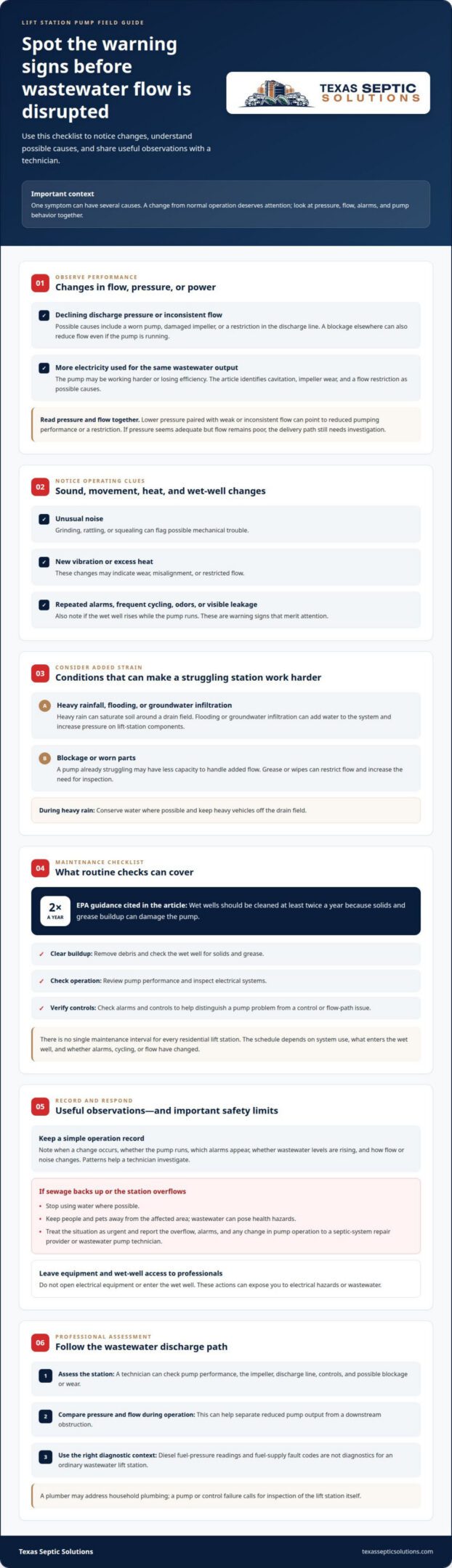
A lift station pump can show trouble before wastewater backs up or overflows. If you’re asking what the signs of a failing lift station pump in Huffman are, watch for declining discharge pressure or inconsistent flow, higher power use, unusual noise, increased vibration, and excess heat. Each can signal a developing problem that deserves attention.
It’s easy to dismiss a new rattle or a change in how the system runs, especially when it still seems to be working. Noticing a pattern early can help you respond before pump trouble disrupts wastewater flow or creates an overflow risk.
This guide explains what each warning sign may mean and what can cause it, from restricted flow to worn or misaligned parts. You’ll also learn why pressure, power use, sound, vibration, and temperature changes are useful clues, and when it makes sense to arrange professional septic system repair or maintenance.
Key Takeaways
- Watch for changes in discharge pressure or flow, since they can point to pump wear or a blockage.
- A rise in power use may signal that the pump is working harder to deliver the same output.
- Grinding, rattling, or squealing can help flag mechanical trouble that needs attention.
- New vibration or excess heat may indicate wear, misalignment, or restricted flow.
- Recognizing changes early can help you respond before pump problems contribute to an overflow.
1. Risks of delayed maintenance and wastewater overflows
A lift station failure can interrupt wastewater movement and allow sewage to back up or overflow. Warning signs include repeated alarms, frequent pump cycling, unusual odors, visible leakage, or a wet well that rises while the pump runs. One symptom can have several causes, but a change from normal operation deserves attention. Note when it occurs and whether the flow, noise, or alarms change at the same time.
Heavy rainfall in Huffman can saturate soil around a drain field, while flooding or groundwater infiltration can add water to a system and increase pressure on lift station components. A pump already struggling with a blockage or worn part may have less capacity to handle added flow. Conserve water during heavy rain, and keep heavy vehicles off the drain field. Delaying an inspection can turn a manageable issue into a shutdown or overflow. Keep people and pets away from wastewater because it can pose a health hazard.
Preventive maintenance helps identify buildup and wear before they disrupt operation. The U.S. Environmental Protection Agency says wet wells should be cleaned at least twice a year because solids and grease buildup can damage the pump. Maintenance can also include removing debris, checking pump performance, inspecting electrical systems, and verifying alarms and controls. These checks help distinguish a pump problem from an issue with its controls or the flow path.
There is no single maintenance interval that fits every residential lift station. The schedule depends on how the system is used, what enters the wet well, and whether alarms, cycling, or flow have changed. For example, recurring grease or wipes can restrict flow and increase the need for inspection. Maintenance requirements and repair permits are separate questions: permit requirements depend on the repair scope and the authority with jurisdiction.
If a residential pump stops working, note any alarm and whether wastewater levels are rising, then arrange a professional inspection. A technician can assess the pump, controls, electrical system, and possible blockage. Don’t open electrical equipment or enter the wet well. These actions can expose you to electrical hazards or wastewater.
If sewage is backing up or the station is overflowing, stop using water where possible and keep people and pets clear of the affected area. Treat the situation as urgent because wastewater can pose health hazards. Contact a septic-system repair provider or wastewater pump technician promptly, and describe the overflow, alarms, and any change in pump operation.
For lift station problems in Huffman, contact a provider who can assess the lift station itself. A plumber may address household plumbing, but a pump or control failure calls for inspection of the station. Texas Septic Solutions provides septic system repair and maintenance, including troubleshooting damaged components and restoring system function.
2. Declining discharge pressure and inconsistent flow
A wastewater lift station moves sewage through a discharge line, so falling pressure or uneven flow can signal trouble. The pump may be worn, its impeller may be damaged, or a blockage may restrict the line. A pump that runs but moves less wastewater than usual isn’t necessarily failing: a restriction elsewhere can produce the same symptom. Assess pressure and flow together rather than treating one reading as a complete diagnosis.
Pressure describes the force available to move wastewater through the line; flow describes how much moves over time. A technician compares current operation with the station’s normal performance and looks for changes during pumping. Lower discharge pressure paired with weak or inconsistent flow points to reduced pumping performance or a restriction. If pressure seems adequate but flow remains poor, a blockage or another delivery problem still needs investigation. These observations help narrow the cause before repair decisions are made.
“Low rail pressure” and fuel-supply fault codes belong to diesel-engine diagnostics, not ordinary wastewater lift station operation. A diesel lift or supply pump feeds fuel from the tank to the high-pressure pump. In heavy trucks, that supply pump operates at 45-65 PSI. A diesel engine can show hard starting, power loss under load, stalling, surging, or low rail-pressure codes when fuel delivery is inadequate. Those signs shouldn’t be used to diagnose a sewage pump.
Fuel pressure testing also differs from lift station testing. For a diesel system, pressure is checked at key-on, at idle, and, if possible, under load; readings are compared with the engine maker’s specification. Delivery volume matters too, because a fuel pump can produce adequate pressure without supplying enough fuel. A clogged tank screen, collapsed hose, or plugged primary filter can mimic pump failure. Measuring supply pressure before blaming the injection pump helps guide the next diagnostic action.
For a wastewater station, assessment follows the discharge path. A technician can inspect pump performance, the impeller, discharge line, and controls for signs of restriction or wear. Comparing pressure and flow during operation helps distinguish a change in pump output from a downstream obstruction. If alarms activate, flow drops further, or wastewater levels rise, treat the situation as urgent and arrange an inspection.
Keep a simple record of pressure or flow changes, whether the pump runs, and which alarms appear. For example, noting that flow weakens after each pump cycle gives a technician a useful pattern to investigate. Don’t apply fuel-pressure codes to a wastewater system. Accurate observations help identify the right repair and restore consistent lift station operation.
3. Increased power consumption
A lift station pump that uses more electricity while moving the same amount of wastewater may be losing efficiency. The change can point to cavitation, impeller wear, or a restriction that makes pumping harder. A rising energy reading alone doesn’t identify the failed component, but it is a useful warning when paired with longer run times, alarms, or weaker output. Compare similar operating periods to spot a pattern rather than reacting to one unusual reading.
Start by comparing energy use with pump activity and system performance. If the pump runs longer than usual but the wet-well level falls slowly, it may be working harder without delivering its normal output. If electricity use rises while flow seems steady, the pump may still be operating inefficiently. A technician considers these observations together, since changes in incoming wastewater can also affect how often the pump runs.
Several components can contribute to increased power demand. Cavitation disrupts smooth pumping, while a worn impeller may move less wastewater per cycle. A flow restriction can also force the pump to work against added resistance. These problems call for different repairs, so an inspection should assess the pump and discharge path rather than treating higher electricity use as proof of motor failure.
Useful records make the change easier to assess. Note the date, energy reading or alarm, and whether the pump ran longer or cycled more often. A gradual rise across comparable billing periods, alongside slower wet-well drawdown, gives a technician a clearer pattern than an isolated high bill. The relevant comparison depends on operating conditions, not just the total on one utility statement.
During an inspection, a technician can review pump performance, electrical components, controls, and flow restrictions. They can compare operating behavior with expected output and look for signs of cavitation or impeller wear. Proper diagnosis matters: replacing a component before identifying the cause may leave the efficiency problem unresolved. A change in power use paired with an alarm deserves prompt attention.
In Huffman, heavy rainfall can saturate soil around the drain field and contribute to backups. Groundwater entering the system can also change wastewater volume and increase pump activity. Context matters: a temporary rise during unusually wet conditions may have a different cause than a continuing increase during ordinary operation. Conserve water and keep heavy vehicles off the drain field. If the pump keeps running longer, alarms recur, or performance drops, arrange a lift station assessment before the added strain leads to a shutdown.
4. Unusual pump noise and possible causes
A lift station pump may fail because of cavitation, worn bearings, misalignment, or restricted flow. Grinding, rattling, and high-pitched squealing can signal mechanical trouble. The sound alone won’t identify the cause, but a new noise that continues during pump operation deserves attention. Note whether it starts when the pump switches on, continues throughout a cycle, or changes as wastewater moves.
Grinding can point to contact or wear inside the pump, while rattling may indicate loose components. A high-pitched squeal can accompany bearing wear or misalignment between the pump and motor. Cavitation can also create unusual pump noise when operating conditions disrupt smooth flow. Because several causes can sound alike, a technician considers the noise alongside flow, vibration, alarms, and operating history before recommending repair or replacement.
Distinguish a wastewater pump’s sounds from those of a nearby engine or other equipment. A diesel engine uses a fuel filter, and a clogged filter can contribute to engine performance problems. That is separate from a wastewater lift station. Replacing a fuel filter won’t correct a grinding lift station pump or rattling motor, so identify which equipment is making the sound.
Paying attention to changing sounds can help catch a problem before the pump stops moving wastewater. Record the sound and when it occurs. A rattle during startup differs from a squeal that continues while the pump runs. Note any related alarm or change in pump activity. These details give a technician specific observations to consider during an inspection, rather than a general report of “a strange noise.”
Don’t open electrical equipment or reach into the wet well to investigate. A qualified technician can inspect the pump and motor, assess alignment and bearings, and check for restrictions that may affect operation. The right repair depends on the cause: a loose component, worn bearing, and damaged pump require different actions. If the pump stops, alarms activate, or wastewater backs up, treat the situation as an emergency and arrange service promptly.
Noise can accompany other warning signs. Grinding paired with weaker discharge, for example, gives a technician more context than noise alone. If a new sound repeats across pump cycles or grows louder, arrange an assessment rather than waiting for failure. When unusual noise comes with sewage backing up or an overflow, contact Texas Septic Solutions for emergency septic service and keep people away from affected wastewater.
5. Vibration and temperature monitoring
A noticeable increase in vibration can signal imbalance, loose components, or misalignment between a lift station pump and motor. Excess heat can point to inadequate lubrication, bearing failure, or restricted flow. These changes matter because vibration can speed wear on bearings and seals, while high temperatures can damage seals and gaskets. A pump that feels or sounds rougher while running may also develop leaks as parts wear.
Monitoring makes a change easier to recognize. A technician can compare current vibration and temperature readings with the pump’s normal operating pattern, then look for a developing trend. A single unusual reading offers less context than repeated readings taken under similar conditions. Sensors can provide continuous data on pump performance, helping identify changes between routine inspections.
The pattern helps narrow possible causes. Rising vibration with a steady temperature can suggest imbalance, loose parts, or pump-to-motor misalignment. If the pump also runs hotter than usual, a technician may investigate bearing condition, lubrication, and restricted flow. These signs don’t prove that one specific component has failed. An assessment should connect readings with pump performance and other observed changes.
Heat deserves attention because elevated temperatures can affect more than the motor. Seals and gaskets may be damaged, leading to fluid leakage. An unusually warm pump followed by visible leakage gives a technician two related observations to assess. A temperature change paired with declining performance can also help distinguish a developing mechanical issue from a normal operating variation.
Vibration and heat data are useful only when interpreted in context. Technicians consider whether the readings changed gradually or suddenly, whether the pump is operating consistently, and whether alarms or flow changes appeared at the same time. They can then inspect relevant components and determine whether adjustment, repair, or replacement is needed. Avoid treating a sensor alert as a diagnosis by itself.
Property owners can note when the pump seems hotter or more unsteady than usual, without opening equipment or entering the wet well. Share when the change started and whether it coincided with an alarm, leak, or altered pump cycle. If vibration or heat keeps increasing, arrange an assessment before wear progresses. Arrange lift station repair when these changes point to a pump problem requiring professional attention.
Excessive pump vibration can accelerate wear on bearings and seals, shortening the pump’s lifespan. Elevated pump temperatures can damage seals and gaskets, potentially leading to fluid leakage. A pump running hotter than normal can indicate inadequate lubrication, bearing failure, or restricted flow.
Texas Septic Solutions: Septic System Pumping
Texas Septic Solutions provides septic system pumping, repair, and maintenance. If a lift station shows worsening flow, repeated alarms, unusual noise, or increasing vibration, arrange an assessment rather than waiting for complete failure. Pumping may help when solids or grease buildup needs attention; mechanical or electrical symptoms may call for repair or maintenance instead.
When arranging service, share the warning signs you’ve noticed, such as when the pump runs, whether flow has changed, and whether wastewater is backing up. These details help guide the next step. Contact Texas Septic Solutions to discuss septic system pumping, repair, or maintenance in Huffman.
Take the next step with a clear picture of the problem
If you’re weighing what the signs of a failing lift station pump in Huffman mean for your property, note when the changes began and how they developed. That timeline can help clarify whether the issue is recurring or getting worse. A clear record gives the technician a useful starting point without assuming every symptom has the same cause.
Texas Septic Solutions provides septic system repair and maintenance. If you’re asking what signs point to a failing lift station pump in Huffman, describe the changes you’ve noticed and how they affect the system. If wastewater is backing up or the pump has stopped, make that clear so the urgency is understood.
Taking a practical next step can help you address the issue before it disrupts your property. Reach out to Texas Septic Solutions to discuss the lift station problem and possible next steps. With a clear account of what’s happening, you can move forward with more confidence.
Frequently Asked Questions
What are the common signs of a failing lift station pump?
Common signs include an alarm that returns after being acknowledged, longer pump cycles, wastewater levels that keep rising, and flow that no longer matches normal household use. Notice whether symptoms appear together. A recurring alarm plus slower drainage, for example, gives a technician more context than a brief change by itself. Record when the problem occurs and whether it is getting worse.
What alarms indicate a lift station pump failure?
A lift station alarm means the system needs attention, but the alarm alone doesn’t identify the failed part. If the septic alarm goes off, minimize water use immediately: stop laundry and dishwasher use, and avoid excessive showers. Check the circuit breaker, then contact Texas Septic Solutions right away. Share any displayed alarm message and changes in wastewater flow.
How can you tell whether a lift station pump is clogged or worn out?
Symptoms alone may not distinguish a clog from worn pump parts, since both can reduce wastewater movement. A technician can inspect the pump and flow path for debris or restrictions, then assess the pump’s condition and performance. Finding a blockage is different from finding that poor performance persists after the flow path is clear. Don’t reach into the wet well to investigate.
How often should lift station pumps be inspected and maintained?
Wet-well cleaning and pump inspection are related but distinct maintenance tasks. The U.S. Environmental Protection Agency says wet wells should be cleaned at least twice a year because solids and grease buildup can damage the pump. Inspection frequency depends on system use, buildup, and changes in operation. A technician can assess these conditions and recommend maintenance suited to the station.
What are the health and property risks of a failing sewage lift station?
A failing station can allow sewage to back up into a building or overflow outside, disrupting use of the property and exposing people to wastewater. If sewage enters a room, keep people and pets away and avoid touching contaminated surfaces. Minimize water use to limit additional flow into the system, and contact Texas Septic Solutions for emergency service to assess the failure and affected area.