
Septic System Access Ports in Houston: Inspection and Pumping Access
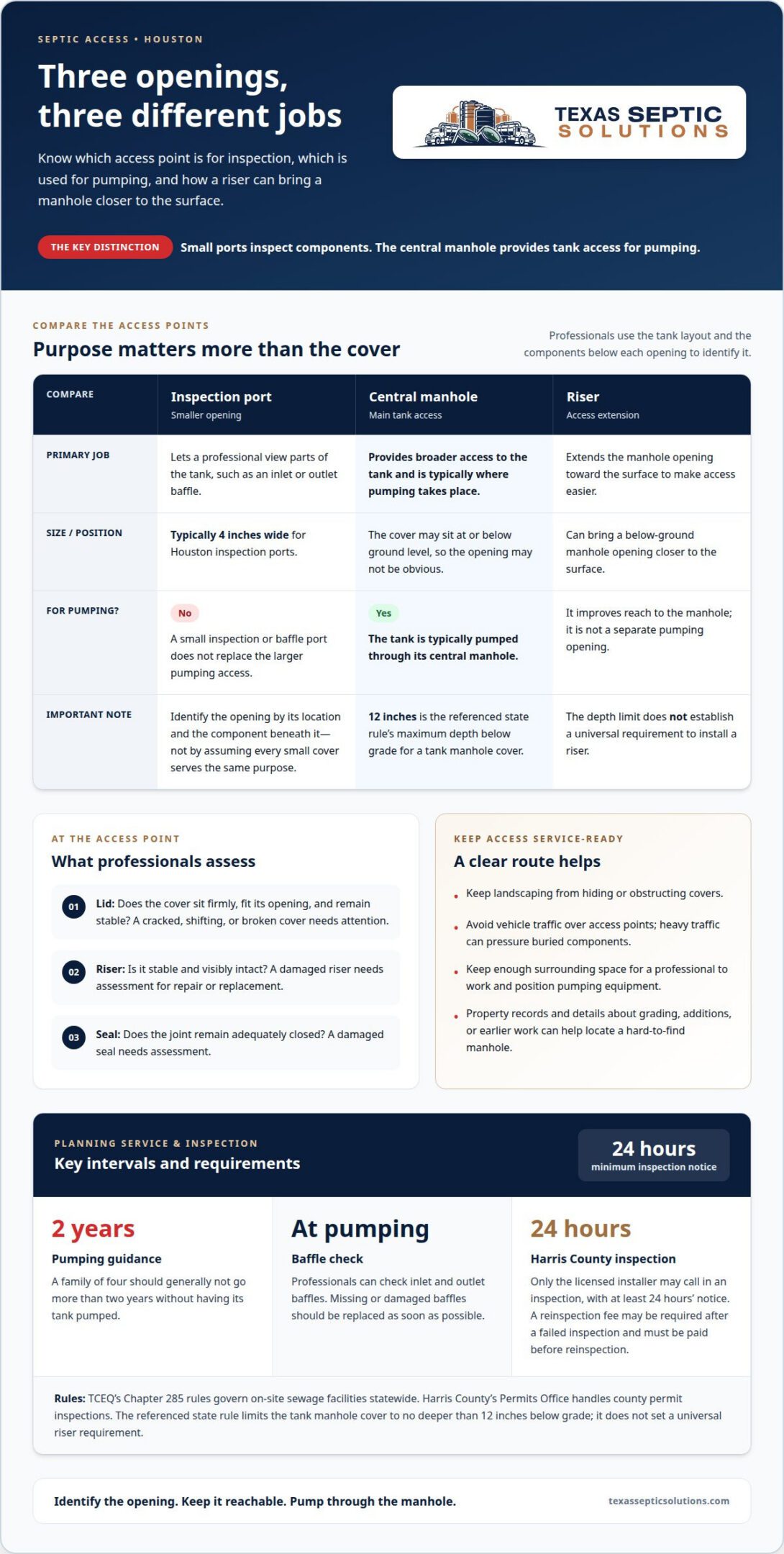
The small inspection port isn’t the main route for pumping a septic tank. If you’re learning how to maintain septic system access ports in Houston, know that pumping typically takes place through the large central manhole, while smaller ports provide inspection access. A riser can make the manhole easier to reach.
It’s easy to focus on visible covers, but reliable access depends on knowing each opening’s purpose and keeping it reachable for professional service. This guide explains how inspection ports, manholes, and risers support tank inspections and pumping.
You’ll learn what these access points do, what can make them difficult to reach, and how routine professional maintenance helps keep them ready for service.
Key Takeaways
- Learn how inspection ports and manhole covers differ, and why knowing their locations matters for planned service.
- See how a riser extension can help keep tank access practical when a cover sits below ground level.
- Understand what professionals look for around lids, risers, and seals to spot access problems during maintenance.
- Use pumping and inspection intervals as a guide for planning service and keeping access points ready.
Septic tank inspection ports and manhole access
Inspection ports are smaller openings used to view parts of a septic tank, while the manhole gives broader tank access. In Houston, typical inspection ports are 4 inches wide, and a tank manhole cover may sit at or below ground level.
The referenced state rule limits the tank manhole cover to no deeper than 12 inches below grade. That access limit does not, by itself, establish a universal requirement to install a riser.
Inspection and Cleaning Frequency
Inspection frequency refers to how often access points and tank components are checked for condition and serviceability. During pumping, professionals can also examine the tank’s baffles, which direct wastewater flow at the inlet and outlet.
A family of four should generally not go more than two years without having its tank pumped. A pumping visit also gives the professional an opportunity to check whether baffles are missing or damaged. Either condition calls for replacement as soon as possible.
A baffle inspection port is a smaller opening that lets a professional inspect a tank’s inlet or outlet baffle. Its size and location distinguish it from the large central manhole used for broader tank access.
Professionals identify openings by the tank layout and the components beneath them, rather than assuming every small cover serves the same purpose. During pumping, they check the baffles and replace them as soon as possible if they are missing or damaged. This matters because baffles help direct flow through the tank.
Houston and Harris County access requirements should be understood alongside the permitted system plan. The referenced state rule sets the manhole-cover depth limit at 12 inches below grade; it does not establish a universal riser requirement.
TCEQ’s Chapter 285 rules govern on-site sewage facilities statewide, while Harris County’s Permits Office handles county permit inspections. In Harris County, only the licensed installer may call in an inspection, and the inspection must be requested at least 24 hours in advance.
For a system ready for inspection, a licensed installer must give the Harris County Permits Office at least 24 hours’ notice. If the system fails inspection, Harris County may require a reinspection fee, which must be paid before reinspection.
Lids, Risers, and Seals
A lid closes an access opening, a riser extends that opening toward the surface, and a seal helps close the joint. A cracked lid, loose riser, or damaged seal can make an access point harder to secure.
Professionals assess whether a cover sits firmly and the surrounding assembly remains stable. A cover that shifts, breaks, or no longer fits its opening needs attention. A visibly damaged riser or seal also needs assessment for repair or replacement.
Safe Access and Site Care
Safe access means controlling the work area while a professional opens or services a tank. Professionals keep people clear of open access points and follow safe work procedures, without leaning into or entering the tank.
Keep landscaping from hiding or obstructing covers, and avoid vehicle traffic over access points. Heavy traffic can put pressure on buried components, while overgrowth can make a cover difficult to locate during service.
Access for septic tank pumping
A septic tank manhole is the large opening professionals use to reach the tank for pumping. The tank is typically pumped through its central manhole, not through smaller baffle ports. Identifying the correct opening matters because each access point serves a different purpose. A small inspection cover may allow a view of a component, but it does not replace the larger pumping access. For Houston property owners, learning how to maintain septic system access ports starts with knowing which opening supports the service.
Before pumping, the professional locates the manhole and assesses whether its cover can be reached and opened. A cover may sit below ground level, making the access point less obvious than expected. If a property has several covers, the tank layout helps distinguish the manhole from inspection ports. Clear identification helps focus service on the correct opening and avoids confusing a component port with tank access.
The manhole needs enough surrounding space for the professional to work and position pumping equipment. Landscaping, stored items, fences, or property changes can obstruct the route. For example, a planting bed over a tank opening can make access harder to locate and prepare. A clear approach helps avoid delays and lets the technician work at the intended access point.
A riser extends above the tank manhole to bring access closer to the surface. It can make pumping easier when the cover sits below ground level. The professional can assess whether a riser would improve access based on the tank layout and cover position. Knowing how to maintain septic system access ports in Houston also means keeping the manhole identifiable and reachable for scheduled service.
Access conditions affect how smoothly a pumping visit proceeds. A damaged, unstable, or obstructed cover needs attention before the manhole can be used as intended. The professional evaluates the cover and opening, then determines whether they are suitable for service. Identifying the opening correctly allows pumping through the tank’s intended access rather than a smaller component port.
Property records and a known tank location can help narrow down where the manhole sits, particularly if landscaping has changed. Details about additions, grading, or earlier work may explain why access is difficult to locate. The professional uses that context alongside the visible layout to identify the correct opening and plan access around the property.
The key distinction is simple: the large central manhole provides tank access, while baffle ports serve inspection purposes. A riser can improve access when the manhole is difficult to reach from the surface. Keeping the location identifiable and the route clear helps the professional reach the opening and pump through the appropriate access point.
Riser extensions for easier access
A riser extends a septic tank manhole to bring its opening closer to the surface. It can make the manhole more accessible for pumping when the cover sits below ground. A professional assesses the existing opening and surrounding grade to determine whether extending access would help. The goal is to make the correct tank opening easier to reach during service.
Risers are installed on the manhole, not on every small inspection port. That distinction matters because the central manhole is typically used for pumping, while smaller ports serve inspection purposes. A professional identifies the tank layout first, then evaluates the manhole’s position. Extending the wrong opening would not improve access to the tank’s pumping point.
Ground level can change around a tank as landscaping or property grading changes. For example, soil added near a manhole may make its cover harder to locate or reach. A riser can bring the manhole opening closer to the changed surface. The professional considers the cover’s position and the surrounding site before recommending an appropriate access improvement.
The referenced state regulation limits a septic tank manhole cover to no deeper than 12 inches below grade. This provides a specific depth reference when assessing an existing opening. A riser is one way to improve reach, but the professional must consider the tank’s configuration and the cover’s location. The right approach keeps the actual manhole identifiable and accessible for service.
During an assessment, the professional checks how the riser meets the existing manhole and whether the lid can be reached and handled. The cover and extension must remain a usable access assembly. A shifted, damaged, or poorly seated part can interfere with access and should be evaluated before routine pumping. The professional determines whether adjustment, repair, or replacement is appropriate.
Riser height and placement should not be guessed from the visible ground alone. The tank layout, manhole position, and grade around the opening all affect the work. A professional uses those site conditions to plan an extension that serves the tank’s access needs. This is especially relevant when a buried cover is difficult to find during a pumping visit.
After a riser is installed, the access point still needs to remain visible and clear. Landscaping should not conceal the lid, and vehicle traffic should stay away from the tank opening. These conditions help preserve practical access for future service. A riser improves reach, while clear identification and an unobstructed approach keep the manhole usable.
How often should septic tank access ports be inspected and cleaned?
Access-port inspection is a professional check of covers, risers, seals, and visible tank components. Its timing should follow the tank’s service schedule, with access points assessed during pumping visits. A family of four should generally not go more than two years without having its septic tank pumped. This offers a practical planning point for checking whether the manhole and inspection openings remain reachable and intact.
Cleaning around an access port means clearing material that interferes with the cover or opening, not washing waste into the tank. Professionals assess whether soil, leaves, or landscaping debris obstructs the lid, then clear the area when preparing for service. How often this is needed depends on how quickly debris builds up around that opening. For example, a lid beside a planting bed may need attention sooner than one in a clear area.
Between pumping visits, visible changes can prompt an earlier professional assessment. A shifting cover, loose-looking riser, or poorly seated seal can affect access. New grading or landscaping may also bury or conceal an opening. These signs do not replace the pumping schedule; they indicate that the access assembly needs attention before the next planned visit.
During pumping, professionals can inspect the tank’s baffles and access components together. Baffles should be replaced as soon as possible if missing or damaged. Checking both helps connect the condition of the opening with the tank components reached through it. For example, a difficult-to-open manhole can be assessed alongside the tank’s baffles, rather than treating access and tank condition as unrelated concerns.
Access areas also need attention when property work changes the ground around the tank. Added soil, a new garden edge, or a relocated path can make a previously visible cover harder to find. A professional can assess the new layout during service and determine whether the cover remains accessible. This is useful when property records or visible landmarks no longer match the current landscaping.
For planning, use pumping as the main recurring opportunity to inspect access points, and arrange professional attention sooner if a lid, riser, or seal has a visible problem. The two-year limit for a family of four is a pumping guideline, not a separate cleaning interval for every port. The inspection schedule should account for household use, the access assembly’s condition, and debris or site changes around each opening.
Tank capacity, permit paperwork, and local inspection arrangements are distinct planning details to confirm when organizing septic service. A typical septic tank has a capacity of approximately 1000 gallons to 1500 gallons. In Harris County, a septic inspection may be scheduled only with a valid septic permit and approved septic plans bearing the Permit Office’s stamps. For Harris County septic inspection questions, call 713-274-3800.
These details can help households prepare questions about service and inspection before arranging work, while access-port condition remains something to assess at the tank.
How do professionals maintain septic access-port lids, risers, and seals?
A septic access-port lid closes an opening, a riser extends it toward ground level, and a seal closes the joint. Professional maintenance checks these parts as an assembly because a problem with one can affect safe, practical access. The technician identifies the opening, examines the lid and riser, and assesses whether the seal and surrounding area remain serviceable.
The inspection begins with the visible condition of the lid. A cracked, warped, loose, or poorly seated cover can be difficult to handle or leave the opening inadequately closed. The technician checks how the lid fits and whether it stays in place. Damage or movement calls for further assessment, not an improvised patch that could complicate later access.
Next, the professional assesses the riser and its connection to the tank opening. A riser that has shifted, separated, or sustained visible damage may no longer provide stable access. The technician considers its position relative to the lid and ground, then determines whether repair or replacement is appropriate. The tank layout matters because the manhole extension must serve the actual tank opening.
A seal is material or a fitted joint that helps close the connection between access components. During service, the professional looks for visible separation, deterioration, or a poor fit. A compromised seal should be assessed alongside the lid and riser, rather than treated as an isolated surface issue. The assembly needs to close properly while remaining accessible for future inspections and pumping.
Work may involve clearing debris around the opening, assessing the fit, and repairing or replacing damaged parts. The right response depends on what the technician finds: a lid that no longer seats needs a different correction than a shifted riser or worn seal. This condition-based approach avoids replacing sound components while addressing the part that interferes with access.
Site changes can also affect the assembly. Added soil may leave a lid too low, while landscaping can hide the opening or put pressure near its edges. The professional considers the current grade and surrounding area when evaluating the riser and cover. After a repair, the technician checks that the opening remains identifiable and usable for future service.
Arrange professional maintenance if a cover shifts, a riser looks displaced, or a seal appears damaged. A technician can assess the access assembly and determine whether septic system repair is needed. Arrange professional septic access-port maintenance to have the lid, riser, and seal evaluated together.
Texas Septic Solutions
Texas Septic Solutions can help assess access concerns as part of septic system maintenance, repair, or pumping. A professional can evaluate whether a lid, riser, or seal affects service access and determine the appropriate next step for the system. If the access point is difficult to locate, damaged, or obstructed, share that detail when arranging service. For broader system needs, Texas Septic Solutions also provides new septic system installation. Contact Texas Septic Solutions to discuss your septic access and maintenance needs.
Keep the next service visit straightforward
Make access planning part of your ongoing septic records. Note where the tank opening is, when the area was last changed, and whether access has become difficult. This can help a professional understand the site before work begins. Update the information after landscaping, grading, or other property changes so the access point doesn’t become a mystery later.
If you’re deciding how to maintain septic system access ports in Houston, focus on the condition and accessibility of the openings, not just their appearance. A professional can assess what needs attention and help plan suitable follow-up for your system. Clear information about the access concern gives the conversation a practical starting point.
Contact Texas Septic Solutions to discuss your septic system access needs and arrange professional support. A clear plan can make future service easier to coordinate.
Frequently Asked Questions
Where are septic tank access ports typically located in Houston homes?
Septic tank access ports are located above the tank, with exact positions varying by system layout and later yard changes. In Houston, a cover may blend into the surrounding ground or be difficult to spot from the house. Professionals can use available system plans and service records to help identify its location. This can be useful for properties in Houston, Cleveland, Cypress, Huffman, and Shepherd.
How do professionals locate and uncover septic system access ports safely?
Professionals use system layout information and visible site clues to identify the intended access point before uncovering it. They distinguish the tank’s manhole from smaller inspection openings and keep the work area controlled while accessing the cover. Landscaping or grading changes can affect where a port is found, so sharing those details and any available service records helps the technician plan the work.