
Septic Tank Materials for Huffman Homes: Concrete or Fiberglass
The lightest septic tank isn’t always the most durable. Concrete often handles soil pressure and flotation better because of its weight, while fiberglass and polyethylene resist corrosion but can be damaged during installation or shift if not secured properly. If you’re asking what are the most durable septic tank materials in Huffman, the answer depends on the site as well as the tank.
Durability matters because a tank must withstand underground soil pressure, groundwater, and installation conditions. Concrete’s weight can help keep it in place, but it makes installation more demanding, and concrete can crack. Lighter tanks may be easier to handle, but they need careful placement and support to reduce damage and flotation risks.
This guide compares concrete, fiberglass, and polyethylene by construction, installation, and resistance to collapse. It also explains how site conditions shape the choice, so you can weigh each material’s strengths and tradeoffs for a Huffman property.
Key Takeaways
- See why concrete’s weight can help it resist soil pressure and flotation, and what tradeoffs come with that strength.
- Learn how installation conditions and heavy loads can affect a tank’s risk of shifting, damage, or collapse.
- Compare concrete, fiberglass, polyethylene, and steel by their practical strengths and vulnerabilities.
- Use Huffman site conditions, including soil and groundwater, to narrow down which material may suit a home.
- Understand what influences tank longevity and how installation and ongoing care contribute to dependable performance.
Why A Concrete Septic Tank?
Concrete septic tanks can withstand substantial pressure from surrounding soil and groundwater. Their weight also reduces flotation risk where the water table is high. Plastic and fiberglass tanks weigh less, which can simplify placement but makes secure installation especially important. Concrete can still crack, so its strength does not replace sound construction and careful handling.
Precast concrete tanks can be watertight when manufactured according to the NPCA “Septic Tank Manufacturing” Best Practices Manual. ASTM C 1227 is the “Standard Specification for Precast Concrete Septic Tanks.” These named standards address construction quality, but a tank’s performance still depends on manufacturing and installation. Concrete can crack under damaging conditions, including exposure to heavy-duty corrosive chemicals.
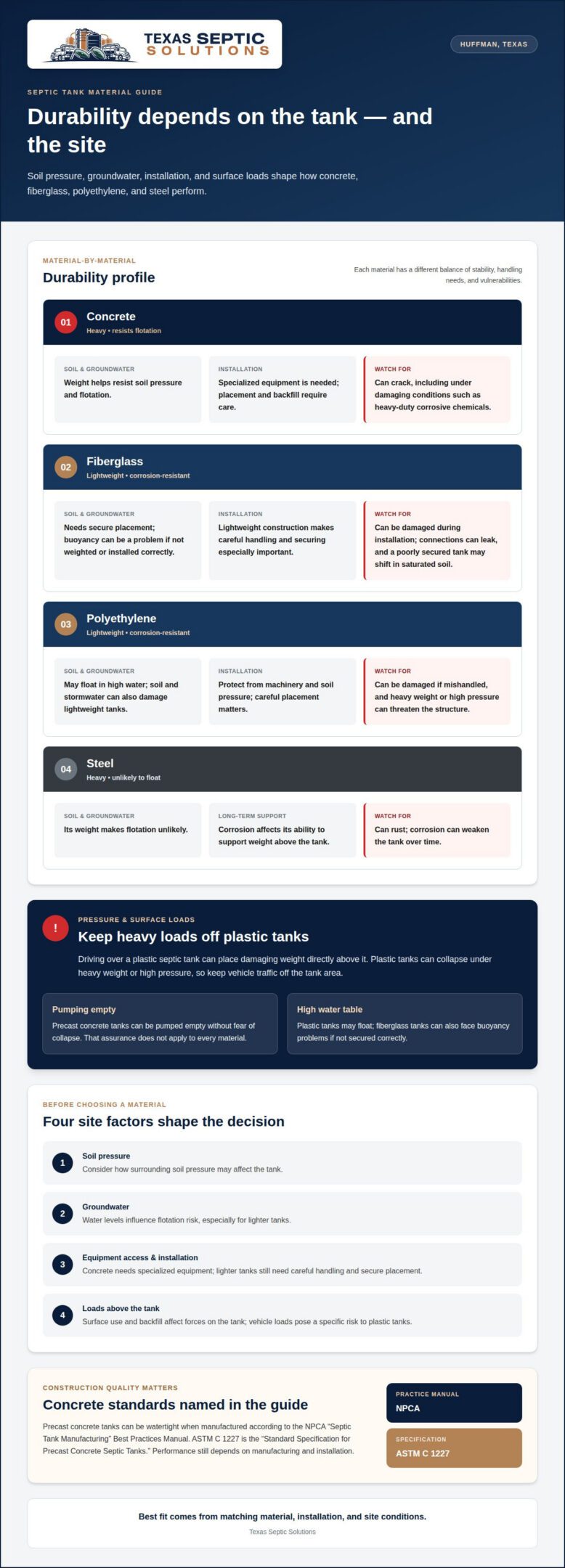
Compared with fiberglass, concrete is heavier and requires specialized installation equipment. Fiberglass is lighter and corrosion-resistant, but installation damage or poor securing can increase leakage and flotation risks. Polyethylene resists corrosion and cracking, yet its light construction can leave it vulnerable to machinery, soil, or stormwater damage. Steel is heavy, but corrosion can weaken its ability to support weight above the tank.
| Material | Soil pressure and flotation | Installation consideration | Durability concern |
|---|---|---|---|
| Concrete | Heavy, resists flotation | Specialized equipment | Can crack |
| Fiberglass | Needs secure placement | Can be damaged during installation | Connections can leak |
| Polyethylene | Lightweight, may float | Protect from machinery and soil pressure | Can be damaged if mishandled |
| Steel | Heavy, unlikely to float | Corrosion affects long-term support | Can rust |
Compare soil pressure, groundwater, equipment access, and each material’s risk of corrosion or cracking.
Maintenance and repair needs vary by material. Concrete may need attention for cracks, fiberglass connections need sound seals, and polyethylene needs protection from impact or pressure. Steel requires attention to corrosion, which can weaken the tank over time.
For a Huffman installation or replacement, permit and inspection requirements depend on local rules and the project. They relate to the site and system, not simply whether the tank is concrete, fiberglass, or plastic.
The installed cost of a concrete, fiberglass, or polyethylene tank near Huffman depends on the project. Tank size, site access, excavation, installation equipment, and backfill all affect the work involved.
Warranty terms depend on the specific tank and installation agreement. Review the written terms for both the tank and its installation, since there is no single warranty term for Huffman.
Concrete’s weight supports stability but makes installation more demanding. Specialized equipment is needed to place the tank and complete backfill without damaging the structure or connections. Fiberglass and polyethylene also require careful handling because machinery can damage lighter tanks. With any material, proper placement and intact pipe connections help limit leaks and movement.
Tank collapse risks under weight or pressure
Tank material affects how an underground system responds to outside weight. Precast concrete septic tanks can be pumped empty without fear of collapse, and their substantial weight helps resist movement from groundwater. Plastic tanks are lighter, so high water levels can create flotation risk, while heavy loads can threaten their structure.
Driving over a plastic septic tank can place damaging weight directly above it. Plastic tanks can collapse under heavy weight or high pressure, so keep vehicle traffic off the tank area. Soil and stormwater can also damage lightweight tanks. The practical advantage of lighter construction can therefore come with greater sensitivity to installation and surface loads.
Emptying a tank changes the conditions around its walls. A precast concrete tank can be pumped empty without fear of collapse, but that does not apply to every material. Plastic tanks may float where the water table is high, and fiberglass tanks can face buoyancy problems if they are not weighted down or installed correctly. Pumping does not remove these material-specific risks.
Fiberglass can be damaged during installation, and a poorly secured two-piece tank may shift when surrounding soil becomes saturated. Movement can strain the tank or its connections and lead to leaks. Fiberglass requires proper securing and careful handling; plastic needs protection from machinery and heavy loads. Each material calls for installation practices suited to its construction.
Cracks, corrosion, flotation, and collapse have different causes. Concrete can crack, steel can corrode, and lightweight plastic or fiberglass can float if groundwater and installation conditions are not managed. Heavy weight or high pressure can collapse plastic tanks. Prevention starts with matching the material to site conditions, securing buoyant tanks correctly, and protecting the tank from damaging loads.
Backfill and surface use also affect the forces acting on a tank. During installation, heavy machinery can damage plastic or fiberglass, while concrete requires specialized equipment because of its density. After placement, vehicle loads above plastic tanks pose a specific collapse risk. Keeping those loads away helps protect the tank from pressure it may not withstand.
For pumping, tank material matters alongside groundwater and soil conditions. Concrete tanks can be pumped empty without fear of collapse, but plastic tanks can float when the water table is high. Fiberglass tanks may also have buoyancy problems if improperly secured. The key difference is structural response: concrete’s weight supports stability, while lighter tanks rely more on correct placement and restraint.
When assessing a damaged tank, consider the failure pattern: a crack in concrete, corrosion on steel, or shifting in fiberglass points to different material risks. A collapsed plastic tank may indicate excessive weight or pressure. The material, site conditions, and installation provide a practical starting point for understanding what failed and reducing the risk of repeat damage.
Common septic tank materials
Septic tanks are commonly made from concrete, concrete blocks, fiber-reinforced plastic, high-density plastic, or fiberglass. Those materials differ in weight, corrosion resistance, construction, and capacity to suit a site. Precast concrete has a specific gravity of 2.40, while high-density polyethylene has a specific gravity of 0.97. That difference helps explain why the materials respond differently to groundwater pressure.
Concrete tanks can be customized to fit site needs while retaining structural integrity. They commonly have two compartments, which separate and filter wastewater more effectively than a one-compartment design. Septic tanks may have one, two, or three compartments. The appropriate design depends on system needs and applicable requirements, not material alone.
Fiberglass-reinforced plastic tanks resist corrosion and come in one-piece or two-piece designs. They can suit sites with limited access and are available in larger capacities. Their pipe penetrations need properly sealed connections. Shipping damage or incorrect adhesives can cause leaks, so connection integrity matters as much as the tank shell.
Polyethylene tanks are flexible and resistant to cracking, and plastic can help prevent tree roots from entering the tank interior. However, polyethylene can be damaged by improper handling. Its light construction may be useful for difficult-to-reach sites, but flotation and pressure remain important design considerations where groundwater is high.
Steel tanks are unlikely to float when nearby water levels rise, but they can corrode over time. Rust can weaken the tank’s ability to support the weight above it. Older brick or stone systems, sometimes called cesspools, were not watertight and could not contain household wash water and wastewater together. They differ from modern sealed septic tanks.
In Harris County, applicable Texas and local requirements govern which tank materials and designs are approved. Common construction materials include concrete, concrete blocks, fiber-reinforced plastic, high-density plastic, and fiberglass. Compartment layouts can include one, two, or three chambers.
Near Huffman, soil type and water-table level influence material selection. A high water table increases flotation concerns for lightweight plastic and fiberglass tanks, while concrete’s mass resists buoyancy. Saturated soil can also shift an improperly secured two-piece fiberglass tank. Site climate, building type and size, and the number of people using the building also inform tank selection.
- Concrete: heavy, customizable, and available in compartmented designs.
- Fiberglass: corrosion-resistant and useful where access is limited, with careful sealing required.
- Polyethylene: flexible and resistant to cracking, but vulnerable to rough handling.
- Steel: resistant to flotation, but corrosion can weaken its structure.
Match the tank’s material and design to the site’s soil, groundwater, equipment access, and applicable local requirements.
Tank costs can vary, so compare the overall expense alongside each material’s suitability for the site and maintenance needs. Their larger size may mean they need pumping less often than plastic tanks. Under extreme conditions, such as exposure to heavy-duty corrosive chemicals, concrete tanks may be susceptible to cracking.
Fiberglass septic tanks can suit corrosive environments and temporary or relocatable systems. Fiberglass-reinforced plastic tanks can also suit sites with limited access, but shipping damage or incorrect adhesives can lead to leaks.
What septic tank materials are most durable in Huffman, Texas?
For a Huffman property, durability depends on soil, groundwater, and installation conditions. Concrete is a strong candidate where external pressure or a high water table is a concern. Its weight helps resist buoyancy, though concrete can crack. Fiberglass and polyethylene resist corrosion, but lighter tanks need careful placement where groundwater could cause movement.
Consider durability in two parts: resistance to corrosion and resistance to physical stress. Fiberglass does not corrode and resists cracking. Polyethylene is non-porous and does not rust or crack like steel or concrete. Yet lightweight plastic can be damaged by surrounding soil, stormwater, or installation machinery. Material alone does not determine performance.
Where corrosive conditions are a concern, fiberglass or polyethylene may suit the material-resistance need. Where groundwater is high, concrete’s mass can reduce flotation risk. These are distinct advantages, not a universal ranking. Weigh the site’s pressure and water conditions against each tank’s susceptibility to damage.
Quality matters, especially for plastic septic tanks. A low-quality plastic tank may need more repairs over time. Fiberglass also requires careful handling and secure installation: shipping damage or weak pipe seals can cause leaks. Concrete can crack, so its strength does not make it immune to damage. Each material has a different failure point.
- Concrete: favors sites where weight and resistance to external pressure are priorities.
- Fiberglass: offers corrosion resistance, but needs careful handling and secure placement.
- Polyethylene: resists corrosion and cracking, but quality and handling affect durability.
- Steel: resists flotation, but corrosion can weaken the tank over time.
For a Huffman property, use a practical selection sequence: assess soil and groundwater first, then consider equipment access and the risks of corrosion or physical damage. A high water table makes flotation resistance more important; corrosive conditions make non-corrosive materials more relevant. Building type and size, along with household use, also inform tank selection.
So, what are the most durable septic tank materials for Huffman homes? Concrete often suits locations where soil pressure and groundwater stability are key concerns. Fiberglass and polyethylene can be durable where corrosion resistance matters and installation conditions suit lighter tanks. Compare those needs before choosing, rather than treating one material as best for every property.
How long do concrete, fiberglass, and polyethylene septic tanks typically last?
Concrete septic tanks can last for decades, making longevity a key advantage of this material. That is not a fixed service-life estimate for every tank. Construction quality, installation, soil conditions, and damage all affect how long a tank remains sound. A concrete tank with a crack, for example, may need attention before an undamaged tank of the same age.
Fiberglass and polyethylene tanks also do not have one dependable lifespan that applies to every installation. Long-term performance depends on how well a tank is made, transported, placed, secured, and connected. A fiberglass tank damaged in transit or fitted with poorly sealed pipe penetrations may develop leaks. A polyethylene tank can be damaged through improper handling.
Compare materials by the factors that influence their condition over time, not by a single lifespan number. Concrete can crack, while steel can corrode. Fiberglass resists corrosion but can be damaged during installation. Polyethylene resists cracking but still needs careful handling. These examples show why material properties and actual site conditions both matter.
For a Huffman home, soil and groundwater conditions help shape a tank’s long-term prospects. High groundwater can create flotation pressure for lightweight tanks that are not properly secured. Saturated soil can shift a two-piece fiberglass tank and potentially strain its joints. Concrete’s weight helps resist buoyancy, though it does not prevent cracking in every circumstance.
Installation quality also influences service life. The tank must be handled without damage, placed appropriately, and connected with watertight pipe penetrations. Fiberglass-reinforced plastic connections need correct seals. Polyethylene needs protection from installation machinery and surrounding soil. A weak joint or tank wall can affect performance regardless of material.
Use this practical review when comparing expected durability:
- Concrete: can last for decades; inspect the tank’s condition for cracking.
- Fiberglass: resists corrosion; transport, installation, and sealed connections affect performance.
- Polyethylene: resists cracking; handling and protection from damage remain important.
These are material-specific considerations, not calendar-based replacement rules. A well-installed tank with intact connections presents different concerns from one with a visible crack, damaged shell, or shifting joint. Groundwater exposure and soil pressure also affect how a tank performs underground.
To make a useful comparison, identify the material, review visible signs of damage, and consider installation and site conditions together. Concrete has a documented potential to last decades, while fiberglass and polyethylene durability depends on the tank and its handling. Get help assessing tank condition before damage or leakage becomes a larger concern.
Concrete’s longevity can make it a cost-effective long-term option, but that benefit depends on the tank’s condition. Longevity does not eliminate the need to watch for cracks or account for installation and site conditions. For homeowners comparing materials, long-term value depends on the tank remaining sound, not on a guaranteed lifespan. Concrete may be worth considering for its potential durability while still being assessed for the factors that affect its performance.
Texas Septic Solutions
Texas Septic Solutions helps Huffman homeowners connect tank-material concerns with practical septic system care. If you are planning a new system, considering replacement, or seeing signs of damage, the team provides new septic system installation and septic system repair. Maintenance and pumping also support ongoing system care.
Focus on the factors that matter: soil and groundwater conditions, installation access, and the tank’s condition. Cracks, leaks, or shifting may call for repair; a new system needs material selection suited to the property. Contact Texas Septic Solutions to discuss your septic tank needs.
Make the Next Tank Decision Fit Your Property
For Huffman homeowners deciding which septic tank materials are most durable, the next step is to relate the choice to the property. Soil, groundwater, access for installation equipment, and the condition of an existing system all help shape a sound decision. A material that performs well in one setting may face different pressures on another lot.
Before planning a replacement or new system, gather what you know about the site and note any signs of damage or movement. That context helps focus the discussion on practical needs rather than choosing a tank by material alone. If the existing system has a problem, repair or maintenance may be the right next step; a new installation calls for a site-specific material choice.
Texas Septic Solutions can help you consider the right path for your septic system. Contact Texas Septic Solutions to discuss your property and take the next step with confidence.
Frequently Asked Questions
How do concrete, fiberglass, and plastic septic tanks compare for strength and durability?
Concrete offers strong resistance to soil pressure, while fiberglass and plastic resist corrosion but need careful handling and installation. For example, a property with high groundwater may benefit from concrete’s weight, while a site with corrosive conditions may make fiberglass or polyethylene worth considering. Plastic quality also matters: a low-quality tank may need more repairs. Match the material to site conditions and the specific risks it will face.
What are the installed costs of concrete, fiberglass, and polyethylene septic tanks near Huffman, Texas?
Installed costs depend on tank size, site access, excavation, installation equipment, and backfill. Pricing is determined by the project.