
How to Fix Septic Backup: Emergency Steps for Texas Homeowners
Imagine walking into your laundry room or bathroom only to find dark, foul-smelling water bubbling up through the drains. It’s a homeowner’s worst nightmare, and the fear of property damage and health risks for your family is completely valid. When raw sewage enters your living space, you need to act fast to protect your investment and your loved ones.
Securing emergency septic backup repair Texas homeowners can trust is the first priority in this situation. We understand the stress of facing unbudgeted repairs, but knowing the right steps can prevent a bad situation from becoming a catastrophe. With over 2.2 million septic systems in the state, many of which struggle with our heavy clay soil and extreme weather patterns, you aren’t alone in this challenge.
In this guide, you’ll learn the immediate safety steps to stop the backup, how to troubleshoot the most common causes, and what professional repair options are available to restore your system. We’ll provide a clear path forward so you can resolve the issue and return your home to a safe, functional state.
Key Takeaways
- Recognize the critical warning signs of a system failure, such as gurgling pipes and foul odors, before raw sewage causes extensive property damage.
- Learn the two immediate actions you must take to stop the flow of wastewater and protect your home’s interior from further contamination.
- Discover how to differentiate between a simple local clog and a full tank failure to determine the right course of action for your specific situation.
- Understand when to call for professional emergency septic backup repair Texas services and which advanced solutions, like hydro-jetting, can clear stubborn blockages.
- Implement a proactive maintenance plan designed for the unique challenges of Texas clay soil to prevent future backups and extend your system’s lifespan.
Identifying an Emergency Septic Backup in Your Texas Home
A septic backup occurs when wastewater can no longer exit your home as intended, reversing its flow from the tank back into your pipes. It’s more than a nuisance; it’s a sanitation crisis that can lead to expensive property damage. To understand why this reversal happens, it helps to review how a septic tank works. In a healthy system, solids settle while liquid effluent flows out to a drain field. When that flow is interrupted, the pressure builds until the waste has nowhere to go but back into your living space.
Texas homeowners face unique environmental challenges that can trigger these failures. Much of our state is covered in heavy clay soil, which expands and contracts significantly with moisture changes. During periods of heavy rain, this clay becomes saturated and loses its ability to absorb liquid. When the ground can’t take any more water, your drain field fails, often resulting in a sudden need for emergency septic backup repair Texas residents experience during the stormy season. Understanding the difference between a local clog in one pipe and a systemic failure of the entire system is the first step toward a resolution.
The “Gurgle” Test: Early Warning Signs
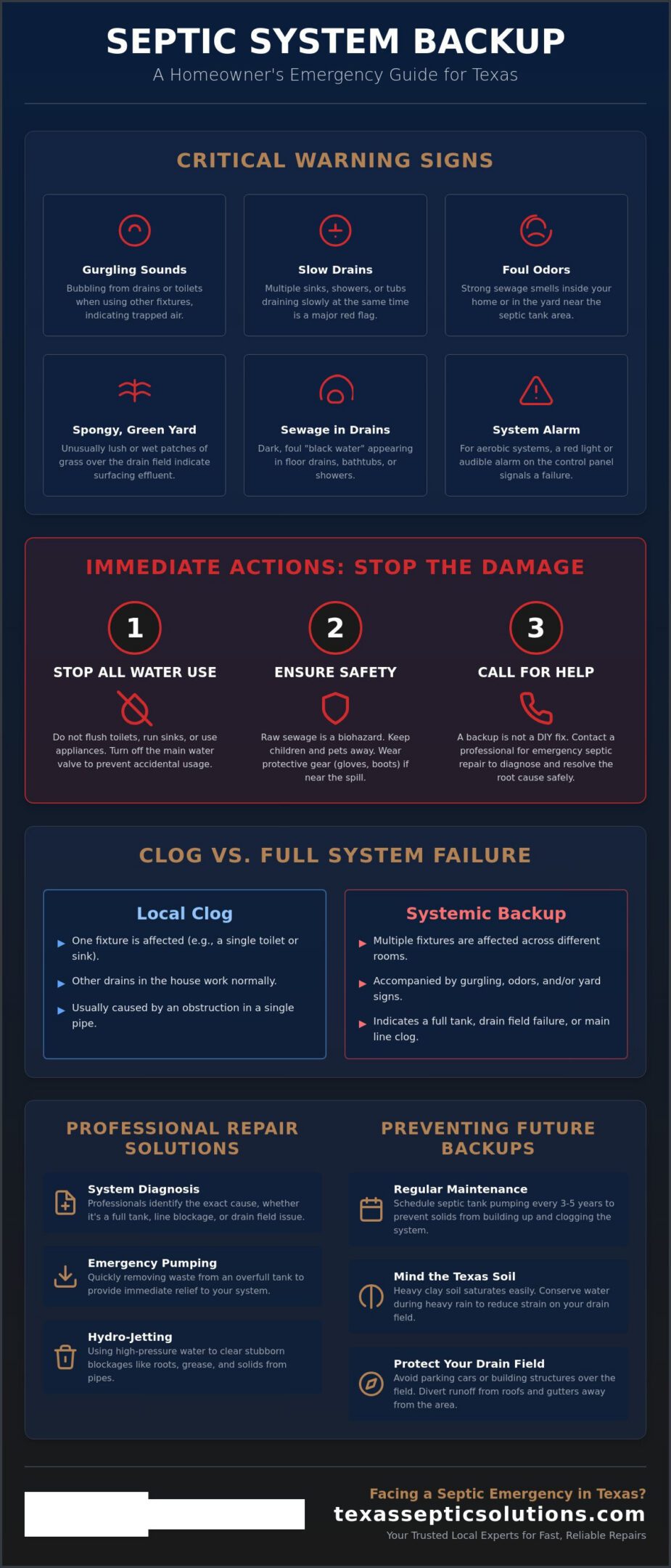
Your plumbing often tries to warn you before a full backup occurs. If you hear a strange bubbling or gurgling sound coming from your toilet when you run the bathroom sink or laundry machine, pay attention. This happens because air is being forced back through the traps as wastewater struggles to find a path forward through an over-pressurized tank. If you notice slow drains in multiple fixtures at the same time, it’s a major red flag. A systemic backup is a failure of the tank or drain field to process effluent.
Visual Cues in the Yard and Home
Your yard often tells the story before your drains do. Walk over your leach field and look for “spongy” grass or patches of bright green turf that seem much healthier than the rest of the lawn. This usually indicates that effluent is rising to the surface because it can’t move downward into the soil. Inside the home, the most alarming sign is “black water” appearing in floor drains or tubs. This is raw sewage and represents a serious health risk. If your home uses an aerobic system, check your control panel for a red light or an audible alarm. These systems are designed to alert you the moment a pump fails or water levels become dangerously high, allowing you to seek emergency septic backup repair Texas experts can provide before the spill reaches your floors.
Immediate Steps: How to Fix Septic Backup Issues Safely
Panic is a natural response when you see wastewater entering your home, but staying calm allows you to take the tactical steps needed to save your flooring and drywall. The moment you realize there’s a problem, your priority shifts from trying to fix it to stopping the damage. Taking these steps immediately can reduce the cost of restoration and the need for the extensive emergency septic backup repair Texas homeowners often fear. Quick action protects your health and your property investment.
The “Stop the Flow” Protocol
Your most critical rule during a backup is to stop all water usage immediately. Do not flush toilets, run the dishwasher, or start a load of laundry. Every gallon of water that goes down a drain will eventually find its way back up into the lowest point of your home. If your family is used to high water usage, it’s often best to turn off the main water valve or the power to your well pump. This prevents accidental usage from a running toilet or an automatic appliance that might cycle on while you’re occupied.
Safety is paramount during this process. Raw sewage is a biohazard that contains harmful pathogens and bacteria. These can cause serious illness if they come into contact with your skin or are tracked through the house. If the backup has reached your floors, keep children and pets in a separate part of the house or relocate them temporarily. Wear rubber boots, gloves, and eye protection if you must move any items near the spill, and never touch standing wastewater with bare skin.
Locating and Opening Your Main Cleanout
Most Texas homes have a main cleanout pipe located outside, usually near the foundation or between the house and the septic tank. It is typically a white PVC pipe with a square or slotted cap. If you can find this, you might be able to provide a pressure relief valve for your system. By carefully unscrewing the cap with a wrench, you allow the backed-up wastewater to exit outside into the yard rather than inside your home.
Be prepared for a mess. When you loosen that cap, effluent may spill out immediately under pressure. While a spill in your yard isn’t ideal, it’s far better than having that same volume of waste flooding your bathroom or laundry room. If you are unsure about the location or safety of this step, wait for professional Emergency Septic Service to arrive and handle the pressure release safely.
While you wait for help, resist the urge to pour chemical “septic starters” or heavy-duty drain cleaners down the pipes. These products rarely work on systemic backups and can actually damage the beneficial bacteria your system needs to function. Following the U.S. Environmental Protection Agency’s advice on septic system care and maintenance is the best way to ensure long-term stability. For immediate relief in the Houston or Cleveland area, calling for emergency septic backup repair Texas experts can trust is the only way to diagnose the root cause and get your system flowing again.
Troubleshooting the Root Cause: Clog vs. Full Tank
Determining whether you’re facing a simple plumbing clog or a complete system failure is the first step toward a fix. Before you call for emergency septic backup repair Texas experts, perform a quick assessment of your home’s drains. If the backup is limited to a single room, such as a clogged kitchen sink or one specific toilet, the problem is likely an internal pipe blockage. However, if multiple fixtures across the house are backing up simultaneously, the issue is systemic, meaning your septic tank or drain field has reached its limit.
Check your records for your last pumping date. Most systems require pumping every three to five years, though household size and water usage can shorten that window. If you’re able to safely inspect your tank, look at the liquid levels. If the water level is sitting above the inlet pipe, the tank is overfull and cannot accept more waste. In many parts of East Texas, root intrusion is a common culprit. Local trees like Oaks and Willows have aggressive root systems that seek out the moisture in your pipes, eventually causing massive blockages or even pipe collapses that require professional intervention.
Diagnosing Internal Plumbing Issues
If you suspect a local clog, a manual drain snake is often the best tool for the job. It physically breaks up the obstruction without introducing harmful substances into your system. You should never use caustic, store-bought drain cleaners. These harsh chemicals can kill the beneficial bacteria in your tank that break down solids, leading to much larger problems later. For minor slow drains, natural alternatives like a mixture of baking soda and vinegar can provide a safe clear-out while you follow standard septic system care and maintenance practices.
Systemic Failures: When the Tank is the Problem
Systemic failures often involve mechanical or structural components. If your septic tank alarm is going off, it’s a clear signal that the water level has exceeded the safety float, usually due to a pump failure or a blocked effluent filter. Many Texas homes utilize aerobic systems which rely on an aerator to treat waste. If the aerator stops working or the discharge pump fails, the system will quickly back up into the house. Other common issues include a collapsed baffle, which allows solids to enter and clog the outlet pipe, or a saturated drain field that can no longer absorb effluent. These complex mechanical issues require the diagnostic tools and expertise of a licensed technician to ensure the repair is handled safely and effectively.
Emergency Septic Backup Repair: Professional Solutions
Once you’ve stopped the water flow and secured your home, a professional must step in to diagnose and resolve the underlying failure. While some homeowners hope a simple pump-out will solve the problem, emergency septic backup repair Texas experts know that pumping is usually just the first phase of a comprehensive repair. It clears the tank so a technician can actually see the internal components and identify why the backup happened in the first place. Without this visual inspection, you’re merely treating a symptom rather than the cause.
Professional solutions vary based on the root cause discovered during the inspection:
- Emergency Pumping: This removes the immediate pressure on your pipes and allows for a full camera inspection of the tank and lines.
- Hydro-jetting: Using high-pressure water streams, technicians can clear stubborn clogs, grease buildup, or small root intrusions that a standard plumbing snake can’t reach.
- Baffle and Riser Repair: Baffles are critical for keeping solids in the tank. If they break or corrode, solids can escape and clog your drain field pipes.
- Drain Field Rehabilitation: This involves techniques to break up soil compaction or remove the biomat slime layer that prevents water from soaking into the ground.
What to Expect During an Emergency Call
When a technician arrives, they follow a methodical process to ensure your home is safe. This typically begins with pumping the tank to stop the immediate backup. Once the liquid level is down, they often use specialized cameras to inspect the lines for cracks or blockages. They’ll also perform diagnostic tests on your pumps and alarms if you have an aerobic system. Texas Septic Solutions provides rapid 24/7 response for Cleveland and Houston residents to ensure these critical steps happen as quickly as possible. If you’re currently dealing with a system failure, contact us for Emergency Septic Service right now to prevent further damage.
Repairing Drain Field Issues
In Texas, our heavy clay soil is a primary factor in drain field failure. Clay soil shrinks and swells with moisture changes, which can damage septic components or reduce the lifespan of a drain field by five to ten years compared to other soil types. During intense Texas storms, saturated soil prevents the drain field from “breathing,” leading to a total halt in wastewater processing. While minor issues can sometimes be fixed by repairing specific sections of the leach field, a saturated or aged field may require more extensive work. If your system is older or the soil is permanently damaged, you may need to consult our septic system replacement cost guide to understand your options for a new, reliable installation.
Preventing Future Backups in the Texas Climate
Once the immediate crisis of an emergency septic backup repair Texas is resolved, your focus should shift toward long-term stability. The Texas climate is notoriously difficult on septic systems, as our cycles of extreme drought and heavy rainfall put constant stress on the soil and components. Implementing a structured septic system maintenance plan is the most effective way to avoid the stress and expense of future failures.
Pumping frequency is not a one-size-fits-all recommendation. While the industry standard is often cited as every three to five years, your specific household size and tank capacity are the real deciding factors. A large family living in a home with a smaller tank will require much more frequent pumping than a single occupant. Beyond pumping, be mindful of your landscaping. Keep trees with aggressive roots and heavy objects like vehicles or sheds away from the system to prevent crushed pipes or root intrusion.
Managing your “hydraulic load” is also vital for system health. This simply means being conscious of how much water you send into the tank at once. Spacing out laundry loads and avoiding long, back-to-back showers gives the soil time to process effluent. Overloading the system with too much water is the leading cause of septic failure in our state’s dense clay soil.
Proactive Maintenance for Longevity
Small issues can quickly turn into major repairs if they aren’t caught early. Annual inspections are the best way to identify minor leaks or pump wear before they cause a backup. We also recommend cleaning your effluent filter every six months to ensure wastewater can exit the tank freely. To stay ahead of potential problems, you can consult our complete homeowner guide for 2026 for detailed upkeep tips.
Protecting Your System During Heavy Rain
Texas storms can saturate a drain field in minutes. To help your system cope, ensure your gutter downspouts and yard drainage are diverted far away from the septic area. This prevents the soil from becoming unnecessarily waterlogged. A critical safety warning: never pump your tank during a flood or when the ground is still saturated. An empty tank in wet soil can become buoyant and actually “pop” out of the ground, leading to catastrophic structural damage. If you find yourself in a situation where your system is overwhelmed, contact Texas Septic Solutions for 24/7 emergency service. We are ready to help you restore your home’s functionality at any hour.
Restore Your Home’s Safety and Functionality
Dealing with a septic backup is a high-pressure situation, but taking the right tactical steps can save your home from severe damage. By stopping all water usage immediately and identifying whether the issue is a local clog or a systemic failure, you’ve already taken control of the crisis. Remember that professional intervention is the only way to ensure the root cause is fixed rather than just hidden. Our licensed and insured Texas technicians are ready to provide the emergency septic backup repair Texas homeowners need to protect their property and health.
Serving Cleveland, Houston, Cypress, and the surrounding areas, we offer a 24/7 rapid response for any septic emergency. We don’t just pump your tank; we provide a comprehensive diagnostic to ensure your system is built to withstand the unique challenges of our local climate. Don’t let a backup wait until morning when help is just a call away.
Get 24/7 Emergency Septic Backup Repair Now
You have the tools and the knowledge to handle this challenge. If you need help with broader drainage or facility management, check out CH Enviro. With a reliable partner by your side, your home will be back to normal in no time.
Frequently Asked Questions
How do I clear a septic backup myself?
You cannot safely clear a systemic septic backup yourself; you can only manage the symptoms while waiting for help. While a manual drain snake might clear a local clog in a single pipe, a backup involving the tank or drain field requires professional pumping and specialized tools. Attempting to DIY a systemic failure often leads to increased property damage or dangerous exposure to raw sewage pathogens.
Is it safe to stay in a house with a septic backup?
It is generally unsafe to remain in a home where raw sewage is actively entering the living space. Wastewater contains harmful bacteria, viruses, and parasites that pose a serious health risk to your family and pets. If you can’t stop the flow or if sewage has contaminated your flooring and walls, you should relocate until the system is repaired and the area is professionally sanitized.
How much does an emergency septic repair cost in Texas?
The total cost for repairs depends on the specific cause of the failure and the components that need replacement. Factors such as the need for emergency pumping, the depth of your tank, and whether the issue is a simple mechanical part or a full drain field failure will influence the final price. You should contact a licensed technician for a diagnostic inspection and a detailed estimate tailored to your system’s needs.
Can heavy rain cause my septic tank to back up?
Yes, heavy rain is a frequent trigger for backups in Texas because our dense clay soil becomes easily saturated. When the ground cannot absorb any more liquid, the drain field stops functioning and wastewater is pushed back toward the tank and into your home. This environmental stress is a common reason for emergency septic backup repair Texas calls during the stormy season.
What is the fastest way to fix a septic backup in the yard?
Professional pumping is the fastest way to stop wastewater from pooling in your yard. This immediately lowers the liquid level in the tank and relieves the pressure on the entire system. Once the tank is emptied, a technician can perform a camera inspection to determine if the issue is a saturated drain field, a broken pipe, or a mechanical pump failure.
Will Drano fix a septic backup?
No, you should never use Drano or other caustic chemical cleaners to address a septic backup. These products are ineffective against systemic tank failures and will kill the beneficial bacteria your system relies on to break down solids. Using harsh chemicals can also corrode your pipes and lead to much more expensive structural repairs over the long term.
How do I know if my septic pump has failed?
A failed pump is usually marked by a triggered septic alarm or a red light on your system’s control panel. You might also notice that the sprinklers in your aerobic system have stopped working or that water is pooling specifically around the pump chamber. If these signs appear alongside slow drains or gurgling pipes, your pump is likely no longer moving effluent to the drain field.
What happens if I ignore a septic tank alarm?
Ignoring a septic tank alarm leads to a total system backup and significant water damage inside your home. The alarm is designed to warn you that the water level has exceeded the safety float and the system can no longer process wastewater. If you don’t stop water usage and call for service immediately, the waste will soon have nowhere to go but back up through your drains.