
Septic System Troubleshooting: A Step-by-Step Guide for Texas Homeowners
Imagine walking out to your backyard on a hot Texas afternoon only to be met by a swampy patch of grass and a smell that definitely isn’t the neighbor’s grill. When your drains slow down or odors start drifting into the house, your first instinct is often a mix of panic and frustration. Effective septic system troubleshooting starts with staying calm and knowing exactly where to look before a minor backup turns into a total system failure.
We understand that managing household waste during a backup is stressful, and the fear of facing a massive replacement bill can be overwhelming. You’ve worked hard for your home, and a malfunctioning septic tank shouldn’t threaten your peace of mind or your property’s value. This guide will show you how to identify specific causes of trouble, determine if you can handle the fix yourself, or if it’s time to call for professional emergency service. We’ll walk through the warning signs and the simple checks that can save you time and money while keeping your system running smoothly for years to come.
- Learn how to differentiate between simple household clogs and serious main line failures to avoid unnecessary service calls.
- Master the basics of septic system troubleshooting so you can identify if a problem is a simple DIY fix or a professional emergency.
- Understand how common mechanical failures like broken baffles and clogged filters can lead to expensive drain field damage.
- Discover why Texas clay and heavy seasonal rainstorms create unique drainage risks for homeowners in our region.
- Know exactly when a backup becomes a health hazard and requires immediate professional intervention to protect your property.
What is Septic System Troubleshooting?
Troubleshooting isn’t just about guessing why a drain is slow; it’s a systematic process of identifying specific symptoms to locate the exact source of a failure. Before you grab a shovel or call for a pump-out, it helps to understand what a septic system is and how its various components work together to process waste. Effective septic system troubleshooting allows you to separate minor inconveniences, like a localized clog, from major structural threats that could compromise your entire property.
Acting quickly is vital for protecting your property value and your family’s health. A small leak or a cracked pipe can quickly saturate your yard with bacteria and pathogens, creating a hazardous environment for children and pets. There is also a massive difference between a symptomatic issue, like a localized odor near a vent pipe, and a systemic failure, such as a complete drain field collapse. Catching a simple blockage or a faulty baffle early can save you from the massive septic system replacement cost that follows total neglect. We see many homeowners who could have avoided a full system overhaul just by paying attention to the early warning signs.
The Goal of a Systematic Inspection
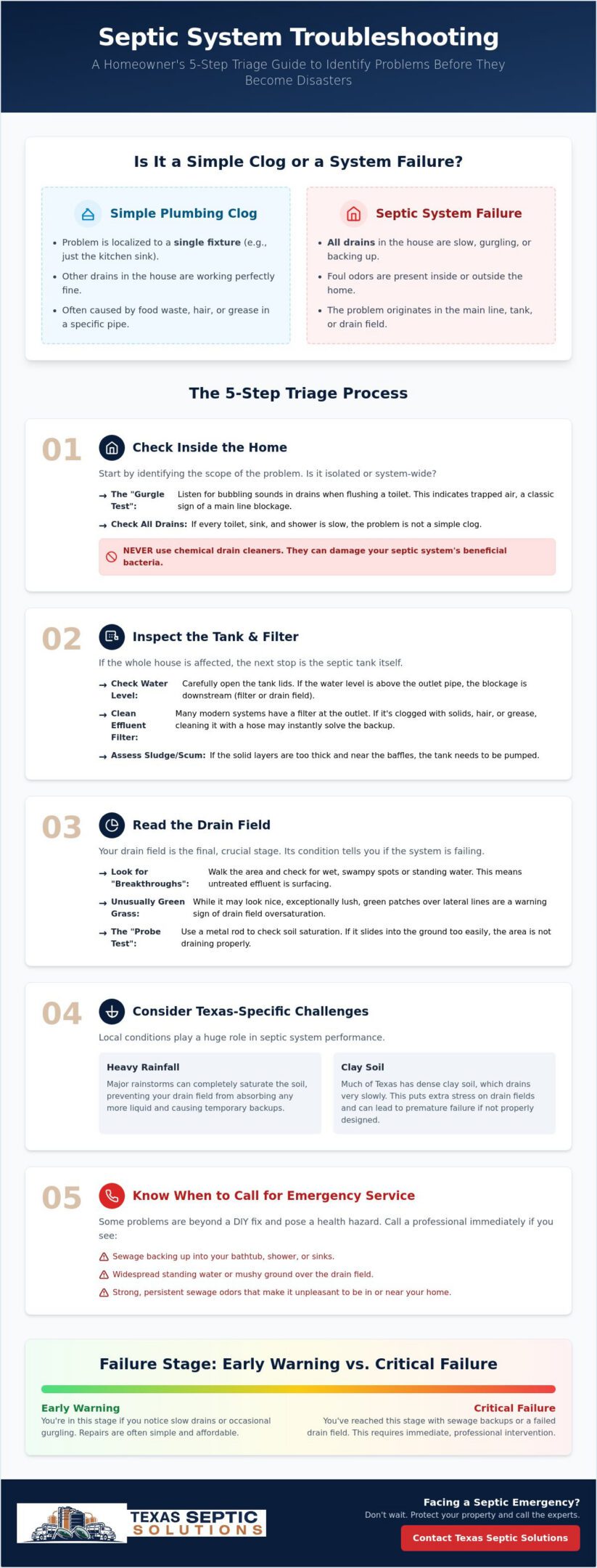
The primary objective is to determine if you have a simple plumbing clog or a true septic tank backup. A clog in the house plumbing usually affects only one room or fixture, while a septic failure impacts the entire home. We categorize these issues into “Early Warning” or “Critical Failure” stages. If you notice gurgling pipes or slow drains today, you’re in the early warning stage where repairs are often affordable. If sewage is backing up into your bathtub, you’ve reached a critical failure. For Texas homeowners, a “wait and see” strategy is almost always the most expensive choice you can make.
Tools You Might Need for Basic Inspection
You don’t need a truck full of heavy machinery to start septic system troubleshooting, but you do need a few essentials to stay safe and accurate. Having these items ready can help you provide better information when you call a professional.
- Safety gear: Heavy-duty waterproof gloves and eye protection are non-negotiable. You’re dealing with hazardous biological waste, and protection is your first priority.
- The “Probe Test”: A simple insulated metal rod helps you check for saturated soil around your drain field. If the rod slides into the ground like butter, you likely have an area that isn’t draining properly.
- Observation logs: Keep a notebook handy. Note if backups happen specifically after laundry day, long showers, or heavy Texas rainstorms. This data helps us diagnose the root cause much faster.
5 Steps to Triage Your Septic System Issues
When you suspect a problem, your first move should be a quick triage to determine the severity. You don’t need to be a licensed technician to perform basic septic system troubleshooting; you just need a logical path to follow. By checking these five areas in order, you can often pinpoint the source of the trouble before it becomes a full blown emergency. This systematic approach helps you decide if you’re looking at a ten minute fix or a situation that requires a professional team.
Step 1: Inside the Home – Clog or System?
Start by identifying if the issue is localized. If only the kitchen sink is draining slowly but the bathroom works fine, you likely have a simple plumbing clog. However, if every drain in the house is sluggish or gurgling, the problem is further down the line. Listen for the “gurgle test.” If you hear air bubbling back up through the pipes when you flush, it’s a sign that air cannot escape the system properly. Never use chemical drain cleaners during this stage. These harsh acids kill the beneficial bacteria in your tank and rarely solve a systemic backup.
Step 2: The Tank and Filter Check
If the whole house is backed up, head outside to the tank. Carefully open the lids and look at the water level. If the level is above the outlet pipe, the issue is either a clogged effluent filter or a problem in the drain field. Many modern systems have an effluent filter located at the outlet. If this filter is covered in hair or grease, it will stop all flow. A simple cleaning with a garden hose can often restore your system immediately. Take note of the “scum” and “sludge” layers; if the solid waste is too close to the baffles, it’s time for a pump out.
Step 3: Reading the Drain Field
The drain field is the final stop for your wastewater. Walk the area and look for “breakthroughs,” which are wet spots or standing water where effluent is surfacing. While many homeowners love seeing lush, green grass, unusually vibrant patches over your lateral lines are actually common signs of a failing septic system. This indicates that the soil is no longer absorbing water correctly. Try the “Squish Test” by walking over the field. If the ground feels spongy or water pools around your boots, the soil is likely saturated.
Steps four and five involve checking your electrical components and reviewing your recent habits. Check the septic alarm box for any red lights or buzzing sounds, which often indicate a pump failure or a high water alert. Finally, think about your recent water usage. Heavy Texas rainstorms or a weekend with houseguests can cause hydraulic overload. If your system is struggling after a heavy load, you might just need to give it a few days to catch up. If these steps don’t resolve the issue, it may be time to schedule professional septic system maintenance to prevent a total failure.
Analyzing the Most Common Septic Failure Points
Deepening your knowledge of septic system troubleshooting requires looking past surface symptoms to find the specific component that has given out. A septic system functions as a balanced ecosystem. When one part fails, the rest of the system often follows. You can find detailed academic guides on troubleshooting septic system issues, but most Texas homeowners will face a few specific, recurring culprits that demand attention.
Mechanical failures often start with the septic baffles. These T-shaped pipes at the inlet and outlet direct waste flow. The inlet baffle ensures waste doesn’t disturb the scum layer, while the outlet baffle prevents solids from entering the drain field. If the outlet baffle breaks, solids flow into your lateral lines, causing expensive clogs. You can diagnose the blockage location by checking the water level. If the tank level is normal but the house is backed up, the inlet is likely blocked. If the tank is overflowing, the outlet or the field is the culprit.
Aerobic systems, common across Texas, rely on a pump to discharge treated water. If this pump fails, the “heart” of the system stops, and the tank fills quickly. This usually triggers a high-water alarm. Beyond mechanical issues, the bacterial balance is frequently ruined by “unflushables.” Items like grease and “flushable” wipes don’t break down. They create physical dams or kill the microbes needed to digest waste, leading to rapid sludge accumulation that eventually forces solids into the secondary chambers.
The Septic Tank Alarm: Friend or Foe?
Your alarm provides a head start on a potential crisis. A steady red light usually indicates a high-water condition, meaning the pump isn’t keeping up or the field is saturated. If the buzzer sounds, the water level has reached a critical point. If your septic tank alarm is going off, stop running water immediately. Most control boxes have a “silence” switch on the bottom. This stops the noise but doesn’t resolve the underlying issue; it only provides quiet while you wait for a professional to arrive.
Drain Field Compaction and Bio-Mat Buildup
The soil under your drain field eventually develops a Bio-Mat, a layer of bacteria and organic matter. Too much Bio-Mat acts like a waterproof barrier, stopping water from soaking into the ground. Soil compaction often accelerates this. Driving vehicles or heavy mowers over the field crushes pipes and packs soil too tightly for air to reach the microbes. If you see water pooling or smell sewage even after a recent pump-out, your leach field might be reaching the end of its functional life.
Texas-Specific Challenges: Clay Soil and Heavy Rainfall
Texas weather is unpredictable. One month we are in a drought that cracks the ground, and the next we are facing a tropical system that drops ten inches of rain in a day. These extremes make septic system troubleshooting in the Lone Star State a unique challenge compared to other parts of the country. Our “Blackland Prairie” and “Houston Clay” soils don’t behave like the sandy soil you might read about in national DIY guides. We have to account for ground that shifts, expands, and holds water for days on end.
The clay in our region is often called “gumbo” for a reason. It is incredibly dense and holds onto water like a sponge. During a hot Texas summer, this clay shrinks and cracks, which can actually shift your septic pipes or cause joints to pull apart. When the heavy rains finally arrive, that same clay expands and seals up, making it nearly impossible for a traditional drain field to “breathe” or absorb effluent. This is why many homeowners in high-water-table areas like Shepherd or Huffman rely on aerobic systems. These systems are built for these conditions, treating the water to a higher standard before spraying it onto the lawn surface rather than relying on soil absorption.
Troubleshooting After a Storm
If your drains slow down immediately after a heavy downpour, don’t panic just yet. Your system might act “clogged” for about 48 hours while the ground is completely saturated. This is often caused by Inflow and Infiltration (I&I). This occurs when groundwater or surface runoff finds its way into your tank through unsealed lids, riser joints, or small cracks. During hurricane season, the best way to protect your system is to ensure your yard is graded so that water flows away from the tank and drain field. Never pump your tank while the ground is still underwater. An empty tank in saturated soil can become buoyant and literally “pop” out of the earth, leading to a total system loss.
Soil Saturation and Percolation Issues
East Texas clay requires a specific approach to troubleshooting, especially with aerobic spray heads. If you notice your sprayers are constantly running or the alarm is buzzing after a rain, the soil simply cannot take any more liquid. A “Percolation Test” measures how quickly water moves through your specific soil; in many parts of Texas, that rate is very slow. You can assist your system’s performance by improving yard drainage with swales that divert rainwater. If your system continues to struggle long after the sun comes out, you likely need a professional to check for structural leaks or pump issues. For help managing these local environmental challenges, reach out to us for professional septic system repair.
When to Call for Professional Emergency Septic Service
While septic system troubleshooting can save you time on minor issues, there is a clear “Red Line” where DIY attempts become a health hazard. If you’ve walked through the triage steps and the water level hasn’t dropped, or if you’re standing in surfacing effluent, it’s time to put down the probe rod. Handling raw sewage without proper training and protective equipment exposes you to harmful pathogens. Knowing when to stop is just as important as knowing where to start.
Professional diagnostics find what you can’t see from the surface. We use specialized tools to determine if your system is suffering from a temporary overload or a permanent structural failure. By identifying the root cause early, we can often perform a targeted repair that prevents a total system collapse. The ultimate goal is to move from reactive troubleshooting to proactive care, ensuring your home remains functional and your property value stays protected.
Emergency vs. Routine Repair
A septic emergency isn’t just a slow drain; it’s a total loss of function that threatens your home’s interior. We follow a 24/7 rule: if sewage is backing up into your sinks or tubs, or if you have a total power failure on an aerobic system, you need immediate professional intervention. Don’t assume that emergency pumping is a permanent fix. While it empties the tank and provides temporary relief, it doesn’t repair a broken baffle or a collapsed pipe. When you call for emergency septic service, tell the dispatcher if the backup is inside the house, if the alarm is sounding, and when you last had the tank pumped.
The Professional Troubleshooting Toolkit
When the source of the problem is buried several feet underground, we use advanced technology to find the answer. High-resolution sewer cameras allow us to see root intrusions or crushed lines without digging up your entire yard. We also use “Sludge Judging” tools to measure the exact thickness of waste layers and dye tests to track how water moves through your drain field. These methods take the guesswork out of septic system troubleshooting and ensure the repair is done right the first time.
The most effective way to handle system issues is to prevent them from happening. Enrolling in a septic system maintenance plan ensures that your filters are cleaned and your mechanical parts are tested regularly. Following a consistent schedule for septic system maintenance in Texas is the best insurance against the stress of a midnight backup and the high costs of unexpected failures.
Protect Your Home with Proactive Care
Mastering septic system troubleshooting gives you the confidence to handle minor issues and the wisdom to know when a situation requires an expert hand. By following a systematic triage process and accounting for the unique challenges of Texas clay and heavy rainfall, you can prevent small malfunctions from turning into expensive property damage. Remember that early detection is your best defense against the stress and health hazards of a sewage backup.
If your system has reached a critical failure point or the alarm just won’t stop buzzing, you don’t have to face it alone. Texas Septic Solutions has been serving East Texas for over 20 years as licensed and insured septic experts. We offer 24/7 emergency service to ensure your family stays safe and your property remains functional, no matter when trouble strikes.
Get 24/7 Emergency Septic Help in Cleveland & Houston Now
Your home’s functionality is our top priority, and we’re here to keep your system running smoothly through every season.
Frequently Asked Questions
Is it normal for my septic system to smell after it rains?
Occasional odors after a storm are common because changes in atmospheric pressure can trap sewer gases near the ground instead of letting them vent upward. However, if the smell is persistent or accompanied by soggy soil, it may indicate that your tank is taking on groundwater through a leak. This hydraulic overload prevents the system from processing waste correctly and requires a closer look at your tank’s seals.
Can I use a plumbing snake to clear a septic backup?
You can use a plumbing snake to clear localized clogs in your home’s interior drains, such as a sink or toilet. If the blockage is in the main line leading to the septic tank, a standard hand snake won’t be long enough to reach it. If the tank itself is overfilled or the outlet filter is clogged, snaking the lines will not provide a solution and could lead to pipe damage.
How do I know if my septic pump has failed?
The clearest sign of pump failure is a red light or an audible buzzer on your system’s control panel. In aerobic systems, you might also notice that the spray heads aren’t activating during their usual cycles. If the pump stops working, the effluent won’t move out of the tank, causing the water level to rise rapidly. This eventually leads to a total backup into your home’s lowest drains.
What should I do if sewage is backing up into my bathtub?
Stop using all water in the house immediately and call for professional emergency service. This situation is a serious health hazard that indicates your system has reached a point of total failure. Avoid using chemical cleaners or trying to force the clog down, as this can push sewage into other areas of your home. Professional intervention is the only safe way to resolve a backup of this magnitude.
Why is my septic alarm buzzing even though the tank was recently pumped?
A recent pump-out only removes the liquid and solid volume; it doesn’t fix mechanical or electrical issues. If the alarm is buzzing, the water level has likely reached a high-point trigger again because of a failed pump, a tripped breaker, or a stuck float switch. Pumping is a temporary fix for the symptoms, but it won’t resolve the underlying hardware failure that is causing the tank to overfill.
Can tree roots cause my septic system to fail, and how do I troubleshoot them?
Tree roots are a frequent cause of system failure because they grow toward the moisture and nutrients inside your pipes. You can troubleshoot potential root issues by looking for sunken spots in the yard or unusually lush trees near your lines. If your drains are chronically slow despite regular maintenance, a professional sewer camera inspection is the most accurate way to find and identify root intrusions before they crush your pipes.
Is standing water over my drain field always a sign of failure?
Standing water isn’t always a sign of total failure if it appears immediately after a heavy Texas downpour and disappears within 48 hours. If the water remains during dry weather or has a noticeable sewage odor, your drain field is likely saturated or clogged with solids. Persistent puddles mean the soil can no longer absorb effluent, which is a primary indicator that your system needs professional repair or replacement.
How often should I troubleshoot or inspect my own system?
You should perform a basic visual inspection of your system every six months to check for odors or changes in your lawn’s appearance. Consistent septic system troubleshooting and record-keeping help you identify small changes in drainage before they become emergencies. While these DIY checks are helpful, they don’t replace the need for a comprehensive professional inspection and pumping every three to five years to ensure long-term functionality.