
Comprehensive Guide to Septic System Design and Installation in Texas (2026)
Did you know that the TCEQ issued 43,165 permits for new septic systems across Texas in 2025? If you feel overwhelmed by the technical requirements of septic system design and installation, you’re certainly not alone. It’s natural to worry about failing a soil test or choosing the wrong setup for our heavy Southeast Texas clay. You want a reliable system that works for your family, not a permit headache that stalls your construction project and drains your budget.
We’re here to help you master every phase of the process while respecting the unique regulatory landscape of our region. This guide provides a clear roadmap of the current installation timeline and helps you understand whether an aerobic or conventional system fits your specific lot. You’ll learn how to navigate county permits with ease and discover exactly what’s required to pass your final inspections. Let’s take the guesswork out of your utilities so you can move forward with your build with total confidence.
- Learn why expert septic system design and installation starts with a site-specific engineering plan that meets strict Texas standards.
- Discover how your property’s soil type and percolation rates determine whether you need a conventional or aerobic system.
- Compare the low-maintenance benefits of gravity systems against the high-tech efficiency of aerobic treatment units.
- See the full installation roadmap, including site preparation, tank placement, and the final steps to get your system running.
- Navigate the TCEQ permitting process with ease by understanding the requirements for both construction and long-term operation.
The Essentials of Septic System Design and Installation
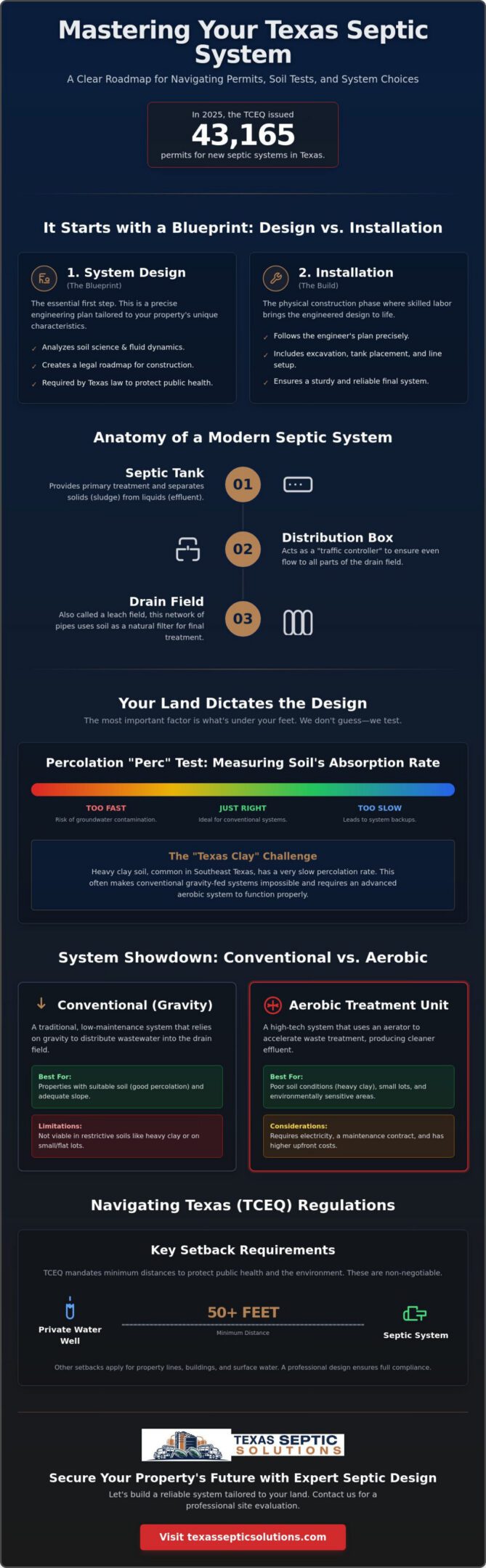
Septic system design is much more than just picking a spot in the backyard; it’s a precise engineering plan for an On-site sewage facility (OSSF). This is the official Texas term for septic systems. While many property owners focus on the physical digging, the design phase is where we solve the complex puzzles of soil science and fluid dynamics. We start by looking at how your specific land handles water to ensure your utilities work exactly as they should for years to come.
Understanding the distinction between professional site engineering and physical hardware installation is vital for a successful project. Think of it like building a custom home. You wouldn’t start framing walls without an architect’s blueprint. In the context of septic system design and installation, the engineer creates a roadmap based on your land’s specific limitations, while the installer follows that map to build a sturdy, reliable system. One provides the technical strategy, and the other provides the skilled labor to bring that strategy to life.
Texas law requires professional design for most residential properties because a failing system isn’t just a nuisance; it’s a public health hazard. The core goal of every system we design is to effectively treat wastewater before it ever reaches our local groundwater. By using the soil as a natural filter, we protect your family and the surrounding community from potential contamination. It’s about building a barrier that keeps our Texas water clean and our neighborhoods safe.
Key Components of a Modern System
A reliable system relies on three main parts working in harmony to process waste efficiently. First, the Septic Tank provides essential pre-treatment and solids separation, allowing heavy materials to settle while oils float to the top. Next, the Drain Field, or leach field, handles the final soil-based treatment and dispersal into the ground. Finally, the Distribution Box acts as a traffic controller, ensuring an even flow of liquid to the lateral lines so no single part of your yard becomes oversaturated.
Why Design Must Come Before Digging
Every piece of land in Southeast Texas is unique. Factors like property size, the steepness of a slope, and even the proximity of your neighbor’s water well dictate the type of system allowed on your lot. “Cookie-cutter” designs are dangerous because they ignore these variables, often leading to premature system failure or environmental damage. A professional septic system design and installation ensures your setup is tailored to your specific landscape, preventing costly repairs down the road. We always look at the “big picture” of your property to ensure your utility setup is both legal and functional from day one.
Site Evaluation: Soil Testing and Texas Regulatory Requirements
Before we ever break ground, we have to look at what’s under your feet. Your soil is the most important factor in septic system design and installation. In Texas, we don’t guess; we test. The Texas Commission on Environmental Quality (TCEQ) sets strict standards for these evaluations to ensure your system won’t fail or contaminate the local water supply. A proper evaluation determines which design options are actually on the table for your specific lot.
Percolation tests, often called “perc” tests, measure how fast water moves through your soil. This rate is critical. If water moves too fast, it isn’t treated properly before reaching the water table. If it moves too slow, you’ll face messy backups. This is a frequent challenge in areas like Houston and Cypress, where heavy “Texas Clay” is the norm. This restrictive soil often limits your options, making conventional gravity systems impossible and requiring more advanced aerobic designs to handle the load.
The Soil Profile Analysis
A licensed site evaluator looks for more than just mud. They identify soil textures ranging from sandy loam to restrictive clay. They also check for seasonal groundwater levels. If the water table is too high, it limits the depth of your drain field. This is why a professional site evaluator is a non-negotiable part of the process. They provide the data that keeps your project legal and functional. If you’re ready to see what your land requires, our team can guide you through the initial steps of a new septic system installation tailored to your soil profile.
Texas-Specific Setback Rules
Location is everything. TCEQ regulations mandate specific distances, or setbacks, to protect your home and the environment. For example, your septic tank must be at least 50 feet away from any private water well. You also need to maintain clear distances from your home’s foundation and property lines. In communities like Shepherd and Huffman, these property line restrictions can be tight, especially on smaller or oddly shaped lots. We also have to account for floodplains. Installing a system in a flood-prone area requires special engineering to prevent sewage from escaping during heavy Texas rainstorms. Following these rules ensures you pass inspection and protects your property’s long-term value.
Choosing the Right System: Conventional vs. Aerobic Septic Designs
Once your soil evaluation is complete, the results will lead you toward one of two primary paths. While every homeowner hopes for the simplest setup possible, the reality of modern septic system design and installation is that your land’s limitations usually make the decision for you. You’ll likely choose between a conventional gravity system or an Aerobic Treatment Unit (ATU). Each has its own set of benefits, but the “best” one is simply the one that your soil can actually support.
Conventional systems are the “set it and forget it” option of the septic world. They rely on gravity to move wastewater from the tank to a series of underground trenches. Because they have no moving parts and don’t require electricity, they are exceptionally reliable and quiet. However, they require deep, well-draining soil to filter bacteria effectively. If your property sits on a thick layer of clay, a conventional system simply won’t meet the technical standards outlined in Texas septic system regulations.
The trade-off between these systems often comes down to upfront investment versus ongoing responsibility. A conventional system might save you money on monthly electricity and service contracts, but it requires a much larger footprint on your property. Aerobic units allow you to build on smaller lots or in areas with poor drainage, but you must factor in the cost of the aerator’s power and the mandatory inspections required by your county. We always help our neighbors weigh these factors to ensure their choice fits both their budget and their lot.
When to Choose a Conventional System
Sandy loam is the gold standard for these traditional setups. If you have ample acreage and the right dirt, this is often the most cost-effective long-term choice. Even though they are simpler, you still need to follow a consistent schedule for Septic System Maintenance Texas to prevent the drain field from clogging over time. Without moving parts to alert you to a problem, regular inspections are your only line of defense.
The Rise of Aerobic Systems in East Texas
In much of the Cypress and Houston area, heavy clay makes conventional systems a non-starter. This is where Aerobic Treatment Units come in. These systems act like miniature wastewater treatment plants. They use an electric aerator to pump oxygen into the tank, which supports “aerobic” bacteria that break down waste much faster and more thoroughly than the bacteria in a standard tank. Because the treated water is so much cleaner, it can be dispersed through spray irrigation or drip emitters. This is a lifesaver for small lots, but Texas law mandates that you maintain a professional septic system maintenance plan to keep the system in legal compliance.
The Step-by-Step Septic Installation Process
Once you have your engineered plan in hand, the transition from paper to the field begins. Many homeowners expect the construction to be a quick, one-day affair, but a professional septic system design and installation requires a methodical approach. We follow a specific timeline to ensure every component meets the strict standards set by your local Texas county health department. This careful pace protects your investment and ensures your home remains functional for decades.
The process starts with initial site preparation. We clear the area of brush and debris, then carefully mark the design footprint. This ensures the tank and drain field sit exactly where the site evaluator intended, respecting all the legal setbacks from your home and property lines. Once the layout is confirmed, we bring in the heavy equipment to begin the excavation phase. We take care to minimize soil compaction in the drain field area, as this can ruin the soil’s ability to absorb water.
Excavation and Tank Setting
Setting the primary treatment vessel is the most critical part of the build. We excavate the pit and prepare a stable, compacted base to support the weight of the tank. We prioritize using high-quality concrete or poly tanks because they offer the best longevity against our local soil conditions. During this phase, we also ensure the inlet pipes have the proper pitch and slope to allow waste to flow freely from your home. The tank must be perfectly level to prevent backups. If the tank is even slightly tilted, it can disrupt the entire treatment process and lead to premature failure.
Final Hookups and Backfilling
After the tank and dispersal lines are in place, we focus on the final connections. We hook the main line from your house to the new system and verify that every seal is watertight. This is also when we test the mechanical components, including the float switches and the septic tank alarm. We want to ensure that if a pump ever fails or the water level rises too high, you’ll be notified immediately before a backup occurs. Testing these sensors now prevents emergency calls later.
Before we finish, we must clear the hurdle of the “open-hole” inspection. A county official will visit the site to inspect the pipes and tank while they are still visible. You can’t bury the system until the county signs off on the work. Once we receive that green light, we backfill the area with appropriate soil, grading it carefully to prevent settling or ponding water. If you’re ready to move forward with your project, our team provides comprehensive new septic system installation services that cover every step from first dig to final inspection.
The final phase of septic system design and installation is often the most misunderstood by homeowners. In Texas, you don’t just get one permit; you navigate a two-stage legal process. First, you receive an “Authorization to Construct.” This allows us to break ground. Once the work is finished and passes the final walkthrough, the county issues a “License to Operate.” This is the official document that legally allows you to use your system and confirms it meets all state health codes.
Professional installers handle the bulk of the TCEQ paperwork for a reason. The technical specifications required by county health departments are dense; they involve complex soil data, site maps, and engineering calculations. We take that burden off your shoulders to ensure the application is correct the first time. This proactive approach prevents the $200 to $500 permit application fees from being wasted on rejected designs or incorrect filings.
Protecting your investment starts the moment the equipment leaves your yard. The first 12 months are a critical “settling” period for your new setup. By maintaining your current system properly from day one, you can avoid a premature and expensive septic system replacement cost. Long-term functionality is built on small, consistent habits rather than waiting for a major failure to occur.
Permitting in Cleveland and Houston
In areas like Cleveland and Houston, the timeline for county health department approval typically ranges from two to four weeks. During this time, the Authorized Agent, usually a county health official, reviews your septic system design and installation plan. They are the final gatekeepers who ensure the design meets local safety standards. Once the system is in the ground, you must keep your final “as-built” drawing in a safe place. This map shows exactly where your lines and tanks are buried. You’ll need it for future property sales or if you ever decide to add a pool or a shed to your lot.
Your Post-Installation Checklist
Your work isn’t quite done once the dirt is backfilled. Your first priority is establishing a thick grass cover over the drain field. Grass roots stabilize the soil and prevent erosion that could expose your pipes. You also need to manage your water usage carefully in the first month. Avoid running five loads of laundry in a single day while the system’s bacteria colony is still establishing itself. This prevents hydraulic overload, which can flush untreated waste into your new drain field. If you’re ready for a site evaluation, Contact Texas Septic Solutions for expert design and installation today.
Secure Your Property’s Future with Expert Septic Design
Building a home in Southeast Texas is a major milestone, and getting your utilities right from the start is the best way to protect that investment. We’ve seen how the right septic system design and installation can turn a challenging, clay-heavy lot into a functional, worry-free property. By prioritizing a thorough soil evaluation and choosing the correct system for your land’s specific needs, you avoid the stress of failed inspections and costly future repairs. Whether you’re navigating the permitting process in Cypress or preparing for your first dig in Cleveland, having a reliable partner makes all the difference.
Texas Septic Solutions has served the Houston area for over a decade, providing TCEQ-compliant expertise that our neighbors trust. We’re built for the long haul, offering everything from initial engineering to 24/7 emergency support. You don’t have to tackle the complexities of state regulations and site engineering alone. Our team is ready to provide the calm reliability you need to get your project across the finish line. Schedule Your Professional Septic Design Consultation today and let’s build a system that stands the test of time.
Frequently Asked Questions
How long does the septic system design and installation process take?
The total timeline for septic system design and installation typically ranges from four to eight weeks. This schedule includes the initial soil evaluation, the engineering phase, and the county’s permit review period. While the actual physical digging usually takes just a few days, we have to wait for the local authorized agent to conduct the mandatory open-hole inspection before we can finish backfilling. Weather conditions and seasonal demand can also influence these dates.
Do I need a permit to install a septic system in Texas?
You absolutely need a permit for any new OSSF installation in Texas. The process involves two stages: first, you obtain an “Authorization to Construct” based on your engineered design. After the installation is complete and passes a final inspection, the county issues a “License to Operate.” Operating a system without these legal documents can lead to heavy fines and major issues if you ever try to sell your property.
Can I design and install my own septic system in Cleveland, TX?
Texas law requires that most residential septic systems be designed and installed by TCEQ-licensed professionals. While some very specific owner-builder exceptions exist in certain counties, they are rare and often difficult to navigate. In Cleveland and surrounding areas, hiring a licensed expert ensures your system meets all safety codes and protects your groundwater. It’s the best way to avoid the liability of an unpermitted or failing utility setup.
What is the difference between an aerobic and a conventional septic system?
The main difference lies in how the waste is treated and dispersed. A conventional system uses gravity to move wastewater into soil trenches for natural filtration. An aerobic system acts like a mini-treatment plant by using an electric aerator to pump oxygen into the tank. This allows for cleaner effluent that can be sprayed or dripped onto the surface, which is ideal for the heavy clay soil found in Southeast Texas.
How much space do I need for a new septic system installation?
Most conventional systems require at least half an acre to accommodate the large drain field and necessary setbacks from wells and property lines. However, the exact space depends on your soil’s absorption rate and the number of bedrooms in your home. Aerobic systems offer more flexibility for smaller or restricted lots because they don’t rely on long underground trenches. We’ll measure your specific footprint during the site evaluation phase.
How often should a newly installed septic system be inspected?
If you have an aerobic system, Texas law requires a maintenance contract with inspections performed every four months. These frequent checks ensure the aerator and spray heads are functioning correctly. For conventional gravity systems, we recommend a professional inspection every one to three years. Regular monitoring helps catch small issues before they turn into major repairs, keeping your utility system reliable for the long term.
What happens if my soil fails the perc test?
Failing a perc test simply means your soil doesn’t drain fast enough for a traditional gravity system. This is very common in our region due to the heavy clay content. If your soil fails, your designer will pivot to an aerobic treatment unit or a low-pressure dosing system. These advanced designs use mechanical treatment and specialized dispersal methods to overcome poor soil conditions, ensuring your home still has a functional wastewater solution.
Does a new septic system increase my property value in Texas?
A modern, permitted septic system design and installation is a major selling point and definitely adds value to your Texas property. Buyers and lenders look for “as-built” drawings and valid licenses to operate when a home changes hands. Having a system that was professionally designed and installed provides peace of mind that the property is environmentally safe and up to code. It transforms a potential liability into a reliable, long-term asset.