
Professional Septic Filter Cleaning Service: The Homeowner’s Guide for 2026
What if your septic tank was just pumped, yet your sinks are still gurgling and a foul odor is creeping across the lawn? Most homeowners believe that pumping is the only maintenance they need, but neglecting your effluent filter is like driving a car with a clogged oil filter. A professional septic filter cleaning service is the often overlooked secret to preventing solids from reaching your drain field. Since these filters can block up to 50% of solids from leaving the tank according to industry data, keeping them clear is your first line of defense against a total system collapse.
We know how stressful it is to worry about the high cost of drain field replacement or the sudden embarrassment of a backup during a family dinner. You want a system that works quietly in the background without constant anxiety. This guide shows you exactly how a professional septic filter cleaning service protects your property and how to tell when your system needs expert attention. You’ll learn the specific warning signs of a clogged filter and see how modern maintenance keeps your Texas home running smoothly for years to come.
Key Takeaways
- Understand how the effluent filter acts as a critical guard for your drain field by trapping harmful solids before they cause permanent damage.
- Discover the specialized tools and safety protocols technicians use during a professional septic filter cleaning service to ensure your system remains operational.
- Evaluate the risks of DIY maintenance against the long-term savings and efficiency of hiring a licensed expert who can spot early warning signs.
- Identify the specific red flags and the recommended 6 to 12-month cleaning schedule to prevent messy backups and expensive repairs.
What is an Effluent Filter and Why Does It Need Professional Cleaning?
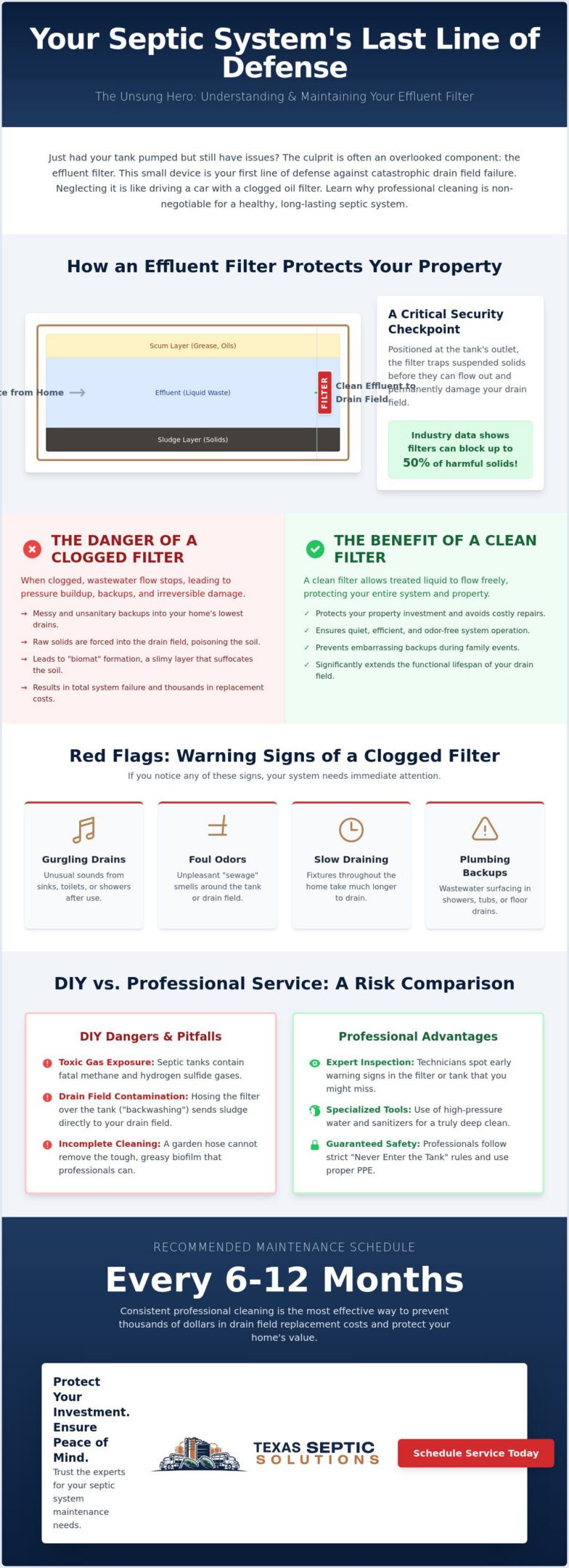
The effluent filter is a cylindrical mesh guard tucked securely inside the outlet baffle of your septic tank. Think of it as a high-stakes security checkpoint. Its primary job is to catch tiny particles of hair, lint, and grease before they flow out of the tank. While a general understanding of how septic tanks work helps you see the big picture, this specific component is what actually protects your yard from total ruin. Only “clean” effluent—liquid waste that’s free of heavy solids—should ever reach your soil. If solids escape the tank, they act like concrete in your drain field pipes, leading to a system failure that often costs thousands to fix.
By 2026, high-efficiency filters have become the gold standard for modern Texas systems. These updated designs are built to handle higher water volumes and trap smaller particulates than the basic baffles used in the past. However, these fine-tuned filters require more attention. A regular septic filter cleaning service is now a non-negotiable part of property maintenance. Without it, the very tool designed to protect your home becomes the primary cause of a plumbing disaster. Understanding the full scope of professional septic system care helps you see how filter maintenance fits into a broader strategy for keeping your system running for decades.
The Consequences of a Clogged Septic Filter
When a filter gets packed with debris, wastewater has nowhere to go. This typically leads to immediate and messy backups into your lowest home drains, like shower stalls or basement sinks. In some cases, the pressure causes a “bypass” scenario where the filter is pushed out of place, allowing raw solids to flood the soil absorption area. This leads to the rapid formation of biomat. Biomat is a dense, slimy layer of bacteria that permanently seals the soil and prevents water from soaking in, effectively killing your drain field.
Filter Types Found in Texas Septic Systems
In the Cleveland and Houston areas, we typically encounter standard mesh filters or high-capacity commercial units. Brands like Polylok and Zabel are common in local installs because they are durable and easy to service. If you have an aerobic system, your filtration requirements are even more specific. These systems often use secondary filters to protect spray heads from clogging. Regardless of the brand, a professional septic filter cleaning service ensures the mesh is scrubbed clean without dropping sludge into the outlet pipe, a common mistake during DIY attempts.
The Step-by-Step Septic Filter Cleaning Process
A professional septic filter cleaning service is a methodical operation that goes far beyond a simple rinse. It begins with careful preparation. Our technicians first locate the outlet riser and inspect the liquid levels within the tank. This is a critical step. If the system is flooded, pulling the filter immediately would cause a sudden surge of suspended solids to rush directly into your drain field. Once we confirm the levels are stable, we move to the extraction phase. This requires a steady hand and specialized long-reach tools to lift the filter cartridge without knocking accumulated debris into the outlet pipe.
While you can find a step-by-step process for cleaning from various public health departments, the mechanical nuances are where professional expertise truly matters. We don’t just spray the mesh with a garden hose. We use pressurized water and specific sanitizing agents to break down tough grease and biofilm that standard water pressure can’t touch. After the filter is spotless, we perform a structural inspection. We check the filter casing and O-rings for cracks or brittleness. A faulty seal allows “bypass,” which lets unfiltered waste slip through the gaps and enter your yard. Finally, we secure the filter back into the baffle to ensure a perfect, airtight seal. If you want to ensure your system stays in peak condition, our team offers reliable septic system maintenance for homes across the region.
Safety Protocols During Filter Maintenance
Septic tanks are confined spaces that harbor dangerous concentrations of methane and hydrogen sulfide gases. These vapors are toxic and can be fatal if inhaled. Our technicians always wear appropriate personal protective equipment (PPE) and follow a strict “Never Enter the Tank” rule. We use specialized hooks and riser keys to service the filter from the surface. This keeps our team safe while ensuring your system is handled with the precision it requires. Homeowners should never attempt to lean into a tank or breathe the fumes directly during a DIY attempt.
The “Backwash” Prevention Technique
A common mistake seen in online tutorials is hosing the filter off directly over the open tank. This sends a concentrated cloud of solids straight toward the outlet pipe, which is exactly what the filter was meant to prevent. During a professional septic filter cleaning service, we use temporary plugs or diversion valves to block the outlet. This ensures that no dirty water or dislodged sludge flows into the drain field during the cleaning process. This level of care prevents the very clogs that lead to expensive field failures.
DIY vs. Professional Septic Filter Cleaning: Is It Worth It?
Choosing between a DIY approach and a professional septic filter cleaning service often comes down to more than just the cost of a service call. While some homeowners feel comfortable handling basic yard work, septic maintenance involves biohazards and specialized mechanical components. A professional team arrives with specific gear, including riser keys to safely open heavy lids and long-reach hooks to extract the cartridge without leaning into the tank. What might take an inexperienced homeowner two hours of frustration usually takes a pro twenty minutes. We don’t just clean the mesh. We inspect the tank’s internal health to ensure the baffles and walls are still structurally sound, catching minor issues before they become catastrophes.
One of the biggest issues with DIY attempts is the disposal of the waste. Hosing off raw sewage and sludge onto your lawn or into a flower bed creates a significant health hazard for pets and children. It also violates basic septic system maintenance guidelines which emphasize keeping pathogens contained. Professionals use contained cleaning methods that neutralize bacteria and keep your yard safe and sanitary. Investing in a professional septic filter cleaning service isn’t just about convenience. It’s about protecting your health and your home’s long-term value.
The Hidden Risks of DIY Filter Cleaning
A garden hose might seem harmless, but high-pressure nozzles can easily shred the delicate mesh of a modern effluent filter. Once that mesh is compromised, the filter is useless. There’s also the very real risk of “septic splash.” Inhaling or coming into contact with aerosolized wastewater can lead to serious illness. Perhaps the most common disaster is dropping the filter into the tank. If it slips, you’re looking at an immediate emergency pump-out just to retrieve a fifty-dollar part. These simple mistakes can turn a quick chore into a multi-day headache.
Value of a Professional Maintenance Record
In Texas, transparency is key when selling a home. State real estate disclosures require you to report the condition and maintenance history of your septic system. Having a documented history of professional service can significantly boost buyer confidence and property value. It proves you haven’t just ignored the system until it broke. By following a structured septic system maintenance plan, you create a paper trail that makes future inspections and home sales much smoother. This documentation is often the deciding factor during a rigorous property inspection.
When to Schedule Service: Frequency and Warning Signs
While the TCEQ recommends pumping conventional systems every 3 to 5 years, your effluent filter operates on a much tighter timeline. For most households, a professional septic filter cleaning service is required every 6 to 12 months. This frequency ensures that the fine mesh doesn’t become blinded by hair, grease, or laundry lint. Waiting until your scheduled pump-out to check the filter is a risky gamble that often ends in a preventable backup. If you have a large family or use a garbage disposal, you’re likely pushing more solids into the tank, which means your filter is working double duty.
Recognizing the early warning signs can save you from an emergency service call. The most common indicator of a struggling filter is slow-draining sinks or toilets that gurgle when you let the water out. You might also notice a damp, “swampy” patch of grass near the tank’s outlet riser. These symptoms suggest that water is struggling to push through the clogged mesh. Heavy rain events in Houston and Cypress often bring these issues to a head. When the ground is saturated, any restriction in the filter can cause the entire system to stall out. If you’re noticing these red flags, it’s time to schedule a professional inspection before the situation worsens.
Local Texas Factors Impacting Filter Health
Cleveland, TX is known for its heavy clay soil, which doesn’t absorb water as quickly as sandy loam. This puts additional stress on your filter because the system can’t “breathe” as easily against the dense earth. We also see many issues after “laundry days.” When you run four or five loads of wash in a single afternoon, the surge of water, known as hydraulic overloading, stirs up fine sediments in the tank. These particles head straight for the filter. In Cypress, homeowners dealing with high water tables must be even more vigilant, as external water pressure can make even a partially dirty filter behave like a fully clogged one.
The “Alarm” Warning: What It Means
If your system is equipped with a high-water alarm, a red light or buzzing sound is an immediate call to action. While many homeowners assume the alarm means a pump has failed, it’s often a signal that the filter is completely blocked. The water level rises because it can’t exit the tank, triggering the float switch. Before you assume you need an expensive pump replacement, check for a filter clog. You can find a detailed list of other red flags in our guide on how to prevent septic system failure. Addressing the filter early is the most cost-effective way to silence that alarm and restore your home’s functionality.
Trust Texas Septic Solutions for Your Maintenance Needs
Texas Septic Solutions understands that a healthy home starts with a functional utility system. We’ve dedicated ourselves to serving the Cleveland, Houston, and Cypress communities with straightforward, reliable care. Whether you’re dealing with a sudden backup or just want to stay ahead of routine upkeep, our team is built to handle the pressure. We don’t just see ourselves as a service provider. We act as guardians of your home’s functionality. Our technicians are local experts who’ve seen every possible scenario in the East Texas soil, and they remain unfazed by even the most complex system failures.
Choosing a professional septic filter cleaning service from a local authority ensures that no detail is overlooked. We pride ourselves on being a one-stop shop for all your wastewater needs. Our approach strikes a balance between the urgency of 24/7 emergency service and the calm reliability of long-term maintenance. When you call us, you aren’t just getting a quick fix. You’re getting a partner committed to extending the life of your drain field and preventing the high costs of system replacement. We treat every property with the same respect we’d show our own homes, ensuring a clean, efficient, and professional experience every time.
What’s Included in Our Filter Cleaning Service
Our service is comprehensive by design. When we perform a septic filter cleaning service, we include a full extraction and structural inspection of the effluent filter to check for any signs of wear or bypass. We also measure the sludge and scum levels within your tank. This data allows us to predict exactly when your next pumping service should occur, moving you from a guessing game to a needs-based maintenance model. Every visit concludes with a written report of your system’s health, providing you with the documentation needed for property records or future home sales.
Get Started with a Proactive Maintenance Plan
Staying proactive is the most effective way to avoid the stress of a system failure. We offer maintenance plans that bundle filter cleaning with routine pumping, providing maximum savings and peace of mind. Our service area extends across the region, including Huffman, Shepherd, and the surrounding East Texas communities. Don’t wait for a high-water alarm to tell you there’s a problem. Take control of your home’s health and schedule your septic filter cleaning service today to ensure your system remains dependable for years to come.
Secure Your Drain Field with Regular Maintenance
Your effluent filter is the most hardworking component of your septic system, standing directly between your home and a total drain field collapse. By prioritizing a regular septic filter cleaning service, you aren’t just checking a box; you’re actively extending the life of your property’s infrastructure. We’ve seen how a few minutes of professional attention can prevent the messy, expensive backups that keep homeowners awake at night. Our expert technicians are ready to serve the Cleveland, Houston, and Cypress communities with the care your system deserves. Whether you need a one-time service or want to join one of our comprehensive maintenance plans, we have the tools and experience to keep things flowing smoothly. We even offer 24/7 emergency service for those high-pressure moments when you can’t afford to wait. Don’t let a small clog turn into a massive headache. Take the first step toward long-term system health today. Book Your Septic Filter Cleaning with Texas Septic Solutions and enjoy the peace of mind that comes with a job well done. Your home is in good hands.
Frequently Asked Questions
How often should a septic filter be cleaned?
Most households require a filter cleaning every 6 to 12 months to maintain proper flow. This frequency depends on your water usage and the number of people in your home. If you use a garbage disposal or run several loads of laundry daily, you should lean toward the 6-month mark to prevent the fine mesh from blinding with debris.
What happens if I never clean my septic tank filter?
Neglecting the filter eventually leads to a total blockage that forces wastewater to back up into your home’s lowest drains. It can also cause a “bypass” where raw solids escape the tank and enter the drain field. This results in the formation of biomat, a thick layer of bacteria that permanently clogs the soil and leads to expensive system failure.
Can I clean my septic filter myself?
Homeowners can technically access the filter, but it isn’t recommended due to significant health and safety risks. You’ll be exposed to raw sewage and dangerous gases like methane and hydrogen sulfide. Additionally, improper handling can shred the delicate mesh or accidentally drop solids into the outlet pipe, which can ruin your drain field in a matter of days.
How much does a professional septic filter cleaning service cost?
The cost of a professional septic filter cleaning service is a small investment compared to the thousands of dollars required for a drain field replacement. While rates vary based on your system’s location and accessibility, bundling this task with a routine maintenance plan is usually the most cost-effective choice. It’s best to contact a local expert for a quote tailored to your specific system type.
Where is the septic filter located in the tank?
The filter is located inside the outlet baffle, which is the pipe that carries treated liquid from the tank to the drain field. It’s typically positioned under a secondary access lid or riser at the end of the tank. In modern Texas systems, the filter is housed in a cartridge that technicians can lift out for a thorough inspection and cleaning.
Will a clogged filter cause my septic alarm to go off?
Yes, a blocked filter is one of the primary reasons a high-water alarm triggers. When the filter is clogged, wastewater cannot exit the tank, causing the liquid level to rise and flip the float switch. This alarm is a vital warning sign that gives you a window of time to call for service before a messy backup occurs in your yard or home.
Do all septic systems have filters?
Not all older systems were built with filters, but they are a standard requirement for almost all systems installed in Texas over the last two decades. Aerobic systems always include filtration to protect the spray heads from clogging with debris. If your older conventional system doesn’t have one, it’s often possible to retro-fit a filter to provide better protection for your soil absorption area.
Is a septic filter cleaning the same as pumping the tank?
No, these are two separate maintenance tasks with different schedules and goals. Pumping involves removing the accumulated sludge and scum from the entire tank, usually every 3 to 5 years. A professional septic filter cleaning service focuses specifically on the mesh guard at the outlet and must be performed much more frequently to ensure the system continues to drain correctly. For a complete overview of how both tasks fit together, our guide to professional septic system care outlines the full maintenance schedule your system needs to reach its maximum lifespan.