
What to Expect During Septic Pumping: A Complete Homeowner’s Guide
What if that heavy vacuum truck pulling into your driveway was actually the best insurance policy your home ever had? Most homeowners dread the day the service truck arrives, often worrying about torn-up grass or a technician delivering news of a massive repair bill. It’s completely normal to feel a bit of “septic anxiety” when you aren’t sure what’s happening beneath the surface of your yard. We understand that you want to protect your property and your wallet, which is why knowing what to expect during septic pumping is the first step toward total peace of mind.
In this guide, we’ll walk you through the entire process so you can manage your system with confidence. You’ll discover exactly what happens when the vacuum truck arrives, from the initial dig to the final inspection of your tank’s baffles and effluent levels. We’ll also provide clear tips on how to prepare your yard and explain the technical jargon in plain English. By the time we’re finished, you’ll have a clear roadmap of the service steps and the assurance that your system is healthy and ready for years of reliable use.
Key Takeaways
- Learn how to prepare your property by locating tank lids and clearing a path to prevent accidental damage to your lawn or landscaping.
- Understand the full technical process of what to expect during septic pumping, from the deployment of heavy-duty hoses to the backwashing methods used to break up thick sludge.
- Discover why an empty tank is the best time to perform a visual inspection for structural cracks and ensure your inlet and outlet baffles are positioned correctly.
- Find out why your tank will look full again just days after service and how to safely backfill soil to prevent unsightly settling in your yard.
- Establish a dependable maintenance plan by learning the real factors that dictate pumping frequency and why physical service beats “miracle” additives every time.
Preparing Your Property for a Septic Pumping Service
Preparation is the secret to a smooth, stress-free service visit. When you take a few minutes to get your yard ready, you help the technician work efficiently and protect your landscaping from unnecessary wear. Before the vacuum truck arrives, you should have a basic understanding of your system’s layout. If you are new to owning a home with onsite wastewater treatment, you can find a helpful overview of What is a Septic Tank? to familiarize yourself with the components. Safety is our top priority during this process. We ask that you keep children and pets indoors while the service is underway. Open tank lids and heavy equipment create a hazardous environment, and keeping everyone at a safe distance ensures the job gets done without incident.
Locating and Uncovering the Tank Lids
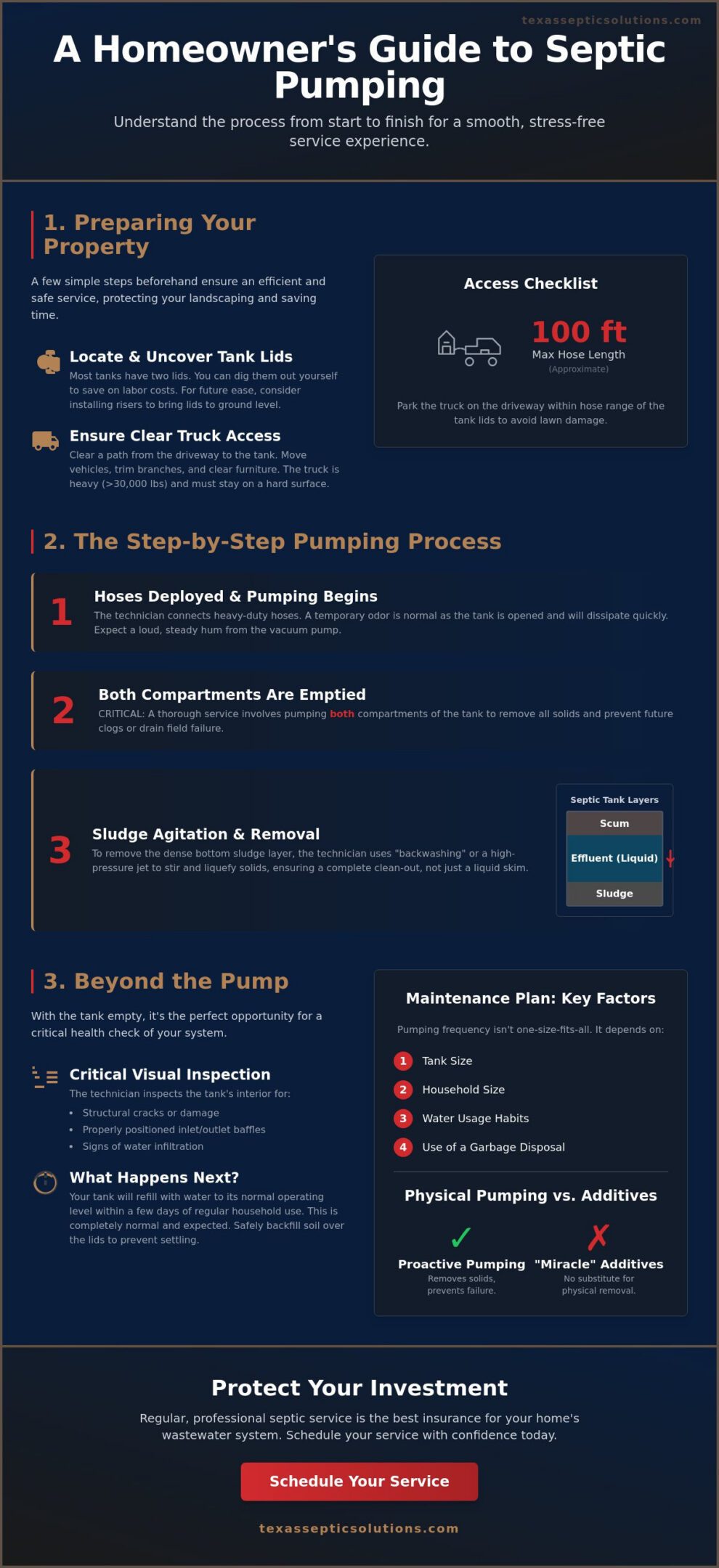
Finding your tank lids is the first hurdle in what to expect during septic pumping. If your lids aren’t already visible at the surface, you can often find them using a property map or a metal probe rod to gently feel beneath the grass. Most tanks have two compartments, meaning there are usually two lids to uncover. You have the choice to dig these out yourself to save on labor costs, or you can opt for professional excavation services if the task is too physically demanding. The depth of the soil covering your tank lids directly impacts how much time and labor is required to uncover them for service. To simplify future maintenance, consider installing septic risers. These are plastic or concrete pipes that bring the tank openings up to ground level, eliminating the need for digging every few years.
Ensuring Clear Access for the Vacuum Truck
A fully loaded septic truck is incredibly heavy, often weighing over 30,000 pounds. Because of this weight, technicians will almost always keep the truck on your driveway or a reinforced hard surface to avoid sinking into the lawn or crushing underground pipes. You should ensure there is a clear path from the driveway to the tank lids. Most standard service trucks carry approximately 100 feet of heavy-duty vacuum hose, so the truck needs to be parked within that range. Before the appointment, check for the following obstacles:
- Move any vehicles, trailers, or equipment blocking the driveway.
- Trim back overhanging tree branches that might snag the top of the truck.
- Ensure gates are unlocked and wide enough for a technician to pull hoses through.
- Clear away decorative rocks, potted plants, or lawn furniture near the tank lids.
By handling these small details ahead of time, you ensure that the technician can get straight to work, keeping your service on schedule and your property in great shape.
The Step-by-Step Septic Pumping Process
Once the truck is parked and the lids are cleared, the real work begins. The technician will roll out heavy-duty vacuum hoses and secure the connection to the truck’s intake valve. You will likely notice a temporary odor as the tank is first opened and the gases escape. This is a normal part of what to expect during septic pumping; the smell usually dissipates quickly once the lids are resealed. We recommend keeping your windows closed during this time if you are sensitive to smells, but rest assured the process is relatively quick.
Most modern tanks have two compartments. It’s vital that your technician pumps both. If only one side is emptied, solids in the second chamber can remain, eventually leading to clogs or drain field failure. A thorough professional will ensure every gallon is accounted for, moving the hose between compartments to ensure nothing is left behind. This double-check is what separates a routine pump from a truly comprehensive service.
Agitating the Sludge and Scum Layers
Simply dropping a hose into the tank and sucking out the liquid isn’t enough for a proper cleaning. Over time, waste separates into three layers: a top scum layer, a middle liquid layer, and a bottom sludge layer. Sludge is the dense collection of inorganic solids and heavy organic waste that settles at the very bottom, making it the most difficult part of the tank to remove. To get it out, technicians use a “backwashing” technique. They pump some liquid back into the tank to stir up the solids or use a high-pressure water wand to liquefy the thickest parts. This agitation ensures a complete pump-out rather than just a “liquid skim.”
Equipment, Noise, and What You’ll Hear
You should expect a fair amount of noise during the 30 to 60 minutes it takes to complete the job. The vacuum pump on the truck creates a steady, loud hum that can be heard from inside the house. You might also see the technician using a tool called a “sludge judge.” This is a clear plastic tube used to measure the thickness of the layers before and after pumping. If you hear the pump’s pitch change significantly, it usually means the technician is moving from liquid to thicker solids. Understanding these sounds helps you feel more in control of the process.
After the majority of the waste is gone, the technician will spray down the interior walls of the tank. This final cleaning removes any remaining debris that could cause future buildup. Following these steps is a core part of long-term septic maintenance. If you’ve noticed slow drains or unusual sounds before your service, it’s always a good idea to discuss septic system repair options with your technician while the tank is accessible.
Beyond the Pump: The Critical Visual Inspection
While the vacuum truck provides the muscle, the visual inspection provides the brains of the operation. Pumping is the only time the interior of your system is fully visible, making it a golden opportunity for a health check. This diagnostic phase is a core part of what to expect during septic pumping. Our technicians look for structural cracks or signs of wear in the concrete or plastic walls. Identifying these issues early prevents small leaks from turning into property-wide headaches. We also follow established guidelines on septic tank pumping to ensure every component meets safety standards before we seal the lids and finish the job.
You don’t want a technician who just “pumps and runs.” A professional approach involves looking at the tank as a living system. We check the liquid levels before we even start the vacuum to see if the tank was overfilled, which can indicate a blockage downstream. Once the tank is empty, we have a clear view of the floor and walls to ensure there isn’t an accumulation of heavy grit or non-biodegradable materials that could reduce your tank’s effective volume over time. When choosing who to trust with this work, reviewing what to look for in a professional septic pumping service can help you ask the right questions and avoid providers who skip this critical diagnostic step.
Evaluating Baffles and Effluent Filters
Baffles are the unsung heroes of your septic system. These T-shaped pipes at the inlet and outlet manage the flow of wastewater and keep the scum layer where it belongs. If a baffle is missing or damaged, solids can escape into your drain field, which usually leads to a very expensive failure. Most modern systems also include an effluent filter located inside the outlet baffle. We pull, spray, and clean this filter during every visit to ensure water can move freely out of the tank. Keeping this filter clear is a major benefit of routine septic tank pumping, as it acts as the final line of defense for your yard.
Identifying Warning Signs of Drain Field Stress
One of the most telling signs of a struggling system is “backflow.” If water begins flowing back into the tank from the outlet pipe once the liquid level drops, it means your drain field is saturated. This is particularly common in areas with heavy East Texas clay soil, which doesn’t always drain as quickly as sand or loam. Standing water in the tank after a full pump-out is a red flag that we need to address immediately. Always ask your technician for a summary of their findings. They can tell you if your system looks healthy or if you need to adjust your water usage to give the soil more time to breathe. This conversation is the best way to ensure your system remains reliable for years to come.
What to Expect Immediately After Pumping is Complete
The service technician has finished the job, the hoses are stowed, and the truck has pulled out of your driveway. While the heavy lifting is over, there are a few things you should keep in mind to ensure your property returns to normal. Knowing what to expect during septic pumping follow-up care is just as important as the service itself. You’ll want to review your paperwork immediately. A professional service provider will leave you with a pumping receipt and a detailed inspection report. Keep these documents in a safe place, as they are essential for property value records and future maintenance scheduling.
Before the technician leaves, make sure you have a clear understanding of the next recommended service date. Most systems need attention every three to five years, but your specific report will highlight any unique needs for your property. Having this documentation on hand is also a major plus if you ever decide to sell your home, as it proves you’ve been a responsible steward of the property’s infrastructure.
The ‘Full Again’ Myth Explained
A common concern for many homeowners is seeing their tank “full” just a few days after a professional service. It’s a misunderstanding that often causes unnecessary stress, but the explanation is simple. There is a significant difference between being “liquid full” and “sludge full.” Your septic system is designed to operate at a constant liquid level to function correctly. Once the tank is emptied, it will naturally fill back up with wastewater from your home within three to five days of normal use. A tank full of water is normal and necessary for the bacterial breakdown process to begin again. The goal of pumping isn’t to keep the tank empty, but to remove the accumulated solids that take up space and threaten your drain field.
Yard Restoration and Odor Dissipation
If your lids were buried and had to be uncovered, you’ll need to backfill the soil properly. We recommend mounding the dirt slightly higher than the surrounding grass. Soil naturally settles over the first few weeks, and a slight mound prevents a dangerous dip or “sinkhole” from forming in your lawn. You can reseed the area with standard grass seed once the soil has stabilized.
You might also notice a lingering “septic smell” in the air immediately following the service. This is normal and usually clears within a few hours as the gases dissipate into the open air. However, odors should never persist inside your home. If you smell sewage in your bathrooms or laundry room after the truck leaves, it could indicate a blocked vent pipe or a dry P-trap. In these rare cases, you should contact us for emergency septic service to identify the source of the indoor odor. For routine upkeep that prevents these issues, schedule your septic system maintenance with our expert team today.
Establishing a Long-Term Septic Maintenance Plan
Completing a service visit is a major win for your home’s health, but the work doesn’t stop once the truck pulls away. Creating a proactive plan is the only way to ensure you never face a messy backup or a premature system failure. Now that you understand what to expect during septic pumping, you can use that knowledge to build a schedule that fits your specific household needs. A one size fits all approach rarely works because every family uses water differently. By staying ahead of the curve, you protect your property value and avoid the stress of septic system maintenance Texas emergencies that often strike at the worst possible times.
Determining Your Ideal Pumping Frequency
Most experts recommend pumping every three to five years, but your household size and tank capacity are the real deciding factors. A two bedroom home with a 1,000 gallon tank might easily go five years between services. However, a four bedroom home with a large family might require a visit every two or three years to keep the sludge levels manageable. If you use a garbage disposal, be aware that these units can nearly double the amount of solids entering your tank, significantly shortening the time between pumps. Residents in East Texas also need to account for heavy seasonal rains. Saturated soil puts extra pressure on your drain field, making regular maintenance even more critical to prevent system strain during wet months. If you want to budget ahead for your next service, reviewing the septic tank pumping cost Cleveland homeowners typically pay can help you plan without surprises.
Daily Habits for a Healthier Septic System
Your daily routine has a massive impact on your system’s lifespan. The most important rule is to stop flushing “flushable” wipes. These products are a marketing myth; they don’t break down like toilet paper and are a leading cause of clogs and pump failures. You should also be mindful of your water load. Instead of doing five loads of laundry on a Saturday, space them out throughout the week. This prevents “hydraulic overloading,” which is when too much water rushes into the tank and pushes solids out into the drain field before they can settle. Finally, protect the area around your tank and drain field. Never park vehicles, build sheds, or place heavy structures over the system, as the weight can crush pipes and compact the soil.
We strongly recommend keeping a “septic logbook” to track every service visit, repair, and inspection. This record is incredibly valuable when it comes time to sell your home, as it provides documented proof of responsible ownership to potential buyers. Avoid the temptation of “miracle” septic additives that claim to eliminate the need for pumping. These chemicals can actually disrupt the natural bacterial balance in your tank and cause more harm than good. Physical pumping is the only proven way to remove inorganic solids and keep your system running smoothly. Schedule your next visit today to stay on top of your home’s most vital utility.
Take Control of Your Home’s Health Today
Taking the mystery out of your wastewater system is the best way to ensure your property remains safe and functional for years to come. Now that you understand what to expect during septic pumping, you can approach your next service visit with the confidence of a seasoned homeowner. A professional pump-out is more than just waste removal; it is a critical diagnostic event that monitors the structural health of your tank and the efficiency of your drain field. By preparing your yard and keeping a detailed logbook, you are actively protecting your property value and your family’s comfort.
At Texas Septic Solutions, we take pride in being your reliable local authority. Our expert technicians provide full diagnostic inspections with every service, ensuring your baffles and filters are in peak condition. Whether you are in Cleveland, Houston, or the surrounding East Texas communities, we are here to support you with dependable maintenance and 24/7 emergency service. Schedule your professional septic pumping with Texas Septic Solutions today to keep your system running smoothly. You’ve done the research and prepared your yard; now let us handle the heavy lifting so you can get back to enjoying your home.
Frequently Asked Questions
How long does the actual septic pumping process take?
A standard service visit usually takes between 30 and 60 minutes once the tank lids are uncovered. This timeframe depends on the tank’s size and the thickness of the sludge layer. If the technician needs to perform extensive backwashing to liquefy heavy solids, it might take a bit longer. We work efficiently to minimize the disruption to your day while ensuring the job is done right.
Do I need to be home when the septic technician arrives?
You don’t need to be home for the service as long as we have clear access to the tank lids and the driveway. Many homeowners prefer to be present to discuss the visual inspection findings, but it isn’t a requirement. If you won’t be there, just ensure that gates are unlocked and pets are secured indoors. We’ll leave the paperwork and inspection report for you to review later.
Will the septic truck damage my driveway or lawn?
Our technicians are trained to keep the heavy vacuum truck on your driveway or a reinforced hard surface to protect your lawn. A fully loaded truck can weigh over 30,000 pounds, which can easily sink into soft East Texas soil or crush underground pipes. We use long hoses to reach the tank from the driveway. This approach ensures your landscaping remains intact while we complete the pumping process.
Is it normal for my house to smell like sewage after a pump-out?
It’s normal to notice a temporary odor outside near the tank while it’s open, but you shouldn’t smell sewage inside your home. If odors persist indoors after the service, it often points to a dry P-trap or a blocked vent pipe rather than the pumping itself. Running a bit of water down every drain can often fix a dry trap. If the smell doesn’t go away, it might be time for a professional check.
Should I add bacteria or chemicals to the tank after it’s pumped?
You don’t need to add “miracle” chemicals or yeast to your tank after a pump-out. Your septic system naturally rebuilds its bacterial colony as soon as you start using your drains and toilets again. Many commercial additives can actually harm the natural balance or cause solids to stay suspended, which threatens your drain field. Knowing what to expect during septic pumping helps you avoid spending money on unnecessary products.
What happens if I don’t pump my septic tank regularly?
Neglecting regular maintenance leads to a build-up of solids that eventually overflow into your drain field. Once the drain field becomes clogged with sludge, the soil can no longer absorb wastewater, leading to surfacing sewage or indoor backups. This often results in the need for a total system replacement. Regular pumping is a small investment that prevents these expensive repairs and protects your property’s long-term functionality.
Can a septic tank be pumped while it is raining?
We can typically pump a tank during light or moderate rain without any issues. However, if the ground is heavily saturated or flooding is occurring, we might recommend rescheduling. Opening a tank during a heavy downpour can allow too much rainwater to enter the system, and the heavy truck is more likely to get stuck in soft mud. We always prioritize your property’s safety when making the call to proceed.
How much does a typical septic pumping cost in the Houston area?
The cost of service in the Houston area depends on several factors, including the size of your tank and how deep the lids are buried. If a technician needs to perform professional excavation to reach the lids, that can add to the total labor required. We recommend contacting us for a specific quote tailored to your property’s needs, or you can review our detailed breakdown of septic tank pumping cost in Cleveland, TX to understand the specific factors that influence local pricing. This ensures you get an accurate estimate based on the specific details of your onsite system.